Oracle

Oracles are essential infrastructure components that feed real-time, off-chain data (such as price feeds, weather, or sports results) into blockchain smart contracts. Without decentralized oracles like Chainlink and Pyth, DeFi could not function. In 2026, oracles have evolved to support verifiable randomness and cross-chain data synchronization. This tag covers the technical evolution of data availability, tamper-proof price feeds, and the critical role oracles play in ensuring the deterministic execution of complex decentralized applications.

5122 Articles
Created: 2026/02/02 18:52
Updated: 2026/02/02 18:52
Pyth Network ($PYTH) Win Big With US Economic Data

Pyth Network ($PYTH) Win Big With US Economic Data

The post Pyth Network ($PYTH) Win Big With US Economic Data appeared on BitcoinEthereumNews.com. When Fed started publishing real-time economic data, Pyth Network jumped on it immediately, becoming the first oracle to feed official US inflation and employment numbers directly onto blockchain. In just weeks, PYTH shot up from $0.28 to over $0.45, and trading volume exploded past $300 million daily. But here’s what most people missed: while everyone was watching Pyth’s price action, Unich – a Solana-based OTC exchange that happens to partner with Pyth, was quietly hitting $1.2 billion in trading volume with its revolutionary Pre-Market platform. Pyth Becomes Wall Street’s Favorite Oracle As Traditional Finance Embraces Blockchain The integration of US economic data marked a turning point for Pyth Network. Major DeFi protocols can now access CPI data, unemployment rates, and GDP figures with the same accuracy banks use for trillion-dollar decisions. This isn’t just another oracle update. It fundamentally changes how smart contracts interact with real-world economics. Think about what this means practically. A lending protocol can automatically adjust interest rates based on actual Fed data. Derivatives platforms can create products tied to employment numbers. Prediction markets can settle disputes using official government statistics rather than third-party sources. The timing couldn’t be better, with institutional players desperately seeking reliable bridges between TradFi and DeFi. The market response tells the story. PYTH’s daily active addresses jumped 340% in the past month. Over 150 protocols now rely on Pyth’s price feeds, up from just 90 in January.  Trading volume consistently breaks $250 million on heavy days, with whale wallets accumulating positions between $100K and $500K. Even Solana’s top protocols like Jupiter and Drift have doubled down on Pyth integration, recognizing that accurate data feeds determine whether billion-dollar protocols succeed or fail. What makes this growth sustainable is the network effect. Each new data source attracts more protocols. More protocols mean higher fees.…

Author: BitcoinEthereumNews
What It Signals for ADA’s Future

What It Signals for ADA’s Future

The post What It Signals for ADA’s Future appeared on BitcoinEthereumNews.com. Blockchain Washington has kicked off a bold initiative to deliver official economic statistics through blockchain networks – but not everyone made the cut. While chains such as Bitcoin, Ethereum, Solana, Tron, Stellar, Avalanche, Arbitrum, Polygon, and Optimism are now carrying U.S. macroeconomic data, Cardano was noticeably missing from the roster. The Department of Commerce is relying on oracle providers Chainlink and Pyth to push data across multiple ecosystems. The goal: make economic reports more transparent, tamper-proof, and instantly accessible to developers and investors worldwide. Hoskinson Points Finger at Chainlink Charles Hoskinson, who founded Cardano, addressed the exclusion in a recent community Q&A. Rather than blaming regulators, he said the problem lay with Chainlink, the oracle company tasked with integration. According to Hoskinson, Chainlink quoted an “outrageously high” price for adding Cardano to the program, effectively shutting it out. Although critical of the cost, Hoskinson acknowledged Chainlink co-founder Sergey Nazarov’s strategic vision, saying he “knows exactly what he’s sitting on.” Hoskinson insisted Cardano would find another path forward, describing the setback as temporary. Frustration Inside the ADA Community For many in the Cardano ecosystem, the snub was particularly disappointing given the network’s track record of five years without downtime. Supporters argue this level of reliability should make it a natural candidate for government-grade integrations. Critics, however, counter that Cardano has consistently lagged rivals in real-world adoption, leaving it vulnerable to being sidelined in high-profile projects. Looking Ahead: Partnerships in the Works Despite this setback, Hoskinson hinted at active talks with major players in decentralized finance. Negotiations with Aave are ongoing, and there are efforts to bring the USD1 stablecoin to Cardano. Currently active on Ethereum, BNB Chain, and Tron, USD1 has quickly grown in market share — and a Cardano deployment could provide the network with a significant boost in utility.…

Author: BitcoinEthereumNews
Solv Protocol Integrates Chainlink Price Feeds for SolvBTC Pricing, Advanced Transparency, and Adoption

Solv Protocol Integrates Chainlink Price Feeds for SolvBTC Pricing, Advanced Transparency, and Adoption

The launch of the Chainlink price feed provides Solv Protocol with reliable, safe, and decentralized price data required to expand the adoption of SolvBTC.

Author: Blockchainreporter
Cardano Excluded From U.S. Blockchain Data Program: What It Signals for ADA’s Future

Cardano Excluded From U.S. Blockchain Data Program: What It Signals for ADA’s Future

While chains such as Bitcoin, Ethereum, Solana, Tron, Stellar, Avalanche, Arbitrum, Polygon, and Optimism are now carrying U.S. macroeconomic data, […] The post Cardano Excluded From U.S. Blockchain Data Program: What It Signals for ADA’s Future appeared first on Coindoo.

Author: Coindoo
Bitcoin Hyper ($HYPER) Live News Today: Latest Insights for Bitcoin Maxis (September 2)

Bitcoin Hyper ($HYPER) Live News Today: Latest Insights for Bitcoin Maxis (September 2)

Stay Ahead with Our Immediate Analysis of Today’s Bitcoin & Bitcoin Hyper Insights Check out our Live Bitcoin Hyper Updates for September 2, 2025! In 2010, Bitcoin was worth a few cents. One year later, it hit $20. In six years, it was $17,000, and now it’s sitting at over $100K, after hitting an ATH […]

Author: Bitcoinist
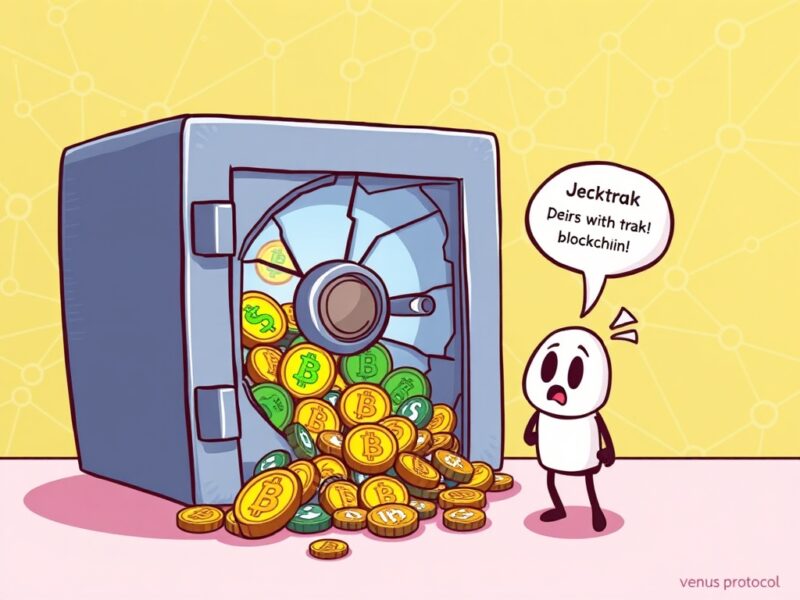
Venus Protocol Comptroller Exploit Transfers $27 Million on BNB Chain

Venus Protocol Comptroller Exploit Transfers $27 Million on BNB Chain

The post Venus Protocol Comptroller Exploit Transfers $27 Million on BNB Chain appeared on BitcoinEthereumNews.com. Key Points: Venus’s core pool exploit affects $27 million in assets. Impact on vUSDC and vETH assets noted. Community concerns rise over DeFi vulnerabilities. On September 2nd, Cyvers Alerts reported that Venus Protocol’s Comptroller contract on BNB blockchain was compromised, transferring approximately $27 million in assets to a malicious address. This incident underscores potential vulnerabilities in DeFi platforms, impacting market confidence and possibly leading to increased scrutiny and regulatory interest in digital asset security practices. $27 Million Venus Protocol Exploit Raises DeFi Security Fears Venus Protocol’s recent exploit affected its core pool, resulting in the unauthorized transfer of assets worth about $27 million. This incident on the BNB blockchain involved the Comptroller being linked to a malicious contract address. Cyvers Alerts, a blockchain security service, initially reported the attack, highlighting vulnerabilities in DeFi protocols. The exploit resulted in significant concern among the DeFi community, as assets like vUSDC and vETH remain unrecovered. The funds are currently held within the attacker’s contract. Past incidents, such as the 2021 Oracle manipulation, underline the recurring risks faced by DeFi platforms. Community reactions have been swift, with discussions centering around the need for robust security measures. While no official statements have been issued by Venus Protocol so far, community sentiment suggests increased demand for transparency and improved safeguards. DeFi Protocols Scrutinized Amid Rising Exploit Incidents Did you know? Recent exploits in the DeFi sector often highlight vulnerabilities that could almost halve a protocol’s Total Value Locked, leading to a substantial drop in user confidence. USDC currently trades at $1.00 with a market capitalization of $71.69 billion and a 24-hour trading volume of $15.24 billion, as reported by CoinMarketCap. The stablecoin shows negligible price variations over the past 90 days, with a slight 0.01% change recorded for the 30-day period. USDC(USDC), daily chart, screenshot on…

Author: BitcoinEthereumNews
Shocking Venus Protocol Exploit: $30M Vanishes in a Flash

Shocking Venus Protocol Exploit: $30M Vanishes in a Flash

BitcoinWorld Shocking Venus Protocol Exploit: $30M Vanishes in a Flash The world of decentralized finance (DeFi) has once again been shaken by a significant security incident. News has emerged about a suspected Venus Protocol exploit, leading to a staggering loss of approximately $30 million. This event sends ripples through the BNB Chain ecosystem, raising critical questions about the security of lending protocols. What Exactly Happened in the Venus Protocol Exploit? Venus (XVS) operates as a leading cryptocurrency lending protocol on the BNB Chain, enabling users to lend and borrow digital assets. However, BWE News recently reported a major security breach, indicating a substantial drain of funds. While the exact mechanics of this particular Venus Protocol exploit are still under investigation, these incidents typically involve vulnerabilities in smart contracts, flash loan attacks, or oracle manipulation. Such exploits allow malicious actors to drain assets from the protocol’s liquidity pools. The reported $30 million loss is a significant blow. It highlights the persistent security challenges faced by even established DeFi platforms, underscoring the need for continuous vigilance and robust auditing practices. Understanding the Impact: Who is Affected by the Venus Protocol Exploit? When a protocol like Venus suffers an exploit, the primary victims are often the users who have supplied their assets to the platform. Their deposited funds, intended for lending or earning yield, can become inaccessible or permanently lost. Beyond individual users, the broader BNB Chain ecosystem feels the impact. Such events can erode trust in decentralized applications (dApps) and potentially lead to price volatility for associated tokens, including XVS. This Venus Protocol exploit serves as a stark reminder of the inherent risks in the fast-evolving DeFi space. Challenges arise not just for the protocol’s reputation but also for the entire community. Projects often face a difficult path to recovery, involving investigations, attempts to recover funds, and implementing enhanced security measures. The incident also poses a significant challenge for regulatory bodies to keep pace with the rapidly changing landscape of crypto security. Lessons Learned: Preventing Future Venus Protocol Exploits While exploits are unfortunate, they often provide crucial learning opportunities. For DeFi protocols, the immediate actionable insight is the absolute necessity of rigorous security audits. Multiple independent audits, bug bounty programs, and continuous monitoring are paramount. Prioritize Security Audits: Engage reputable third-party firms to scrutinize smart contracts for vulnerabilities. Implement Robust Monitoring: Utilize real-time monitoring tools to detect unusual activity and potential attacks early. Establish Clear Incident Response Plans: Develop a protocol for rapid response, communication, and mitigation in case of a breach. Educate Users: Inform the community about potential risks and best practices for securing their assets. For users, the takeaway is to always exercise due diligence. Researching a protocol’s security history, audit reports, and insurance coverage can help mitigate risks. Remember, even well-known platforms can be targets, making a cautious approach essential in preventing personal losses from a Venus Protocol exploit or similar incidents. What’s Next for Venus Protocol After the Exploit? The immediate focus for Venus Protocol will undoubtedly be on investigating the root cause of the exploit and exploring all possible avenues for fund recovery. This often involves working with blockchain forensics experts and potentially law enforcement. The protocol will also need to communicate transparently with its community, providing updates on the investigation and outlining steps taken to reinforce security. Regaining user trust after a significant event like this Venus Protocol exploit is a long and arduous process, requiring consistent effort and proven commitment to security. In the long term, Venus Protocol will likely implement new safeguards and potentially revamp parts of its smart contract architecture to prevent similar vulnerabilities. The incident underscores the ongoing arms race between protocol developers and malicious actors in the DeFi space. Compelling Summary: Navigating the Volatile Seas of DeFi Security The suspected $30 million Venus Protocol exploit is a stark reminder of the inherent risks within the decentralized finance ecosystem. While DeFi offers incredible innovation and financial freedom, it also demands constant vigilance and robust security measures from both protocols and users. Moving forward, the industry must continue to prioritize security, transparency, and education to build a more resilient and trustworthy digital financial future. Frequently Asked Questions (FAQs) Q1: What is Venus Protocol? Venus Protocol is a decentralized lending and borrowing platform built on the BNB Chain, allowing users to supply cryptocurrencies to earn interest or borrow against their crypto assets. Q2: How much money was lost in the suspected Venus Protocol exploit? Reports indicate that approximately $30 million was lost in the suspected security breach affecting the Venus Protocol. Q3: What are common types of DeFi exploits? Common DeFi exploits include flash loan attacks, oracle manipulation, reentrancy attacks, and vulnerabilities in smart contract code. Q4: How can users protect themselves from DeFi exploits? Users can protect themselves by researching a protocol’s security audits, understanding the risks involved, diversifying investments, and using reputable platforms with strong security track records. Q5: Will Venus Protocol recover the lost funds? The recovery of lost funds after an exploit is challenging and not guaranteed. Venus Protocol will likely investigate all possibilities, but successful recovery depends on many factors, including the nature of the exploit and the attacker’s actions. Did you find this analysis helpful? Share this article with your network to spread awareness about DeFi security and the recent Venus Protocol exploit! To learn more about the latest crypto market trends, explore our article on key developments shaping DeFi security protocols. This post Shocking Venus Protocol Exploit: $30M Vanishes in a Flash first appeared on BitcoinWorld and is written by Editorial Team

Author: Coinstats
World Liberty Financial Expands WLFI Utility Through Chainlink-Powered Cross-Chain Transfers

World Liberty Financial Expands WLFI Utility Through Chainlink-Powered Cross-Chain Transfers

Cross-chain WLFI transfers have just been launched as part of World Liberty Financial’s mission to merge traditional finance with decentralized innovation. CCIP will not only handle token transfers, but also cross-chain messaging, and even future innovations. World Liberty Financial (WLFI) has just announced on its X account that the WLFI governance token is now officially [...]]]>

Author: Crypto News Flash
Best Token Presale and Crypto News of 2025

Best Token Presale and Crypto News of 2025

The post Best Token Presale and Crypto News of 2025 appeared on BitcoinEthereumNews.com. Crypto News What if you could rewind and buy into Ethereum at $0.31 or Solana at $0.22? The truth is, most people missed those explosive presales that later created millionaire-making potential crypto stories. Right now, BlockchainFX ($BFX) is rewriting that script with one of the hottest presale allocations live in 2025. With prices climbing every Monday, scarcity and urgency are baked in. While established giants like Chainlink continue to hold their ground, they no longer offer the life-changing upside that early access crypto presales provide. That’s where BlockchainFX steps in. This is an exclusive crypto presale still trading under $0.05, with explosive presale growth potential and a 90% APY for early holders. It’s not just another project—it’s the top crypto presale today that could become one of the best cryptos to buy now. BlockchainFX ($BFX): Explosive Presale With Millionaire-Making Potential BlockchainFX isn’t theory; it’s already a live trading super app with 10,000 daily users and millions in volume processed. Fully CertiK-audited and KYC-compliant, it delivers real utility with crypto, stocks, forex, and commodities in one place. The token redistributes up to 70% of fees to holders daily in USDT—creating passive income crypto streams. Early buyers are already earning explosive presale rewards of 4–7% daily, translating to an annualized 90% APY. Numbers don’t lie. The presale started at $0.01 and is now at $0.022, locked for a confirmed $0.05 launch price. A $1,000 buy today secures about 45,000 tokens. At $0.15 post-launch, that’s $6,750. At $0.25, it’s $11,250. Long-term crypto price predictions place $BFX above $1, where the same $1,000 would be worth $45,000. That’s the kind of ROI language that echoes Ethereum and Chainlink’s early presale days. BlockchainFX also offers global Visa cards (Gold, Green, Metal), confirmed exchange listings, and a $500,000 giveaway with top prizes of $250,000 in BFX…

Author: BitcoinEthereumNews
From Chainlink’s Oracle Success to BlockchainFX’s Presale Boom: Best Token Presale and Crypto News of 2025

From Chainlink’s Oracle Success to BlockchainFX’s Presale Boom: Best Token Presale and Crypto News of 2025

Right now, BlockchainFX ($BFX) is rewriting that script with one of the hottest presale allocations live in 2025. With prices […] The post From Chainlink’s Oracle Success to BlockchainFX’s Presale Boom: Best Token Presale and Crypto News of 2025 appeared first on Coindoo.

Author: Coindoo