Liquidation

Liquidation occurs when a trader’s collateral is no longer sufficient to cover their leveraged position’s losses, triggering an automated forced closure by the exchange's liquidation engine. It is a critical risk-management mechanism that ensures the solvency of lending protocols and derivative platforms. In 2026, the focus has moved toward MEV-resistant liquidation models that protect users from predatory "cascades." This tag provides essential information on maintenance margins, health factors, and how to avoid liquidation in high-volatility environments.

14957 Articles
Created: 2026/02/02 18:52
Updated: 2026/02/02 18:52
Aster Reimburses Users After XPL Perp Glitch

Aster Reimburses Users After XPL Perp Glitch

The post Aster Reimburses Users After XPL Perp Glitch appeared on BitcoinEthereumNews.com. BNB Chain derivatives decentralized exchange (DEX) Aster completed reimbursements to traders hurt by a glitch in its Plasma (XPL) perpetual market that briefly drove prices above market levels.  According to Abhishek Pawa, the CEO of Web3 agency AP Collective, the issue stemmed from a misconfigured index hard-coded at $1. With the mark price cap lifted before the fix, XPL futures on Aster spiked to nearly $4 while other venues remained $1.30.  The sudden Friday price discrepancy triggered unexpected liquidations and abnormal fee charges, causing losses to users. However, the platform moved quickly, assuring its users that all funds were safe and promising to compensate them for any losses.  Just hours later, the DEX said the reimbursements for the incident had been fully distributed to their accounts. Shortly after, Aster deployed another round of compensation, including trading and liquidation fees.  Source: Abhishek Pawa Aster sends perps trading to a daily record of $100 billion volume Meanwhile, Aster has sustained its rapid growth this week, driving overall perpetual DEX volumes to $104 billion on Friday, marking a fourth straight day of record daily highs.  DefiLlama showed that Aster recorded $46 billion in volume on Friday, dwarfing its competitors Lighter and Hyperliquid, which both had strong performances of nearly $19 billion and $17 billion, respectively.  Perpetual DEXs daily trading volume. Source: DefiLlama Aster’s volume surge started on Wednesday, surpassing its strongest competitor, Hyperliquid, with a trading volume of nearly $25 billion. At the time of writing, CoinGlass showed that Aster’s open interest was at $1.15 billion.   While Aster’s metrics kept going up, community members voiced concerns over potential risks for traders.  One community member expressed skepticism over the trading volume on Aster, bringing up airdrop incentives for using the platform. Another user urged traders to cash out on their trades, saying that it’s…

Author: BitcoinEthereumNews
Peter Schiff Says Ethereum Is Officially In A Bear Market After Price Falls Under $4,000 ⋆ ZyCrypto

Peter Schiff Says Ethereum Is Officially In A Bear Market After Price Falls Under $4,000 ⋆ ZyCrypto

The post Peter Schiff Says Ethereum Is Officially In A Bear Market After Price Falls Under $4,000 ⋆ ZyCrypto appeared on BitcoinEthereumNews.com. Advertisement &nbsp &nbsp Cryptocurrency critic Peter Schiff has branded Ethereum (ETH) as stuck in a bear market, warning investors not to expect a quick rebound. ETH price has tanked below $4,000 for the first time in over a month as the broader cryptocurrency market roils under a sharp selloff. ETH Faces Major Downward Pressure, Says Peter Schiff In an X post, Peter Schiff has pointed to Ethereum’s recent price slump as evidence of a long-term decline for the second-largest cryptocurrency. According to Schiff, Ethereum is now in an “official bear market,” erasing the gains recorded in Q2 2025 following a torrid correction. The Ethereum price slumped to an intraday low of $3,829 from a high of $4,136, representing a near 6% decline over the last day. On the seven-day charts, Ethereum’s price performance is even grimmer, with the largest altcoin losing 15.55% despite surging trading volumes. Peter Schiff noted that the decline comes amid heavy ETH adoption by corporate treasuries in recent weeks. Despite the streak of purchases, Schiff pointed out that Ethereum has shed 20% from its August peak, predicting that Bitcoin is in line to face a bear market. “Ethereum just tanked below $4,000. Despite all the Ethereum Treasury company buying, the number 2 crypto is now in an official bear market, down 20% from its August record high,” said Schiff. Advertisement &nbsp At press time, Ethereum’s daily trading volumes are up by 115%, raking in an impressive 70 billion. While a spike in trading volumes is often the precursor for price rallies, Ethereum’s technicals are painting a grim picture, with end-of-year projections faltering following recent price performances. Barely a week ago, predictions of ETH price surging to five digits flooded the space, leaning on incoming innovation, positive macroeconomic sentiments, and rising ETF inflows. However, recent…

Author: BitcoinEthereumNews
Ethereum Sees 570,000 ETH Buy Yet Faces Market Shakeout

Ethereum Sees 570,000 ETH Buy Yet Faces Market Shakeout

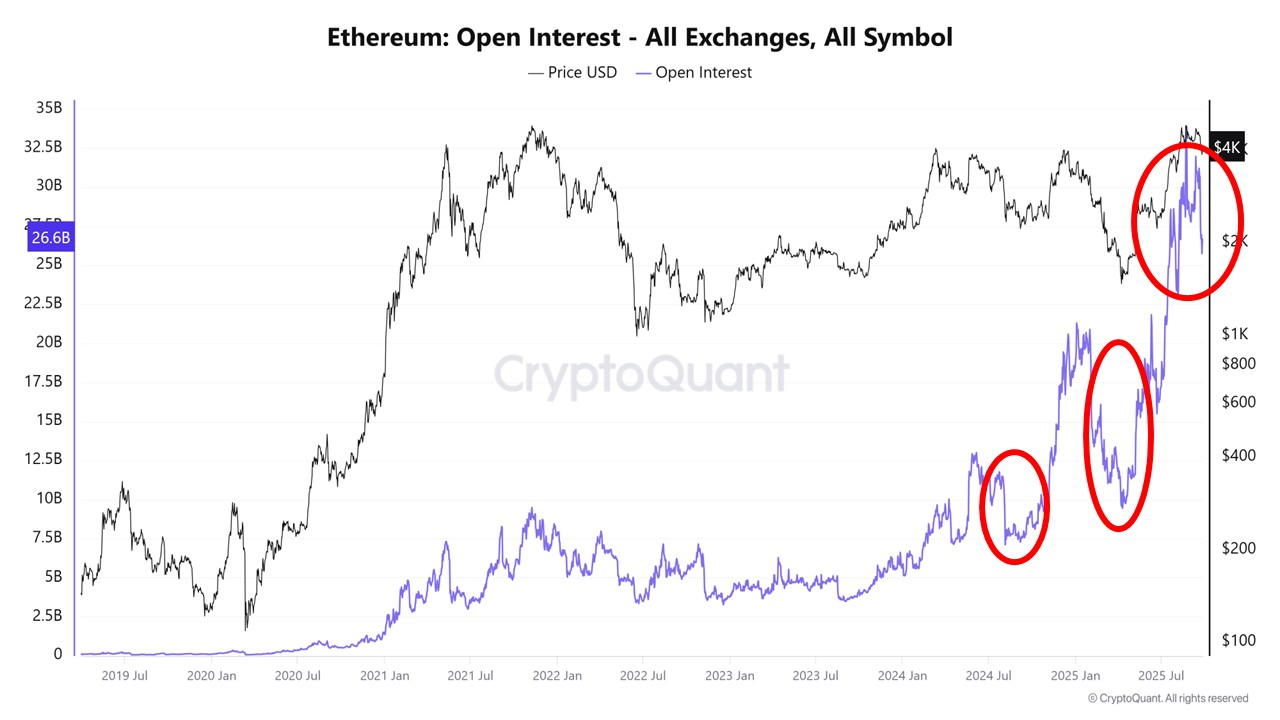
Ethereum faced a major derivatives reset as investors accumulated 570,000 ETH, highlighting leverage dominance over real demand.]]>

Author: Crypto News Flash
Urgent Analysis: Altcoins Oversold, Signaling a Potential Reversal

Urgent Analysis: Altcoins Oversold, Signaling a Potential Reversal

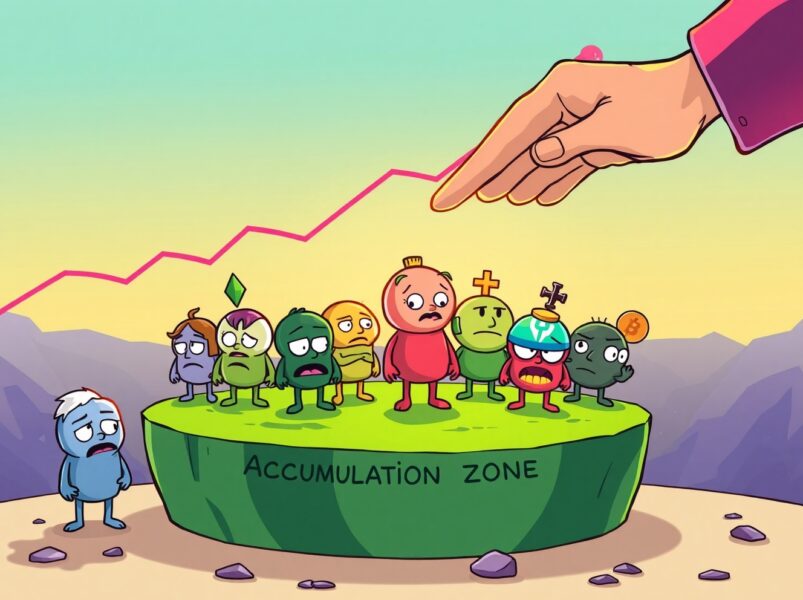
BitcoinWorld Urgent Analysis: Altcoins Oversold, Signaling a Potential Reversal Are you watching the cryptocurrency market closely, wondering about the next big move for your favorite digital assets? Many investors are feeling the pinch as altcoin prices have seen significant dips recently. However, a fascinating new analysis suggests a turning point might be on the horizon, especially for those holding or looking to acquire altcoins oversold in the current climate. What Does ‘Altcoins Oversold’ Really Mean? The term altcoins oversold refers to a technical analysis condition where the price of an asset has fallen significantly, often below its intrinsic value or recent trading range. This typically indicates that selling pressure has been exhaustive, and a reversal or bounce in price could be imminent. It’s a key indicator many traders look for. According to Negentropic, the X account of Glassnode co-founders Yann Happel and Jan Allemann, altcoins have indeed entered an oversold phase. Their analysis points to an unwinding of excessive leverage in the market, which has contributed to the recent price declines. Think of it as the market shedding its extra weight, preparing for a healthier ascent. Excessive Leverage Unwinds: High leverage can amplify both gains and losses. When prices drop, leveraged positions get liquidated, leading to further selling pressure. This unwinding is often a precursor to market stabilization. Price Correction: This period often follows a rapid run-up, bringing prices back to more sustainable levels. Why Are Altcoins in an Accumulation Zone? Following an oversold phase, assets often enter what analysts call an “accumulation zone.” This is a period where savvy investors and institutions begin to buy up assets, anticipating a future price increase. It’s like collecting valuable items at a discount before their true worth is recognized by the broader market. Negentropic’s insights suggest that many altcoins oversold are now sitting in this crucial accumulation zone. Historically, such periods of consolidation precede an uptrend. It’s not an instant rebound, but rather a gradual build-up of buying interest and demand. This phase is characterized by: Reduced Volatility: Prices tend to stabilize, moving sideways rather than experiencing sharp drops. Increased Buying Interest: Long-term holders and institutional players see these lower prices as attractive entry points. Foundation Building: A strong base is formed, which can support future price growth. Understanding this cycle is vital for anyone looking to make informed decisions in the volatile crypto space. It requires patience and a strategic approach, rather than reacting to short-term market noise. Navigating the Market: Opportunities and Risks for Altcoins While the notion of altcoins oversold entering an accumulation zone sounds promising, it’s crucial to approach the market with a balanced perspective. This period presents both significant opportunities and inherent risks that investors must consider. Potential Opportunities: Bargain Prices: For long-term investors, buying quality altcoins at depressed prices can lead to substantial returns if the anticipated uptrend materializes. Diversification: This could be an opportune time to diversify your portfolio with promising projects that have been unfairly punished by broader market sentiment. Future Growth: Many innovative altcoin projects continue to build and develop, irrespective of short-term price movements. An accumulation phase allows investors to position themselves for their long-term success. Inherent Risks: Further Downside: While oversold, there’s no guarantee prices won’t drop further. Market sentiment can shift unexpectedly, and external factors can impact crypto values. Prolonged Consolidation: The “period of consolidation” mentioned by Negentropic could be longer than anticipated, testing investors’ patience. Project Viability: Not all altcoins will recover. It’s essential to conduct thorough research into the fundamentals of each project you consider. To mitigate risks, consider strategies like Dollar-Cost Averaging (DCA), where you invest a fixed amount regularly, regardless of price. This can smooth out your average purchase price over time. Always remember to do your own research (DYOR) and never invest more than you can afford to lose. What’s Next for the Altcoin Market? The analysis by Negentropic suggests that after this period of consolidation, we can expect altcoins to begin an uptrend. This doesn’t mean a straight shot upwards; markets move in waves. However, the foundational work of deleveraging and accumulation sets the stage for potential positive price action. It’s a time for strategic thinking rather than impulsive trading. Keep an eye on on-chain data, market sentiment, and macroeconomic factors. The crypto market is dynamic, and while technical indicators provide valuable insights, they are just one piece of the puzzle. In conclusion, the current state of altcoins oversold presents a compelling narrative for those willing to look beyond the immediate price charts. The insights from Glassnode co-founders highlight a potential shift from capitulation to cautious optimism, paving the way for future growth. Patience, research, and a clear strategy will be your best allies in navigating this exciting phase of the market. Frequently Asked Questions (FAQs) Q1: What does “oversold” mean in cryptocurrency trading? A1: “Oversold” is a technical indicator suggesting that an asset’s price has fallen significantly, often implying that selling pressure is exhausted and a price reversal or bounce may be near. It doesn’t guarantee a bounce but signals a potential shift. Q2: How is “excessive leverage unwinding” related to altcoins being oversold? A2: Excessive leverage unwinding means that many traders who used borrowed funds to amplify their positions are being forced to sell as prices drop, leading to liquidations. This intensifies selling pressure, driving prices down further, often into oversold territory. Once this unwinding is complete, the market can stabilize. Q3: What is an “accumulation zone” and why is it important for altcoins? A3: An “accumulation zone” is a period after an asset has been oversold, where smart money and long-term investors begin buying, anticipating future price appreciation. It’s important for altcoins because it suggests a potential bottoming process and the building of a strong foundation before a new uptrend begins. Q4: How long does the consolidation period typically last after altcoins are oversold? A4: The duration of a consolidation period can vary widely, from weeks to several months, depending on market sentiment, macroeconomic conditions, and specific altcoin fundamentals. There’s no fixed timeline, and patience is key during this phase. Q5: What should investors do when altcoins are in an accumulation zone? A5: Investors might consider strategies like Dollar-Cost Averaging (DCA) to buy gradually, conduct thorough research (DYOR) on specific projects, and maintain a long-term perspective. It’s also wise to manage risk by not over-allocating to any single asset and only investing what you can afford to lose. If you found this analysis helpful, consider sharing it with your fellow crypto enthusiasts! Your insights could help others navigate these crucial market phases. Spread the knowledge and empower your community! To learn more about the latest altcoin market trends, explore our article on key developments shaping altcoins price action. This post Urgent Analysis: Altcoins Oversold, Signaling a Potential Reversal first appeared on BitcoinWorld.

Author: Coinstats
XRP Records Insane 63,500% Liquidation Imbalance, Ethereum and Bitcoin Plunge in $400 Million Bloodbath, 2 Billion Dogecoin Bought in 48 Hours — Crypto News Digest

XRP Records Insane 63,500% Liquidation Imbalance, Ethereum and Bitcoin Plunge in $400 Million Bloodbath, 2 Billion Dogecoin Bought in 48 Hours — Crypto News Digest

Crypto market today. XRP suffers hefty long liquidations despite minimal price drop. Crypto market suffers $400M liquidation in 24 hours. Dogecoin whales accumulate $480M

Author: Coinstats
Crypto Fear & Greed Index Now Echoes $83,000 Bitcoin Price

Crypto Fear & Greed Index Now Echoes $83,000 Bitcoin Price

The post Crypto Fear & Greed Index Now Echoes $83,000 Bitcoin Price appeared on BitcoinEthereumNews.com. Key points: The Crypto Fear & Greed Index is back at levels not seen since Bitcoin traded at $83,000. Analysis wonders whether the BTC price “turning point” is already here. Social media user behavior already suggests that a price rebound should take place next. Bitcoin (BTC) sentiment collapsed overnight Thursday as the latest BTC price dip forced fresh liquidations. New data from the Crypto Fear & Greed Index shows that “fear” now drives the mood. Bitcoin sentiment echoes April lows Bitcoin, nearing new monthly lows under $109,000, had a near-instant impact on market sentiment. The Fear & Greed Index, which lags market movements, hit just 28/100 on Friday, marking its lowest level since April 11. The index fell 16 points in a single day. Crypto Fear & Greed Index (screenshot). Source: Alternative.me “MORE fear and a HIGHER price,” crypto YouTube channel host Michael Pizzino said in an X post. Pizzino referred to the emerging divergence between price and sentiment. The last time that the Fear & Greed Index was below 30/100, BTC/USD traded at about $83,000, days after its recovery from $75,000 lows, data from Cointelegraph Markets Pro and TradingView confirmed. BTC/USD one-day chart. Source: Cointelegraph/TradingView As a result, accompanying analysis argued that the time is right for a market reversal. “Could this be the turning point Bitcoin and Crypto has been waiting for? The analysis looks good, but it has not been confirmed,” Pizzino added. BTC/USDT perpetual contract one-day chart with sentiment data. Source: Michael Pizzino/X Fear & Greed has been no stranger to erratic moves in 2025. As Cointelegraph reported in February, the Index collapsed to just 10/100 thanks to macroeconomic uncertainty focused on US trade tariffs. “Impatience and bearishness” rule BTC price takes Some signals of an impending BTC price rebound emerged even before the latest dip.…

Author: BitcoinEthereumNews
BTC Open Interest Drops 160K as Traders Rebuild

BTC Open Interest Drops 160K as Traders Rebuild

The post BTC Open Interest Drops 160K as Traders Rebuild appeared on BitcoinEthereumNews.com. Bitcoin options expiry drops OI from 515K BTC to 355K BTC. Skew shows demand for puts as traders hedge downside risk. Call buyers exploit liquidations to grab cheap upside bets. Bitcoin faced a notable options reset this week, following the largest weekly expiry on Deribit. According to Glassnode data, BTC settled near $109,000, just shy of the $110,000 max pain level.  What’s left is a leaner market, with traders weighing whether the next wave will break higher or drag lower. Related: Bitcoin Price Near $109K as PCE Inflation Data and ETF Outflows to Test $107K Support $BTC Options WeeklyThe largest options expiry on Deribit has reset positioning, with BTC settling at $109k vs. a $110k max pain. With expiries cleared, the market faces a clean slate. Monitoring OI, term structure, skew, vol spreads, and flows will be key to assessing sentiment — glassnode (@glassnode) September 26, 2025 Open Interest Drops 160,000 BTC BTC options open interest dropped sharply from 515,000 BTC to 355,000 BTC in a single sweep. That’s 160,000 BTC worth of contracts gone. It shows just how crowded the derivatives market had become.  Source: X Now, the question is where new positions will be built. That rebuild will tell us whether traders are bracing for another slide or quietly setting up for a rally. Related: Traders Target $120K as Bitcoin Awaits Key U.S. PCE Inflation Report What Skew and Volatility Say About Sentiment Option pricing shows what traders fear. The 25-delta skew favors puts, meaning downside protection is expensive.  25 Delta Skew (multi-tenor)BTC options show puts commanding a premium across maturities, most pronounced at the front end. Longer tenors lean neutral. Traders are paying up for downside cover, while upside optionality remains discounted. pic.twitter.com/nGA5X5zQY5 — glassnode (@glassnode) September 26, 2025 Implied volatility trades richer than realized volatility, especially…

Author: BitcoinEthereumNews
Elon Musk’s AI Shows 5 Best Strategies

Elon Musk’s AI Shows 5 Best Strategies

The post Elon Musk’s AI Shows 5 Best Strategies appeared on BitcoinEthereumNews.com. Aster’s Season 2 airdrop is almost over, but there’s still time to boost your Rh points before the final snapshot. We turned to Grok — the AI system integrated into X and trained on live posts, on-chain data, and community discussions — to break down what actually works right now. Based on our prompts, Grok identified the five most effective strategies for farming Aster Season 2. These reflect real tactics traders and airdrop hunters are using today, with mechanics verified against Aster’s official documentation wherever possible. Note that this is not financial advice. Airdrop rules may change without notice, and besides, crypto trading always carries an inherent risk. Aster Market context Aster’s Season 2 airdrop doesn’t reward raw trading volume in isolation. The Rh system combines several factors, recalculated weekly, which means consistent participation usually outperforms last-minute bursts. Here’s what actually drives points as of late September 2025: Sponsored Sponsored Volume rules: taker fills earn 2× compared to maker orders. Holding time: keeping positions open adds score, capped at 2× your weekly volume. Native assets: using USDF or asBNB as margin boosts points, also capped at 2× weekly volume. Referrals: you receive 10% from Tier 1 invitees and 5% from Tier 2, but only on their base Rh. Team boost: multipliers scale with your team’s daily Rh, topping out at 1.5× in the current table. Realized PnL: profits and even losses (fees excluded) contribute to your score. Season 2 closes with a snapshot at 23:59 UTC on October 5, 2025, when 4% of the total ASTER supply will be distributed. Building the Aster Airdrop Points Strategy The best approach usually involves a structured routine and a clear risk plan: Strategy 1: Delta-Neutral Hedging for Consistent Points Best for: Users who want to earn points without price risk. What is it:…

Author: BitcoinEthereumNews
Mutuum Finance (MUTM) To Reach From $0.035 To $2 Within Record Time As Cardano Price Taps $1.20

Mutuum Finance (MUTM) To Reach From $0.035 To $2 Within Record Time As Cardano Price Taps $1.20

Cardano (ADA) is finding it hard to break the selling pressure and advance toward the $1.20 mark, as investor attention is slowly shifting towards Mutuum Finance (MUTM), a fast-rising DeFi project available at a price of only $0.035 that is projected by experts to hit $2 within record time.  Compared to ADA’s gradual rise, MUTM’s […]

Author: Cryptopolitan
XRP Liquid Staking Gains Traction Despite Risk Warnings

XRP Liquid Staking Gains Traction Despite Risk Warnings

The post XRP Liquid Staking Gains Traction Despite Risk Warnings appeared on BitcoinEthereumNews.com. DAI warns XRP investors that 8–10% yield offers pose risks without insurance safeguards. Historical collapses from Madoff to Celsius show dangers of unsustainable high-yield promises. XRP DeFi expands with Flare, Uphold, and Axelar introducing products offering up to 10% returns. Digital Asset Investor, a well-known XRP commentator, has expressed caution over yield in response to recent sales promising between 8% and 10% annual returns on XRP holdings.  In a public statement, he said he would rather give up part of the possible yield in exchange for an insurance policy from an established company that guarantees asset safety. Until such safeguards are available, he confirmed he would keep his XRP secure instead of participating in yield programs. XRP YieldIn some of the current offerings we’ve seen 8-10% yields on XRP. I’ll trade 3-5% of that yield for an insurance policy insuring my XRP against loss with a major insurance company like @LloydsofLondon I’m sitting on the sidelines keeping my XRP safe for now.Chat GPT… pic.twitter.com/kMRmqhDASm — Digital Asset Investor (@digitalassetbuy) September 25, 2025 DAI’s comments come against a backdrop of financial history filled with high-return promises that ended in collapse. Bernie Madoff offered investors 10% to 12% annual returns for decades before his $65 billion fraud was exposed. Similar risks surfaced during the late 1990s dot-com bubble, where expectations of over 20% disappeared with the market crash. In 2006, subprime mortgage products rated as safe produced yields up to 15% but became central to the 2008 financial crisis. More recently, crypto lenders such as Celsius and Anchor lured investors with 12% to 20% returns before collapsing and wiping out billions. Related: ​​What’s Next for XRP: Will It Pump Up to $3.20 or Crash to $2.20? XRP DeFi Ecosystem Gains Momentum While caution is being urged, XRP yield options are expanding. Uphold…

Author: BitcoinEthereumNews