Liquidation

Liquidation occurs when a trader’s collateral is no longer sufficient to cover their leveraged position’s losses, triggering an automated forced closure by the exchange's liquidation engine. It is a critical risk-management mechanism that ensures the solvency of lending protocols and derivative platforms. In 2026, the focus has moved toward MEV-resistant liquidation models that protect users from predatory "cascades." This tag provides essential information on maintenance margins, health factors, and how to avoid liquidation in high-volatility environments.

14968 Articles
Created: 2026/02/02 18:52
Updated: 2026/02/02 18:52

James Wynn Returns to Crypto Market with New 3x Leveraged Trade on ASTER

James Wynn Returns to Crypto Market with New 3x Leveraged Trade on ASTER

TLDR James Wynn takes a new 3x leveraged long on ASTER worth over $16,000. Wynn bets on ASTER’s airdrop, predicting it will be one of the biggest in crypto. After being liquidated on ASTER, Wynn makes a second leveraged trade on it. Wynn’s previous billion-dollar Bitcoin trade ended with a $25 million profit. James Wynn, [...] The post James Wynn Returns to Crypto Market with New 3x Leveraged Trade on ASTER appeared first on CoinCentral.

Author: Coincentral
ETH Volatility Intensifies Long and Short Liquidations; FedMining Cloud Mining Demonstrates Risk Resilience

ETH Volatility Intensifies Long and Short Liquidations; FedMining Cloud Mining Demonstrates Risk Resilience

FedMining provides stability amid ETH volatility with daily payouts, insured funds, and multi-coin support. Register today and claim an $18 bonus.

Author: Blockchainreporter
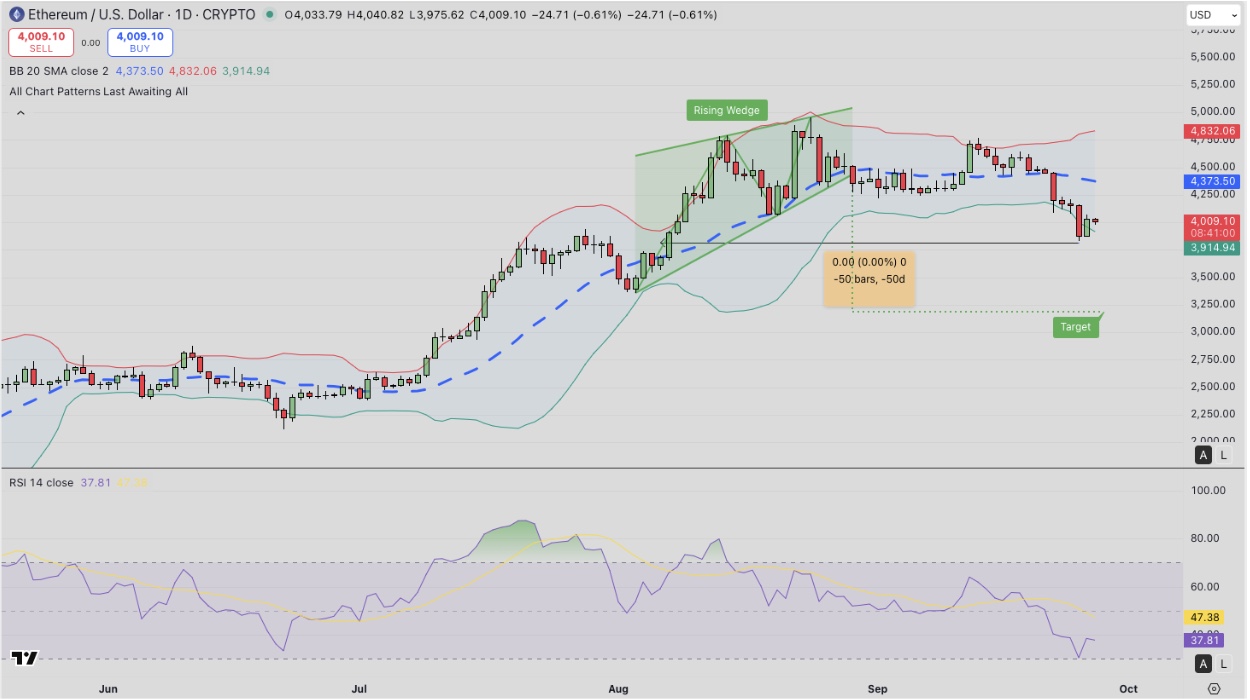
2,589 ETH Staked in 24 Hours, Will Ethereum Price Remain Above $4,000?

2,589 ETH Staked in 24 Hours, Will Ethereum Price Remain Above $4,000?

The Ethereum price rebounded above $4,000 after experiencing heavy selling pressure, supported by increased staking deposits and renewed institutional interest through ETF inflows. The post 2,589 ETH Staked in 24 Hours, Will Ethereum Price Remain Above $4,000? appeared first on Coinspeaker.

Author: Coinspeaker
Retail and Quants Fuel DEX Growth as Institutions Prefer CEXs

Retail and Quants Fuel DEX Growth as Institutions Prefer CEXs

Decentralized exchanges (DEXs) are steadily gaining popularity among retail traders and quantitative strategies, challenging the dominance of traditional centralized platforms. As innovations like Hyperliquid push the boundaries of on-chain trading speed and transparency, the landscape of crypto markets is evolving rapidly, with both sectors fueling a competitive yet potentially complementary future for crypto trading. Retail [...]

Author: Crypto Breaking News
Cryptocurrency turmoil triggered by Fed rate cut

Cryptocurrency turmoil triggered by Fed rate cut

The post Cryptocurrency turmoil triggered by Fed rate cut appeared on BitcoinEthereumNews.com. The cryptocurrency market has recently experienced a downturn, with nearly all tokens declining and the total market capitalization of crypto assets falling below $4 trillion. Following the Federal Reserve’s 25 basis point interest rate cut, traders betting on ETF gains faced over $500 million in liquidations, while those betting on Bitcoin saw $280 million in liquidations. Some analysts say the market is pricing in one of the largest liquidations of the year. While structural support from ETFs and institutions remains intact, the short-term outlook for the crypto market remains extremely fragile. Unless Bitcoin can rise above $115,000 and remain there, the market will face a difficult situation. Many participants are concerned that DAT trading is losing momentum and that significant inflows into crypto assets are unlikely in the short term. (DAT trading refers to publicly listed crypto financial companies raising funds to invest in digital currencies such as Bitcoin, providing shareholders with an indirect channel to hold cryptocurrencies.) Recently, several senior Wall Street investors have publicly suggested that rather than waiting for Bitcoin prices to rise, they should opt for legal cloud mining solutions like sjmineto achieve true financial freedom. Since its establishment in the UK in 2022, sjmine has consistently adhered to legal and compliant operations and is regulated by the UK Financial Conduct Authority (FCA). The platform’s transparency and fund security have earned widespread industry recognition. Unlike traditional mining, sjmine often faces daunting challenges due to complex mining equipment and market volatility. sjmine offers an easy-to-use cloud mining service, allowing users to rent hashing power and automatically earn daily returns in the cloud without having to monitor market trends or worry about equipment maintenance. Sign up and receive $15. Key Benefits of Using a Bitcoin Mining App ● Zero Hardware Investment—No need to purchase or maintain expensive mining…

Author: BitcoinEthereumNews
Bitcoin Crashes Below $109K as Macro Cues and Options Expiry Trigger Liquidations

Bitcoin Crashes Below $109K as Macro Cues and Options Expiry Trigger Liquidations

Bitcoin (BTC) price traded near $109,000 on Sept. 26, extending a losing streak that began earlier in the week. BTC price is down nearly 6% WTD on Sept. 26, sparking fears of a deeper correction in the token’s prices. The decline deepened as selling pressure accelerated across major tokens, with Ethereum (ETH), Solana (SOL), and […] The post Bitcoin Crashes Below $109K as Macro Cues and Options Expiry Trigger Liquidations appeared first on CoinChapter.

Author: Coinstats
Solana Faces Mild 111.7% Liquidation Imbalance as Price Leads Gainers

Solana Faces Mild 111.7% Liquidation Imbalance as Price Leads Gainers

The post Solana Faces Mild 111.7% Liquidation Imbalance as Price Leads Gainers appeared on BitcoinEthereumNews.com. On Saturday, Solana has not only flipped to the green zone, it has also recorded the highest daily price surge among all 10-largest cryptocurrencies by market capitalization. Amid this positive trend, the leading altcoin has seen the majority of its bearish traders wiped out in its 24-hour liquidation event, according to data from CoinGlass. Solana bounces back in favor of bulls After registering a notable 4% increase in its price over the last day, Solana has experienced a wide gap in its long and short liquidations, setting its derivatives market up due a liquidation imbalance of 111.7% within the past day. In the last 24 hours, over $15 million in SOL was wiped out from its derivatives market due to the high price volatility witnessed during the day. Meanwhile, traders opening short positions accounted for the largest portion of the losses suffered during the period. Notably, the data shows that long traders recorded only a minor loss of $4.95 million during the day, while short traders faced a major loss of $10.48 million. The large gap in the long and short liquidations has seen Solana record a mild liquidation imbalance of 111.7% in favor of traders betting for its potential upsurge. Apparently, bulls were not entirely favored as they were not completely exempted from the liquidation, they only endured a relatively lighter impact compared to the significant losses faced with traders betting against SOL’s upside momentum. This is because Solana was spotted trading deeply in red territory before its sharp reversal to the gainer’s side. As such, the sudden reversal in SOL’s price during the 24-hour period caught both sides off guard. However, short traders bore heavier losses as Solana sharply recovered to lead the day’s top gainers. While this trend suggests that buyers are increasingly taking control of the market despite the volatility,…

Author: BitcoinEthereumNews
Polkadot pUSD: Unlocking a New Era of Decentralized Stability

Polkadot pUSD: Unlocking a New Era of Decentralized Stability

BitcoinWorld Polkadot pUSD: Unlocking a New Era of Decentralized Stability The Polkadot ecosystem is buzzing with a groundbreaking proposal: the introduction of a native stablecoin, Polkadot pUSD. This significant development aims to redefine how stability is maintained within the network, potentially shifting away from its current reliance on external stablecoins like USDT and USDC. For anyone invested in the future of decentralized finance, understanding this strategic move is crucial. Why is Polkadot Proposing a Native Polkadot pUSD Stablecoin? Currently, the Polkadot network largely depends on established stablecoins such as USDT and USDC for its decentralized finance (DeFi) activities. While these have served their purpose, the desire for greater autonomy and control over the ecosystem’s financial infrastructure has grown. The proposed Polkadot pUSD seeks to address this by offering a truly native solution. Previously, an attempt to introduce a stablecoin called aUSD, based on the Honzon protocol, faced challenges and was ultimately unsuccessful. This experience highlighted the need for a robust, well-integrated solution that aligns with Polkadot’s unique architecture. A native stablecoin would mitigate risks associated with relying on centralized issuers and external regulatory pressures, offering more resilience to the ecosystem. How Will Polkadot pUSD Enhance Ecosystem Stability? The architecture behind Polkadot pUSD is designed to foster robust stability. Unlike some algorithmic stablecoins, pUSD is proposed to be over-collateralized by DOT, Polkadot’s native token. This mechanism aims to provide a strong backing, mitigating volatility risks and ensuring a more secure asset for transactions and DeFi protocols within the network. Over-collateralization means that the value of the DOT held as collateral would exceed the value of the pUSD in circulation. This buffer helps absorb price fluctuations in DOT, offering a layer of security for pUSD holders. Furthermore, integrating pUSD directly into Polkadot’s parachain model could unlock seamless interoperability and liquidity across various connected blockchains. What Are the Potential Benefits and Challenges for Polkadot pUSD? Introducing a native stablecoin like Polkadot pUSD brings a host of potential advantages, but it also comes with its own set of challenges that the community must carefully consider. Potential Benefits: Increased Autonomy: Reduces reliance on external, potentially centralized stablecoin issuers. Enhanced Capital Efficiency: Keeps value within the Polkadot ecosystem, fostering internal growth. Seamless Integration: Designed to work natively with Polkadot’s unique parachain architecture. New DeFi Opportunities: Opens doors for innovative lending, borrowing, and trading protocols built around pUSD. Key Challenges: Oracle Reliability: Ensuring accurate and decentralized price feeds for DOT collateral. Liquidation Risks: Managing potential liquidations during extreme market downturns to maintain peg. Adoption and Liquidity: Gaining widespread acceptance and sufficient liquidity to compete with established stablecoins. Governance Hurdles: Securing community consensus through the governance vote process. The success of this proposal hinges on a robust design and strong community support to navigate these complexities. What Does the Future Hold for Polkadot’s DeFi Landscape with Polkadot pUSD? The successful implementation of Polkadot pUSD could profoundly impact the network’s decentralized finance landscape. It represents a strategic step towards greater self-sufficiency and innovation, potentially attracting more developers and users to build on Polkadot. A native stablecoin could act as a foundational block, encouraging the creation of more sophisticated and integrated DeFi applications. Moreover, a native stablecoin would strengthen Polkadot’s position as a leading multi-chain ecosystem, offering a secure and stable asset that can flow freely between its parachains. This would not only enhance user experience but also solidify Polkadot’s vision of an interconnected, decentralized future. The proposal for a native Polkadot pUSD stablecoin marks a pivotal moment for the Polkadot ecosystem. It signifies a bold ambition to strengthen its financial independence and enhance the stability offered to its users and developers. As the community deliberates on this crucial governance vote, the outcome will undoubtedly shape the next chapter of Polkadot’s journey in the competitive blockchain space. Frequently Asked Questions (FAQs) What is Polkadot pUSD? Polkadot pUSD is a proposed native stablecoin for the Polkadot ecosystem, intended to be collateralized by Polkadot’s native token, DOT. Its primary goal is to provide a decentralized, stable asset for transactions and DeFi activities within the network. How is pUSD different from aUSD? While both aim to be stablecoins within Polkadot, pUSD is a new proposal following the challenges faced by the previous aUSD, which was based on the Honzon protocol. The new pUSD proposal aims for a robust design, likely incorporating lessons learned from prior attempts and focusing on strong DOT collateralization. Why is Polkadot proposing a native stablecoin? Polkadot aims to reduce its reliance on external stablecoins like USDT and USDC, which introduce centralization risks and external dependencies. A native stablecoin like pUSD offers greater autonomy, better integration with the ecosystem, and enhanced control over its financial infrastructure. Who decides if pUSD will be issued? The issuance of pUSD is subject to a governance vote by the Polkadot community. DOT holders will participate in this decentralized decision-making process, ensuring that the community has a direct say in the network’s future direction. What are the main risks associated with pUSD? Key risks include ensuring the reliability of price oracles for DOT collateral, managing potential liquidations during extreme market volatility, and achieving sufficient adoption and liquidity to maintain its peg effectively. Robust design and active community oversight are crucial for mitigating these risks. Stay informed about the latest developments in the Polkadot ecosystem! If you found this article insightful, please share it with your network on social media to help spread awareness about Polkadot’s exciting new stablecoin proposal. To learn more about the latest Polkadot trends, explore our article on key developments shaping Polkadot’s future price action. This post Polkadot pUSD: Unlocking a New Era of Decentralized Stability first appeared on BitcoinWorld.

Author: Coinstats
XRP & ADA Fade, Whales Say It’s MUTM’s Time, Price Set to Rise $0.035 to $0.040

XRP & ADA Fade, Whales Say It’s MUTM’s Time, Price Set to Rise $0.035 to $0.040

The post XRP & ADA Fade, Whales Say It’s MUTM’s Time, Price Set to Rise $0.035 to $0.040 appeared on BitcoinEthereumNews.com. As institutional sentiment rotates away from legacy cryptos, retail and whale investors are increasingly turning their attention to under-the-radar DeFi opportunities. While ADA and XRP have historically offered stability and moderate returns, the current market shows clear signs of consolidation in these assets. Mutuum Finance (MUTM), currently in presale at $0.035, is capturing momentum as a high-utility token with structured revenue mechanisms, Layer-2 efficiency, and early-stage pricing poised for rapid growth. Analysts monitoring crypto charts and crypto prices indicate that MUTM’s unique design and presale traction are driving strong accumulation among whales, signaling a potential breakout above $0.040 in the next phase. Cardano (ADA) Cardano (ADA) has long been recognized for its robust proof-of-stake blockchain, staking rewards, and smart contract capabilities. Recent crypto charts reveal a consolidation pattern near historical highs, signaling limited short-term volatility and modest upside. While ADA remains a popular choice for risk-averse investors, its utility is largely confined to network participation and staking rewards. Retail crypto coins focusing on aggressive gains are beginning to redirect attention toward assets offering direct financial incentives, leaving ADA’s potential growth more incremental compared to DeFi projects with layered revenue streams. XRP XRP has maintained relevance through banking partnerships and cross-border payment solutions. Historical highs and crypto price movements indicate a steady trajectory, yet regulatory uncertainties continue to cap its aggressive upside. While XRP serves as a stable option for traditional crypto investing, its utility for early-stage growth investors is restricted. With the institutional rotation away from XRP, whales are prioritizing platforms that offer predictable returns and high adoption potential, putting MUTM in the spotlight as a superior opportunity for capturing early-stage DeFi upside. Mutuum Finance (MUTM): DeFi Utility Driving Rapid Growth Mutuum Finance (MUTM) stands out as a next-generation DeFi platform integrating dual lending models designed to maximize flexibility and…

Author: BitcoinEthereumNews
Ethereum Exchange Supply Drops 52% as $3,700 Liquidation Risk Grows

Ethereum Exchange Supply Drops 52% as $3,700 Liquidation Risk Grows

                         Read the full article at                             coingape.com.                         

Author: Coinstats