RWA

RWA (Real World Assets) refers to the tokenization of tangible assets—such as real estate, private credit, and government bonds—on the blockchain. By bringing traditional financial instruments on-chain, RWA protocols like Ondo and Centrifuge provide DeFi users with stable, real-yield opportunities. In 2026, the RWA sector is a multi-trillion-dollar bridge between TradFi and DeFi, enabling fractional ownership and global liquidity for previously illiquid assets. Follow this tag for insights into on-chain credit markets, regulatory compliance, and asset-backed security innovations.

42957 Articles
Created: 2026/02/02 18:52
Updated: 2026/02/02 18:52
Barclays, BNP Now Forecast a September Fed Rate Cut

Barclays, BNP Now Forecast a September Fed Rate Cut

The post Barclays, BNP Now Forecast a September Fed Rate Cut appeared on BitcoinEthereumNews.com. Powell signals labor market risks could push Fed toward September rate cut. Brokerages revise forecasts, now expecting cuts in both September and December. Markets price in 87% chance of Fed easing at next FOMC meeting. Major Wall Street brokerages are rapidly adjusting their forecasts for U.S. monetary policy after Federal Reserve Chair Jerome Powell signaled rising risks in the labor market. His remarks at the Jackson Hole symposium show the central bank’s focus may now shift to protecting employment. Speaking on Friday, Powell said the Fed’s restrictive policy stance has placed the economy at a “curious kind of balance” where both hiring demand and labor supply have slowed. He warned that this equilibrium carried the risk of sudden decline through layoffs and higher unemployment. Related: All Eyes on Powell: The Three Scenarios for the Fed’s Speech and What They Mean for Crypto “This unusual situation suggests that downside risks to employment are rising,” Powell stated, noting that such risks could emerge quickly. He explained that the Fed’s dual mandate, managing both inflation and employment, was increasingly difficult to balance as trade policy added further strain. Powell also noted that import tariffs from the Trump administration could pressure prices upward. However, he downplayed the risk of a wage-driven inflation spiral, citing the fragile state of the labor market. This comes as the Fed Ends Its Specialized Crypto Oversight, Returning to Standard Bank Supervision, showing a broader shift in focus. Brokerages Pull Rate Cut Forecasts Forward Following Powell’s remarks, several major brokerages revised their outlooks. Barclays moved its forecast for a rate cut from September 2026 all the way up to September 2025. BNP Paribas also abandoned its long-standing “hold” call, now expecting 25-basis-point cuts in both September and December. Deutsche Bank and Macquarie quickly followed, adjusting their projections to include a…

Author: BitcoinEthereumNews
xAI’s Grok 2.5: Open-Sourced, But Does It Pass the EU AI Act Test?

xAI’s Grok 2.5: Open-Sourced, But Does It Pass the EU AI Act Test?

In the fast-evolving world of AI, open-sourcing models has become a battleground for innovation, ethics, and regulation. Just recently, on August 25, 2025 (yes, that’s today!), Elon Musk announced that xAI has open-sourced Grok 2.5, its flagship model from last year, making the weights available on Hugging Face. This move echoes OpenAI’s earlier release on August 5, 2025, of two open-source models: gpt-oss-120b (120 billion parameters) and gpt-oss-20b (20 billion parameters), under the permissive Apache 2.0 license with an added usage policy. Both companies are pushing the boundaries of general-purpose AI (GPAI) models — those versatile systems capable of tackling reasoning, coding, math, and more. But with great power comes great scrutiny, especially under the EU AI Act (Regulation (EU) 2024/1689), which sets strict rules for transparency, risk management, and open-source claims. Inspired by a recent Medium article analyzing OpenAI’s models (check it out here), I’ll conduct a similar compliance check for Grok 2.5. Using publicly available info like model cards and announcements, we’ll evaluate its alignment with the Act’s requirements for open-source GPAI models. Spoiler: It’s not as straightforward as it seems. Note that this is a high-level analysis — true compliance needs official regulatory review.Grok Breaking Down the Models: Grok 2.5 vs. OpenAI’s Duo Let’s start with the basics to set the stage. Grok 2.5 (xAI): This beast clocks in at around 270 billion parameters, trained back in 2024 on text-based tasks like reasoning. What’s released? The model weights (a hefty ~500 GB across 42 files) and the tokenizer. But details on the full architecture, training code, or datasets? Slim to none — only hints like a June 2024 knowledge cutoff. The license is a custom “Grok 2 Community License Agreement”: revocable, allows commercial and non-commercial use, but slaps on restrictions like banning its use to train or improve other AI models. No separate usage policy, just the license terms. gpt-oss-120b and gpt-oss-20b (OpenAI): Smaller siblings at 120B and 20B parameters, trained on trillions of filtered tokens with chain-of-thought tweaks. Releases include weights, architecture details, tokenizer (via TikToken), and even some training code snippets. Licensed under Apache 2.0 — super permissive — with a usage policy encouraging responsible AI without heavy restrictions. Training compute (measured in FLOPs) isn’t explicitly shared for Grok 2.5, but given its size, it’s probably under the 10²⁵ FLOPs mark that triggers “systemic risk” status — similar to GPT-3’s estimates (around 3.14 x 10²³ FLOPs). OpenAI’s models are in the same boat, as noted in the original article. The EU AI Act: What Open-Source GPAI Models Need to Nail The EU AI Act classifies GPAI as AI that handles diverse tasks without a narrow focus (Article 3, point 63). For “open-source” ones (Recital 102, Article 3 point 12), the bar is high: They must use a “free and open license” allowing unrestricted access, use, study, modification, and sharing — including derivatives — with no commercial bans or field limits. Key obligations include: Article 53 (Baseline for All GPAI Providers): Technical docs on training/testing, copyright respect (like honoring opt-outs from Directive 2019/790), and usage info. Article 55 (For Systemic Risks): If over 10²⁵ FLOPs or deemed high-risk, add risk assessments, testing, and reporting. Open-source models can snag exemptions from some transparency rules if their license is truly open and they’re not monetized (e.g., no subs). Exemptions and the Code of Practice: Genuine open-source (non-systemic) skips some hurdles if the license is barrier-free. The EU’s upcoming Code of Practice (rolling out in 2025) offers a voluntary roadmap for safety, transparency, and copyright. The Act loves open-source for sparking innovation but calls out licenses with sneaky restrictions. The Compliance Breakdown: Where Grok 2.5 Stands vs. OpenAI Mirroring the original article’s style, here’s a table assessing compliance based on public data. Ratings: “Likely Compliant” (checks out), “Partial/Questionable” (iffy spots), or “Potential Non-Compliance” (red flags). I’ve included OpenAI for direct comparison.https://medium.com/media/8218eea850b241bff8bd2a4f09d44233/href Wrapping It Up: Lessons for xAI and the AI World Grok 2.5 ticks some boxes as a GPAI release but stumbles on open-source purity thanks to its custom license’s revocability and restrictions — potentially stripping away exemptions and inviting deeper EU scrutiny under Articles 53 and 55. OpenAI’s gpt-oss models, with their straightforward Apache 2.0 setup and better docs, seem to sail through more smoothly, qualifying for those sweet exemptions while hitting baselines. If Grok 2.5’s FLOPs secretly top 10²⁵ (doubtful, but possible), the gaps widen. xAI could level up by switching to a standard open license and beefing up transparency. For anyone in AI, this highlights the Act’s push: Open-source is great, but only if it’s truly open. Curious about the EU’s full guidelines? Dive into them or chat with regulators for the real deal. What do you think — will more companies follow suit, or tighten up? Drop your thoughts below! xAI’s Grok 2.5: Open-Sourced, But Does It Pass the EU AI Act Test? was originally published in Coinmonks on Medium, where people are continuing the conversation by highlighting and responding to this story

Author: Medium
Nvidia's heads into earnings week with high expectations after sustained AI dominance

Nvidia's heads into earnings week with high expectations after sustained AI dominance

The post Nvidia's heads into earnings week with high expectations after sustained AI dominance appeared on BitcoinEthereumNews.com. Nvidia’s second-quarter earnings, due this Wednesday, will land exactly two years after the AI boom kicked the company into a new era. Back in late 2022, when OpenAI launched ChatGPT, Nvidia was mostly known for its gaming chips. Since then, the company has grown into the biggest name in AI infrastructure, with revenue up more than three times and profits quadrupled, according to CNBC. Last month, Nvidia became the first company in history to cross a $4 trillion market cap. The stock is up 33% this year alone, ending last week at $177.99. Since the AI boom started, the company’s shares have gained twelvefold. But despite that massive rise, the rate of growth has dropped. After five straight quarters of triple-digit gains in 2023 and early 2024, Q1 growth this year dropped to 69%. Analysts now expect the company to post 53% growth in Q2, hitting $45.9 billion in revenue. Hyperscalers drive Nvidia’s AI boom AI data centers now dominate Nvidia’s business. In Q1, 88% of the company’s total sales came from its data center segment. Nvidia also reported that 34% of last year’s total revenue came from just three unnamed buyers. The company now makes up 7.5% of the entire S&P 500. In late July, every other major tech firm reported earnings and updated their capital expenditure forecasts. The result: combined spending of $320 billion this year on AI infrastructure and data centers, not counting OpenAI. With AI capex still climbing, Nvidia’s role stays central. Analysts estimate the company takes in about half of total AI infrastructure spend. But there are warnings. Sam Altman, OpenAI’s CEO, said last week, “Investors as a whole are overexcited about AI,” and called it a potential “bubble.” Wall Street is watching to see what Nvidia CEO Jensen Huang says on Wednesday. Blackwell sales…

Author: BitcoinEthereumNews
Little Pepe Crypto Price Prediction: What We Can Expect from LILPEPE in 2025

Little Pepe Crypto Price Prediction: What We Can Expect from LILPEPE in 2025

Little Pepe (LILPEPE) presale nears $22M with Layer 2 tech, zero-tax trading, and strong community backing, aiming for $0.01 by 2025.

Author: Blockchainreporter
Hong Kong’s New Crypto Rules Aim For Market Stability

Hong Kong’s New Crypto Rules Aim For Market Stability

The post Hong Kong’s New Crypto Rules Aim For Market Stability appeared on BitcoinEthereumNews.com. Hong Kong is taking a significant step towards solidifying its position as a global cryptocurrency hub with the announcement of new banking capital regulations. Starting January 1, 2026, banks in Hong Kong will be required to hold a 1:1 capital ratio for their exposures to permissionless cryptocurrencies. This means that for every dollar’s worth of a digital asset like Bitcoin or Ethereum a bank holds, it must have a corresponding dollar in its capital reserves. A stable and regulated environment This new rule, announced by the Hong Kong Monetary Authority (HKMA), is designed to provide a more stable and regulated environment for financial institutions to engage with digital assets. By mandating a direct capital backing, the HKMA is aiming to mitigate the risks associated with crypto volatility and protect the broader financial system. The measure is also a clear signal that Hong Kong is not just allowing crypto, but actively integrating it into its regulatory framework, which could make it an attractive destination for businesses seeking a compliant and forward-thinking environment. This proactive approach is already yielding results. The news comes on the heels of a strong performance by Hong Kong’s recently launched cryptocurrency ETFs, which surged by over 9% today. This suggests that both institutional and retail investors in the region are ready for regulated crypto products, and Hong Kong’s new rules are a key part of building that trust. Source: https://coinidol.com/hong-kong-crypto-rules/

Author: BitcoinEthereumNews
SHIB Burn Rate Plunges 44%, ENA Targets $0.96, While BlockDAG’s DAG + PoW Presale Surges Past $383M

SHIB Burn Rate Plunges 44%, ENA Targets $0.96, While BlockDAG’s DAG + PoW Presale Surges Past $383M

Discover SHIB burn rate drop, ENA price setup near $0.96, and BlockDAG’s $383M presale with a live testnet powered by its DAG + PoW hybrid model.

Author: Blockchainreporter
Why Investors Are Choosing Moonshot MAGAX’s DeFi Utility Over Ripple

Why Investors Are Choosing Moonshot MAGAX’s DeFi Utility Over Ripple

The post Why Investors Are Choosing Moonshot MAGAX’s DeFi Utility Over Ripple appeared on BitcoinEthereumNews.com. Crypto News As XRP holds steady, discover why investors are choosing Moonshot MAGAX’s AI-powered DeFi utility and deflationary tokenomics for high-upside growth in 2025. XRP Holds Steady at $3 but Faces Uncertain Outlook Ripple’s XRP is currently trading around $3.01, managing to hold above this key level despite recent market turbulence. While XRP remains a top-10 cryptocurrency by market capitalization, its price action has begun to flatten. After its strong rallies earlier this year, many analysts are warning that XRP could enter a consolidation phase, with limited near-term upside. This leaves investors questioning whether XRP can continue delivering high returns in the competitive altcoin market. Why Ripple’s Institutional Focus Leaves Retail Investors Waiting XRP’s growth story has largely revolved around its strong institutional adoption and regulatory progress. Ripple’s partnerships with banks and financial institutions strengthen its role as a settlement token for cross-border payments. However, this institutional-heavy approach has left retail traders with fewer immediate catalysts for exponential price moves. While institutions favor XRP’s stability, retail participants are increasingly seeking projects that combine rapid growth potential with innovative features. Ethereum and Altcoin Market Set the Stage for New Contenders Meanwhile, Ethereum continues to trade above $4,700, backed by its massive ecosystem of DeFi and NFT applications. Bitcoin holds above $111,000, setting a tone of overall market resilience. Yet, as these blue-chip cryptos mature, they are less likely to produce the triple or quadruple-digit percentage gains retail investors crave. This dynamic creates room for new altcoins to emerge with both higher ROI potential and real-world utility. Moonshot MAGAX is quickly filling this gap. Moonshot MAGAX Introduces AI-Powered DeFi Utility for Growth Unlike traditional meme coins, Moonshot MAGAX goes beyond hype by offering AI-driven functionality and DeFi utility. The project incentivizes content creation and community engagement, rewarding participants through a sustainable ecosystem…

Author: BitcoinEthereumNews
Action Required for All Users: Account Activation -WLFI

Action Required for All Users: Account Activation -WLFI

BitcoinWorld Action Required for All Users: Account Activation -WLFI The $WLFI token is set to begin trading on September 1st, 2025, at 8:00 AM EST . The necessary smart contracts for the Token Generation Event (TGE) have been deployed and tested. Action Required for All Users: Account Activation A key feature of the new token contract is that all users must activate their account before they can claim any $WLFI tokens. How it works: Activation requires an off-chain signature from an address controlled by the WLFI team. This is a common practice used to enforce compliance. When to do it: You can activate your account at any time, both before or after trading goes live. The feature to activate accounts is expected to be available starting tomorrow. Claiming: The vesting contract will automatically check if your account is activated before processing any claims. Launch & Liquidity Details The development team has successfully deployed the vesting and token contracts. They also tested adding liquidity pools on Uniswap V3. Tested Pairs: $WLFI paired with USDC, USDT, and USD1. Trading Fees: Test transactions indicated a 1% fee for the USDC and USDT pools and a 0.3% fee for the USD1 pool. Note for “Legacy Users” A specific group referred to as “legacy users” will be required to reallocate their $WLFI tokens to a new wallet address before they are able to claim. The team is expected to provide more information soon on who qualifies as a legacy user. This post Action Required for All Users: Account Activation -WLFI first appeared on BitcoinWorld and is written by Keshav Aggarwal

Author: Coinstats
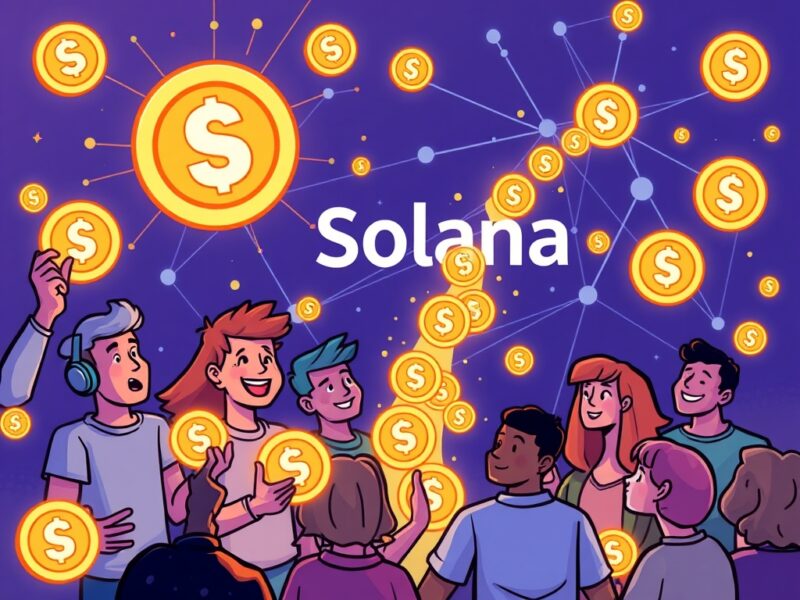
Creator Coins: Access Protocol Unleashes Revolutionary Monetization on Solana

Creator Coins: Access Protocol Unleashes Revolutionary Monetization on Solana

BitcoinWorld Creator Coins: Access Protocol Unleashes Revolutionary Monetization on Solana The digital content landscape is constantly evolving, and a groundbreaking shift is underway. Access Protocol, a prominent Solana-based content monetization protocol, recently announced an exciting development via X: the official rollout of creator coins on Solana. This move, powered by Raydium’s Launchpad, represents a significant leap forward for creators seeking innovative ways to engage with their audience and build sustainable revenue streams. What Are Access Protocol’s Revolutionary Creator Coins? At its core, Access Protocol aims to redefine how content creators monetize their work. Traditionally, creators rely on subscriptions, advertising, or direct donations. However, the introduction of creator coins offers a fresh, decentralized alternative. These unique digital tokens allow fans to directly invest in their favorite creators, fostering a deeper connection and shared economic incentive. Proof of Audience Mechanism: A key innovation is the ‘Proof of Audience’ mechanism. This system rewards early supporters who demonstrate genuine engagement, ensuring that those who believe in a creator from the start are recognized and potentially benefit from their growth. Early Supporter Rewards: A substantial 10% of the total token supply is allocated to initial backers. This provides a tangible incentive for fans to get involved early and become integral to a creator’s journey. Creator Vesting: To ensure long-term alignment and stability, 20% of the token supply vests to creators over a two-year period. This mechanism encourages sustained content creation and community building, rather than short-term gains. How Do These Creator Coins Empower Content Creators? The launch of creator coins by Access Protocol brings several compelling advantages for creators and their communities. This model moves beyond traditional gatekeepers, offering creators more control and a direct line to their most dedicated fans. For creators, the benefits are clear: Direct Monetization: Creators can build an independent economy around their content, reducing reliance on centralized platforms that often take a large cut. Enhanced Community Engagement: Fans become stakeholders, creating a stronger sense of community and loyalty. This shared ownership can lead to more active participation and support. New Revenue Streams: Beyond direct sales, creators can benefit from the potential appreciation of their coins as their audience grows and their content gains popularity. For supporters, the model offers a unique opportunity to directly back creators they admire, potentially gaining financial rewards while deepening their connection. Solana and Raydium: The Power Behind the Creator Coins Access Protocol chose Solana for its robust infrastructure, a decision that underpins the efficiency and accessibility of these new creator coins. Solana is renowned for its high transaction speeds and remarkably low fees, which are crucial for micro-transactions and frequent engagement in a content monetization model. Moreover, the integration with Raydium’s Launchpad is a strategic move. Raydium, a leading automated market maker (AMM) and liquidity provider on Solana, provides the necessary infrastructure for seamless token distribution and liquidity. This partnership ensures that the creator coins can be launched and traded efficiently, offering a smooth experience for both creators and their communities. What Does This Mean for the Future of Content Monetization? The introduction of Access Protocol’s creator coins marks a pivotal moment in the evolution of content monetization. It signifies a move towards a more decentralized, creator-centric internet where value is directly exchanged between creators and their most loyal fans. While the concept is promising, challenges such as market volatility and wider adoption remain. However, the potential for innovation is immense. This model could inspire new forms of content, foster niche communities, and ultimately empower creators globally to build more resilient and independent careers. As the Web3 ecosystem matures, initiatives like these pave the way for a more equitable and engaging digital economy. In conclusion, Access Protocol’s launch of creator coins on Solana, supported by Raydium, is more than just a new token; it’s a bold vision for the future of content creation. By leveraging blockchain technology and a novel ‘Proof of Audience’ mechanism, Access Protocol is setting the stage for a new era where creators and their communities can thrive together in a truly decentralized environment. Frequently Asked Questions (FAQs) Q1: What exactly are creator coins? Creator coins are personalized digital tokens launched by content creators, often on a blockchain, allowing their audience to directly invest in their work and participate in their economic ecosystem. They can offer various benefits like exclusive content access, voting rights, or potential financial returns. Q2: How does the ‘Proof of Audience’ mechanism work with Access Protocol’s creator coins? The ‘Proof of Audience’ mechanism rewards early and engaged supporters. By demonstrating consistent interaction and belief in a creator, these supporters receive a portion of the initial token supply, incentivizing genuine community building and long-term commitment. Q3: Why did Access Protocol choose Solana for its creator coins? Access Protocol chose Solana due to its high transaction speeds, low fees, and scalability. These features are essential for supporting frequent micro-transactions and ensuring a smooth, cost-effective experience for both creators and their audiences. Q4: What are the benefits for fans who purchase creator coins? Fans who purchase creator coins can gain several benefits, including direct financial support for their favorite creators, potential appreciation of the token’s value, access to exclusive content or communities, and a deeper sense of involvement in the creator’s journey. Q5: How does the 20% vesting for creators work? The 20% vesting mechanism means that a portion of the creator’s allocated tokens is released gradually over a two-year period. This encourages creators to maintain long-term engagement and continue producing valuable content, aligning their incentives with the sustained growth of their community and token value. If you found this article insightful, consider sharing it with your network! Help spread the word about the exciting potential of creator coins and the future of content monetization on social media. To learn more about the latest crypto market trends, explore our article on key developments shaping Web3 innovation. This post Creator Coins: Access Protocol Unleashes Revolutionary Monetization on Solana first appeared on BitcoinWorld and is written by Editorial Team

Author: Coinstats
Race for AI computing in China: over 50% increase by 2025. Effects on data centers, energy, and global competition

Race for AI computing in China: over 50% increase by 2025. Effects on data centers, energy, and global competition

China aims for a leap in computing power for AI exceeding 50% by 2025, pushing for the opening of new hubs.

Author: The Cryptonomist