Liquidation

Liquidation occurs when a trader’s collateral is no longer sufficient to cover their leveraged position’s losses, triggering an automated forced closure by the exchange's liquidation engine. It is a critical risk-management mechanism that ensures the solvency of lending protocols and derivative platforms. In 2026, the focus has moved toward MEV-resistant liquidation models that protect users from predatory "cascades." This tag provides essential information on maintenance margins, health factors, and how to avoid liquidation in high-volatility environments.

14734 Articles
Created: 2026/02/02 18:52
Updated: 2026/02/02 18:52

Bitcoin Joins the Altcoin Bloodbath With a Sudden Flash Crash to $112K

Bitcoin Joins the Altcoin Bloodbath With a Sudden Flash Crash to $112K

BTC stalled at first but dumped minutes ago.

Author: CryptoPotato
Why is Crypto Crashing Today?  Let’s Dive In

Why is Crypto Crashing Today? Let’s Dive In

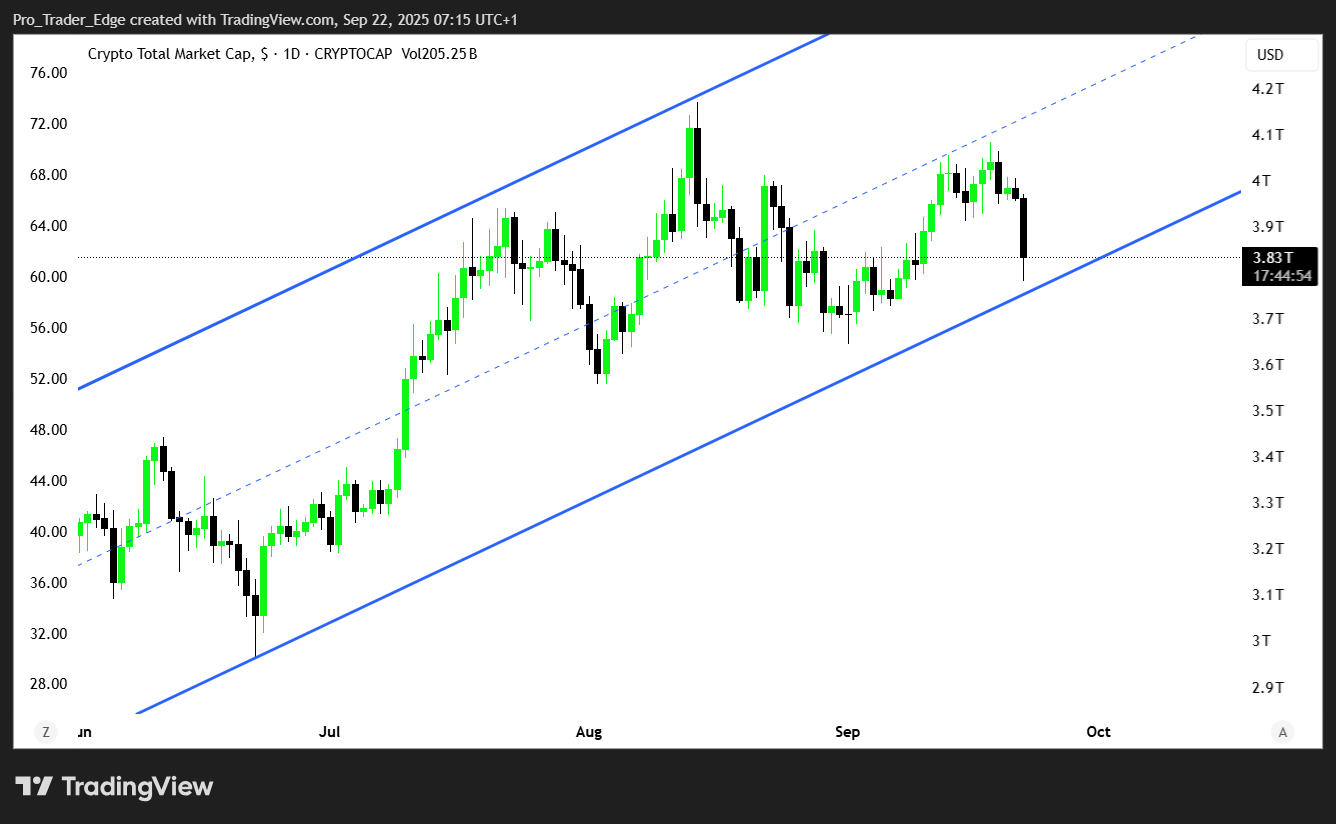
TLDR Total crypto market cap fell $77 billion to $3.91 trillion in 24 hours Bitcoin dropped below $115,000 support, now trading at $114,363 Ethereum declined 1.6% while Dogecoin plunged 7.1% Altcoins followed Bitcoin’s weakness Market sentiment remains neutral at 45 on Fear & Greed Index The cryptocurrency market faced widespread selling pressure on September 22, [...] The post Why is Crypto Crashing Today? Let’s Dive In appeared first on CoinCentral.

Author: Coincentral
DOGE Flashes Classic ‘1-2 Pattern’ as Bulls Eye $0.28–$0.30

DOGE Flashes Classic ‘1-2 Pattern’ as Bulls Eye $0.28–$0.30

The post DOGE Flashes Classic ‘1-2 Pattern’ as Bulls Eye $0.28–$0.30 appeared on BitcoinEthereumNews.com. Dogecoin endured a sharp overnight selloff, sliding from $0.27 to $0.25 during the September 21–22 session, as institutional traders offloaded positions on record volumes exceeding 2.15 billion tokens. The midnight rout carved through support levels and established fresh resistance zones, leaving DOGE consolidating around $0.25 as traders monitor for recovery or continuation lower. News Background • DOGE fell 7% over the 24-hour period ending September 22 at 02:00, retreating from $0.27 to $0.25.• Midnight trading saw a collapse from $0.26 to $0.25 on record 2.15 billion volume, dwarfing the 24-hour average of 344.8 million.• Analysts flagged a “1-2 pattern” formation that has historically preceded DOGE breakouts above $0.28–$0.30. Price Action Summary • DOGE’s range spanned $0.02 (≈8%) between a $0.27 high and $0.25 low.• Resistance solidified near $0.27 following repeated rejections.• Institutional support emerged around $0.25, with recovery attempts keeping DOGE anchored above this level.• In the final hour (01:14–02:13), DOGE bounced within a narrow $0.25–$0.25 channel, showing accumulation patterns with spikes at 01:25 and 02:03. Technical Analysis • Record 2.15B tokens traded during the midnight dump confirms heavy institutional activity.• Support confirmed at $0.25; failure here risks extending decline toward $0.23.• Key resistance sits at $0.27, with next upside tests at $0.28–$0.30 should buying resume.• Volume spikes during recovery attempts highlight potential bottoming interest.• Pattern recognition: technicians identify a recurring “1-2 setup” consistent with prior rally structures. What Traders Are Watching • Whether $0.25 can hold as durable support after record liquidation flows.• Institutional positioning around the $0.28–$0.30 resistance band if recovery gains traction.• Follow-through volumes in upcoming sessions to confirm whether accumulation or further distribution dominates.• Broader sentiment impact from ETF delays and ongoing regulatory uncertainty. Source: https://www.coindesk.com/markets/2025/09/22/doge-flashes-classic-1-2-pattern-as-bulls-eye-usd0-28-usd0-30-breakout

Author: BitcoinEthereumNews
Altcoin Wipeout: ETH, XRP Selloff Triggers $600 Million in Liquidations

Altcoin Wipeout: ETH, XRP Selloff Triggers $600 Million in Liquidations

ETH is responsible for the biggest share of the liquidations daily.

Author: CryptoPotato
Here’s why Michael Saylor and MSTR are facing questions despite Bitcoin’s uptick

Here’s why Michael Saylor and MSTR are facing questions despite Bitcoin’s uptick

The post Here’s why Michael Saylor and MSTR are facing questions despite Bitcoin’s uptick appeared on BitcoinEthereumNews.com. Key Takeaways What happened to MSTR? It dropped by 4% in a month, even though Bitcoin’s value rose by 3% over the same period.  How are other “Bitcoin treasury” firms doing? Other firms fell far worse – Metaplanet fell by 36%, KindlyMD by 87%, and Semler Scientific by 12%. Michael Saylor’s firm, Strategy (formerly MicroStrategy), has long been hailed as the poster child of corporate Bitcoin [BTC] adoption. Its bold treasury strategy has not only pushed MSTR into the spotlight, but also inspired dozens of other companies to follow a Bitcoin-centric path. And yet, the narrative has somewhat shifted in recent weeks. Strategy and other firms face a decline Despite Bitcoin climbing by 3% over the past month, Strategy’s stock slid by 4%, sparking renewed debate over whether Saylor’s high-stakes, debt-fueled bet on the world’s largest cryptocurrency is as resilient as once believed. While Michael Saylor’s Strategy faced a modest dip, other firms that mimicked its Bitcoin-first playbook are seeing far steeper declines. Japanese hotel operator Metaplanet, for instance, plunged by 27.62% in just a month. Others like healthcare startup KindlyMD, a newcomer to the Bitcoin treasury club, collapsed by 87%. In fact, even medical tech firm Semler Scientific, which joined the trend earlier this year, is down 12% right now.  Not everyone is backing away though.  A persistence of optimism The Swiss National Bank has quietly started purchasing shares of MicroStrategy (MSTR), effectively giving the central bank indirect exposure to Bitcoin without buying the cryptocurrency outright. A lot of the aforementioned companies initially rushed into Bitcoin treasuries when soaring prices, looser regulations, and favorable accounting changes made it attractive to do so. Alas, saturation is now evident. With over 180 public firms holding Bitcoin and controlling roughly 5% of all coins in circulation, some are trading below the value…

Author: BitcoinEthereumNews
Hyperliquid's success and hidden dangers

Hyperliquid's success and hidden dangers

I've been really busy lately and can't write a 10,000-word research report any more. I'll try to change my writing style and just state my opinions and reasoning. Please forgive me, dear readers. 1. Research Background I have recently researched almost all the Perps (perpetual trading platforms) on the market. The five-fold growth of the hype market proves once again that when I first researched it last year, I still overlooked its core value. Moreover, recently aster, antex, dydxV4, and even Sun Ge's sunPerps, which shook the track, have gradually brought the Perps track into a period of explosive growth. Furthermore, major exchanges are vying to list Hyper and its perpetual trading capabilities. Yesterday, news broke that Metamask, following Phantom, is planning to integrate Hyper's perpetual trading capabilities. Circle has also become a validator, addressing concerns about its core decentralization. Hyperliquid itself is also striving to improve its openness, particularly with the gradual rollout of HyperEVM and HIP2/3/4. 1.1 Three Elements of the New Track At this point, Perps basically has the three key elements of a new track. In fact, if we look back at any huge track wave in history, we can see that it is often the new leading platform, new wealth opportunities, and new narrative background. The trend gathering will bring about peaks, while the subsequent platform's airdrop strategy, the gradual development of platform complexity, and the decline in user perception of freshness will gradually bring about troughs. This process has actually gone through many waves. The typical scenarios are as follows. The following modules have been analyzed in the previous public account articles of "Fourteen Gentlemen". If you are interested, you can check it out yourself: The ICO craze of 2017 was centered on the CEX platform. It's a basic necessity, uncontroversial, and many are doing very well now. In the summer of DeFi in 2021, the corresponding platforms are Uniswap, lending and stablecoins, as above. NFTs, which have been around for 22 years, actually have protocols that existed long before, but only reached their peak thanks to OpenSea. The root of this was pricing through transactions, which then led to dissemination based on price. Its decline stemmed from arrogance, with its airdrop strategy and royalties leading to a death spiral of price increases, a self-inflicted consequence. The 23-year-old inscription, corresponding to the platform Unisat, was ultimately driven by short-sightedness. At its peak, it focused on asset issuance, not application development, resulting in a short lifespan for its narrative. When other new narratives emerged, RWA and perps dominated attention, hindering the recent Alkanes and BRC2.0 from regaining their popularity. This is a self-inflicted failure. The 24-year meme and the corresponding pump platform, as well as this year's dark horse Axiom, have made this wave exceptionally long-lasting. This is due to the advantages of the chain itself in terms of transactions, the constant influx of people who are interested in trading, and the new users brought by the wave of compliance, which has enhanced the life cycle. Finally, in 25 years, there are both RWA (focused on stocks) and Perps (led by hyperliquid). 2. Understanding the key steps in the development of hyperliquid 2.1 Current Development Status Objectively speaking, the system remains relatively centralized, theoretically capable of being disrupted by unplugging the network. Furthermore, hacker funds are siphoned off, creating significant obstacles for many exchanges in terms of compliance and attracting significant attention. However, the data is highly contradictory. Hyperliquid currently has about 10,000 to 20,000 daily active users, out of a total user base of about 600,000. A core group of 20,000 to 30,000 of these users contributes nearly $1 billion in revenue, a significant portion of which comes from the United States. The cumulative trading volume has exceeded 3 trillion US dollars, and the average daily trading volume has reached nearly 7 billion US dollars. Currently supports Perps trading of more than 100 assets. Looking at his data in this way, I can only say that it is really great. Although the number of users seems small, they are the group that can make the most money. 2.2 Major Updates and Interpretations The specific timeline is as follows March 25: HyperCore and HyperEVM were connected, theoretically allowing users to trade core tokens from the EVM (trading only at the time). April 30: Launched the read precompile feature, enabling HyperEVM smart contracts to read state from HyperCore. May 26: Small block time halved to 1 second, increasing the throughput of HyperEVM. June 26: The HyperEVM block was updated to remove the previous ordering of only published orders to improve integration with HyperCore. On July 5, HyperEVM updated a new precompiler called CoreWriter. This enables HyperEVM contracts to be written directly into HyperCore, including functions such as placing orders, transferring spot assets, managing treasury bonds, and staking HYPE. Recently, Builder core and Hip4 have also entered the data prediction market. This step of entry was completely unexpected by the market. This also means that the founders have very unique ideas in thinking about the pain points of the industry, which often leads to polarization of the platform. How do you understand this series of updates? First, compared to last year, Hyperliquid now has open core order operation capabilities. HyperEVM In particular, the dual-chain architecture based on EVM has an outrageous logic. Under the premise that HyperCore is not open (cannot be deployed), a large number of pre-compiled contracts are added through HyperEVM and connected to HyperCore. In theory, it has the access basis of wallets (phantom, metamask) and exchanges, and can theoretically realize EVM transaction operations to execute Core's order asset trading and other capabilities. The official picture shows the positioning of hyperEVM in the system It can be seen that HyperCore and HyperEVM writes and reads are uniformly confirmed by HyperBFT. The specific mechanism of the validator's confirmation information mechanism is not public, and there is no cross-chain bridge or delayed synchronization. The dynamics that can be seen through on-chain transactions are that HyperEVM can affect HyperCore by executing writes through the system contract (0x333…3333, CoreWriter.sendAction(...)), which can perform order placement, liquidation, and lending operations. The status (of the previous block) fed back by HyperCore can be read by the smart contract of HyperEVM. User data — positions, balances, and vault information Market Data — Mark Price and Oracle Price Staking data — delegation and validator information System data - L1 block count and other core metrics The information is essentially received by the EVM system contract, which generates corresponding receipts or events and records them. And in the EVM, the precompiled contract (0x000…0800) can call perp positions or oracle price (oraclePx) Secondly, the implementation of hip2 and hip3 is changing the platform positioning of Hyperliquid. Hyperliquidity This is an on-chain liquidity mechanism built into Hypercore. It automatically places buy and sell orders based on the current price of the token, maintaining a narrow spread of approximately 0.3% without manual intervention. This mechanism allows for native-level liquidity insertion operations built into the block logic without AMMs or third-party bots. For example, when the PURR/USDC spot market launched, Hyperliquidity immediately issued seed transactions with initial depth, allowing real trading before normal user liquidity arrived. Builder core This mechanism is highly valuable for the future, allowing DeFi builders (developers, quantitative teams, and aggregators) to collect additional fees as service revenue when placing orders on behalf of users. The application scenario for this system is clear, and it represents a move to open up profits and embrace ecosystem co-construction. **Quantitative strategy hosting, **The quantitative team helps users place perp position orders and collects management fees through builder fees, forming a compound profit model of "revenue sharing + builder fee" Aggregators/transaction routers, such as 1inch and Odyssey, integrate perp trading services on Hyperliquid and can charge builder fees as a routing revenue model. The initial launch has already brought over 10 million US dollars in dividend income to some projects, which shows the effect of hyper funds being deeply deposited at the platform level. In fact, the issue of opening up depth is not just Hyper. The previous Uniswapv4 also wanted to do this through hooks, but v4 did not take off, and most users are still accustomed to v2 and v3. This may be the influence of having less historical baggage and stronger centralized decision-making. 3 Summary and Comments 3.1 There are many advantages. Let’s go through them one by one. Hyperliquid's primary advantage was its strong early product capabilities, which stemmed from addressing two user pain points: The trading needs of non-compliant users are actually even more rare in this year's wave of compliance. Advanced trading users demand high leverage and high transparency. The former brings KOL exposure, while the latter is often ignored by market incumbents, that is, the dark under the light, thus catching many CEXs off guard. The second is the team background itself. Its biggest advantage here is that it has a small number of people, so the communication gap, wear and tear, and labor efficiency are all very high. With an overall staff of more than a dozen people, excluding 3-4 product operation BDs and deducting the front-end and back-end, it means that only 3-4 people can build a high-performance chain of 20Wtps. Compared with many blockchain teams of traditional large companies, which can also produce a lot of palace fighting dramas, it is much better. In the background, his market maker foundation started in 2020 actually brought good initial depth. He also felt in many details that his matching logic and other order book systems are not simply settled gradually by time and amount. However, the data is insufficient, so I will supplement it later when I do comparative analysis of multiple Perps. Then there's the trend. General projects need to adapt to the market, but when a platform reaches its peak popularity, the market can adapt to it. This is the treatment Hyperliquid is receiving now. On the one hand, the openness of the aforementioned updates creates space for diverse ecosystems to enter. This contrasts with many previous platforms, which often prioritized doing everything themselves, reaping all the benefits, single-handedly criticizing OpenSea, and even imposing mandatory royalty systems, forcing the market to follow the leading platform. Each of these platforms incurs high, fixed costs, interfering with the flow of goods and affecting market pricing, ultimately becoming a family heirloom. In Hype, he opened up EVM and all kinds of DEX PEPS APIs, so soon a bunch of derivatives appeared on the market. Hyperliquid's generosity can also be seen in the airdrop. It was impossible for it to take the compliance route from the beginning. Therefore, he will not try to embrace the so-called expectations of going public, so he will naturally release the profits. Then he will pledge the hype back through the HLP mechanism, release the profits and make profits again, so that the official tokens can be dispersed and the market will gain the most valuable decentralized evaluation and reputation. Its openness has attracted market acclaim. Phantom first integrated its perps capabilities from the perspective of a decentralized wallet. This is not difficult, mainly due to the large amount of adaptation and development costs. Recently, there are rumors that Metamask is also integrating it. From this we can also see that those decentralized wallets that have not been updated for more than half a year have also learned to seize the annual narrative after missing the inscription. Finally, he pushed for the introduction of giants such as Circle to join as validators to bring decentralized security and fill his decentralization gap, so that highly compliant CEX platforms also had the opportunity to access. 3.2 Disadvantages After the most challenging initial phase, the next issue is compliance. Even pure DEXs like Uniswap are embracing compliance, not to mention the European and American Hyperliquid, whose users have also made their fortunes. If a platform is deemed non-compliant or otherwise severely errs, existing CEX/Wallet partnerships will be severed, and former allies will part ways. In addition, the subsequent development of this system will also face the problem of development complexity. Most projects become more and more complicated as they are written, and it is difficult to simplify them and return to the first principles. In the end, novice users cannot understand how to use them and lose fresh blood. Finally, there's the single-point risk. The current claimed 20Wtps, if accessed by multiple global platforms, would create numerous information inconsistencies, placing immense pressure on the core hyperCore module. Building this high performance takes time. The official market maker background may not be able to handle the volume, and if multiple outages trigger liquidation issues (similar to the short squeeze incident in March), this could lead to significant downtime. The reputation that is accumulated with great difficulty is inherently fragile.

Author: PANews
$103 Million Wiped Out In An Hour

$103 Million Wiped Out In An Hour

The post $103 Million Wiped Out In An Hour appeared on BitcoinEthereumNews.com. Massive Crypto Futures Liquidation: $103 Million Wiped Out In An Hour Skip to content Home Crypto News Massive Crypto Futures Liquidation: $103 Million Wiped Out in an Hour Source: https://bitcoinworld.co.in/massive-crypto-futures-liquidation-3/

Author: BitcoinEthereumNews
In the past hour, the total contract liquidation of the entire network was about 310 million US dollars, of which 305 million were long orders.

In the past hour, the total contract liquidation of the entire network was about 310 million US dollars, of which 305 million were long orders.

PANews reported on September 22 that Coinglass data showed that in the past hour, the cryptocurrency market's entire network contract liquidation was US$310 million, of which short positions were liquidated for US$5.32 million and long positions were liquidated for US$310 million; the total amount of ETH liquidation was US$113 million, and the total amount of BTC liquidation was US$50.1445 million.

Author: PANews
Massive Crypto Futures Liquidation: $183 Million Vanishes in an Hour

Massive Crypto Futures Liquidation: $183 Million Vanishes in an Hour

BitcoinWorld Massive Crypto Futures Liquidation: $183 Million Vanishes in an Hour The cryptocurrency market recently witnessed a dramatic event, with a staggering $183 million worth of crypto futures liquidation occurring in just a single hour. This sudden downturn caught many traders off guard, highlighting the inherent volatility of digital asset markets. Over the past 24 hours, the total liquidated value soared to an astonishing $390 million, leaving a significant impact on trading positions across major exchanges. What exactly does this mean for traders and the broader market? What Exactly is Crypto Futures Liquidation? For those new to futures trading, understanding crypto futures liquidation is crucial. Essentially, it happens when a trader’s leveraged position is forcibly closed by an exchange. This occurs because the trader no longer has sufficient margin to cover potential losses. When market prices move sharply against a trader’s position, their margin balance can fall below the maintenance margin level. To prevent further losses and maintain market stability, the exchange automatically liquidates the position. Imagine you are trading with borrowed funds, also known as leverage. While leverage can amplify profits, it also significantly magnifies potential losses. If the market shifts unfavorably, even slightly, your initial capital (margin) might not be enough to sustain the position. Leverage Amplifies Risk: Using leverage means you’re trading with more capital than you actually own, increasing both potential gains and losses. Margin Call Precursor: Before liquidation, traders might face a margin call, requesting additional funds. Failure to meet this often leads to forced closure. Market Volatility is Key: The highly volatile nature of cryptocurrencies means prices can swing dramatically in short periods, making futures positions particularly susceptible to liquidation. Why Did Such a Massive Liquidation Event Occur? The recent $183 million crypto futures liquidation didn’t happen in a vacuum. Such large-scale events are typically triggered by a confluence of factors, often beginning with a significant price movement in a major cryptocurrency like Bitcoin or Ethereum. A sudden dip or surge can cascade through the market, especially when many traders hold highly leveraged positions in the same direction. Several elements contribute to these sudden market shifts and subsequent liquidations. Understanding these can provide valuable insights into market dynamics and help traders prepare for future volatility. Sudden Price Swings: A rapid, unexpected price drop or pump can quickly erode a trader’s margin, especially for highly leveraged positions. Over-Leveraged Positions: Many traders might have been overly optimistic or aggressive with their leverage, making their positions fragile and vulnerable to even small price movements. Market Sentiment Shift: Negative news, regulatory concerns, or broader economic trends can quickly shift market sentiment, leading to widespread selling pressure and price depreciation. Stop-Loss Hunting: Sometimes, large market players might strategically push prices to trigger stop-loss orders and liquidations, creating further downward (or upward) momentum. How Can Traders Navigate the Risks of Crypto Futures Liquidation? While the recent crypto futures liquidation event serves as a stark reminder of market risks, traders can adopt several strategies to protect themselves. Prudent risk management is not just a recommendation; it is an absolute necessity in futures trading. Protecting your capital should always be your top priority. Here are some actionable insights to help you navigate these turbulent waters: Manage Leverage Wisely: Avoid excessively high leverage. Start with lower leverage ratios until you gain sufficient experience and confidence in your trading strategy. Implement Stop-Loss Orders: Always set stop-loss orders to automatically close your position if the price moves beyond a predetermined threshold. This limits potential losses and prevents catastrophic outcomes. Diversify Your Portfolio: Do not put all your capital into one trade or one asset. Diversification across different assets and strategies can help spread risk and reduce exposure. Monitor Market News: Stay informed about global economic news, regulatory updates, and cryptocurrency-specific developments that could impact prices. Knowledge is power in volatile markets. Understand Margin Requirements: Always be aware of your initial and maintenance margin requirements. Keep sufficient funds in your account to avoid margin calls and potential liquidation. Practice Emotional Discipline: Avoid impulsive decisions driven by fear or greed. Stick to your trading plan and pre-defined risk parameters, even when the market is chaotic. The recent $183 million crypto futures liquidation underscores the dynamic and often unpredictable nature of the cryptocurrency market. While futures trading offers exciting opportunities for profit, it comes with significant risks, particularly due to leverage and market volatility. By understanding the mechanics of liquidation and implementing robust risk management strategies, traders can better navigate these turbulent waters. Stay informed, trade responsibly, and prioritize the preservation of your capital to ensure long-term success in the crypto space. Frequently Asked Questions (FAQs) 1. What is crypto futures liquidation? Crypto futures liquidation occurs when an exchange forcibly closes a trader’s leveraged position because their margin balance has fallen below the required maintenance level, typically due to adverse price movements against their trade. 2. Why did $183 million worth of futures get liquidated recently? This massive liquidation was likely triggered by significant and rapid price movements in major cryptocurrencies, combined with a high number of traders holding overly leveraged positions that could not withstand the sudden market shift. 3. How can I avoid liquidation in futures trading? To avoid liquidation, traders should use lower leverage, always set stop-loss orders, maintain sufficient margin, diversify their portfolio, and stay informed about market news to make prudent trading decisions. 4. Is crypto futures trading too risky? Crypto futures trading is inherently risky due to market volatility and the use of leverage. However, with proper risk management, education, and emotional discipline, traders can mitigate some of these risks. 5. What role does leverage play in liquidation? Leverage significantly amplifies both potential profits and losses. While it allows traders to control larger positions with less capital, it also makes positions more susceptible to liquidation if market prices move unfavorably, as the margin required to maintain the position becomes insufficient more quickly. If you found this article insightful and believe it can help other traders understand the complexities of crypto futures liquidation, please consider sharing it on your social media platforms. Your support helps us continue providing valuable market insights and educational content to the crypto community! To learn more about the latest crypto market trends, explore our article on key developments shaping Bitcoin price action. This post Massive Crypto Futures Liquidation: $183 Million Vanishes in an Hour first appeared on BitcoinWorld.

Author: Coinstats
Which Crypto To Buy As Forward Industries Files $4 Billion Equity Program, Targets Solana Treasury Expansion

Which Crypto To Buy As Forward Industries Files $4 Billion Equity Program, Targets Solana Treasury Expansion

The post Which Crypto To Buy As Forward Industries Files $4 Billion Equity Program, Targets Solana Treasury Expansion appeared first on Coinpedia Fintech News Forward Industries is filing a $4 billion at-the-market equity program with the U.S. Securities and Exchange Commission. The filing, which allows the company to sell common stock up to that amount, is focusing on corporate purposes such as acquiring income-producing assets and expanding its Solana treasury.  Consequently, the company is reinforcing its intent to build …

Author: CoinPedia