Lending

Lending protocols form the backbone of the decentralized money market, allowing users to lend or borrow digital assets without intermediaries. Using smart contracts, platforms like Aave and Morpho automate interest rates based on supply and demand while requiring over-collateralization for security. The 2026 lending landscape features advanced permissionless vaults and institutional-grade credit lines. This tag covers the evolution of capital efficiency, liquidations, and the integration of diverse collateral types, including LSTs and tokenized RWAs.

14425 Articles
Created: 2026/02/02 18:52
Updated: 2026/02/02 18:52
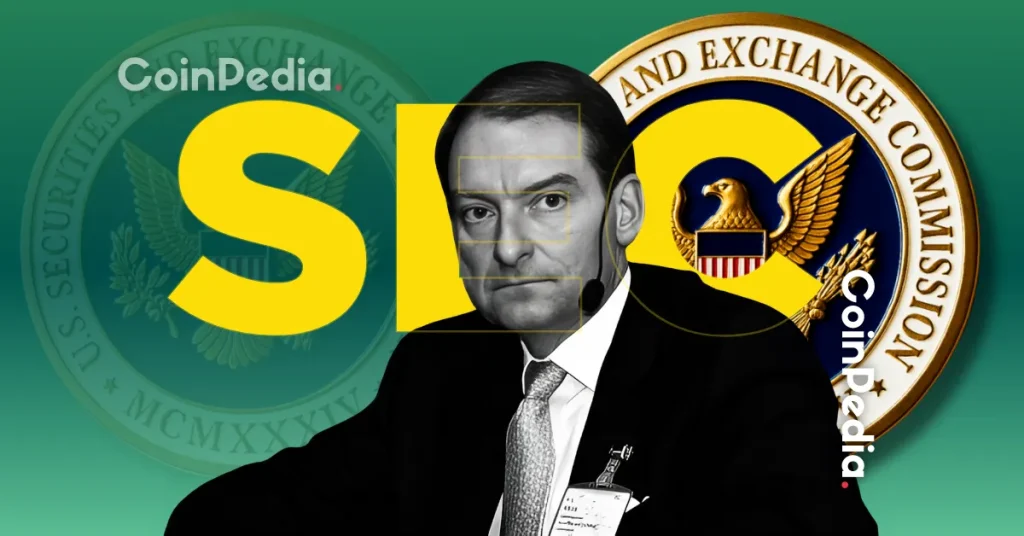
Paul Atkins Announces SEC’s Project Crypto for Clear Crypto Regulation

Paul Atkins Announces SEC’s Project Crypto for Clear Crypto Regulation

The post Paul Atkins Announces SEC’s Project Crypto for Clear Crypto Regulation appeared first on Coinpedia Fintech News The U.S. Securities and Exchange Commission (SEC) is changing course on how it regulates cryptocurrencies. At the inaugural OECD Roundtable on Global Financial Markets in Paris, SEC Chairman Paul S. Atkins declared that the “era of uncertainty is coming to an end,” with America preparing to embrace digital assets as part of its financial system. …

Author: CoinPedia
Starting from the battle for USDH, where is the fulcrum of DeFi stablecoin?

Starting from the battle for USDH, where is the fulcrum of DeFi stablecoin?

Recently, the bidding war for USDH issuance rights initiated by HyperLiquid has attracted players such as Circle, Paxos, and Frax Finance to compete openly. Some giants even offered $20 million in ecological incentives as bargaining chips. This storm not only demonstrates the huge allure of the DeFi protocol's native stablecoins, but also allows us to glimpse the stablecoin logic of the DeFi world. We would like to take this opportunity to re-examine: What are DeFi protocol stablecoins? Why are they so popular? And as the issuance mechanism becomes increasingly mature, what are the real fulcrums that determine their success or failure? Source: Paxos Why are DeFi stablecoins so popular? Before exploring this issue, we must face the fact that the stablecoin market is still dominated by stablecoins issued by centralized institutions (such as USDT and USDC). With strong compliance, liquidity, and first-mover advantage, they have become the most important bridge between the crypto world and the real world. But at the same time, a force pursuing purer decentralization, censorship resistance and transparency has always been driving the development of DeFi native stablecoins. For a decentralized protocol with a daily trading volume of billions of dollars, the value of native stablecoins is self-evident. It is not only the core pricing and settlement unit within the platform, which can greatly reduce dependence on external stablecoins, but also can lock the value of transactions, lending, clearing and other links firmly within its own ecosystem. Taking USDH to HyperLiquid as an example, its positioning is not simply to copy USDT, but to become the "heart" of the agreement - operating as a margin, pricing unit, and liquidity center. This means that whoever can hold the right to issue USDH will occupy a crucial strategic position in the future landscape of HyperLiquid. This is the fundamental reason why the market responded quickly after HyperLiquid extended the olive branch. Even Paxos and PayPal did not hesitate to put out 20 million US dollars in ecological incentives as bargaining chips. In other words, for DeFi protocols that are extremely dependent on liquidity, stablecoins are not just a "tool", but a "fulcrum" of on-chain economic activities covering transactions and value circulation. Whether it is DEX, Lending, derivatives protocols, or on-chain payment applications, stablecoins play a core role in the dollarized settlement layer. Source: DeFi protocol stablecoin from imToken Web (web.token.im) From the perspective of imToken, stablecoins are no longer a tool that can be summarized by a single narrative, but rather a multi-dimensional "asset collection" - different users and different needs will correspond to different stablecoin choices (further reading: "Stablecoin Worldview: How to Build a Stablecoin Classification Framework from the User Perspective?"). Within this classification, "DeFi protocol stablecoins" (DAI, GHO, crvUSD, FRAX, etc.) are a distinct category. Compared to centralized stablecoins, they emphasize decentralization and protocol autonomy. They rely on the protocol's inherent mechanism design and collateralized assets as anchors, striving to break away from reliance on a single institution. This is why, despite market fluctuations, numerous protocols continue to experiment. The “Paradigm Struggle” Started by DAI The evolution of DeFi protocol native stablecoins is essentially a paradigm battle centered on scenarios, mechanisms, and efficiency. 1.MakerDAO (Sky)’s DAI (USDS) As the originator of decentralized stablecoins, DAI launched by MakerDAO pioneered the paradigm of over-collateralized minting, allowing users to deposit ETH and other collateral into the vault to mint DAI, and has withstood the test of many extreme market conditions. But what is less known is that DAI is also one of the first DeFi protocol stablecoins to embrace RWA (real-world assets). As early as 2022, MakerDAO began to try to enable asset initiators to convert real-world assets into tokens for loan financing, trying to find larger asset support and demand scenarios for DAI. After the recent name change from MakerDAO to Sky and the launch of USDS as part of the final plan, MakerDAO plans to attract a different user group from DAI based on the new stablecoin and further expand its adoption from DeFi to off-chain scenarios. 2. Aave’s GHO Interestingly, Aave, which is based on lending, is moving closer to MakerDAO and has launched GHO, a decentralized, collateral-backed, and US dollar-pegged DeFi native stablecoin. It shares similar logic to DAI—it's an over-collateralized stablecoin minted using aTokens as collateral. Users can use Aave V3 assets as collateral for over-collateralization. The only difference is that since all collateral is productive capital, it generates a certain amount of interest (aTokens), which is determined by lending demand. Source: Dune From the perspective of experimental comparison, MakerDAO relies on the right to mint coins to expand its ecosystem, while Aave derives stablecoins from its mature lending scenarios. The two provide DeFi protocol stablecoin development templates under different paths. As of the time of writing, the minting volume of GHO has exceeded 350 million pieces, and it has been in a basically steady growth trend in the past two years, with market recognition and user acceptance steadily increasing. 3. Curve’s crvUSD Since its launch in 2023, crvUSD has supported a variety of mainstream assets as collateral, including sfrxETH, wstETH, WBTC, WETH, and ETH, and covers major LSD (liquidity staking) asset categories. Its unique LLAMMA liquidation mechanism also makes it easier for users to understand and use. As of the time of writing, the number of crvUSD minted has exceeded 230 million. It is worth mentioning that wstETH alone accounts for about half of the total crvUSD minting volume, highlighting its deep binding and market advantages in the LSDfi field. 4. Frax Finance’s frxUSD The story of Frax Finance is the most dramatic. During the 2022 stablecoin crisis, Frax quickly adjusted its strategy and stabilized its position by increasing sufficient reserves to completely transform into a fully collateralized stablecoin. A more critical step is that it has accurately entered the LSD track in the past two years, using its ecological product frxETH and the governance resources accumulated in its hands to create extremely attractive yields on platforms such as Curve, and successfully achieved the second growth curve. In the latest USDH bidding competition, Frax even put forward a "community first" proposal and planned to peg USDH with frxUSD at a 1:1 ratio. frxUSD is backed by BlackRock's yield-based BUIDL on-chain treasury bond fund. "100% of the underlying treasury bond income will be directly distributed to Hyperliquid users through an on-chain programmatic method, and Frax does not charge any fees." From "issuance" to "transaction", what is the fulcrum? From the above cases, we can see that, to a certain extent, stablecoins are the only way for DeFi protocols to move from "tools" to "systems." In fact, as a narrative forgotten after the midsummer of 2020-2021, DeFi protocol stablecoins have been on a path of continuous evolution. From MakerDAO, Aave, Curve to today's HyperLiquid, we found that the focus of this war has quietly changed. The key lies not in the ability to issue, but in the transaction and application scenarios. Put bluntly, whether it's overcollateralized or fully backed, issuing a stablecoin pegged to the US dollar is no longer a difficult task. The real challenges lie in "what can it be used for? Who will use it? Where can it circulate?" As HyperLiquid emphasized when bidding for USDH issuance rights, serving the HyperLiquid ecosystem first and ensuring compliance is the key. This is the true fulcrum of DeFi stablecoins: First and foremost, there must be an endogenous scenario for the stablecoin to be widely deployed. This is also the stablecoin's "base." For example, for Aave, it's lending; for Curve, it's trading; and for HyperLiquid, it's derivatives trading (margin assets). It can be said that a strong endogenous scenario can provide the most original and loyal demand for stablecoins. Secondly, liquidity depth is crucial. After all, the lifeblood of a stablecoin lies in its trading pairs with other mainstream assets (such as ETH, WBTC) and other stablecoins (such as USDC, USDT). Having one or more deep liquidity pools is fundamental to maintaining price stability and meeting large-scale trading needs. This is why Curve remains a battleground for all stablecoins. Then there are composability and scalability. Whether a stablecoin can be easily integrated into other DeFi protocols as collateral, lending assets, or the underlying asset of yield aggregators determines the ceiling of its value network. Finally, there is the "icing on the cake" revenue drive - in the DeFi market where stock-based trading is the norm, yield is the most effective means of attracting liquidity, and stablecoins that "earn money for users" are more attractive. In a nutshell, centralized stablecoins remain the underlying liquidity of DeFi. For all DeFi protocols, issuing native stablecoins is no longer a simple technical selection, but a strategic layout related to the closed loop of ecological value. Its real fulcrum has long shifted from "how to issue" to "how to make it traded and used frequently." This also means that the DeFi stablecoins that will win in the future must be those "super assets" that can provide their holders with the most solid application scenarios, the deepest liquidity and the most sustainable returns, rather than just a "currency".

Author: PANews
ETH Liquidity Hits Record $163.5B: Is a Big Rally Coming?

ETH Liquidity Hits Record $163.5B: Is a Big Rally Coming?

Ethereum liquidity hits a record $163.5B with rising fees, strong DeFi activity, and traders eyeing resistance at $4,500.

Author: CryptoPotato
SEC Chair Declares ‘Crypto’s Time Has Come’ In Latest Statement – Get The Full Scoop

SEC Chair Declares ‘Crypto’s Time Has Come’ In Latest Statement – Get The Full Scoop

Paul Atkins, the newly appointed chair of the US Securities and Exchange Commission (SEC), has boldly declared that “crypto’s time has come,” marking a pivotal moment in the regulator’s approach to digital assets. Atkins Declares End To ‘Weaponization’ Of Regulation Delivering a keynote address at the inaugural OECD roundtable on global financial markets, Atkins expressed his commitment to unlocking the potential of digital assets in the United States, highlighting the impact of new technologies on global finance.  Related Reading: WLFI Price Dips 7% As Eric Trump Leaves World Liberty Treasury Company ALT5 Sigma Atkins criticized the previous SEC approach under former chair Gary Gensler, which he described as a “weaponization” of regulatory powers that stifled the crypto industry.  The Commissioner pointed out that this “enforcement-centric strategy” not only proved ineffective but also drove innovation overseas, burdening American entrepreneurs with costly legal defenses. He asserted that those days are over and that the SEC is embarking on a new chapter. The SEC under Atkins aims to establish “clear and predictable regulations” that will enable innovation to flourish. He indicated that the agency will no longer rely on ad hoc enforcement actions to set policy.  As Congress works on legislation, the SEC is set to modernize its rules through what it has termed “Project Crypto.” This initiative seeks to adapt existing securities regulations to accommodate the digital asset landscape, ensuring that most crypto tokens are clearly classified as non-securities. Future Of Crypto Regulation Atkins also highlighted the need for regulatory efficiency, advocating for a minimum effective dose of regulation to protect investors without overburdening entrepreneurs with complex rules that only large incumbents can navigate.  He emphasized the potential for innovation through “super-app” trading platforms that could combine trading, lending, and staking services under a unified regulatory framework.  Related Reading: Solana And XRP ETFs Smash New Records In Canada Atkins further unveiled that the Securities and Exchange Commission also plans to collaborate with other regulatory bodies to create a cohesive environment that permits the trading of crypto assets alongside traditional financial services.  The regulator praised the European Union (EU) for its stance on digital assets, specifically referencing the Markets in Crypto-Assets (MiCA) regulation, which he sees as a model for regulatory clarity.  Atkins expressed a desire for the United States to learn from these efforts, ensuring that America remains a leader in fostering an economic climate conducive to financial innovation. In closing, Atkins articulated a vision for a future where breakthroughs in the financial industry are made on American soil, under American oversight, ultimately benefiting American investors.  He welcomed the opportunity to work with international allies to enhance economic collaboration and extend the sphere of freedom and prosperity in the financial markets, including the fast-growing cryptocurrency space. Featured image from DALL-E, chart from TradingView.com

Author: NewsBTC
Paul Atkins Pushes for On-Chain Capital Raising With Certainty

Paul Atkins Pushes for On-Chain Capital Raising With Certainty

The post Paul Atkins Pushes for On-Chain Capital Raising With Certainty appeared on BitcoinEthereumNews.com. Paul Atkins, Chairman of the U.S. Securities and Exchange Commission, delivered a keynote address at the OECD’s inaugural Roundtable on Global Financial Markets in Paris. He advocated for clear rules that facilitate innovation, increase international collaboration and lower obstacles for entrepreneurs raising capital on-chain. Paul Atkins Pledges Framework To Ease Legal Doubts Regarding Crypto In his keynote speech, the SEC chair that the agency will cease to rely on selective enforcement but offer predictable rules. The SEC chair emphasized that entrepreneurs must be able to raise capital without facing endless legal uncertainty. He said that most crypto tokens cannot be classified as securities. He criticized past SEC approaches that forced crypto firms to spend more resources on legal defenses than on building businesses. According to Atkins, this act drove jobs and innovation abroad. He further said that the SEC’s Project Crypto initiative is designed to modernize regulations and give digital platforms the ability to offer trading, lending, and staking under one regulatory framework. Paul Atkins vowed to change that by fostering a business climate that encourages startups and innovators to build in the United States. President Trump has directed the SEC to lead efforts that will make America the world’s crypto capital, with regulators aligning their work under a new blueprint from the President’s Working Group on Digital Asset Markets. Atkins Stresses Global Cooperation and Technology’s Role in Future Finance Atkins also highlighted the importance of international cooperation. He commended the early adoption of the MiCA framework for digital assets in Europe and asked for a deeper cooperation between the U.S. and the European Union. Senate Democrats also released their Clarity Act framework, showing their support towards clearer rules for the cryptocurrency and blockchain industry. Paul Atkins also explained how the technology of artificial intelligence is transforming the world of…

Author: BitcoinEthereumNews
Massive Galaxy Digital USDC Transfer: Unpacking a $319 Million Whale Move

Massive Galaxy Digital USDC Transfer: Unpacking a $319 Million Whale Move

BitcoinWorld Massive Galaxy Digital USDC Transfer: Unpacking a $319 Million Whale Move The cryptocurrency world often buzzes with news of significant movements, and a recent event has captured considerable attention. Whale Alert, a prominent blockchain tracking service, reported a colossal Galaxy Digital USDC transfer: 319,425,123 USDC, valued at approximately $319 million, moved from an unknown wallet to Galaxy Digital. This transaction, massive in scale, prompts important questions about market dynamics and institutional activity in the digital asset space. What Does This Galaxy Digital USDC Transfer Signify? When such a substantial amount of a stablecoin like USDC moves, it is rarely a simple retail transaction. USDC, or USD Coin, is a stablecoin pegged 1:1 with the US dollar, meaning its value is designed to remain stable. Its primary use is for facilitating large transactions, providing liquidity, and acting as a safe haven during market volatility without converting to fiat currency. Galaxy Digital, on the other hand, is a leading financial services and investment management company dedicated to the digital asset, cryptocurrency, and blockchain technology sectors. They offer a range of services, including trading, asset management, and investment banking for institutional clients. Therefore, a large Galaxy Digital USDC transfer suggests significant institutional maneuvering. The Mechanics of a Whale Move: How Does Such a Large USDC Transfer Happen? The term “unknown wallet” often sparks curiosity. It typically refers to an address not publicly associated with a known exchange or entity. However, in the institutional crypto world, this could mean several things: Over-the-Counter (OTC) Desk Activity: Large institutions often prefer OTC desks for privacy and to avoid market impact. This transfer could be part of an OTC trade settlement. Internal Rebalancing: Galaxy Digital might be rebalancing its own reserves or those of a large client. Client Deposit: A new or existing institutional client could be depositing a substantial amount of capital to engage in trading, lending, or other investment activities through Galaxy Digital. These transactions are executed on the blockchain, offering transparency in terms of amount and destination, even if the sender’s identity remains private. The efficiency and security of these large-scale transfers are a testament to the underlying blockchain technology. Potential Implications: Why is This Galaxy Digital USDC Transfer Important? A transaction of this magnitude can have several profound implications for the broader crypto market: Increased Liquidity: A significant inflow of USDC into an institutional platform like Galaxy Digital can enhance market liquidity, making it easier for large trades to occur without causing drastic price swings. Institutional Confidence: Such large movements often signal growing institutional confidence and participation in the crypto space. It indicates that major players are actively engaging with digital assets. Future Investment Potential: The USDC could be earmarked for future investments in various cryptocurrencies, providing capital for market growth, or for participation in decentralized finance (DeFi) protocols. Market Sentiment: While not a direct price driver, large institutional activity can positively influence market sentiment, suggesting a healthy and maturing ecosystem. Understanding these potential impacts helps investors gauge the evolving landscape of digital finance. The Galaxy Digital USDC transfer provides a snapshot into the ongoing institutionalization of crypto. Navigating the Crypto Waters: What Should Investors Consider After a Galaxy Digital USDC Transfer? While a large institutional transfer like this is generally a positive sign for market maturity, individual investors should approach the information with a balanced perspective. It is crucial to remember that: Do Your Own Research (DYOR): Always investigate the broader market trends and specific assets before making investment decisions. Observe Market Reactions: Pay attention to how the market reacts to such news. Is there an increase in trading volume for certain assets? Long-Term vs. Short-Term: Institutional movements often reflect long-term strategies rather than immediate speculative plays. This event underscores the growing integration of traditional finance players into the digital asset ecosystem. The continuous flow of capital into established crypto firms like Galaxy Digital highlights a dynamic and evolving industry. The recent Galaxy Digital USDC transfer of over $319 million is more than just a large number; it is a powerful indicator of the increasing institutional involvement and maturity within the cryptocurrency market. From facilitating large OTC trades to potentially funding new investment strategies, this whale move reinforces the pivotal role stablecoins play in the digital economy. As the crypto landscape continues to evolve, keeping an eye on these significant transactions provides valuable insights into the broader market sentiment and the direction of institutional capital. Frequently Asked Questions (FAQs) What is USDC? USDC (USD Coin) is a stablecoin pegged to the US dollar, meaning one USDC is always redeemable for one US dollar. It is widely used for digital transactions due to its stability and speed. Who is Galaxy Digital? Galaxy Digital is a leading financial services and investment management company focused on the digital asset, cryptocurrency, and blockchain technology sectors. They provide services to institutional clients. Why are large USDC transfers important? Large USDC transfers, often referred to as “whale moves,” are significant because they typically involve institutional players or very wealthy individuals. They can signal increased market liquidity, institutional confidence, or upcoming investment activities. Does this transfer guarantee a price increase for cryptocurrencies? No, a large USDC transfer does not guarantee a price increase. While it can signal increased institutional interest and potential future investments, market prices are influenced by many factors. Investors should always conduct their own research. How can I track similar transactions? Services like Whale Alert track and report large cryptocurrency transactions across various blockchains. Following such services can provide insights into significant market movements. If you found this analysis of the Galaxy Digital USDC transfer insightful, consider sharing it with your network! Stay informed about the dynamic world of cryptocurrency by sharing this article on social media platforms like X (formerly Twitter), LinkedIn, and Facebook. Your engagement helps spread crucial market understanding. To learn more about the latest crypto market trends, explore our article on key developments shaping institutional adoption. This post Massive Galaxy Digital USDC Transfer: Unpacking a $319 Million Whale Move first appeared on BitcoinWorld and is written by Editorial Team

Author: Coinstats
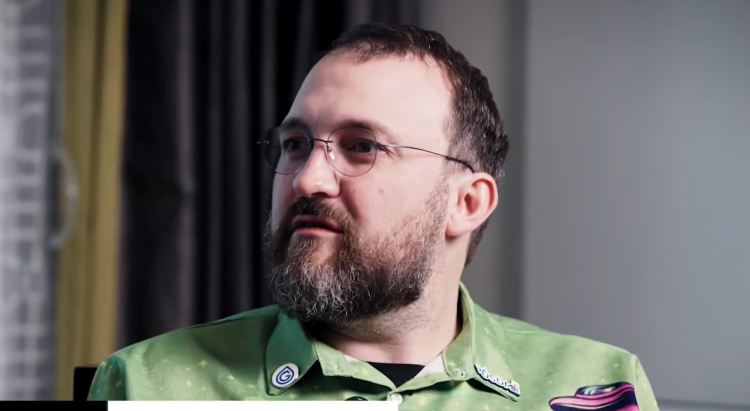
Cardano Founder Hoskinson Says Ethereum Is Doomed To Fail: Here’s How

Cardano Founder Hoskinson Says Ethereum Is Doomed To Fail: Here’s How

In a wide-ranging CoinDesk interview released yesterday, Cardano founder Charles Hoskinson sharpened a years-long critique of Ethereum’s long-term viability, arguing that the network’s reliance on rollups and external scaling layers has created economic incentives that will ultimately hollow out the base chain. While acknowledging Ethereum’s technical progress, he contended that “as a general-purpose, smart-contract ledger,” the project has nurtured an ecosystem that “will slowly but surely eat [it] alive.” Why Ethereum Is Doomed To Fail: Cardano Founder Hoskinson framed the core problem as one of misaligned incentives between Ethereum’s L1 and its expanding constellation of L2s. “To make Ethereum better, they’ve had to embrace layer twos,” he said. “The layer twos are not strong allies… they’re partners of necessity.” In his view, rollup teams “don’t particularly care if they’re attached to Solana or they become a layer one,” so if better economics or user growth lie elsewhere, “they could simply migrate or go multi-chain.” New applications and liquidity, he added, are already “outside of the Ethereum ecosystem,” eroding the network’s historical network effects. Related Reading: Cardano Pushes Past $0.85: Falling Wedge Breakout Confirmed? “So if they’re gobbling up the transaction volume and gobbling up the users and they’re gobbling up the token appreciation, if there’s a more attractive target, they could simply migrate or go multi-chain,” Hoskinson said, adding that this trend is already observable with LayerZero and Espresso. That erosion, Hoskinson argued, is set to accelerate as two external forces gather momentum. First, he described Bitcoin DeFi as a “sleeping giant” that could attract “hundreds of billions” in total value once primitives such as stablecoins, DEXs and lending are built with credible security assumptions. “When Bitcoin wakes up… its TVL will be… larger than the market cap of Ethereum,” he said, noting that sovereigns and major asset managers would likely prefer to build around Bitcoin exposure. Second, he expects large technology platforms and traditional financial institutions to enter with their own infrastructure, adjacent to public chains but not economically dependent on Ethereum’s base layer—“Microsoft… Google… Amazon… have no incentive to go boost Ethereum or deploy on Ethereum,” he said. The technological arc, in Hoskinson’s telling, also tilts away from shared-state blockchains. As zero-knowledge proofs and “proof-carrying code” mature, more computation can be executed off-chain—in secure enclaves, on devices, or within MPC systems—leaving the chain to verify succinct proofs. “Why… spend billions of dollars a year maintaining this very weak computer that’s shared and replicated,” he asked, “when you can turn it into a distributed problem that runs everywhere?” Like Microsoft missing mobile and pivoting from Windows dominance to Azure, he suggested, Ethereum may ultimately need to “pivot to a new McGuffin” to retain relevance even if it remains present in the stack. Related Reading: Cardano Sentiment Crashes To 5-Month Low As ADA Defends Key Price Level Notably, Hoskinson’s assessment was not unqualified dismissal. He credited Ethereum for “keeping up with the times,” investing in rollups and zero-knowledge technology, and building a “Goliath” ecosystem that survived early funding scares and the DAO crisis. “They’ve done some really incredible things,” he said, and he allowed that “it’s entirely possible that Ethereum could pivot… and get very good at that” new role. The nub of his skepticism is not competence but structure: in his view, the more rollups succeed, the less compelling the L1 becomes as the economic hub. The remarks reprise and elaborate on a stance Hoskinson aired earlier this year, when he said during an AMA: “I don’t think Ethereum will survive more than 10 to 15 years,” predicting that L2s would “suckle out all of the alpha.” Hoskinson’s analysis also folds into his own current bets for Cardano. He cast Bitcoin-centric DeFi as a three-rule design target—security derived from Bitcoin, fees paid in Bitcoin, and yields returned in Bitcoin—and argued that companion chains and trust-minimized bridges will be necessary to make it work. He presented Cardano’s extended-UTXO design and its privacy sidechain Midnight as infrastructure positioned to serve that market while offering selective-disclosure compliance for institutions. At press time, ADA traded at $0.89. Featured image created with DALL.E, chart from TradingView.com

Author: NewsBTC
Alabama Senator warns GENIUS Act could devastate rural banks

Alabama Senator warns GENIUS Act could devastate rural banks

Alabama State Senator Keith Kelley warns that the new GENIUS Act could threaten rural banks.

Author: Cryptopolitan
SEC’s Paul Atkins calls for certainty in on-chain capital raising rules

SEC’s Paul Atkins calls for certainty in on-chain capital raising rules

The post SEC’s Paul Atkins calls for certainty in on-chain capital raising rules appeared on BitcoinEthereumNews.com. The world of digital assets has entered a brave new path courtesy of the U.S. Securities and Exchange Commission (SEC ) Chair Paul Atkins. Addressing the OECD Roundtable on Global Financial Markets, he argued for certainty in on-chain capital raising rules.  He said entrepreneurs shouldn’t confront “endless legal uncertainty as they build in the U.S.” Atkins reiterated his belief that most crypto tokens are not securities, which directly contrasts with how the SEC has been doing things for the last 10 years. He stated the agency needs to cease relying on ad hoc enforcement under case law and provide clear, predictable road rules for entrepreneurs and investors. SEC charts a new course with rulemaking Atkins’ speech focused on Project Crypto, a wide-ranging regulatory operation that has the support of President Donald Trump’s administration. The project aims to update securities laws for the digital age and intends to help prepare capital markets to run fully on-chain. U.S. financial regulation has rested on analog-era principles for decades. Project Crypto aims to change that by rewriting fundamental rules that better suit blockchain, tokenized assets, and decentralized systems. Atkins believes that a system designed for paper stock certificates is ill-equipped to deal with tokenized equities, decentralized exchanges, or algorithmic stablecoins. This will entail the SEC issuing straightforward, consistent definitions around when a token is considered a security and when it is not. The clarity can be expected to assist investors, entrepreneurs, and exchanges in understanding how to come into compliance without fear of being sued out of the blue or accepting the regulatory interpretations of the day. Atkins said that recent years of regulatory inconsistency had throttled innovation and driven talent overseas. He told the OECD audience that American entrepreneurs had been forced to spend more money on lawsuits than on developing their products,…

Author: BitcoinEthereumNews
Paul Atkins Says Regulatory Uncertainty Is Holding Crypto Back

Paul Atkins Says Regulatory Uncertainty Is Holding Crypto Back

SEC Chair Paul Atkins says raising money on the blockchain should not feel like walking through a legal fog. Speaking at a global policy event hosted by the OECD, he emphasized that entrepreneurs must understand the rules before they enter the game. Uncertainty about what constitutes a security is holding things back. Most Tokens Should Not Be Treated Like Stocks Atkins took a direct stance and said most tokens should not be treated the same way as traditional securities. It is a big statement, especially from someone in his position. If that view holds, it could give crypto projects more breathing room to grow without worrying they might be hit with a lawsuit later. BREAKING: SEC Chairman Paul Atkins declared that 'crypto's time has come,' signaling a significant shift in the regulatory tone towards digital assets. Prepare for impact! On September 12th, RealFi will execute a strategic $558,000 REAL Token Burn! This massive reduction… pic.twitter.com/MuvxJmE68a — Skipper | XRPL (@skipper_xrp) September 10, 2025 The SEC’s New Plan: Project Crypto To move things forward, Atkins outlined something called Project Crypto. This plan aims to update securities rules so they actually work in an on-chain environment. Instead of splitting up rules for trading, lending, and staking, the goal is to bring them all under one simple license. The whole idea is to make compliance easier without losing sight of consumer protection. DISCOVER: Best New Cryptocurrencies to Invest in 2025 A Different Tone From the Previous SEC Atkins also took a moment to call out the way things were done before. He said past enforcement was too aggressive and sent developers and investors running to other countries. Instead of leading with threats, his approach is more focused on setting expectations early and letting projects stay in the US without constantly looking over their shoulder. PriceBTC24h7d30d1yAll time The Rise of All-in-One Crypto Platforms Another idea he shared was the emergence of what he called “super apps.” These would let users trade, lend, stake, and maybe even access other financial tools all from one place. Right now, different parts of crypto are regulated in different ways. Atkins thinks there should be a path for these all-in-one platforms to operate under one rulebook instead of navigating several. DISCOVER: 20+ Next Crypto to Explode in 2025 Working Together With Other Regulators To make all of this happen, the SEC will be teaming up with other regulators, especially the CFTC. A joint roundtable is in the works, focusing on areas like DeFi, tokenized assets, and new blockchain-based products. The aim is to build a shared understanding across agencies so that everyone is on the same page. Atkins made it clear that this is not just about the SEC acting alone. Looking Ahead Atkins laid out a pretty ambitious vision. He wants the United States to lead the next wave of digital finance, but that will depend on whether regulators can deliver real clarity fast enough. The road ahead involves legal work, collaboration, and a willingness to rethink how financial oversight works in the age of blockchain. If this plan stays on track, it could change how crypto gets built and backed in the US. DISCOVER: 20+ Next Crypto to Explode in 2025  Join The 99Bitcoins News Discord Here For The Latest Market Updates Key Takeaways SEC Chair Paul Atkins called for clearer blockchain fundraising rules, saying uncertainty is stopping crypto projects from growing in the US. Atkins said most tokens should not be treated like stocks, signaling support for a more crypto-specific approach to regulation. He introduced Project Crypto, a plan to simplify how trading, lending, and staking are regulated through a unified license model. Atkins criticized past enforcement as too aggressive and wants US crypto projects to succeed without fearing surprise legal action. The SEC plans to work with other regulators, including the CFTC, to build shared rules for DeFi, tokenized assets, and all-in-one crypto apps. The post Paul Atkins Says Regulatory Uncertainty Is Holding Crypto Back appeared first on 99Bitcoins.

Author: Coinstats