Lending

Lending protocols form the backbone of the decentralized money market, allowing users to lend or borrow digital assets without intermediaries. Using smart contracts, platforms like Aave and Morpho automate interest rates based on supply and demand while requiring over-collateralization for security. The 2026 lending landscape features advanced permissionless vaults and institutional-grade credit lines. This tag covers the evolution of capital efficiency, liquidations, and the integration of diverse collateral types, including LSTs and tokenized RWAs.

14609 Articles
Created: 2026/02/02 18:52
Updated: 2026/02/02 18:52

Top Crypto Headlines Hide the Fact That an Altcoin Is Quietly Outperforming Majors by 15x

Top Crypto Headlines Hide the Fact That an Altcoin Is Quietly Outperforming Majors by 15x

The post Top Crypto Headlines Hide the Fact That an Altcoin Is Quietly Outperforming Majors by 15x appeared first on Coinpedia Fintech News Mainstream media continues to spotlight BTC and ETH movements while retail investors search for the next high-potential altcoin. Despite the focus on major cryptocurrencies, Mutuum Finance (MUTM) is quietly emerging as a standout DeFi project, capturing attention with its innovative mechanisms and structured yield opportunities. While most crypto coins fluctuate with market sentiment, MUTM provides …

Author: CoinPedia
ConstructKoin steals attention amid crypto market rally

ConstructKoin steals attention amid crypto market rally

Renewed momentum in major altcoins is fueling attention on ConstructKoin, a real estate–backed crypto protocol gaining traction in 2025. #partnercontent

Author: Crypto.news
Shiba Inu Price Outlook: Experts Weigh SHIB, PEPE, and LBRETT – Which One Will Dominate Q4?

Shiba Inu Price Outlook: Experts Weigh SHIB, PEPE, and LBRETT – Which One Will Dominate Q4?

SHIB eyes steady 20–50% Q4 gains, PEPE bets on viral pumps, but Layer Brett at $0.0058 with $4M raised, 630% APY, and L2 speed is tipped as the breakout.

Author: Blockchainreporter
Crypto Traders Brace For Volatility After $1.5b Liquidation But One Viral Altcoin Has Remained Strong

Crypto Traders Brace For Volatility After $1.5b Liquidation But One Viral Altcoin Has Remained Strong

Ether and bitcoin have carried the heaviest losses, while traders are shifting focus toward options markets to hedge against further […] The post Crypto Traders Brace For Volatility After $1.5b Liquidation But One Viral Altcoin Has Remained Strong appeared first on Coindoo.

Author: Coindoo
7 Best Cryptos to Watch in 2025 That Could Dominate the Next Market Rally

7 Best Cryptos to Watch in 2025 That Could Dominate the Next Market Rally

The post 7 Best Cryptos to Watch in 2025 That Could Dominate the Next Market Rally appeared on BitcoinEthereumNews.com. Crypto News 25 September 2025 | 14:15 What if the right meme coin in 2025 could be the difference between an average portfolio and a life-changing windfall? The crypto market has proven time and again that timing, community strength, and presale opportunities can turn overlooked tokens into overnight sensations. Choosing wisely has never been more crucial, especially as meme coins continue to dominate headlines, attract new investors, and harness viral internet culture for explosive growth. Investors are now scanning the market for the best cryptos to watch in 2025, as these projects could define the next wave of opportunities. MoonBull, Mog Coin, Snek, Turbo, Dogs, Apu Apustaja, and Ponke represent 7 of the most talked-about meme coins today. Each carries unique features, community backing, and market potential that make them compelling choices for anyone analyzing the best cryptos to watch in 2025. Before diving into each one, it is important to spotlight the project already turning heads with a live whitelist, MoonBull. MoonBull is not just another meme coin. Built on Ethereum, it has been engineered for meme coin enthusiasts who thrive on exclusive rewards and early access. Its whitelist phase has already captured attention across communities, creating an electric buzz ahead of its September 26 presale. This model has already proven to be powerful, with the whitelist oversubscribed within days of its opening. The sense of exclusivity makes early entry critical, as once Stage One begins, demand will surge and opportunities will vanish. With the official presale starting on September 26, anticipation is peaking. Whitelisted members enjoy unparalleled advantages, ensuring they are at the forefront of one of the best cryptos to watch in 2025. Mog Coin has emerged as a cultural force, blending viral meme power with a rapidly growing online presence. Known for its strong branding, MOG…

Author: BitcoinEthereumNews
U.S. Senate to discuss digital assets tax reforms on October 1 – Details

U.S. Senate to discuss digital assets tax reforms on October 1 – Details

The post U.S. Senate to discuss digital assets tax reforms on October 1 – Details appeared on BitcoinEthereumNews.com. Journalist Posted: September 25, 2025 Key Takeaways  Why will Congress discuss crypto tax next month?  To help address lack of clarity and the cost of the current crypto tax regime Will it boost crypto adoption?  A clear and retail-friendly tax regime could drive crypto adoption. But there is a lot of balancing act for this to be achieved.  The U.S. Congress appears to be ready to take another shot at addressing the crypto tax, which many industry players have deemed restrictive.   On the 1st of October, the U.S. Senate Finance Committee will have a hearing on the same with the theme ‘Examining taxation in digital assets.’ Amongst those invited to the discussion are representatives from the crypto advocacy group, Coin Center, a Coinbase tax executive, and an official from the American Institute of CPAs. This underscored Congress’s determination to address the current unclear crypto tax regime through a potential policy solution.  Sen. Lummis attempt to lower crypto taxes In July, pro-crypto Senator Cynthia Lummis tried pushing for a tax exemption for transactions below $300 (also known as a de minimis exclusion). Additionally, she voiced for lower rates for Bitcoin to encourage adoption.  Lummis also proposed deferral of tax on mining and staking income until the assets are sold, and an exemption on crypto lending. But the bill has not advanced from the introduction stage.  Although Lummis tried to slip in part of these proposals (like tax exemption for $200-$300 crypto transfers) into the ‘Big Beautiful Bill’, it was shot down due to revenue concerns.  Potential proposals at the hearing As such, part of the proposals by Lummis could be floated again during the hearing. Besides tax clarity on staking, DeFi yield, derivatives, and lending could feature in the talks.  But like the past roadblock, lawmakers will have to balance the…

Author: BitcoinEthereumNews
Inside Microlender Tala’s Big Bet On Global Expansion

Inside Microlender Tala’s Big Bet On Global Expansion

The post Inside Microlender Tala’s Big Bet On Global Expansion appeared on BitcoinEthereumNews.com. After 11 years, Tala still isn’t profitable. But it has revamped its technology and developed a new underwriting approach, and it aims to enter six new countries and break even by early 2026. In March 2020, the Covid pandemic was beginning to devastate the finances of consumers in the Philippines. The country’s government had imposed what became one of the longest military-enforced lockdowns in the world, making paying bills impossible for many citizens. Across the ocean in Santa Monica, the consequences were dire for Tala, the fintech company that makes small loans of up to $500 to low-income consumers in the Philippines, Mexico and Kenya. Historically, 10% of Tala’s customers had regularly failed to pay back their loans. That rate tripled in the second quarter of 2020. While most American fintech companies were enjoying a spike in digital transactions, Tala all but shut down most of its business, temporarily going into what entrepreneurs call “cockroach mode.” It had been lending out $80 million a month, but abruptly slashed that to $3 million. Shivani Siroya, Tala’s 43-year-old founder and CEO, says one of her biggest fears was that she wouldn’t be able to pay back Tala’s lenders, which could have disastrous ripple effects. She thought at the time, “We have 600 people at the company. How are we going to protect their jobs?” Tala laid off 20% of its customer service staff in the Philippines and Kenya and cut other costs dramatically. The emergency measures paid off–after a year, Tala was able to return to its pre-pandemic lending levels. It raised funding in 2021 at a valuation of $800 million from investors including fellow fintech lender Upstart, Kindred Ventures and Revolution Growth. Since then, the company has been growing steadily. Revenue is up 35% from a year ago and is now…

Author: BitcoinEthereumNews
Tapzi, BullZilla & BlockDAG: Best Crypto to Buy Now for Next 1000X Explosion Amidst New Developments & Launches

Tapzi, BullZilla & BlockDAG: Best Crypto to Buy Now for Next 1000X Explosion Amidst New Developments & Launches

Tapzi at $0.0035 presale stands out as the best 100x+ crypto bet, blending GameFi utility, controlled tokenomics, and early adoption, ahead of BullZilla and BlockDAG.

Author: Blockchainreporter
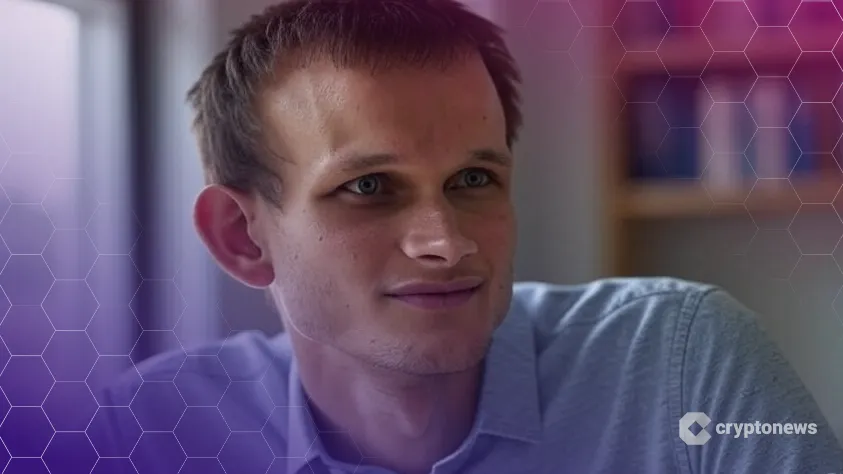
Ethereum Co-Founder Vitalik Buterin Introduces Fusaka: Ethereum’s Most Ambitious Scaling Solution Yet

Ethereum Co-Founder Vitalik Buterin Introduces Fusaka: Ethereum’s Most Ambitious Scaling Solution Yet

Ethereum co-founder Vitalik Buterin has unveiled Fusaka as the network’s most ambitious scaling upgrade, set to activate on December 3 with revolutionary technology that eliminates the need for any single computer to download complete blockchain data. The upgrade introduces PeerDAS, allowing validator nodes to verify information by checking small random pieces rather than entire data blocks. Buterin described the technology as “unprecedented” for live blockchains, as it enables massive scalability improvements while maintaining security. Each network participant downloads only small “chunks” to probabilistically verify that sufficient data exists for complete reconstruction when needed. The upgrade addresses mounting pressure on Ethereum’s base layer amid criticism that Layer 2 solutions create fragmented user experiences.Source: X/@hildobby Current network congestion forces over 2 million ETH into exit queues, facing 43-day delays, while entry processing completes in just 7 days. Fusaka will more than double blob capacity within two weeks through automated parameter-only forks, expanding from the current limits of 6/9 blobs to 14/21.Source: X/@hildobby The phased approach begins with conservative increases before becoming more aggressive as the technology proves stable. The upgrade comes as Ethereum’s revenue fell 44% to $14.1 million in August despite ETH reaching new all-time highs above $4,950. Layer 2 adoption has reduced base layer fee generation, creating sustainability concerns about the network’s economic model. Revolutionary Data System Changes Everything As reported earlier, the Fusaka Upgrade is scheduled to go live on December 3, and PeerDAS will fundamentally alter how the blockchain networks handle information by distributing data verification across thousands of computers, rather than requiring complete downloads. Traditional systems force every participant to store entire blocks, creating bottlenecks as networks grow larger. The new approach uses mathematical probability to ensure data availability. If more than 50% of data chunks remain accessible across the network, any computer can theoretically download those pieces and reconstruct missing information using erasure coding techniques. Initially, complete data blocks must still exist in one location for broadcasting new information and emergency reconstruction when publishers provide incomplete data. However, these roles remain untrusted, requiring only one honest participant among potentially hundreds of dishonest actors. Future developments will eliminate even these centralized functions through cell-level messaging and distributed block building. Different computers can handle these tasks for different blocks, which further decentralizes the entire process. Notably, Buterin emphasized the cautious testing approach core developers have adopted despite years of development work. The conservative blob count initially increases and will become more aggressive as real-world performance validates the technology’s stability and security. Ethereum Battles Revenue Crisis With Infrastructure Focus The Fusaka upgrade addresses Ethereum’s growing economic challenges as Layer 2 networks reduce mainnet transaction demand. August revenue of $14.1 million marked one of the weakest months since early 2021, which has raised concerns about sustainability. Witnessing this, Buterin recently proposed low-risk DeFi protocols as Ethereum’s potential revenue anchor, comparing the model to Google Search funding broader company operations. He suggested protocols offering 5% yields on blue-chip stablecoins could provide economic stability without compromising ethical foundations. These protocols include mainstream lending platforms like Aave, where users can earn stable returns by supplying USDT and USDC to borrowers without speculative risks. Fusaka’s infrastructure improvements will reduce transaction costs for such applications, making them accessible to everyday users who previously faced prohibitive gas fees when interacting with DeFi protocols. The upgrade includes 11-12 Ethereum Improvement Proposals targeting scalability and node efficiency improvements. Blob parameter-only forks will activate automatically based on predetermined schedules rather than requiring separate network upgrades. Additionally, recent controversies in the validator queue also add to the ongoing scalability pressures. However, Buterin defended the current 43-day exit delays as essential security features, comparing validator commitments to military service, which requires “friction in quitting.” The upgrade follows May’s successful Pectra implementation, which introduced account abstraction and increased validator staking limits from 32 ETH to 2,048 ETH. That upgrade delivered infrastructure improvements for social recovery wallets and smart contract execution capabilities. For Fusaka, the improvements in data availability will support the next growth phase of Ethereum, while maintaining the security guarantees that distinguish Ethereum from its competitors

Author: CryptoNews
The TechBeat: New frontiers in Human AI Interface (9/25/2025)

The TechBeat: New frontiers in Human AI Interface (9/25/2025)

How are you, hacker? 🪐Want to know what's trending right now?: The Techbeat by HackerNoon has got you covered with fresh content from our trending stories of the day! Set email preference here. ## Hurry! One Month Left to Win from 15,000 USDT in the Spacecoin Writing Contest By @hackernooncontests [ 3 Min read ] Enter Round 2 of the Spacecoin Writing Contest by Oct 7! Write on #spacetech, #blockchain-use-case, or #decentralized-internet and more to win from 15000 USDT! Read More. Are we Catching up With Science Fiction’s Dream of Lunar Bases? By @codelynx [ 5 Min read ] Exploring the progress of lunar base development and how it aligns with science fiction’s vision of life on the Moon. Read More. ⁠ ⁠Is Elon Musk’s Timeline for Mars Colonization Still Feasible After 2025? By @lonewolf [ 8 Min read ] Analyzing if Elon Musk's Mars colonization plans remain achievable beyond 2025, factoring in technology, funding, and future challenges. Read More. Passive Income in Crypto: Why Waiting for Altseason Is a Bad Strategy By @MichaelJerlis [ 4 Min read ] Discover the most reliable passive income strategies in crypto for 2025 — from tokenized treasuries to staking, lending, farming, and more. Read More. Making LLMs Efficient: Reducing Memory Usage Without Breaking Quality By @sushant523 [ 3 Min read ] Optimal memory-quality tradeoffs for efficient language models. Read More. XYO, the DePIN Project With 10M+ Nodes, Launches Blockchain’s First Data-Focused L1 By @chainwire [ 5 Min read ] With this launch, XYO introduces the first blockchain built to handle large volumes of data without slowing performance. Read More. Sia Redefines Cloud Reliability with Continuous Performance by Design By @siafoundation [ 7 Min read ] Sia delivers true cloud reliability by eliminating single points of failure. Decentralized design ensures continuous performance, even during outages. Read More. Remote Work Reality Check: Malta, Madeira and the Canaries By @socialdiscoverygroup [ 4 Min read ] Remote Work in Paradise? 4 Years, 3 Islands, 1 Honest Guide. Discover the real trade-offs of Malta, Madeira & Canary Islands for digital nomads. Read More. I Unlocked Cash Without Selling Bitcoin: My OnLock Story By @MichaelJerlis [ 3 Min read ] Discover how DeFi lending and EMCD Onlock differs from banks: no middlemen, just protocols, smart contracts, and instant liquidity for borrowers and depositors. Read More. How Space Debris Cleanup Could Become the Next Trillion-Dollar Industry By @samuelogbonna138 [ 5 Min read ] Space debris threatens satellites and economies. See how cleanup tech could unlock a trillion-dollar spacetech industry. Read More. New frontiers in Human AI Interface By @zbruceli [ 12 Min read ] Recent tech advances are breaking free from 20 years of 5-inch screen limits, unlocking full human senses in computing through AI interfaces and wearables. Read More. Here's How ShareChat Scaled Their ML Feature Store 1000X Without Scaling the Database By @scylladb [ 8 Min read ] How ShareChat scaled its ML feature store to 1B features/sec on ScyllaDB, achieving 1000X performance without scaling the database. Read More. Vibe Coding is Creating a Generation of Unemployable Developers By @paoloap [ 7 Min read ] Vibe coding lets AI generate code—but skips the skills that make developers indispensable. Learn why shortcuts can ruin careers in 2025 tech. Read More. How People Use ChatGPT By @hacker-Antho [ 5 Min read ] A groundbreaking NBER Working Paper, “How People Use ChatGPT”, finally pulls back the curtain on this phenomenon. Read More. The WEF Wants to Put a Market Price on Nature By @thesociable [ 6 Min read ] WEF’s new blueprint, led by Larry Fink & Andre Hoffmann, aims to monetize nature with credits, swaps & asset schemes worth trillions. Read More. 10 Influential Women in The AI Space By @vicloskutova [ 15 Min read ] Meet 10 influential women redefining AI—leaders, founders, and innovators shaping technology with creativity, ethics, and bold vision. Read More. Spacecoin: Beaming Web3 Access From Space for $2 a Month By @hacker82362998 [ 4 Min read ] Spacecoin beams low-cost, censorship-proof internet from satellites, unlocking Web3 for billions with crypto-first access. Read More. Here's Why AI Can’t Replace You By @c4twithshell [ 4 Min read ] Why AI can’t replace people: insights from real projects showing how data quality, curation, and human expertise still make the difference. Read More. Developers Gain Version Control, A/B Testing for Prompts in OpenAI Rollout By @ainativedev [ 3 Min read ] OpenAI now treats prompts as API primitives - centralized, versioned, and callable - enabling collaboration, A/B testing, and dynamic integration like never before. Read More. Generative AI Press Releases Explained: Why They’re an Essential Visibility Layer By @sarahevans [ 4 Min read ] Discover how Generative AI Press Releases (GenAI Press Releases) are transforming PR. Learn how schema, FAQs, backlinks, and semantic headlines impact releases. Read More. 🧑‍💻 What happened in your world this week? It's been said that writing can help consolidate technical knowledge, establish credibility, and contribute to emerging community standards. Feeling stuck? We got you covered ⬇️⬇️⬇️ ANSWER THESE GREATEST INTERVIEW QUESTIONS OF ALL TIME We hope you enjoy this worth of free reading material. Feel free to forward this email to a nerdy friend who'll love you for it. See you on Planet Internet! With love, The HackerNoon Team ✌️

Author: Hackernoon