Index

A crypto Index provides a way for investors to gain diversified exposure to a specific basket of digital assets through a single tokenized product. These indices often track specific sectors, such as DeFi, DePIN, or RWA, and are automatically rebalanced via smart contracts. In 2026, AI-managed thematic indices have become the gold standard for passive investing, allowing users to track the "blue chips" of the Web3 economy without manual portfolio management. This tag covers index methodology, rebalancing frequency, and the benefits of diversified crypto baskets.

25541 Articles
Created: 2026/02/02 18:52
Updated: 2026/02/02 18:52
Ethereum’s (ETH) Monthly Trading Volume Reaches Highest Level Since May 2021! Details Here

Ethereum’s (ETH) Monthly Trading Volume Reaches Highest Level Since May 2021! Details Here

The post Ethereum’s (ETH) Monthly Trading Volume Reaches Highest Level Since May 2021! Details Here appeared on BitcoinEthereumNews.com. The Ethereum ecosystem was notable for its record-breaking month of August. Ethereum’s on-chain adjusted transfer volume surpassed $320 billion, reaching its highest level since May 2021. This represents the third-largest monthly volume in Ethereum history. Ethereum Network Transaction Volume Exceeds $320 Billion in August: Highest Level Since 2021 The data covers not only transfers but also DeFi interactions and other blockchain-based transactions. The 30-day transaction count also reached a new high in August, while active ETH addresses reached their second all-time high. Ethereum’s total value locked (TVL) also remains near historical highs. The impact of institutional investors is the primary driver of this increase. Publicly traded companies’ ETH reserves rose from $4 billion at the beginning of the month to $12 billion. BitMine Immersion and SharpLink Gaming, in particular, made significant purchases. Trading volumes and net inflows for spot ETH ETFs also accelerated during the same period. Ethereum transaction fees have fallen to their lowest levels in five years. The 2024 Dencun update (EIP-4844) reduced costs for rollups, while this year’s Pectra upgrade focused on improving account abstraction and user experience. Validator exit requests hit a record high in August, while entry requests also reached a two-year high. Experts attribute much of this movement to fund flows into liquid retaking protocols. ETH price, on the other hand, is trading at $4,337 after the recent correction, trading 12% below its peak. *This is not investment advice. Follow our Telegram and Twitter account now for exclusive news, analytics and on-chain data! Source: https://en.bitcoinsistemi.com/ethereums-eth-monthly-trading-volume-reaches-highest-level-since-may-2021-details-here/

Author: BitcoinEthereumNews
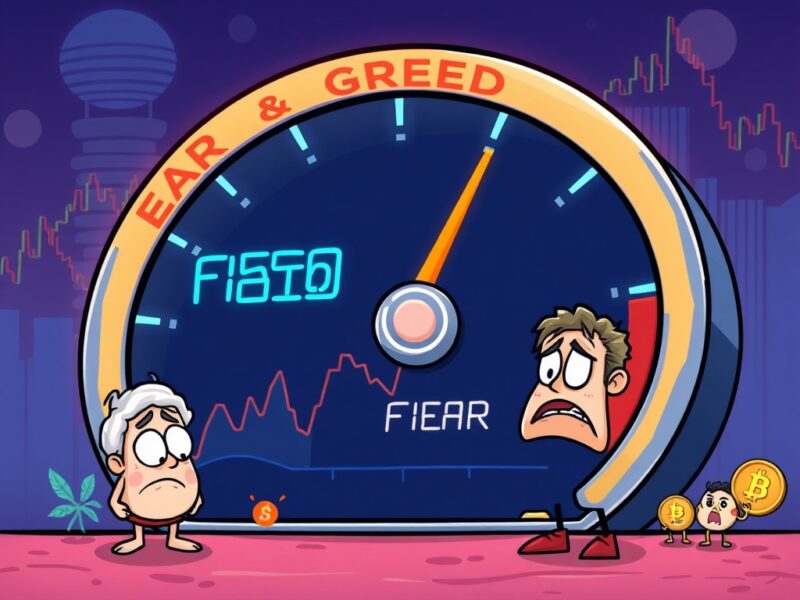
Crypto Fear & Greed Index Plunges: Understanding the Sudden Market Apprehension

Crypto Fear & Greed Index Plunges: Understanding the Sudden Market Apprehension

BitcoinWorld Crypto Fear & Greed Index Plunges: Understanding the Sudden Market Apprehension The cryptocurrency market is currently experiencing a significant shift in sentiment, with the Crypto Fear & Greed Index recently plunging to a score of 39. This notable drop signals a decisive move into ‘fear territory,’ causing many investors to pause and carefully assess the current landscape. Understanding this pivotal index is crucial for anyone navigating the volatile world of digital assets. What is the Crypto Fear & Greed Index and Why Does it Matter? The Crypto Fear & Greed Index is a powerful tool developed by Alternative.me to gauge overall market sentiment. It operates on a simple scale from 0 to 100, where 0 signifies ‘Extreme Fear’ and 100 indicates ‘Extreme Greed.’ Essentially, it provides a quick snapshot of how emotionally charged the crypto market is at any given moment. But how exactly is this sentiment measured? The index considers several key factors, each contributing to the overall score: Volatility (25%): Measures how much the market moves, often indicating uncertainty. Trading Volume (25%): Reflects the level of buying and selling activity across the market. Social Media Mentions (15%): Analyzes the frequency and sentiment of crypto-related discussions online. Surveys (15%): Gathers direct polls of investor sentiment (though currently paused). Bitcoin’s Market Cap Dominance (10%): Assesses Bitcoin’s share of the total cryptocurrency market. Google Search Volume (10%): Tracks how often crypto-related terms are searched, indicating public interest. These diverse factors combine to give a comprehensive view, helping investors understand if the market is driven by rational decisions or emotional impulses. What Does a Crypto Fear & Greed Index of 39 Mean for Investors? Recently, the Crypto Fear & Greed Index saw an 11-point decline from its previous day’s reading, settling at 39. This significant dip pushes market sentiment firmly into the ‘fear’ category. What does this actually mean for you as an investor? When the index enters fear territory, it suggests that investors are becoming increasingly cautious, worried, and perhaps even engaging in panic-selling. This sentiment can be triggered by various factors, such as negative news, significant price drops, regulatory concerns, or broader economic uncertainties. It often reflects a lack of confidence in the short-term outlook for cryptocurrencies. Historically, periods of extreme fear have sometimes presented unique opportunities for long-term investors. However, they also come with heightened risks, as market downturns can intensify rapidly. It is a time for careful consideration, not impulsive reactions. How Does the Crypto Fear & Greed Index Impact Your Strategy? For many, the Crypto Fear & Greed Index acts as a contrarian indicator. The old adage, ‘Be fearful when others are greedy, and greedy when others are fearful,’ perfectly encapsulates this approach. When the index shows extreme fear, it might suggest that the market is oversold and could be due for a rebound, potentially offering attractive entry points for those with a higher risk tolerance. Conversely, when the index hits ‘Extreme Greed,’ it could signal an overheated market ripe for a correction. This is often when asset prices are at their peak, driven by FOMO (Fear Of Missing Out), and a pullback might be imminent. Recognizing these patterns can help inform your decisions. It is important to remember, however, that the index is just one tool among many. It should complement, not replace, your own thorough research and robust risk management strategies. Relying solely on a single indicator can be misleading and lead to poor outcomes. Navigating Market Apprehension: Actionable Tips for Crypto Investors With the Crypto Fear & Greed Index now showing fear, how can you navigate these uncertain times effectively? Here are some actionable insights to consider: Stay Informed: Keep up with reliable news sources and market analysis. Understand the underlying reasons for market shifts, rather than reacting solely to price movements. Diversify Your Portfolio: Spreading your investments across different assets can help mitigate risk during volatile periods. Practice Risk Management: Only invest what you can afford to lose. Set clear stop-loss orders and stick to your predefined investment plan. Consider Dollar-Cost Averaging (DCA): Regularly investing a fixed amount, regardless of price, can help smooth out volatility over time and reduce the impact of short-term dips. Maintain a Long-Term Perspective: Short-term fluctuations are common in crypto. Focusing on the long-term potential of projects can help you weather temporary downturns. Avoid Emotional Decisions: Fear can lead to impulsive selling, while greed can lead to reckless buying. Always stick to a well-thought-out strategy rather than succumbing to market emotions. The recent drop in the Crypto Fear & Greed Index to 39 serves as a crucial reminder of the inherent volatility and emotional swings within the cryptocurrency market. While fear can be unsettling, it also presents an opportunity for informed investors to re-evaluate their positions and potentially identify strategic entry or exit points. By understanding the index and combining it with sound investment principles, you can make more rational decisions, even when market sentiment turns apprehensive. Stay calm, stay informed, and always prioritize your long-term financial goals. Frequently Asked Questions (FAQs) Q1: What is the Crypto Fear & Greed Index? A: The Crypto Fear & Greed Index is a tool that measures the current sentiment of the cryptocurrency market, ranging from ‘Extreme Fear’ (0) to ‘Extreme Greed’ (100). Q2: How is the Crypto Fear & Greed Index calculated? A: It is calculated based on factors like volatility, trading volume, social media mentions, surveys, Bitcoin’s market cap dominance, and Google search volume. Q3: What does a score of 39 on the Crypto Fear & Greed Index indicate? A: A score of 39 indicates that market sentiment has entered ‘fear territory,’ suggesting increased caution and apprehension among investors. Q4: Should I buy or sell when the Crypto Fear & Greed Index is in fear territory? A: While some view extreme fear as a potential buying opportunity (contrarian investing), it’s not a standalone signal. Always combine it with your own research and risk management strategy. Q5: Is the Crypto Fear & Greed Index a reliable trading indicator? A: It is a valuable sentiment indicator but should not be the sole basis for trading decisions. It’s best used as a complementary tool alongside technical and fundamental analysis. If you found this analysis helpful, please share it with your fellow crypto enthusiasts! Spreading awareness about market sentiment tools like the Crypto Fear & Greed Index can help our community make more informed decisions together. To learn more about the latest cryptocurrency trends, explore our article on key developments shaping market sentiment and future price action. This post Crypto Fear & Greed Index Plunges: Understanding the Sudden Market Apprehension first appeared on BitcoinWorld and is written by Editorial Team

Author: Coinstats
‘Red September’ Is Coming—Here’s What to Expect From the Bitcoin Market

‘Red September’ Is Coming—Here’s What to Expect From the Bitcoin Market

The post ‘Red September’ Is Coming—Here’s What to Expect From the Bitcoin Market appeared on BitcoinEthereumNews.com. In brief Bitcoin has dropped 3.77% on average each September since 2013, with eight monthly crashes in 11 years. Seasonal pressures—from fund rebalancing to Fed policy jitters—fuel risk-off sentiment that spills over from stocks into crypto. This year’s setup adds war, sticky inflation, and Fed uncertainty, making $105K the line in the sand for traders. Bitcoin is trading sideways as August winds down, and crypto traders are doing what they do every year around this time: preparing for pain. The phenomenon known as “Red September,” or “The September Effect,” has haunted markets for nearly a century. The S&P 500 has averaged negative returns in September since 1928, making it the index’s only consistently negative month. Bitcoin’s track record is worse—the cryptocurrency has fallen an average of 3.77% each September since 2013, crashing eight times according to data from Coinglass. “The pattern is predictable: negative social media chatter spikes around August 25, followed by increased Bitcoin deposits to exchanges within 48-72 hours,” Yuri Berg, a consultant at the Swiss-based crypto liquidity provider FinchTrade, told Decrypt. “Red September has gone from market anomaly to monthly psychology experiment. We’re watching an entire market talk itself into a selloff based on history rather than current fundamentals.” Image: Coinglass The mechanics behind Red September trace back to structural market behaviors that converge each fall. Mutual funds close their fiscal years in September, triggering tax-loss harvesting and portfolio rebalancing that floods markets with sell orders. Summer vacation season ends, bringing traders back to desks where they reassess positions after months of thin liquidity. Bond issuances surge post-Labor Day, pulling capital from equities and risk assets as institutions rotate into fixed income. The Federal Open Market Committee holds its September meeting, creating uncertainty that freezes buying until policy direction clarifies. In crypto, these pressures compound: Bitcoin’s 24/7…

Author: BitcoinEthereumNews
Fed Chair Candidate Announces Interest Rate Cut Expectations “Within 3-6 Months…”

Fed Chair Candidate Announces Interest Rate Cut Expectations “Within 3-6 Months…”

The post Fed Chair Candidate Announces Interest Rate Cut Expectations “Within 3-6 Months…” appeared on BitcoinEthereumNews.com. While the markets generally expect the FED to cut interest rates in September, the probability of a 25 basis point cut is priced in at 85%. US President Donald Trump is also pressuring Fed Chairman Jerome Powell to cut interest rates quickly, stating that they are late in reducing interest rates. At this point, FED member Christopher Waller, who is close to Trump and supports the interest rate cut, announced that he supports the interest rate cut in September. Speaking at the Miami Economic Club, Waller announced that he supports a 25 basis point cut in interest rates in September and said he expects additional cuts in the next 3-6 months. Christopher Waller, who is considered a potential candidate for the next Fed President, said in July that he also wanted to cut interest rates and that his determination on this issue has increased since then. At this point, Waller stated that reducing interest rates would be the right move and risk management due to the positive trend in core inflation and labor market risks. With core inflation running near 2%, market-based long-term inflation expectations firmly anchored, and the likelihood of undesirable labor market weakness increasing, the correct risk management strategy is for the FOMC to cut the policy rate now. “As of today, I expect further rate cuts within the next three to six months. The pace of rate cuts will be determined by incoming data.” Waller also commented on the recently enacted US stablecoin regulation bill, the GENIUS Act, saying he sees it as a good starting point. *This is not investment advice. Follow our Telegram and Twitter account now for exclusive news, analytics and on-chain data! Source: https://en.bitcoinsistemi.com/fed-chair-candidate-announces-interest-rate-cut-expectations-within-3-6-months/

Author: BitcoinEthereumNews
Chainlink to bring U.S. economic data on-chain in historic deal!

Chainlink to bring U.S. economic data on-chain in historic deal!

The post Chainlink to bring U.S. economic data on-chain in historic deal! appeared on BitcoinEthereumNews.com. Key takeaways Chainlink’s partnership with the U.S. Department o f Commerce brings official economic data like GDP and inflation on-chain for the first time. Despite this, LINK’s price shows signs of cooling. Chainlink [LINK] has struck a landmark deal with the U.S. Department of Commerce to bring official economic data on-chain! This will include GDP and inflation figures from the Bureau of Economic Analysis as well. The integration is set to roll out across 10 blockchain networks, and could reshape how financial markets interact with real-world metrics. U.S. economic data goes on-chain for the first time For the first time, official U.S. economic indicators will be streamed directly onto public blockchains. Through Chainlink’s historic partnership with the Department of Commerce, data from the Bureau of Economic Analysis (including GDP growth, inflation via the PCE Price Index, and real final sales) will be available across 10 blockchain ecosystems such as Ethereum [ETH], Avalanche [AVAX], and Base [BASE]. Source: blog.chain.link The feeds will deliver both raw figures and annualized growth rates, updated monthly or quarterly. The integration could reshape how developers, analysts, and financial protocols access and use core government data. This would open the door to more transparent and programmable economic applications. Buzz meets mixed derivative signals This tie-up comes just days after Bitwise filed to launch the first-ever Chainlink ETF in the U.S., a move that could open the token to traditional investors. Meanwhile, derivatives data showed a cooling in sentiment. Source: Coinalyze At press time, Open Interest slipped to around $674 million, pointing to lighter trading activity. Funding Rates, while still positive at roughly 0.0073, showed a more cautious stance among traders compared to earlier in the week. The market is steady but waiting for stronger catalysts before the next move. Price pulls back despite catalysts Atthe time of…

Author: BitcoinEthereumNews
Grayscale submit S-1 Filings for Cardano and Polkadot ETFs

Grayscale submit S-1 Filings for Cardano and Polkadot ETFs

TLDR Grayscale Files S-1 for Cardano ETF, Targets NYSE Arca With Ticker GADA Polkadot ETF Filing Joins Grayscale’s Push for Altcoin Investment Access Grayscale Advances Cardano, Polkadot ETFs Amid SEC’s Sluggish Review Crypto ETF Race Expands as Grayscale Eyes Altcoins With New SEC Filings Altcoin ETFs Gain Traction: Grayscale Targets Regulated Exposure for ADA, DOT [...] The post Grayscale submit S-1 Filings for Cardano and Polkadot ETFs appeared first on CoinCentral.

Author: Coincentral
U.S. July Core PCE Inflation Surges, Challenges Federal Rate Strategy

U.S. July Core PCE Inflation Surges, Challenges Federal Rate Strategy

The post U.S. July Core PCE Inflation Surges, Challenges Federal Rate Strategy appeared on BitcoinEthereumNews.com. Key Points: U.S. July Core PCE rises, limiting Federal Reserve’s rate adjustments. Increased inflation impacts crypto markets, delaying potential rate cuts. Experts analyze long-term inflationary pressures impacting financial strategies. The U.S. Bureau of Economic Analysis released the July Core PCE Price Index, showing a year-on-year increase to 2.9%, the highest since February, significantly impacting Federal Reserve policy plans. This report may limit Federal Reserve rate cuts, affecting markets, including cryptocurrencies, as interest rates influence risk asset valuations. Bitcoin Drops Amid Rising Inflation Pressure Federal Reserve Chair Jerome Powell, during a recent address, emphasized inflation’s key role in deciding monetary policy. Despite market expectations for a rate reduction, consistent inflation increases underline cautious strategies moving forward. Jerome Powell noted, “Any future rate cuts will depend on the path of inflation.” As of the latest update, Bitcoin (BTC) is valued at $108,459.57, with a market cap of $2.16 trillion and a circulating supply of 19.91 million. Over the past 24 hours, Bitcoin experienced a 3.62% decline compared to a 7.10% drop over the past seven days, as reported by CoinMarketCap. The cryptocurrency commands a 57.44% market dominance, reporting a 12.94% change in trading volume in the last 24 hours, currently at $72.25 billion. Coincu’s research team observes that prolonged inflation could lead to prolonged monetary policy adjustments, affecting investment flows into cryptocurrencies. Historically, macroeconomic shifts dictate financial strategies, underscoring the critical balance between market confidence and inflationary control. Market Response and Future Outlook Did you know? In previous high-inflation cycles, like September 2022 and March 2023, initial unfavorable impacts on cryptocurrencies eventually gave way to stabilization if the Federal Reserve maintained a dovish stance. Market analysts are closely monitoring the fluctuations in Bitcoin and other cryptocurrencies as inflation data continues to influence trading strategies. Bitcoin(BTC), daily chart, screenshot on CoinMarketCap at 17:38…

Author: BitcoinEthereumNews
Grayscale Files for Polkadot and Cardano ETFs After 19b-4 Moves

Grayscale Files for Polkadot and Cardano ETFs After 19b-4 Moves

TLDR Grayscale has filed registration statements with the SEC for Polkadot and Cardano ETFs. The Polkadot ETF will trade on Nasdaq under the ticker DOT, tracking the CoinDesk DOT CCIXber Reference Rate. The Cardano ETF will list on NYSE Arca under the ticker GADA, following the CoinDesk Cardano Price Index. Both ETFs will hold the [...] The post Grayscale Files for Polkadot and Cardano ETFs After 19b-4 Moves appeared first on Blockonomi.

Author: Blockonomi
CoinShares posts $32.4m Q2 profit amid 26% AUM jump, eyes U.S. listing

CoinShares posts $32.4m Q2 profit amid 26% AUM jump, eyes U.S. listing

CoinShares Q2 profits

Author: Crypto.news
Bitcoin koers daalt naar laagste punt sinds begin juli

Bitcoin koers daalt naar laagste punt sinds begin juli

Snelle crypto updates? Connect op Instagram! Check onze Instagram De bitcoin koers daalt eind augustus 2025 fors en noteert het laagste niveau sinds 8 juli. De digitale munt verloor in korte tijd enkele procenten, onder druk van megaliquidaties en grootschalige verkoop door zogenaamde whales. De situatie wijst op toenemende onzekerheid op de cryptomarkt, terwijl handelaren belangrijke technische niveaus in de gaten houden. Bitcoin koers daalt De scherpe daling begon toen een grote investeerder meer dan 24.000 BTC verkocht. Deze actie veroorzaakte een kettingreactie van geforceerde verkopen, waarbij in korte tijd ruim 800 miljoen dollar werd geliquideerd. In de daaropvolgende dagen liepen de totale liquidaties in 24 uur tijd verder op tot meer dan 530 miljoen dollar. Dit zorgde voor extra druk op de bitcoin koers en bracht de munt onder de grens van 109.000 dollar. Het gevolg is dat de markt opnieuw test waar de belangrijkste steun ligt. Handelaren wijzen op 107.000 dollar als cruciaal punt. Als de verkoopdruk aanhoudt, kijken analisten zelfs naar 100.000 dollar als volgend scenario. Technische signalen geven gemengd beeld Hoewel de bitcoin koers daalt, zien sommige technische indicatoren er minder negatief uit. De relatieve sterkte-index (RSI), een veelgebruikte graadmeter voor overbought of oversold markten, laat op de vieruursgrafiek een positieve divergentie zien. Dat betekent dat de RSI hogere bodems maakt terwijl de koers lagere bodems neerzet. Dit patroon kan duiden op een mogelijk herstel op korte termijn. Toch blijft de kans groot dat de neerwaartse trend nog even doorzet. De eerstvolgende weerstanden liggen rond 117.000 en 123.000 dollar. Pas als die niveaus weer worden doorbroken, kunnen bulls opnieuw ademhalen. Hieronder zie je de geschiedenis van de winsten (en verliezen) van bitcoin per kwartaal: Bitcoin winsten per maand Macro-economie en seizoenseffecten werken tegen Naast technische factoren spelen macro-economische omstandigheden de bitcoin koers parten. Augustus en september zijn traditioneel zwakke maanden voor de cryptomarkt. Daar komt bij dat recente inflatiecijfers uit de Verenigde Staten de zorgen over het beleid van de Federal Reserve opnieuw aanwakkeren. Ook zien we dat bepaalde bitcoin whales hun BTC verkopen voor Ether. Hoewel veel beleggers rekening houden met een renteverlaging in september, is die nog niet zeker. Als economische cijfers sterker uitvallen dan verwacht, kan de Fed besluiten het beleid minder snel te verruimen. Dat zou betekenen dat risicovolle assets zoals bitcoin voorlopig weinig steun krijgen van het macroklimaat. Actuele data over de bitcoin koers Prijs: circa 108.320 dollar Marktkapitalisatie: 2,16 biljoen dollar Sats per dollar: ongeveer 923 All Time High: 124.400 dollar op 14 augustus 2025 Daling vanaf ATH: -12,9 procent in 15 dagen tijd Waarde in goud: 31,4 ounce Bitcoin versus goud marktkapitalisatie: 8,89 procent In bedrijfsschappen: 2.285.604 BTC, goed voor 247,6 miljard dollar (11,48 procent van de totale supply) Deze cijfers maken duidelijk dat de bitcoin koers daalt, maar dat de munt ondanks de recente terugval nog altijd een stevig aandeel heeft in institutionele portefeuilles en zijn rol als digitaal alternatief voor goud behoudt. Conclusie over de bitcoin koers De bitcoin koers daalt eind augustus 2025 naar het laagste punt in bijna twee maanden. De terugval is het gevolg van grote liquidaties en verkoopdruk van whales, in combinatie met macro-economische onzekerheid en een zwakke seizoensperiode. Technisch gezien zijn er signalen die wijzen op een mogelijk herstel, maar de markt blijft kwetsbaar zolang de koers niet terugkeert boven de 117.000 tot 123.000 dollar. Institutionele adoptie en reserves in bedrijfsbalansen laten zien dat het vertrouwen in bitcoin op de lange termijn overeind blijft, ook in een periode waarin de bitcoin koers daalt. Best wallet - betrouwbare en anonieme wallet Best wallet - betrouwbare en anonieme wallet Meer dan 60 chains beschikbaar voor alle crypto Vroege toegang tot nieuwe projecten Hoge staking belongingen Lage transactiekosten Best wallet review Koop nu via Best Wallet Let op: cryptocurrency is een zeer volatiele en ongereguleerde investering. Doe je eigen onderzoek. Het bericht Bitcoin koers daalt naar laagste punt sinds begin juli is geschreven door Robin Heester en verscheen als eerst op Bitcoinmagazine.nl.

Author: Coinstats