Index

A crypto Index provides a way for investors to gain diversified exposure to a specific basket of digital assets through a single tokenized product. These indices often track specific sectors, such as DeFi, DePIN, or RWA, and are automatically rebalanced via smart contracts. In 2026, AI-managed thematic indices have become the gold standard for passive investing, allowing users to track the "blue chips" of the Web3 economy without manual portfolio management. This tag covers index methodology, rebalancing frequency, and the benefits of diversified crypto baskets.

25827 Articles
Created: 2026/02/02 18:52
Updated: 2026/02/02 18:52
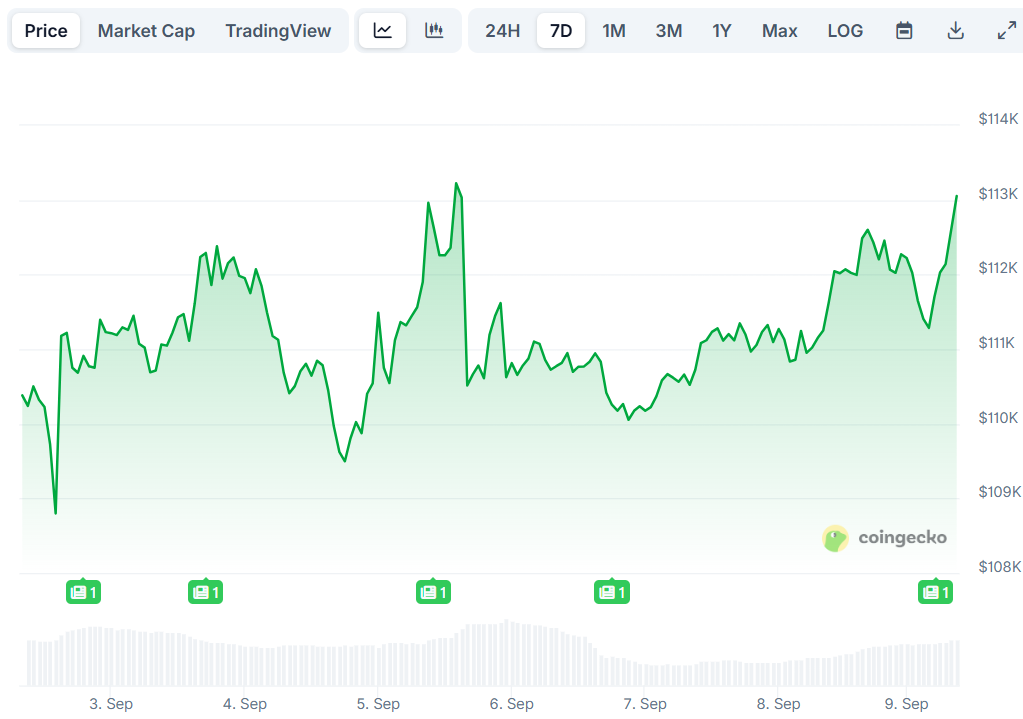
Bitcoin (BTC) Price: Rallies Past $112K as Strategy Adds More BTC

Bitcoin (BTC) Price: Rallies Past $112K as Strategy Adds More BTC

TLDR Bitcoin rose above $112,000 but derivatives data shows traders remain cautious despite the rally Spot Bitcoin ETFs recorded $383 million in net outflows between Thursday and Friday Nasdaq officially filed with SEC to allow trading of tokenized U.S. equities, boosting blockchain legitimacy Major institutions continue accumulating BTC, with Metaplanet adding 136 BTC and MicroStrategy [...] The post Bitcoin (BTC) Price: Rallies Past $112K as Strategy Adds More BTC appeared first on CoinCentral.

Author: Coincentral
ARK Invest Acquires $4.46M in BitMine Shares, Sells Robinhood

ARK Invest Acquires $4.46M in BitMine Shares, Sells Robinhood

The post ARK Invest Acquires $4.46M in BitMine Shares, Sells Robinhood appeared on BitcoinEthereumNews.com. Key Points: Ark Invest buys BitMine shares, sells Robinhood, shifting market dynamics. BitMine aims for 5% of Ethereum’s supply amid strategic ETH accumulation. Market reactions and price shifts highlight investor and industry interest. Ark Invest, led by Cathie Wood, purchased approximately $4.46 million worth of BitMine Immersion Technologies shares across its ETFs on September 8, boosting market interest in Ethereum treasury strategies. This acquisition signals institutional confidence in Ethereum, positioning BitMine as a major public holder and influencing market dynamics amid corporate interest in Ethereum. Ark Invest’s $4.46M BitMine Purchase and $5.13M Robinhood Sale Ark Invest has made a notable investment in BitMine Immersion Technologies, acquiring approximately $4.46 million in shares through its three ETFs. Led by Cathie Wood, the investment was announced on September 8, 2025. In an interesting parallel move, Ark Invest divested approximately $5.13 million worth of Robinhood shares, just as the stock recently got added to the S&P 500 index. While BitMine’s stock price increased by 4.16% to $43.79, Robinhood’s shares surged by 15.8% to $117.28 post its S&P 500 inclusion. The market regards BitMine as a significant player due to its aggressive initiative to acquire 5% of Ethereum’s circulating supply. Cathie Wood, Founder and CEO, ARK Invest, – “Our investment in BitMine Immersion Technologies represents our confidence in their strategic focus on Ethereum accumulation, which we believe will play a pivotal role in the future of digital assets.” Industry experts have taken note of BitMine’s strategic pivot from bitcoin mining to serve as an Ethereum treasury. Observers attribute its appeal to substantial institutional backing. Reports highlight no direct commentary from prominent figures like Tom Lee or Cathie Wood but note rising interest among key stakeholders. BitMine Targets 5% of Ethereum, Driving Market Interest Did you know? Ark Invest’s transaction proceeds mirror their August 2022 strategy,…

Author: BitcoinEthereumNews
Crypto News Today: CPI Report Could Decide Next Move for Bitcoin, Ethereum, and XRP

Crypto News Today: CPI Report Could Decide Next Move for Bitcoin, Ethereum, and XRP

The post Crypto News Today: CPI Report Could Decide Next Move for Bitcoin, Ethereum, and XRP appeared first on Coinpedia Fintech News Bitcoin Price Today and Ethereum News Crypto markets remain cautious as investors await this week’s U.S. Consumer Price Index (CPI) report, a key data point that could influence the Federal Reserve’s next policy steps. Bitcoin price today is holding above $111,600, while Ethereum trades near $4,298. The CD20 index climbed 1.6% to cross 4,000. Despite …

Author: CoinPedia
This Week In Crypto: What Investors Need To Know And Why It Matters

This Week In Crypto: What Investors Need To Know And Why It Matters

This week is shaping up to be critical for the broader crypto market, marked by a prevailing sense of caution as prices consolidate ahead of their next direction.  According to market analysis firm Bull Theory, the forthcoming Federal Open Market Committee (FOMC) meeting is on the horizon, and its outcome will largely hinge on the economic data released this week. Stability Or Further Pressure For Crypto? The Federal Reserve (Fed) has two primary mandates: to maintain inflation around 2% and to support employment levels. Currently, the landscape appears challenging, with rising unemployment juxtaposed against persistent inflation. Related Reading: Solana Rally in Sight? Traders Eye Breakout That Could Push SOL Toward $250 On September 9, the Bureau of Labor Statistics will revise the previous year’s non-farm payrolls (NFP). This annual revision often reveals downward adjustments, indicating weaker job growth than initially reported.  For instance, last August, the revision was significantly lower than expected, with a downward adjustment of 818,000 jobs—the second worst in US history.  This prompted the Fed to implement a more aggressive 50 basis point cut instead of the anticipated 25 basis points. If this repeats, it could raise the likelihood of another substantial cut, which would be viewed positively for liquidity and, by extension, the crypto market. The Producer Price Index (PPI) report, scheduled for September 10, will provide insights into inflation at the business level. A PPI reading that meets or falls below expectations is likely to boost market sentiment, while a higher-than-expected figure could dampen it.  Last month, the PPI was unexpectedly high, coinciding with Bitcoin’s (BTC) peak near $124,000 before it began to cool. A softer PPI this time could grant the Fed more leeway to implement cuts, alleviating pressure on cryptocurrencies. Three Scenarios For Fed’s Upcoming Rate Cut Decision Following that, on September 11, the Consumer Price Index (CPI), a key inflation gauge, will be released. If CPI readings come in hotter than anticipated, it complicates the Fed’s decision-making process. For the crypto market, a CPI result at or below expectations would be the most favorable outcome. Also on September 11, initial jobless claims will be reported, indicating how many individuals filed for unemployment benefits last week. A higher-than-expected figure would signal weakness in the job market, thereby increasing pressure on the Fed to act. As all eyes turn to the FOMC meeting, the data collected this week will be instrumental in determining whether the Fed opts for a 25 basis point or a more aggressive 50 basis point cut.  Related Reading: Dogecoin Leads Altcoin Rally Amid ETF Speculation: Is $1.50 the Next Big Target? There are three potential scenarios that could unfold. The first, a larger cut of 50 basis points, is likely if the NFP is sharply revised downwards, CPI and PPI data are soft, and jobless claims are high.  This scenario, which indicates a rapidly weakening economy, could provide robust liquidity support for the market. However, the Bull Theory estimates this outcome has a 20%-25% probability. The second scenario, a standard cut of 25 basis points, appears more probable, with a 70%-74% chance. This would occur if NFP revisions are moderately weaker, CPI is slightly elevated, and jobless claims remain steady. While this would still be positive for crypto, it may not yield the same liquidity burst as a 50 basis point cut. Lastly, a scenario where the Fed pauses or delays changes is also possible. The firm asserts that if NFP data holds steady, CPI readings are hotter than expected, and jobless claims decrease, the Fed might take a more cautious approach, potentially leading to short-term pressures and further consolidation for Bitcoin and altcoins. Featured image from DALL-E, chart from TradingView.com

Author: NewsBTC
Asia stocks rally while dollar slips as markets price in Fed rate cut

Asia stocks rally while dollar slips as markets price in Fed rate cut

The post Asia stocks rally while dollar slips as markets price in Fed rate cut appeared on BitcoinEthereumNews.com. Asia-Pacific shares pushed higher on Tuesday on hopes the U.S. Federal Reserve will cut interest rates as soon as next week, even as political tensions and policy risks kept currency and bond markets cautious. MSCI’s index of Asia-Pacific stocks outside Japan rose 0.2% in early dealings, after a strong Wall Street day that ended with a Nasdaq record. In New York, the S&P 500 rose 0.2%, just shy of last week’s record. The Dow added 114 points (0.3%), and the Nasdaq gained 0.5% to a new record. Pricing in futures shows just over a 10% chance of a 50bp cut this month, up from none a week ago, according to the CME FedWatch tool. European equity futures softened after cash-market gains on Monday. EUROSTOXX 50 futures slipped 0.17%, FTSE futures eased 0.04%, and DAX futures dipped 0.22%. Japan’s Nikkei 225 rose almost 0.3% to 43,763.96; Australia’s ASX 200 fell 0.5% to 8,806.60; South Korea’s Kospi climbed 0.6% to 3,238.07; Hong Kong’s Hang Seng added 1.2% to 25,949.48; the Shanghai Composite edged up 0.1% to 3,831.45. In currencies, the yen rose 0.1% to 147.37 per dollar, undoing yesterday’s drop, while the euro was steady at $1.1768. Japanese government bond yields fell after rising a day earlier, since prices and yields move opposite each other. The U.S. dollar dropped to its lowest level in nearly seven weeks on Tuesday as per Reuters. U.S. yields stood near their lowest point The two-year Treasury yield, sensitive to policy expectations, hovered near a five-month bottom at 3.4966%. The benchmark 10-year was likewise near a five-month trough at 4.0494%. The 10-year Treasury yield eased to 4.04% from 4.10% late Friday and from 4.28% last Tuesday. Commodities were mixed. In energy trading, benchmark U.S. crude rose 25 cents to $62.51 a barrel, and Brent crude gained 27…

Author: BitcoinEthereumNews
Asia-Pacific stocks rose and the U.S. dollar weakened

Asia-Pacific stocks rose and the U.S. dollar weakened

Asia-Pacific shares pushed higher on Tuesday on hopes the U.S. Federal Reserve will cut interest rates as soon as next week, even as political tensions and policy risks kept currency and bond markets cautious. MSCI’s index of Asia-Pacific stocks outside Japan rose 0.2% in early dealings, after a strong Wall Street day that ended with a Nasdaq record. In New York, the S&P 500 rose 0.2%, just shy of last week’s record. The Dow added 114 points (0.3%), and the Nasdaq gained 0.5% to a new record. Pricing in futures shows just over a 10% chance of a 50bp cut this month, up from none a week ago, according to the CME FedWatch tool. European equity futures softened after cash-market gains on Monday. EUROSTOXX 50 futures slipped 0.17%, FTSE futures eased 0.04%, and DAX futures dipped 0.22%. Japan’s Nikkei 225 rose almost 0.3% to 43,763.96; Australia’s ASX 200 fell 0.5% to 8,806.60; South Korea’s Kospi climbed 0.6% to 3,238.07; Hong Kong’s Hang Seng added 1.2% to 25,949.48; the Shanghai Composite edged up 0.1% to 3,831.45. In currencies, the yen rose 0.1% to 147.37 per dollar, undoing yesterday’s drop, while the euro was steady at $1.1768. Japanese government bond yields fell after rising a day earlier, since prices and yields move opposite each other. The U.S. dollar dropped to its lowest level in nearly seven weeks on Tuesday as per Reuters. U.S. yields stood near their lowest point The two-year Treasury yield, sensitive to policy expectations, hovered near a five-month bottom at 3.4966%. The benchmark 10-year was likewise near a five-month trough at 4.0494%. The 10-year Treasury yield eased to 4.04% from 4.10% late Friday and from 4.28% last Tuesday. Commodities were mixed. In energy trading, benchmark U.S. crude rose 25 cents to $62.51 a barrel, and Brent crude gained 27 cents to $66.29. Gold notched another record on Tuesday as traders ramped up bets on multiple Fed cuts this year. Spot bullion rose as much as 0.3% to a new all-time high above $3,647 an ounce, topping Monday’s peak as noted by Cryptopolitan The metal had climbed 2.5% over the previous two sessions after Friday’s surprisingly weak payrolls led markets to price in three cuts this year, including a quarter-point move at next week’s Fed meeting. Because gold does not pay interest, it often benefits when borrowing costs fall. The rally has lifted gold nearly 40% this year, supported by purchases from central banks, expectations of easier policy, safe-haven demand amid geopolitical strains, and concern about the impact of President Donald Trump’s tariff regime on the world economy. As of 9:51 a.m. in Singapore, bullion traded at $3,645.61 an ounce. Global Bond index jumps 20% since 2022 A widely followed gauge has surged more than 20% from its 2022 low as softer U.S. labor data reinforced the case for faster Fed easing. “Curves have been highly directional and that too has brought about a grab for yield, that perhaps also was driven by fairly significant shorts placed in the US market as seen in surveys,” said Martin Whetton, head of financial markets strategy at Westpac Banking Corporation. Even with the recovery, longer-dated debt faces pressure from fiscal concerns. France’s prime minister has warned of a debt crisis as the government faces strain, while in the UK investors are waiting for Chancellor Rachel Reeves’s November plan to balance growth measures with spending restraint. KEY Difference Wire: the secret tool crypto projects use to get guaranteed media coverage

Author: Coinstats
OPEC+ pivots to offense: gulf producers prioritise market share

OPEC+ pivots to offense: gulf producers prioritise market share

Beneath the surface of seemingly unified decisions, significant fault lines are widening within the OPEC+ alliance, as revealed by analysis from Rystad Energy. Russia’s pressing need for crude revenues to bolster its budget and counter sanctions-driven strain contrasts sharply with the long-term strategy of Gulf producers like Saudi Arabia and the UAE. The Organization of the Petroleum Exporting Countries and allies surprised markets over the weekend by announcing a 137,000 barrel-per-day (bpd) increase in production for October, marking the start of the second phase of unwinding its voluntary output cuts. ToleranceThis decision goes against widespread expectations that the group would maintain current output levels to support prices in an anticipated oversupplied market during the fourth quarter.“Riyadh and its allies signaled a decisive pivot: defending market share now outweighs defending prices. The headline volume may look marginal, but the messaging is not,” Rystad Energy’s Chief Economist Claudio Galimberti said in an emailed commentary. By allowing supply back into a market moving toward surplus, OPEC+ is playing offense, not defense.These Gulf nations are reportedly willing to endure near-term revenue pain to secure future market share, anticipating a slowdown in global oil demand growth. For now, the Gulf camp appears to be dictating the terms, with Moscow largely conforming.“Structural capacity constraints mean that only a handful of members – primarily Saudi Arabia, the UAE, and Iraq – can deliver significant volume uptick, and the compensation mechanism will further cap net additions,” Galimberti added. Source: Rystad EnergyTensions in CaribbeanAdding another layer of geopolitical risk, Rystad Energy highlights escalating tensions in the Caribbean. The US administration’s actions targeting vessels and, potentially, future aircraft from Venezuela suspected of drug trafficking raise concerns about a possible military confrontation. Such a development would significantly impact regional stability and global oil markets.The OPEC+ decisions are unfolding against a backdrop of a fluctuating US macroeconomic landscape. US economic data and Fed cutsA disappointing August jobs report, showing only 22,000 payroll gains and downward revisions to June’s figures, has led markets to fully price in a 25-basis point (bp) Fed cut next week. The probability of three cuts by year-end now stands at 80%. This has resulted in sliding Treasury yields, volatile equities, and gold hitting new record highs. Gold’s surge is further fueled by reports that global central banks now hold more gold than US Treasuries, a first since 1996.The upcoming Consumer Price Index (CPI) and Producer Price Index (PPI) releases on September 10-11 are expected to set the tone for the Fed meeting. While core CPI is projected to remain around 3.1%, an unexpected upside surprise could complicate the dovish narrative. In Europe, the European Central Bank (ECB) is expected to maintain its current rates as inflation stabilises.For the oil markets, the coming week will be defined by how traders absorb OPEC+’s strategic shift. Rystad Energy anticipates Brent price volatility as the market re-evaluates its supply-demand balance. Softer prices are being tolerated, but OPEC+’s firm grip on swing supply remains a key factor.The psychological signal – that the group is prepared to tolerate softer prices to secure long-term relevance – has reset expectations heading into the fourth quarter.The post OPEC+ pivots to offense: gulf producers prioritise market share appeared first on Invezz

Author: Coinstats
Ark Invest increased its holdings in BitMine by approximately $4.46 million and reduced its holdings in Robinhood by approximately $5.13 million.

Ark Invest increased its holdings in BitMine by approximately $4.46 million and reduced its holdings in Robinhood by approximately $5.13 million.

PANews reported on September 9th that, according to The Block , Ark Invest purchased a total of approximately $4.46 million worth of BitMine Immersion Technologies ( BMNR) shares through its three ETFs on Monday , purchasing 67,700 shares through ARKK , 21,890 shares through ARKW , and 12,360 shares through ARKF . BitMine , an Ethereum treasury company, holds approximately 1.78 million ETH. Its stock price rose 4.16% to $43.79 that day . During the same period, ARKW sold 43,728 shares of Robinhood ( HOOD ) , cashing in approximately $5.13 million. Robinhood's stock price rose 15.8% to $ 117.28 following its inclusion in the S&P 500 index.

Author: PANews
Asia FX Outlook: Unleashing a Strong Yuan as US Dollar Plunges

Asia FX Outlook: Unleashing a Strong Yuan as US Dollar Plunges

BitcoinWorld Asia FX Outlook: Unleashing a Strong Yuan as US Dollar Plunges For anyone tracking global financial currents, the recent shifts in the foreign exchange market are nothing short of captivating. While your primary interest might lie in the dynamic world of cryptocurrencies, understanding the broader movements in traditional currencies like the US Dollar and the Chinese Yuan is absolutely crucial. These shifts often signal changes in global liquidity, risk appetite, and economic sentiment, all of which can indirectly influence the crypto market. Today, we’re witnessing a significant turn: the Asia FX outlook is firming up dramatically, with the Yuan hitting a 10-month high, while the US Dollar faces a notable decline, driven by strong market bets on upcoming rate cuts by the Federal Reserve. What does this mean for your investments, and the global economic landscape at large? Understanding the Dynamic Asia FX Outlook The financial markets are constantly in motion, and recent developments have put the spotlight firmly on Asia. The term ‘Asia FX firms’ signifies a broad strengthening across various Asian currencies against major counterparts, most notably the US Dollar. This trend is not merely a statistical anomaly; it reflects a deeper shift in global economic sentiment and capital flows. Investors are increasingly looking towards Asian economies for growth opportunities, driven by factors such as improving economic data, robust trade balances, and relatively stable political environments compared to other regions. This firming of the Asia FX outlook has several dimensions. Firstly, it often indicates a renewed confidence in the economic fundamentals of the region. As manufacturing hubs and significant consumers, Asian nations play a pivotal role in global trade. A stronger currency can make imports cheaper, potentially easing inflationary pressures, and it can also attract more foreign direct investment, as the returns on investment are perceived to be more stable or growing. For businesses operating within or trading with Asia, this means shifting cost structures and competitive landscapes. For instance, a stronger local currency can make it more expensive to export goods, but simultaneously, it reduces the cost of importing raw materials or technology. Moreover, the performance of Asian currencies is intricately linked to global liquidity conditions. When central banks in major economies, particularly the U.S. Federal Reserve, signal a shift towards looser monetary policy, capital tends to flow into higher-yielding or faster-growing markets, many of which are in Asia. This capital inflow creates demand for local currencies, driving up their value. The current scenario, where the US Dollar is weakening, directly contributes to this phenomenon, creating a positive feedback loop for Asian FX markets. The Remarkable Yuan Currency Strength: A 10-Month High At the heart of Asia’s currency strength is the Chinese Yuan, which has recently climbed to a 10-month high against the US Dollar. This significant appreciation of the Yuan currency strength is a multifaceted story, reflecting both domestic economic policies and international market dynamics. China’s economy, after navigating various challenges, has shown signs of stabilization and targeted recovery, particularly in manufacturing and export sectors. Government stimulus measures, aimed at bolstering domestic demand and industrial output, have played a role in fostering this economic resilience. What drives this notable strength? Several key factors are at play: Economic Recovery: While not without its hurdles, China’s economy has demonstrated a degree of recovery, particularly in its industrial and export sectors. Positive economic indicators, such as industrial production and retail sales, contribute to investor confidence. Policy Support: The People’s Bank of China (PBOC) has employed a mix of monetary policies to stabilize the economy. While some measures have aimed at stimulating growth, the overall approach has been to maintain currency stability, which indirectly supports its appreciation in a weakening dollar environment. Capital Inflows: As global investors seek diversification and growth, capital has been flowing into Chinese assets, including equities and bonds. This increased demand for Chinese assets translates into higher demand for the Yuan, pushing its value up. Trade Surplus: China continues to maintain a substantial trade surplus, meaning it exports more goods and services than it imports. This constant inflow of foreign currency, which needs to be converted into Yuan, creates persistent upward pressure on the currency. The implications of a strong Yuan are far-reaching. For Chinese businesses, it means cheaper imports of raw materials and technology, potentially boosting productivity and reducing input costs. However, it also makes Chinese exports more expensive on the global market, which could pose a challenge for export-oriented industries if the appreciation is too rapid or sustained. Globally, a stronger Yuan can influence trade dynamics, potentially making goods from other Asian nations more competitive relative to Chinese products in certain markets. It also signals China’s growing economic influence and its currency’s increasing role in international trade and finance. Analyzing the Profound US Dollar Decline While Asian currencies have been gaining ground, the other side of the coin is the notable US Dollar decline. The dollar has recently hit a 7-week low, a movement that has profound implications for global financial markets. The primary catalyst for this weakening trend is the evolving narrative around the Federal Reserve’s monetary policy, specifically the increasing market expectations of interest rate cuts in the near future. For a long time, the dollar benefited from aggressive rate hikes by the Fed, which made dollar-denominated assets more attractive due to higher yields. However, the economic landscape is shifting. Inflation, while still elevated, has shown signs of moderating, and there are growing concerns about the potential for an economic slowdown. In response, market participants are now pricing in a higher probability of the Fed cutting rates, possibly multiple times, within the coming year. This anticipation makes holding dollar assets less attractive, as future yields are expected to decrease. As a result, investors are moving capital out of dollar-denominated assets and into other currencies or asset classes that offer better potential returns or stability, contributing directly to the dollar’s depreciation. The US Dollar decline has several significant impacts: Boost for Commodities: Commodities like oil and gold, which are typically priced in US Dollars, become cheaper for holders of other currencies when the dollar weakens. This can stimulate demand and push up commodity prices. Support for Emerging Markets: Many emerging market economies hold dollar-denominated debt. A weaker dollar makes it easier for these countries to service their debt, reducing their financial burden and potentially improving their economic outlook. Impact on Trade: For the United States, a weaker dollar makes American exports more competitive on the global market, potentially boosting export volumes. Conversely, imports become more expensive, which could contribute to domestic inflationary pressures or encourage domestic production. Shift in Global Capital Flows: A less attractive dollar encourages capital to flow into other regions, including Asia and Europe, seeking better returns. This redistribution of capital can influence asset prices and economic growth trajectories worldwide. Understanding the forces behind the dollar’s movements is key to grasping broader market trends, including those in the cryptocurrency space, where dollar liquidity and sentiment often play a significant role. What Are the Pivotal Fed Rate Cut Expectations? The market’s fervent belief in upcoming Federal Reserve interest rate cuts is the driving force behind the recent US Dollar decline. But what exactly are these Fed rate cut expectations built upon? Central banks, like the Fed, adjust interest rates to manage inflation, employment, and economic growth. For an extended period, the Fed aggressively raised rates to combat stubbornly high inflation. Now, the narrative is changing. Market participants are closely scrutinizing economic data, and several indicators point towards a potential shift in monetary policy: Inflation Data: While still above the Fed’s 2% target, the Consumer Price Index (CPI) and Personal Consumption Expenditures (PCE) price index have shown a consistent downward trend. This suggests that the Fed’s past rate hikes are having the desired effect. Employment Figures: The labor market, while remaining robust, has shown some signs of cooling. While unemployment remains low, job growth might be slowing, and wage pressures could be easing. The Fed aims for maximum employment, and signs of softening could prompt a policy adjustment. Economic Growth Projections: Concerns about a potential economic slowdown or even a mild recession have grown. Higher interest rates can dampen economic activity, and the Fed might opt to cut rates to prevent a significant downturn. Forward Guidance: Statements from Fed officials, while often cautious, have occasionally hinted at the possibility of future rate adjustments, depending on incoming data. The market interprets these signals very closely. The magnitude and timing of these anticipated cuts are subject to intense speculation. Some analysts predict multiple cuts within the next year, while others suggest a more measured approach. Regardless of the exact path, the expectation itself is powerful. It impacts bond yields, stock valuations, and, crucially, currency markets. When interest rates are expected to fall, the attractiveness of a country’s bonds and other fixed-income assets diminishes, leading investors to seek higher yields elsewhere. This capital reallocation directly contributes to the weakening of the currency, as seen with the US Dollar. For investors, monitoring the Fed’s pronouncements and economic data releases is paramount. These signals provide vital clues about future monetary policy and, consequently, the direction of global currency flows and broader market sentiment, including the appetite for riskier assets like cryptocurrencies. Navigating Global Forex Shifts: Opportunities and Challenges The current environment of strengthening Asian currencies and a weakening US Dollar represents a significant inflection point in the Global Forex shifts. Such periods of transition present both unique opportunities and notable challenges for investors, businesses, and even individual consumers. Understanding these dynamics is key to making informed decisions. Opportunities Arising from Current Forex Trends: Diversification into Asian Assets: As the Asia FX outlook firms and the Yuan shows Yuan currency strength, investors may find attractive opportunities in Asian equities, bonds, and real estate. Stronger currencies enhance returns for foreign investors when converting back to their home currency. Cheaper Imports for US Consumers/Businesses: A weaker US Dollar makes imported goods and services cheaper for American consumers and businesses. This can reduce the cost of foreign travel, imported raw materials, and finished goods. Boost for US Exporters: Conversely, a weaker dollar makes American-made goods and services more competitive on the global market, potentially increasing export volumes and revenues for US companies. Commodity Investment: The US Dollar decline typically supports commodity prices (like gold and oil), making them a potential hedge against dollar weakness or an attractive investment for those anticipating further dollar depreciation. Emerging Market Debt Relief: For emerging economies with dollar-denominated debt, a weaker dollar reduces the cost of servicing that debt, freeing up capital for domestic investment and growth. Challenges to Consider Amidst Forex Volatility: Currency Risk for International Businesses: Companies engaged in international trade face increased currency risk. Fluctuations can impact profit margins, making hedging strategies essential. Inflationary Pressures in the US: While a weaker dollar helps exports, it also makes imports more expensive, which could contribute to domestic inflation, potentially complicating the Fed’s policy decisions. Reduced Returns for Foreign Investors in US Assets: For foreign investors holding US dollar-denominated assets, a weakening dollar can erode their returns when converted back to their local currency. Increased Volatility: Periods of significant Global Forex shifts often come with increased market volatility, which can lead to unpredictable price movements and higher risk for traders. Actionable Insights for Navigating These Shifts: To navigate these complex movements effectively, consider the following: Stay Informed on Central Bank Policies: Closely monitor statements and data from the Federal Reserve, the People’s Bank of China, and other major central banks. Their policy decisions are primary drivers of currency movements. Diversify Your Portfolio: Consider diversifying across different currencies and asset classes to mitigate risk. Exposure to stronger Asian currencies or commodity-linked assets could offer balance. Review Hedging Strategies: Businesses with international exposure should review and potentially adjust their currency hedging strategies to protect against adverse exchange rate movements. Assess Economic Fundamentals: Look beyond short-term fluctuations and evaluate the underlying economic health and growth prospects of different regions. Key Currency Performance Snapshot Here is a simplified overview of recent currency movements reflecting the broader market trends: Currency Pair/Index Recent Performance (Example: Last Month) Primary Driver Market Implication USD/CNY Yuan strengthens significantly (e.g., ~2-3%) China’s economic recovery, US rate cut bets Increased purchasing power for China, potentially cheaper US imports for China USD Index (DXY) Downward trend (e.g., ~1.5-2.5%) Fed rate cut expectations, moderating US inflation Boost for commodities, support for emerging markets EUR/USD Euro gains against USD (e.g., ~1-2%) Dollar weakness, Eurozone resilience, higher relative rates Stronger Euro for trade, potentially higher cost for US tourists in Europe Asian Currency Basket (ex-Yuan) General strengthening against USD Improved regional economic outlook, capital inflows Increased attractiveness of Asian assets for foreign investors Factors Influencing FX Markets The intricate dance of currency values is influenced by a multitude of factors, creating complex interactions that shape Global Forex shifts. Understanding these elements provides a clearer picture of why currencies move the way they do: Interest Rate Differentials: The difference in interest rates between two countries is a powerful driver. Higher interest rates typically attract foreign capital seeking better returns, increasing demand for that country’s currency. The anticipation of the Fed rate cut expectations is a prime example of this at play. Economic Growth Prospects: Countries with strong and stable economic growth tend to have stronger currencies, as their economies are seen as attractive for investment. This is a contributing factor to the positive Asia FX outlook. Inflation Rates: High and uncontrolled inflation can erode a currency’s purchasing power, leading to depreciation. Central banks intervene with rate hikes to combat inflation, which can temporarily strengthen a currency, as the Fed did. Trade Balances: A country’s trade balance (exports minus imports) significantly impacts its currency. A consistent trade surplus (more exports than imports) creates demand for the domestic currency, while a deficit can weaken it. China’s trade surplus contributes to Yuan currency strength. Capital Flows: The movement of investment capital (foreign direct investment, portfolio investment) into or out of a country directly affects currency demand and supply. Significant inflows strengthen a currency, while outflows weaken it. Geopolitical Stability: Political stability and geopolitical events can have a profound impact on investor confidence and, consequently, currency values. Uncertainty often leads to capital flight to safer haven currencies, though this can be short-lived. Government Debt: High levels of government debt can be a concern for investors, potentially leading to currency depreciation if there are doubts about a country’s ability to manage its finances. The Broader Impact: From Traditional Finance to Digital Assets While this article focuses on traditional foreign exchange markets, it’s essential to briefly connect these developments to the cryptocurrency space. The movements in the Asia FX outlook, the Yuan currency strength, and the US Dollar decline, driven by Fed rate cut expectations, have indirect yet significant implications for digital assets. A weakening dollar, for instance, often leads to increased risk appetite among investors. When traditional safe havens like the dollar become less attractive due to lower yields, capital may seek higher returns in alternative assets, including cryptocurrencies. This dynamic can contribute to a more favorable environment for Bitcoin and altcoins, as investors look to diversify and potentially hedge against traditional currency depreciation. Conversely, a strong dollar can sometimes draw liquidity away from riskier assets. Therefore, understanding these Global Forex shifts provides a broader macroeconomic context that is invaluable for cryptocurrency investors and traders. It helps in anticipating shifts in global liquidity and investor sentiment, which are critical drivers of the crypto market’s often volatile movements. Conclusion: A New Era for Global Currencies? The financial landscape is undergoing a significant transformation, with the Asia FX outlook firming impressively, led by the robust Yuan currency strength reaching a 10-month high. Simultaneously, the US Dollar decline to a 7-week low underscores a pivotal shift in global monetary policy sentiment, heavily influenced by mounting Fed rate cut expectations. These Global Forex shifts are not isolated events but rather interconnected phenomena that reflect deeper economic rebalancing and evolving investor strategies. For investors and businesses alike, these movements present a complex tapestry of opportunities and challenges. Whether it’s the potential for diversified returns in Asian markets, the impact on import/export costs, or the broader implications for commodity prices and emerging market stability, the current currency dynamics demand careful attention. As central banks continue to navigate inflation, growth, and employment targets, the interplay between monetary policy and currency valuations will remain a dominant theme in the global financial narrative. Staying informed and adaptable will be key to thriving in this dynamic environment, where the traditional and digital financial worlds increasingly influence one another. To learn more about the latest Forex market trends, explore our article on key developments shaping the US Dollar, interest rates, and global liquidity. This post Asia FX Outlook: Unleashing a Strong Yuan as US Dollar Plunges first appeared on BitcoinWorld and is written by Editorial Team

Author: Coinstats
S&P 500 Changes Send HOOD Higher, MSTR Lower

S&P 500 Changes Send HOOD Higher, MSTR Lower

The post S&P 500 Changes Send HOOD Higher, MSTR Lower appeared on BitcoinEthereumNews.com. Robinhood (HOOD) stock soared 15% on Monday following the company’s inclusion in the S&P 500, the widely tracked benchmark for U.S. equities. The announcement was made after markets closed on Friday and takes effect with the index’s September 22 rebalance. The trading platform, which has seen its stock price nearly triple this year, has long been considered a frontrunner for inclusion. It was one of the three largest eligible companies yet to be added to the index. Meanwhile, shares of Strategy (MSTR) slipped lower after the bitcoin BTC$111,661.49 development company was passed over,despite qualifying for inclusion for the first time this quarter. Strategy posted $14 billion in operating income and $10 billion in net income for the second quarter 2025 — eye-popping figures that met the S&P’s requirements. The source of the profit — a sharp rise in the price of bitcoin — likely didn’t set well with the selection committee, which surely was aware that BTC can also move in the opposite direction. MSTR was down 1.5% in late morning U.S. action. Appearing on CNBC Monday morning, Strategy CEO Michael Saylor said he hadn’t expected immediate inclusion. “I don’t think we expected to be selected on our first quarter of eligibility,” he said. “We figured it’ll happen at some time.” Benchmark analyst Mark Palmer echoed that sentiment, writing that Strategy “does not need S&P’s approval as validation of its operating model, as the market scoreboard has already provided it in emphatic fashion.” TD Cowen analyst Lance Vitanca called the committee’s decision unsurprising. “Inclusion was never central to our investment thesis, though it remains a potential positive catalyst,” he wrote. Some observers speculate that the committee may be hesitant to include a company so heavily tied to bitcoin. Vitanca addressed the possibility directly, writing: “To the extent the Committee is…

Author: BitcoinEthereumNews