DEX

DEXs are peer-to-peer marketplaces where users trade cryptocurrencies directly from their wallets via Automated Market Makers (AMM) or on-chain order books. By removing central authorities, DEXs like Uniswap and Raydium prioritize privacy and user sovereignty. The 2026 DEX landscape is dominated by intent-based trading, MEV protection, and cross-chain liquidity aggregation. Follow this tag for the latest in on-chain trading volume, liquidity pools, and the technology behind permissionless swaps.

34569 Articles
Created: 2026/02/02 18:52
Updated: 2026/02/02 18:52
US President Donald Trump threatens export curbs, tariffs in digital tax retaliation

US President Donald Trump threatens export curbs, tariffs in digital tax retaliation

The post US President Donald Trump threatens export curbs, tariffs in digital tax retaliation appeared on BitcoinEthereumNews.com. US President Donald Trump threatened “subsequent additional tariffs” and export restrictions on advanced technology and semiconductors in retaliation for digital services taxes that hit American technology companies, Bloomberg reported on Tuesday.  Market reaction At the time of press, the US Dollar Index (DXY) was down 0.26% on the day at 98.20. US Dollar FAQs The US Dollar (USD) is the official currency of the United States of America, and the ‘de facto’ currency of a significant number of other countries where it is found in circulation alongside local notes. It is the most heavily traded currency in the world, accounting for over 88% of all global foreign exchange turnover, or an average of $6.6 trillion in transactions per day, according to data from 2022. Following the second world war, the USD took over from the British Pound as the world’s reserve currency. For most of its history, the US Dollar was backed by Gold, until the Bretton Woods Agreement in 1971 when the Gold Standard went away. The most important single factor impacting on the value of the US Dollar is monetary policy, which is shaped by the Federal Reserve (Fed). The Fed has two mandates: to achieve price stability (control inflation) and foster full employment. Its primary tool to achieve these two goals is by adjusting interest rates. When prices are rising too quickly and inflation is above the Fed’s 2% target, the Fed will raise rates, which helps the USD value. When inflation falls below 2% or the Unemployment Rate is too high, the Fed may lower interest rates, which weighs on the Greenback. In extreme situations, the Federal Reserve can also print more Dollars and enact quantitative easing (QE). QE is the process by which the Fed substantially increases the flow of credit in a stuck financial system. It…

Author: BitcoinEthereumNews
Japan’s Finance Minister Makes Statement on Cryptocurrencies

Japan’s Finance Minister Makes Statement on Cryptocurrencies

The post Japan’s Finance Minister Makes Statement on Cryptocurrencies appeared on BitcoinEthereumNews.com. Japanese Finance Minister Katsunobu Kato said that cryptocurrencies can be part of diversified portfolios when a suitable investment environment is provided. “Crypto assets carry the risk of high volatility, but when the right investment environment is created, they can be part of diversified investments,” Kato said in a speech at an event he attended in Tokyo. According to Bloomberg, the Minister added that the government is careful not to stifle innovation with excessive regulations. These statements are noteworthy at a time when Japan’s debt-to-GDP ratio has surpassed 200%, raising concerns. Experts believe this raises the possibility of implementing financial repression policies. Financial repression aims to reduce the government’s debt burden through methods such as inflation, low or negative real interest rates, currency depreciation, and capital controls. It is assessed that such policies could erode real returns on fixed-income investment instruments and cash, while alternative investments such as cryptocurrencies could become more attractive. *This is not investment advice. Follow our Telegram and Twitter account now for exclusive news, analytics and on-chain data! Source: https://en.bitcoinsistemi.com/japans-finance-minister-makes-statement-on-cryptocurrencies/

Author: BitcoinEthereumNews
TOKEN6900: The $2.6M+ Meme Coin Presale Built on Pure Vibe Ends in Two Days

TOKEN6900: The $2.6M+ Meme Coin Presale Built on Pure Vibe Ends in Two Days

We live in an era where meme coins are rewriting the rules of finance. That’s right – simple, pointless bits of digital currency have the potential to dominate real-world stocks. There’s no real point to a meme coin – and that’s exactly the point! You might be familiar with Dogecoin ($DOGE), the first meme coin […]

Author: Bitcoinist
Altseason odds – What next after latest round of crypto liquidations?

Altseason odds – What next after latest round of crypto liquidations?

The post Altseason odds – What next after latest round of crypto liquidations? appeared on BitcoinEthereumNews.com. Key Takeaways Altcoin Open Interest hit $61.7 billion as the Altcoin Season Index hit 61 – Its first test since early 2025. And yet, fading rotational flows raised doubts about whether this breakout signals a lasting altseason or not.  In less than 72 hours, the crypto market shed nearly $20 billion, with Bitcoin [BTC] alone losing roughly $10 billion and showing that this cycle is still very much “BTC-led.” Backing this, Bitcoin dominance [BTC.D] slipped to multi-month lows at 57%, while TOTAL2 (ex-BTC cap) fell in tandem. All in all,  rotational flows remained flat, reinforcing a risk-off market. Altcoin OI surges despite muted flows Against that backdrop, Altcoin Futures Open Interest (OI) blew up +$9.2 billion on Friday, 22 August, taking the total alt OI (red line) to a fresh all-time high of $61.7 billion. This pointed to rising leverage in alts, despite short-term chop. Source: Glassnode Typically, spikes in OI tend to track Bitcoin’s price action. However, top altcoin OI (beige bars) has steadily climbed from $20 billion in March to $60 billion by late August, adding nearly $40 billion, outperforming BTC’s $30 billion OI growth over the same period. Put simply, the altcoin market might be overheated. Traders might be front-running an altseason, but with rotational flows muted, could this feed a volatility loop instead? Altcoin index breaks out, but history urges caution High leverage across alts amplified the pullback.  Supporting this, top altcoin Ethereum [ETH] saw a nearly 4% drop in OI over the past 24 hours, aligning with its 3% price decline. All while Bitcoin contained its drop to 2.68%. Having said that, top altcoins have endured deeper hits, initially triggered by BTC’s correction, but magnified as leverage got flushed out. This dragged the Altcoin Season Index down to 56 from 61 just a day prior.…

Author: BitcoinEthereumNews
Bloomberg Senior Analyst McGlone Shares His Latest Thoughts on Bitcoin (BTC)

Bloomberg Senior Analyst McGlone Shares His Latest Thoughts on Bitcoin (BTC)

The post Bloomberg Senior Analyst McGlone Shares His Latest Thoughts on Bitcoin (BTC) appeared on BitcoinEthereumNews.com. Bloomberg Intelligence Senior Commodity Strategist Mike McGlone said that Bitcoin (BTC) has become the most important “risk appetite indicator” in the markets as uncertainty about the Fed’s interest rate policy continues. McGlone reminded that Bitcoin’s average price during the year is at $100,000, and stated that this level is likely to be tested again in the short term. According to the analyst, volatility remains low as the crypto market experiences a summer lull. However, McGlone believes that Bitcoin could pull back towards support levels once the VIX index rises above 20 again. “Even though Bitcoin, the world’s most speculative digital asset, has reached new highs, a normalization process is inevitable. There is a risk that Bitcoin will break its support level towards the end of the year,” McGlone said, arguing that extreme speculative movements are being seen in crypto assets in the current environment. McGlone stated that Bitcoin will continue to be a leading indicator of risk appetite in the long term, while pointing out that the Fed’s tight monetary policy pressure against inflation and global economic weakening could create more volatility in the markets. *This is not investment advice. Follow our Telegram and Twitter account now for exclusive news, analytics and on-chain data! Source: https://en.bitcoinsistemi.com/bloomberg-senior-analyst-mcglone-shares-his-latest-thoughts-on-bitcoin-btc/

Author: BitcoinEthereumNews
Strategy Buys The Bitcoin Dip: Saylor Unveils New $357 Million Purchase

Strategy Buys The Bitcoin Dip: Saylor Unveils New $357 Million Purchase

Michael Saylor’s Strategy has just announced a new Bitcoin purchase, suggesting the price dip hasn’t stopped the company from buying more. Strategy Has Made A Fresh Addition To Its Bitcoin Treasury As announced by Strategy chairman Michael Saylor in a new post on X, the company has completed a new Bitcoin acquisition involving 3,018 BTC. […]

Author: Bitcoinist
Asian markets open: Nikkei falls 1.01%, Sensex opens 0.32% lower amid tariff threats

Asian markets open: Nikkei falls 1.01%, Sensex opens 0.32% lower amid tariff threats

A stunning late-night edict from the White House has sent a powerful tremor through global markets, as US President Donald Trump abruptly fired Federal Reserve Governor Lisa Cook, amplifying a wave of fear already stoked by his escalating tariff rhetoric. The move, announced in a social media post, was seen as a direct assault on the central bank’s independence, sending investors fleeing from risk and scrambling for safety.This presidential shockwave was not an isolated event but the crescendo of an increasingly aggressive posture. Trump had already put markets on edge by threatening “200% tariffs or something” on China if it restricts rare-earth magnet exports, while also warning of new levies on any country that imposes digital taxes. The one-two punch of a destabilized Fed and renewed trade war fears proved too much for a market already on a knife’s edge.A flight to safety, a sea of redThe reaction across Asian markets on Tuesday was swift and decisive. A sea of red washed over the major bourses, with Japan’s Nikkei 225 sliding 1.01%, Hong Kong’s Hang Seng Index falling 0.44%, and mainland China’s CSI 300 dropping 0.68%, snapping a four-session winning streak. The sell-off, which followed a negative session on Wall Street, was a clear signal of investor anxiety.In a classic flight to safety, the Japanese yen gained 0.3% against the dollar, while gold strengthened to 3,372. The US dollar index, a measure of the greenback’s strength, fell 0.16% on the news of Cook’s termination, a sign of faltering confidence in the stability of US monetary policy.The tariff shadow falls on Dalal StreetNowhere was the presidential pressure felt more acutely than on Dalal Street. After kicking off the week with a rally fueled by dovish signals from the Fed, Indian equities were set for a painful reversal. A draft notice revealing Trump’s plan to slap 50 percent tariffs on Indian goods, citing New Delhi’s purchase of Russian oil, sent a chill through the market before the opening bell.At the open, the Sensex tumbled 258.52 points (0.32%) to 81,377.39, while the Nifty fell 68.25 points (0.27%) to 24,899.50. The sharp reversal wiped out the previous day’s optimism, serving as a stark reminder of how quickly the geopolitical landscape can shift under the current administration.As the dust from the overnight turmoil begins to settle, investors are now bracing for the next potential sources of volatility. All eyes are on the horizon, warily watching for bellwether Nvidia’s upcoming earnings report and the next reading of the Federal Reserve’s preferred inflation gauge, searching for a steady hand in an increasingly unsteady world.The post Asian markets open: Nikkei falls 1.01%, Sensex opens 0.32% lower amid tariff threats appeared first on Invezz

Author: Coinstats
Bitcoin fell below 110,000, 900 million funds were liquidated, is the September curse coming early?

Bitcoin fell below 110,000, 900 million funds were liquidated, is the September curse coming early?

By BitpushNews Crypto market volatility intensified on Monday. Bitcoin briefly dipped below $110,000, hitting a low of $109,324, its lowest point since early July. Ethereum also briefly fell below $4,400, a 24-hour drop of nearly 8%. This decline triggered massive liquidations across the market: According to CoinGlass data, as of this writing, 24-hour liquidations exceeded $900 million, with Ethereum longs losing approximately $322 million and Bitcoin longs $207 million. The market chain reaction was rapid, and mainstream altcoins were under pressure across the board: Solana plummeted by more than 8% in a single day, XRP fell by 6%, and small and medium-sized market capitalization tokens such as PENDLE, LDO, and PENGU recorded double-digit declines, with a single-day drop of as much as 13%. Historical Patterns: The September Curse Investors’ caution is not without reason. Statistics from CoinGlass show that September was one of the worst performing months for Bitcoin and Ethereum. The chart above compares the actual rise and fall of BTC and ETH in September from 2017 to 2024. It can be seen that: BTC performed negatively in September in most years, with only 2023 (+3.91%) and 2024 (+7.29%) recording increases. ETH’s September decline is usually larger, with 2017 (–21.65%), 2020 (–17.08%), and 2022 (–14.49%) all significantly underperforming BTC. Only in 2019 (ETH +5.72% vs BTC –13.38%), 2023 and 2024 did ETH perform better. This "September curse" has appeared in every bull market cycle. In 2013, 2017, and 2021, Bitcoin experienced a sharp pullback in September after a strong rebound in the summer. Analyst view: Short-term trend reversal Renowned analyst Benjamin Cowen noted that strong performances in July and August often reverse in September, and Bitcoin is likely to fall to its bull market support band near $110,000. He also warned that Ethereum could briefly reach a new high before falling 20-30%, and altcoins could even see declines of 30-50%. Doctor Profit, another active market analyst, offered a more pessimistic assessment from a macro and psychological perspective. He believes the Fed's September rate cut is more of a trigger for uncertainty than a positive development. Unlike the "soft landing" rate cut in 2024, this one could be a true "major turning point," triggering a simultaneous correction in both the stock and crypto markets. Regarding price, he also emphasized that the CME gap between 93k and 95k still exists on the BTC chart, where a significant amount of liquidity is concentrated, while retail investors generally enter positions in the 110k to 120k range or even higher. To flush out these "weak hands," the price must fall into their "maximum pain point range." In his strategy, he said he has gradually reduced his positions in BTC and ETH spot and turned to short-term short positions. The latest fund flow data suggests that the enthusiasm for ETFs is cooling. According to SoSoValue, last week, spot Bitcoin ETFs saw $1.17 billion in outflows, the second-largest weekly net outflow on record; spot Ethereum ETFs saw $237.7 million in outflows, the third-largest on record. This suggests that institutional funds are temporarily shifting to a wait-and-see approach, weakening support for the spot market. On-chain data also reveals structural signals. Glassnode notes that all groups of Bitcoin holders have "collectively entered the distribution phase," a consistent pattern that highlights widespread selling pressure in the market. Ethereum, after hitting a new high of $4,946, retreated, with the MVRV indicator rising to 2.15, meaning the average investor holds over 2x unrealized gains. Historically, this level is similar to December 2020 and March 2024, both of which preceded significant volatility and profit-taking. Macroeconomic factors: The Federal Reserve and interest rate risk Macroeconomic uncertainty has further exacerbated market tensions. Last Friday, Federal Reserve Chairman Powell hinted at a possible rate cut in September, spurring market optimism. However, both Cowen and Doctor Profit cautioned that rate cuts are not necessarily positive and could actually lead to an increase in long-term Treasury yields, suppressing risk assets. This is similar to the situation in September 2023, when a rate cut marked a low in the bond market, followed by a surge in yields. Furthermore, Benjamin Cowen noted that recent Producer Price Index (PPI) data showed inflation "running hotter than expected," undoubtedly adding additional pressure to the market. Without fully easing inflationary pressures, a Fed policy shift could trigger renewed market volatility. Outlook and Conclusion Looking at historical patterns, analyst opinions, and the macro environment, we can see that September put several pressures on the crypto market: Seasonal downturn – September historically averages significant losses; Macro uncertainty – the Fed’s policy could become a watershed moment for the market; Imbalanced capital structure - institutional funds outflow, retail investors chasing high prices; On-chain selling pressure intensifies - all coin holding groups enter distribution, and whale transactions disrupt the market. Although Cowen and Doctor Profit have different views on the extent of the adjustment, the consensus is that September is not the time for the bull market to turn upward, but a test that must be faced. However, from a longer-term perspective, this cleansing may also be a necessary step for the bull market to continue. The market needs to clear out overheated positions in the "greatest pain points" to make room for the next round of gains. If the cleansing is thorough, BTC may still hit new highs in subsequent cycles, and ETH's long-term upward trend will not be altered.

Author: PANews
Hyperliquid Trading Volume Soars: $330.8B in July Signals a DeFi Revolution

Hyperliquid Trading Volume Soars: $330.8B in July Signals a DeFi Revolution

BitcoinWorld Hyperliquid Trading Volume Soars: $330.8B in July Signals a DeFi Revolution The world of decentralized finance (DeFi) continues to astonish, and Hyperliquid is leading the charge. In a truly remarkable feat, the decentralized exchange (DEX) recorded an astounding Hyperliquid trading volume of $330.8 billion in July. This figure, as reported by CryptoSlate, is not just a number; it represents a significant milestone for the entire DeFi ecosystem. To put this into perspective, Hyperliquid’s July performance was over 39% higher than the trading volume of traditional brokerage giant Robinhood, which stood at $237.8 billion for the same period. This comparison highlights a crucial shift in investor preference and the growing maturity of decentralized platforms. It signals that users are increasingly trusting and utilizing DEXs for their trading needs. What’s Driving Hyperliquid’s Astounding Hyperliquid Trading Volume? So, what exactly makes Hyperliquid such a powerhouse in the competitive crypto landscape? Hyperliquid operates as a decentralized exchange offering both spot and futures trading. Its architecture is designed for speed, efficiency, and user autonomy, drawing in a diverse range of traders. Several key factors contribute to its impressive Hyperliquid trading volume: Low Fees: Decentralized exchanges often boast lower transaction fees compared to centralized counterparts, which can significantly impact profitability for frequent traders. High Liquidity: A robust order book and deep liquidity ensure that traders can execute large orders with minimal slippage, a critical factor for institutional and high-volume participants. User Experience: Hyperliquid focuses on providing a seamless and intuitive trading interface, making complex derivatives trading accessible to a broader audience. Innovation: The platform continuously introduces new features and trading pairs, keeping its offerings fresh and appealing to a dynamic market. Moreover, the inherent transparency and security of blockchain technology provide an added layer of trust that appeals to many users. A Closer Look at the Numbers: Hyperliquid Trading Volume vs. Traditional Finance The comparison between Hyperliquid’s $330.8 billion and Robinhood’s $237.8 billion is more than just a statistic; it’s a testament to the evolving financial landscape. Robinhood, a household name in traditional and crypto brokerage, serves millions of users with a wide array of investment products. Yet, a relatively newer decentralized platform has managed to outpace it in monthly trading activity. This remarkable surge in Hyperliquid trading volume demonstrates several important trends: DeFi’s Maturation: Decentralized finance is no longer a niche market; it is becoming a formidable force capable of competing with established financial institutions. Investor Demand: There is a clear and growing demand for decentralized trading solutions that offer greater control, transparency, and often, better financial terms. Technological Advancement: The underlying technology of DEXs like Hyperliquid is proving its scalability and reliability under immense trading pressure. Consequently, this performance suggests a potential shift in how global finance operates, with decentralized models gaining significant traction. Navigating the DeFi Landscape: Challenges and Opportunities for Hyperliquid While the July Hyperliquid trading volume is undoubtedly a triumph, the path ahead for decentralized exchanges is not without its challenges. Regulatory scrutiny remains a significant hurdle, as governments worldwide grapple with how to classify and oversee DeFi platforms. Security is another constant concern, as smart contract vulnerabilities can lead to substantial losses. However, the opportunities for Hyperliquid and the broader DeFi sector are immense. Continued innovation in areas like: Scalability Solutions: Enhancing transaction speed and reducing costs. User Onboarding: Making DeFi more accessible to mainstream users. Interoperability: Connecting with other blockchain networks to expand offerings. These developments could further propel Hyperliquid’s growth. For traders, exploring platforms like Hyperliquid offers the chance to participate in a rapidly evolving financial system that prioritizes user empowerment. Conclusion: A New Era for Decentralized Trading Hyperliquid’s astounding $330.8 billion Hyperliquid trading volume in July is more than just a number; it’s a powerful statement. It underscores the increasing viability and appeal of decentralized finance as a robust alternative to traditional financial systems. This achievement not only solidifies Hyperliquid’s position as a leading DEX but also serves as an inspiring indicator for the future potential of the entire DeFi ecosystem. As the digital asset space continues to evolve, platforms that prioritize efficiency, user control, and innovation will undoubtedly thrive. Hyperliquid’s journey offers valuable insights into the dynamics of this exciting new financial frontier. Frequently Asked Questions (FAQs) What is Hyperliquid? Hyperliquid is a decentralized exchange (DEX) that allows users to trade cryptocurrencies in both spot and futures markets directly from their self-custody wallets, without relying on intermediaries. How did Hyperliquid’s July trading volume compare to Robinhood’s? In July, Hyperliquid recorded a combined spot and futures trading volume of $330.8 billion, which was over 39% higher than Robinhood’s trading volume of $237.8 billion during the same period. Why is Hyperliquid’s high trading volume significant for DeFi? A high Hyperliquid trading volume indicates the growing maturity, liquidity, and user adoption of decentralized exchanges. It shows that DeFi platforms are becoming competitive with, and in some cases surpassing, traditional financial brokers. What are the main benefits of using a decentralized exchange like Hyperliquid? Key benefits include lower fees, enhanced security through self-custody, transparency of transactions, and often a wider range of innovative trading products compared to centralized alternatives. Are there any risks associated with trading on decentralized exchanges? Yes, like all financial platforms, DEXs carry risks such as smart contract vulnerabilities, market volatility, and potential regulatory uncertainties. Users should always conduct thorough research and understand the risks involved. If you found this article insightful, consider sharing it with your network! Your support helps us continue to deliver crucial updates and analysis from the dynamic world of cryptocurrency. Spread the word and join the conversation! To learn more about the latest crypto market trends, explore our article on key developments shaping decentralized finance institutional adoption. This post Hyperliquid Trading Volume Soars: $330.8B in July Signals a DeFi Revolution first appeared on BitcoinWorld and is written by Editorial Team

Author: Coinstats
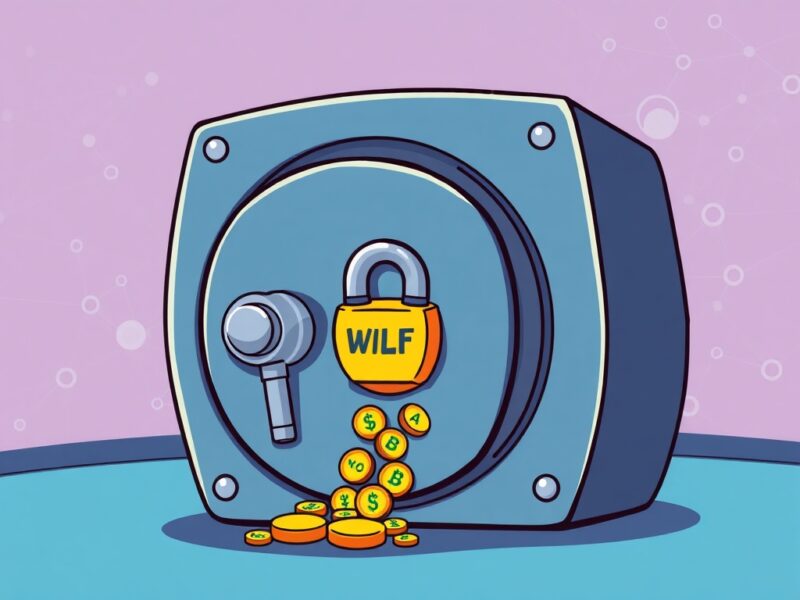
WLFI Token Transfer: Massive $1.5B Lockup Ignites DeFi Discussion

WLFI Token Transfer: Massive $1.5B Lockup Ignites DeFi Discussion

BitcoinWorld WLFI Token Transfer: Massive $1.5B Lockup Ignites DeFi Discussion A significant event has unfolded in the decentralized finance (DeFi) world, catching the attention of many investors and analysts. World Liberty Financial (WLFI), a DeFi project with reported links to the Trump family, recently completed a substantial WLFI token transfer. This move involved a massive amount of tokens being sent to a specialized lockup address, signaling potential shifts within the project’s strategy and the broader market. What’s Behind This WLFI Token Transfer? Over the past five and a half hours, World Liberty Financial executed a major transaction. On-chain analyst ai_9684xtpa reported that 6.55 billion WLFI tokens were transferred to a designated lockup address. This represents a substantial 6.55% of the total WLFI supply. Total Tokens Transferred: 6.55 billion WLFI Percentage of Total Supply: 6.55% Current Valuation: Approximately $1.5 billion Origin: The transfer originated from the top and eighth-largest WLFI holding addresses. This move is not just a simple transaction; it’s a strategic decision that could have wide-ranging implications for the WLFI ecosystem and its community. Why Does a WLFI Lockup Matter So Much? When a project performs a WLFI token transfer to a lockup address, it typically means these tokens are removed from circulation for a set period. This action is significant for several reasons: Reduced Circulating Supply: Locking up a large number of tokens effectively decreases the available supply in the market. Consequently, this could impact market dynamics. Increased Trust and Stability: Token lockups often demonstrate a project’s long-term commitment. It signals to investors that core holders are not looking to sell their tokens immediately, fostering greater confidence. Price Stability: By preventing large amounts of tokens from being dumped on the market, lockups can help reduce price volatility and support more stable growth. Therefore, this substantial WLFI lockup could be a strong indicator of World Liberty Financial’s future intentions. Understanding Token Lockups in DeFi Token lockups are a common strategy in the DeFi space. They serve multiple purposes, from vesting schedules for team members to securing liquidity for decentralized exchanges (DEXs). Generally, a lockup address is a smart contract designed to hold tokens for a predetermined duration or until certain conditions are met. This mechanism helps to: Align Incentives: It ensures that project developers and early investors have a vested interest in the long-term success of the project. Prevent Market Manipulation: Large token holders cannot suddenly flood the market with their holdings, which protects smaller investors. Support Project Development: Locked tokens might be designated for future development, marketing, or community incentives, ensuring resources are available over time. The recent WLFI token transfer to a lockup address aligns with these common practices, suggesting a deliberate strategic move. What’s the Broader Impact on World Liberty Financial? The decision by World Liberty Financial to execute such a large WLFI token transfer to a lockup address could have several impacts on the project. For a DeFi project reportedly linked to a high-profile family, transparency and stability are paramount. This move could: Enhance Credibility: By demonstrating a commitment to long-term value, WLFI might attract more serious investors and users. Spark Community Discussion: The community will undoubtedly analyze what this lockup means for WLFI’s future roadmap, tokenomics, and governance. Influence Market Perception: While a lockup often implies stability, the sheer size of this transfer and the project’s background will keep the market watching closely. As the DeFi landscape evolves, such strategic token movements are closely scrutinized for their potential to shape a project’s trajectory. In conclusion, the WLFI token transfer of $1.5 billion to a lockup address marks a significant moment for World Liberty Financial. This action, involving 6.55% of the total supply, signals a strong commitment to long-term stability and strategic growth within the DeFi ecosystem. As the crypto community watches, the implications of this massive lockup will undoubtedly unfold, influencing market sentiment and the project’s future trajectory. It underscores the importance of transparency and strategic planning in the dynamic world of decentralized finance. Frequently Asked Questions (FAQs) What is a token lockup? A token lockup involves sending cryptocurrency tokens to a smart contract address that prevents them from being sold or moved for a specified period. This action is typically done to reduce circulating supply, demonstrate long-term commitment, or secure project funds. Why did World Liberty Financial execute this WLFI token transfer? While the project has not issued an official statement detailing the exact reasons, a large WLFI token transfer to a lockup address usually indicates a strategic move to foster long-term stability, reduce market volatility, and signal commitment to the project’s future development. How does this lockup affect the WLFI token price? By reducing the circulating supply of WLFI tokens, a lockup can potentially create scarcity, which might lead to upward price pressure. However, market prices are influenced by many factors, so this is not a guarantee. Who reported this significant WLFI token transfer? The substantial WLFI token transfer was initially reported by on-chain analyst ai_9684xtpa, who tracks blockchain transactions and provides insights into large movements of digital assets. What are the benefits of token lockups for investors? For investors, token lockups can signify a project’s dedication, reduce the risk of large token dumps by major holders, and potentially contribute to a more stable and predictable token price environment over time. Did you find this analysis insightful? Share this article on your social media channels to help others understand the implications of this significant WLFI token transfer in the DeFi space! To learn more about the latest DeFi market trends, explore our article on key developments shaping cryptocurrency institutional adoption. This post WLFI Token Transfer: Massive $1.5B Lockup Ignites DeFi Discussion first appeared on BitcoinWorld and is written by Editorial Team

Author: Coinstats