DePIN

DePIN utilizes blockchain and token incentives to build and maintain physical infrastructure, such as wireless networks, cloud storage, and energy grids.By decentralizing the ownership of hardware, projects like Helium and Hivemapper disrupt traditional centralized monopolies.In 2026, DePIN is a core pillar of the Web3 + AI economy, providing the decentralized compute and data collection necessary for autonomous agents. This tag tracks the growth of hardware-based rewards, crowdsourced infrastructure, and the democratization of global utility networks.

1508 Articles
Created: 2026/02/02 18:52
Updated: 2026/02/02 18:52

While Altcoins Bleed, Ozak AI’s Presale Is Breaking Records — Analysts Expect 700× Growth After Listing

While Altcoins Bleed, Ozak AI’s Presale Is Breaking Records — Analysts Expect 700× Growth After Listing

The broader altcoin market has disappointed repeatedly in 2025, yet one project is bucking the trend. Ozak AI ($OZ), an AI + DePIN-driven crypto ecosystem, is seeing immense demand in its ongoing presale, with investors looking for utility-first projects that could sustain value even in a market downturn. Built on

Author: Thenewscrypto
Could Ozak AI Outpace Bitcoin and BNB Gains From Their Early Days? Presale Data Suggests Yes

Could Ozak AI Outpace Bitcoin and BNB Gains From Their Early Days? Presale Data Suggests Yes

Ozak AI, with its token called $OZ, stands out as one of the hottest new AI projects around right now. It runs on AI for automation, plus DePIN setup, links across chains, and real uses that pull people in. Folks are starting to stack it up against the starting days of Bitcoin and Binance Coin. […] The post Could Ozak AI Outpace Bitcoin and BNB Gains From Their Early Days? Presale Data Suggests Yes appeared first on Live Bitcoin News.

Author: LiveBitcoinNews
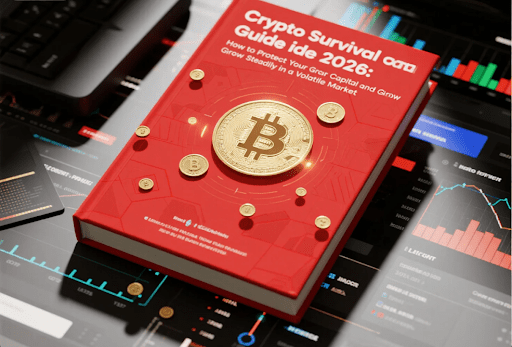
Crypto Survival Guide 2026: How to Protect Your Capital and Grow Steadily in a Volatile Market

Crypto Survival Guide 2026: How to Protect Your Capital and Grow Steadily in a Volatile Market

The global crypto market has evolved rapidly in the past two years. We’ve seen strong rallies, ETF approvals, regulatory breakthroughs, institutional inflows, new AI narratives, and massive shifts in liquidity. But as we enter 2026, one thing has become obvious: Making money in crypto is harder than ever — but losing money has become easier. […] The post Crypto Survival Guide 2026: How to Protect Your Capital and Grow Steadily in a Volatile Market appeared first on TechBullion.

Author: Techbullion
DePIN Launches ZK-Proof Processing Marketplace for Secure Blockchain Transactions

DePIN Launches ZK-Proof Processing Marketplace for Secure Blockchain Transactions

Brevis Launches marketplace for Zero-Knowledge Proof Computation Brevis, a pioneer in zero-knowledge proof (ZK-proof) coprocessor technology, has announced the launch of its marketplace, enabling users to earn revenue by performing ZK-proof computations. This development marks a significant step toward decentralizing and scaling blockchain proofing infrastructure, leveraging the company’s innovative ProverNet network. According to a recent [...]

Author: Crypto Breaking News
Decentralized Trading as the Center of Market Evolution in 2026

Decentralized Trading as the Center of Market Evolution in 2026

Decentralized exchanges reached about $474B in trading volume in May 2025, representing roughly 25% of the global crypto spot market. The advantage of decentralized exchanges is rooted in custody and autonomy. Institutional capital demands transparent and non-custodial environments, which positions decentralized venues as natural beneficiaries.

Author: Hackernoon
Which Top 10 AI Coins Will Boom in 2026?

Which Top 10 AI Coins Will Boom in 2026?

The line between artificial intelligence and blockchain is now thinner than ever. As we move toward 2026, the crypto market is no longer just about coins and charts: it’s about ecosystems built around machine learning models, intelligent agents, decentralized computing networks, and tokenized algorithms. AI coins sit at the heart of this shift, taking blockchain […] The post Which Top 10 AI Coins Will Boom in 2026? appeared first on CoinSwitch. The post Which Top 10 AI Coins Will Boom in 2026? appeared first on CoinSwitch.

Author: Coinswitch
Which Top 10 Cryptos Are Growing Fast? [Updated as of Dec 2025]

Which Top 10 Cryptos Are Growing Fast? [Updated as of Dec 2025]

Introduction to Top 10 Cryptos that are Growing Fastest The crypto market never sleeps. While some coins stay stagnant or fade into obscurity, others explode into the spotlight, gathering millions of new users, billions in liquidity, and a tidal wave of investor attention. Whether you’re a long-term believer in blockchain or a short-term trader chasing […] The post Which Top 10 Cryptos Are Growing Fast? [Updated as of Dec 2025] appeared first on CoinSwitch. The post Which Top 10 Cryptos Are Growing Fast? [Updated as of Dec 2025] appeared first on CoinSwitch.

Author: Coinswitch
DePIN Day Will Be Held in Abu Dhabi in December

DePIN Day Will Be Held in Abu Dhabi in December

On December 10, 2025, Abu Dhabi will become the world centre of decentralized physical infrastructure, hosting the 14th DePIN Day. The event will take place during Solana Breakpoint, the annual meeting of one of the most dynamic Web3 ecosystems, and will bring together leading teams building real networks based on crypto economics. This is stated […] Сообщение DePIN Day Will Be Held in Abu Dhabi in December появились сначала на INCRYPTED.

Author: Incrypted
Predicting the market takes a decade of honing; who will be next?

Predicting the market takes a decade of honing; who will be next?

The evolution of the crypto prediction market is fascinating because it was once considered a "falsifiable" sector. It took a decade to achieve Product-Market Fit (PMF), a process that exceeded market expectations. Sometimes, in the crypto space, drawing conclusions too early isn't advisable. The concept of prediction markets is not new; it has existed in the crypto space for a long time. The Gnosis project started development in 2015; and Augur officially launched in 2018. It is a decentralized prediction market platform based on Ethereum that allows users to create and predict future events and settle them using cryptocurrencies. Polymarket (based on Polygon) launched in 2020, but has remained marginalized ever since. Coupled with regulatory factors, it has struggled to survive. Polymarket's initial monthly trading volume was only a few million dollars; Augur's TVL plummeted nearly 80% after the 2020 election, falling from its peak to a few million dollars. The overall industry TVL peaked at around 7 million dollars, with monthly trading volume less than 100 million dollars. Regulatory pressure (such as the CFTC viewing it as "gambling") and imperfect (manipulable) oracles further hampered growth. The prediction market didn't truly explode until 2024. In particular, the 2024 US presidential election became a turning point. Polymarket's campaign prediction market saw trading volume exceed $2.7 billion, with the platform's monthly trading volume surging from $62 million in May to $2.1 billion in October, a more than 30-fold increase. The total notional trading volume for the year reached $16.3 billion, far exceeding the total of all previous years. Why did it take ten years to achieve PMF? First, the early crypto space faced technical and user experience barriers. While the concept of prediction markets seemed promising and demand immense, the user experience excluded the vast majority of users. For example, early versions of Augur were built on Ethereum's L1 platform, resulting in extremely high transaction costs—GAS was prohibitively high at the time—and slow confirmation speeds. Furthermore, ordinary users had to master wallets and complex interfaces, all of which presented significant learning curves. These high barriers corresponded to insufficient liquidity and user concerns about manipulation. Secondly, regulatory pressure has been constant. The U.S. Commodity Futures Trading Commission (CFTC) has intensified its scrutiny of prediction markets since 2018, classifying them as "gambling" or derivatives. During this period, Augur was fined for betting on sensitive events; Polymarket paid a $1.4 million fine and withdrew from the U.S. in 2022; and even its founder, Shayne Coplan (born in 1998), had his New York apartment raided by the FBI, who seized his electronic devices (but did not arrest him). This regulatory ambiguity has prevented institutional funds from entering the market. Regulatory pressure has made it difficult for liquidity to improve. Thirdly, there has been a shift in market narrative. In the crypto space from 2016 to 2018, most users focused more on speculation than practical tools; the DeFi/NFT boom from 2020 to 2023 distracted attention, resulting in a prediction market TVL of only $7 million. The lack of mainstream events hindered the accumulation of liquidity. Fourth, oracles are immature and easily manipulated. 2024 will be a turning point. As mentioned above, the US presidential election in 2024 will be a catalyst, but it will be much more than that. From 2024 to now, prediction markets have truly taken off. Besides Polymarket, the centralized prediction platform Kalshi has also emerged. In 2025, prediction market trading volume reached $27.9 billion (a year-on-year increase of 210%), with a weekly peak of $2.3 billion. The combined TVL of Polymarket and Kalshi exceeded $20 billion. Both were valued at tens of billions of dollars. Prediction markets suddenly became the darling of the market. So, what are the driving factors? In stark contrast to the obstacles encountered between 2015 and 2024, these obstacles were removed one by one, resulting in a qualitative improvement in various aspects such as user experience. First, there are changes in technological barriers and user experience. Polygon and Base L2 networks have reduced gas fees to mere cents and increased transaction speeds tenfold. Platforms like Polymarket have optimized their UIs, supporting one-click stablecoin betting and attracting non-crypto natives. Furthermore, DeFi has seen significant growth, providing deeper liquidity. For users, participating in prediction markets is now very convenient. Kalshi, a centralized prediction platform, has integrated with platforms like Robinhood, making user participation even easier. Second, regulatory changes. Following the 2024 US presidential election, regulators pushed for crypto-friendly policies. The CFTC approved regulated platforms like Kalshi in 2025. The SEC/CFTC clarified the legality of "spot commodity crypto," and stablecoin legislation passed Congress. Overseas, while Switzerland maintains a blacklist, the overall environment has shifted from hostile to supportive, with institutional funds flowing in (e.g., ICE invested $2 billion). Third, the market narrative has shifted. During this cycle, no single narrative has been particularly dominant. Instead, real-world applications have become the focus of market attention. Coupled with the catalyst of the 2024 election predictions, Polymarkets expanded its reach to areas such as sports, economics, and technology. Media promotion (such as coverage by CNN/Bloomberg) and the spread through social networks further fueled the boom in prediction markets. Fourth, both institutions and the community are pushing for it, with a16z actively participating and creating a narrative of "event-driven financial infrastructure." Community users are also actively participating, which has boosted TVL. Fifth, the prediction market has gradually evolved from "gambling" into a new type of signal, similar to a signal that provides real-time probability. An interesting conclusion can be drawn from the decade-long evolution of prediction markets: not all "falsified" sectors necessarily lack product-market fit (PMF); sometimes it's simply because conditions weren't yet ripe. This phenomenon is particularly evident in the crypto space. Due to the underdeveloped infrastructure in the first decade (expensive/slow/poor user experience, etc.), many attempts failed to reach ordinary users. Perhaps some of these sectors—such as Crypto Games, social networking, AI agents, depins, and digital identities—have already ended, but others will still have a chance to rediscover their potential.

Author: PANews
Post-Listing, Ozak AI Could Become the Most Profitable AI Token Ever — Analysts Expect $5 Target by 2027

Post-Listing, Ozak AI Could Become the Most Profitable AI Token Ever — Analysts Expect $5 Target by 2027

The post Post-Listing, Ozak AI Could Become the Most Profitable AI Token Ever — Analysts Expect $5 Target by 2027 appeared on BitcoinEthereumNews.com. Ozak AI ($OZ) continues to position itself as one of the most promising AI-powered blockchain projects in the market. Built on a fusion of artificial intelligence, tokenized infrastructure, and decentralized processing, Ozak AI combines AI automation with DePIN architecture, allowing real-time analytics and data execution across decentralized networks. Analysts tracking high-growth digital assets say the project now stands out as a rare presale token offering technology rather than theory. Presale Growth Shows Investor Confidence The Phase-7 presale of Ozak AI is live at a price of $0.014, with over 1,011,031,501.95 tokens sold and $4,854,478.95 already raised. The project has grown significantly from its earliest phases, where the price began at a fraction of current levels, making the total increase from launch one of the strongest among 2025 presales. With a $1 listing target set for exchanges, early entries are betting on a large gap between presale value and launch price. Investors argue that the token’s utility-driven design makes the project fundamentally different from speculative ICOs that lack real demand. A Utility Token With Real AI Infrastructure Ozak AI is designed to power predictive analytics, automated insights, and cross-chain operations without relying on centralized servers. Its DePIN framework distributes processing tasks across decentralized nodes, reducing system bottlenecks and enabling rapid data output. The token also plays a functional role in staking, governance, and ecosystem participation, suggesting long-term sustainability. The project has emphasized security and transparency from the beginning, completing a full smart contract audit from @sherlockdefi with zero unresolved findings. This audit has been an important confidence factor for large presale buyers entering during the later phases. Partnership Stack Positions Ozak AI for Rapid Ecosystem Growth The acceleration of partnerships around the project has been one of the clearest signals of future adoption. Through Hive Intel, Ozak AI gains enhanced blockchain…

Author: BitcoinEthereumNews