Dapp

Dapps are digital applications that run on a P2P network of computers rather than a single server, typically utilizing smart contracts to ensure transparency and uptime. In 2026, Dapps have achieved mass-market appeal through Account Abstraction, allowing for a "Web2-like" user experience with the security of Web3. This tag covers the entire ecosystem of decentralized software—from social media and productivity tools to governance platforms and identity management.

4955 Articles
Created: 2026/02/02 18:52
Updated: 2026/02/02 18:52
Unleash Exclusive DApp Rewards Starting Sept. 8

Unleash Exclusive DApp Rewards Starting Sept. 8

The post Unleash Exclusive DApp Rewards Starting Sept. 8 appeared on BitcoinEthereumNews.com. Solana Mobile Seeker Season: Unleash Exclusive DApp Rewards Starting Sept. 8 Skip to content Home Crypto News Solana Mobile Seeker Season: Unleash Exclusive dApp Rewards Starting Sept. 8 Source: https://bitcoinworld.co.in/solana-mobile-seeker-season/

Author: BitcoinEthereumNews
Revolutionary Kalshi Solana Expansion: Unleashing New Prediction Market Opportunities

Revolutionary Kalshi Solana Expansion: Unleashing New Prediction Market Opportunities

BitcoinWorld Revolutionary Kalshi Solana Expansion: Unleashing New Prediction Market Opportunities Get ready for a significant leap in decentralized finance! The world of prediction markets is buzzing with the exciting news of the Kalshi Solana expansion. Kalshi, a leading platform for event-based trading, has officially announced its integration with the high-performance Solana blockchain. This strategic move means users can now engage with prediction markets using SOL and Solana-based USDC, opening up a realm of new possibilities for speed, efficiency, and accessibility. What Does the Kalshi Solana Expansion Mean for Traders? Kalshi is renowned for allowing users to trade on the outcome of real-world events, from economic indicators to political races. Traditionally operating on other chains, this move to Solana is a game-changer. Solana is celebrated for its incredibly fast transaction speeds and remarkably low fees, which are crucial for the dynamic nature of prediction markets. This integration directly supports the SOL token and Solana-based USDC. Therefore, traders can fund their accounts and settle their bets with greater ease and lower costs. The Kalshi Solana expansion aims to enhance the user experience significantly, making event trading more fluid and responsive. Why Did Kalshi Choose Solana for This Revolutionary Expansion? Solana has emerged as a powerhouse in the blockchain space, often lauded for its scalability and performance. Its ability to process thousands of transactions per second, coupled with minimal gas fees, makes it an ideal environment for applications requiring high throughput and quick finality. For a platform like Kalshi, where market conditions can change rapidly and users demand instant execution, Solana’s infrastructure provides a distinct advantage. Speed: Transactions confirm in seconds, not minutes. Cost-Effectiveness: Dramatically lower fees compared to older blockchain networks. Scalability: Handles a massive volume of transactions, ensuring smooth operation even during peak times. The decision to embrace the Kalshi Solana expansion underscores a commitment to leveraging cutting-edge technology to serve its growing user base better. What Opportunities Will This Expansion Unlock for You? The integration of Kalshi with Solana brings a wave of exciting opportunities for both existing users and new entrants to the prediction market space. This move will likely attract a fresh wave of users who are already active within the Solana ecosystem, boosting liquidity and market diversity on Kalshi. Consider these compelling benefits: Broader Access: Solana users can now easily participate in Kalshi’s diverse range of prediction markets. Enhanced Liquidity: Increased participation often leads to deeper markets and tighter spreads. Innovative Products: The faster and cheaper infrastructure could pave the way for new, more complex prediction market products that require rapid updates and settlements. This Kalshi Solana expansion empowers traders to act swiftly on their insights, capitalizing on real-time information without being hampered by network congestion or high costs. Are There Any Challenges or Future Prospects for the Kalshi Solana Expansion? While the benefits are clear, every major platform expansion comes with its own set of considerations. Ensuring network stability and maintaining robust security measures on the new chain will be paramount. However, Kalshi’s rigorous approach to platform development suggests a strong focus on a seamless transition. Looking ahead, the potential for innovation is immense. Imagine micro-predictions on rapidly unfolding events, or even more granular market offerings, all facilitated by Solana’s efficient backbone. The Kalshi Solana expansion sets a precedent for how decentralized prediction markets can evolve, pushing the boundaries of what’s possible in event-based trading. In conclusion, Kalshi’s move to the Solana chain marks a pivotal moment for decentralized prediction markets. By embracing Solana’s superior speed and cost-efficiency, Kalshi is not just expanding its reach; it is fundamentally enhancing the trading experience for its users. This development promises a more dynamic, accessible, and liquid future for predicting real-world outcomes. The integration of SOL and Solana-based USDC is a clear signal of Kalshi’s dedication to innovation and user empowerment. Frequently Asked Questions (FAQs) 1. What is Kalshi? Kalshi is a decentralized prediction market platform that allows users to trade on the outcome of real-world events, such as economic indicators, political outcomes, and other future occurrences. 2. What is Solana? Solana is a high-performance blockchain platform known for its incredibly fast transaction speeds, low transaction costs, and high scalability, making it suitable for decentralized applications (dApps) and crypto projects. 3. Why did Kalshi expand to Solana? Kalshi expanded to Solana to leverage its superior speed, lower transaction fees, and higher scalability. This move aims to provide a more efficient, cost-effective, and responsive trading experience for its users. 4. What cryptocurrencies does Kalshi now support on Solana? With the Kalshi Solana expansion, the platform now supports SOL (Solana’s native cryptocurrency) and Solana-based USDC, allowing users to fund their accounts and settle trades using these assets. 5. How does this expansion benefit users? Users benefit from faster transaction speeds, significantly lower fees, enhanced liquidity, and broader access to Kalshi’s prediction markets. This also opens the door for more innovative and dynamic trading products. Did you find this update on Kalshi’s Solana expansion insightful? Share this article with your network on social media to spread the word about this exciting development in decentralized prediction markets! To learn more about the latest crypto market trends, explore our article on key developments shaping Solana’s institutional adoption. This post Revolutionary Kalshi Solana Expansion: Unleashing New Prediction Market Opportunities first appeared on BitcoinWorld and is written by Editorial Team

Author: Coinstats
9 Best Cheap Cryptos To Buy for High  Returns

9 Best Cheap Cryptos To Buy for High  Returns

The cryptocurrency market in 2025 presents unprecedented opportunities for investors seeking high returns from affordable digital assets. With Bitcoin hitting an all-time high of $123,000 in mid-July and the broader crypto market experiencing renewed momentum, many investors are now turning their attention to cheap cryptocurrencies with potential for high returns. These low-priced cryptocurrencies, often priced […]

Author: The Cryptonomist
Best Altcoins to Buy Now: BlockDAG, XRP, ONDO, ARB Make Big Moves in 2025

Best Altcoins to Buy Now: BlockDAG, XRP, ONDO, ARB Make Big Moves in 2025

The post Best Altcoins to Buy Now: BlockDAG, XRP, ONDO, ARB Make Big Moves in 2025 appeared on BitcoinEthereumNews.com. The Best Altcoins to Buy Right Now: BlockDAG’s 2049% Bonus, While XRP, ONDO & ARB Heat Up In a market where headlines are fleeting and attention is everything, only a few altcoins manage to stay in the spotlight. From established names making regulatory progress to newcomers shaking up major conferences, investors are watching closely for the next big breakout.   Whether you’re a long-term holder or a presale opportunist, now is a strong moment to reassess what the best altcoins to buy really look like. Let’s break it down, starting with the one that just turned heads at Web3’s biggest event. BlockDAG (BDAG): The Presale That Cut Through the Noise Token2049 in Singapore is known for its buzz. But this year, one name stood out above the rest: BlockDAG. With hundreds of projects trying to gain attention, BlockDAG’s 2049% bonus offer wasn’t just louder, it was smarter. The number matched the conference, but the real power was in the timing. While others shared updates, BlockDAG made a move that turned investors’ heads and social feeds into free PR. Backed by $386 million raised, over 25.5 billion BDAG sold, and currently in batch 30 at $0.03, the numbers speak for themselves. Early buyers in batch 1 at $0.001 have already secured a 2,900% ROI. With the launch price projected at $0.05, those joining now can still earn up to 1,566% ROI. More than just a Layer 1 chain, BlockDAG has a full ecosystem rolling out, explorer, dashboard, X-series miners, and millions of users across its mobile miner apps. The limited-time bonus runs until October 1, the same day as Token2049’s kickoff, making now the most strategic time to enter. Among all the best altcoins to buy, BlockDAG currently owns the conversation. XRP: Waiting on Regulatory Clarity XRP has always been on…

Author: BitcoinEthereumNews
DoS Protection: Safeguarding Your Contract’s Availability

DoS Protection: Safeguarding Your Contract’s Availability

Denial of Service (DoS) attacks pose a critical threat to decentralized applications (dApps). These attacks are not designed to steal funds, but rather to cripple a program’s functionality, making it unusable or inaccessible for legitimate users. This disruption can prevent crucial operations from executing, block user interactions, and severely erode trust in the application. Such incidents effectively “shut down” access, even if underlying assets remain secure. This section will detail common DoS attack methods found in smart contracts and, more importantly, provide robust strategies to defend against them, ensuring your dApps remain resilient and consistently available.

  1. Avoid Unbounded Loops For collections that still need to be iterated (e.g., for data display in a dApp), implementing pagination is crucial to fetch items in smaller, manageable chunks, thus avoiding the block gas limit and potential DoS attacks. How Pagination Works Instead of trying to read an entire large array or list from your smart contract in one go (which can exceed the gas limit), pagination allows your frontend application to request data in smaller, defined segments. This distributes the gas cost over multiple, smaller transactions and prevents any single transaction from becoming too expensive. Examples of Pagination in Solidity Let’s illustrate with a simple example of a contract storing a list of user addresses. Vulnerable Example (Without Pagination): This function tries to return all addresses, which would fail if users array becomes too large. // VULNERABLE: Trying to return an entire unbounded arrayaddress[] public registeredUsers;function addRegisteredUser(address _user) public { registeredUsers.push(_user);}// This function will revert if registeredUsers.length is too largefunction getAllRegisteredUsers() public view returns (address[] memory) { return registeredUsers;} DoS Protected Example (With Pagination): Here, we provide functions that allow the frontend to request users in batches, controlling the gas cost. // DoS Protected: Paginationaddress[] public registeredUsers;function addRegisteredUser(address _user) public { registeredUsers.push(_user);}// Function to get the total count of registered usersfunction getTotalRegisteredUsersCount() public view returns (uint256) { return registeredUsers.length;}// Function to get a paginated list of users// _startIndex: the starting index for the slice// _count: the number of elements to retrieve from the startIndexfunction getPaginatedRegisteredUsers(uint256 _startIndex, uint256 _count) public view returns (address[] memory) { require(_startIndex <= registeredUsers.length, "Start index out of bounds"); uint256 endIndex = _startIndex + _count; if (endIndex > registeredUsers.length) { endIndex = registeredUsers.length; } uint256 actualCount = endIndex - _startIndex; address[] memory result = new address; for (uint256 i = 0; i < actualCount; i++) { result[i] = registeredUsers[_startIndex + i]; } return result;} How a Frontend Would Use It A frontend application (e.g., in React or plain JavaScript) would interact with this paginated contract like this:
Get Total Count: First, call getTotalRegisteredUsersCount() to know how many users there are in total. Calculate Pages: Based on the total count, decide how many items to display per page (e.g., 10 or 20). Fetch Pages: Make repeated calls to getPaginatedRegisteredUsers(startIndex, count) as the user navigates through pages. For instance, to get the first 10 users, it would call getPaginatedRegisteredUsers(0, 10); for the next 10, it would call getPaginatedRegisteredUsers(10, 10), and so on. This way, no single transaction tries to fetch all data at once, keeping gas costs manageable and preventing DoS attacks due to excessive computation. 2. Guard Against Unexpected Reverts (External Call DoS) If your contract’s logic depends on the successful execution of an external call (e.g., sending Ether to an address), and that external call can be made to revert by a malicious actor, it can cause a DoS. Vulnerable Example (Auction Refund): Imagine an auction contract that automatically refunds the previous highest bidder when a new higher bid comes in. If the previous highest bidder is a malicious contract that always reverts when it receives Ether, the bid function would always fail, preventing anyone else from bidding. // VULNERABLE: DoS via external call revert address public highestBidder; uint256 public highestBid; function bid() public payable { require(msg.value > highestBid, "Bid must be higher"); if (highestBidder != address(0)) { // If highestBidder is a malicious contract that always reverts on Ether receipt, // this transfer will fail, causing the entire bid function to revert. payable(highestBidder).transfer(highestBid); // Or .send() or .call() } highestBidder = msg.sender; highestBid = msg.value; } Solution: Pull Payment Pattern (as shown above): By using a pull payment system, the contract doesn’t force a transfer to potentially malicious addresses. Users must explicitly call a withdraw function, isolating the failure to their own transaction if they are a malicious contract.
  1. Consider Transaction Ordering Dependence (Front-running) While not a direct DoS in the sense of halting a contract, front-running can effectively deny a legitimate user their intended outcome by having a malicious transaction executed before theirs. This is often seen in decentralized exchanges or auction protocols.
Scenario: An attacker sees your transaction to buy a rare NFT in the public mempool. They then submit a similar transaction with a higher gas price, ensuring their transaction is mined first, effectively “stealing” the NFT. Mitigation: Commit-Reveal Schemes: For sensitive operations like auctions or votes, users first commit a hashed version of their action, and only later reveal the actual action. This prevents others from knowing their intent beforehand. Time Delays: Implement delays so that sensitive actions can only be executed after a certain number of blocks, giving time for others to react if they see a front-running attempt. Using a Decentralized Sequencer/Relayer: In some Layer 2 solutions, transactions are ordered by a centralized or decentralized sequencer, which can help mitigate front-running risks.
  1. Reentrancy Guards (Indirect DoS) While primarily a fund-draining vulnerability, a reentrancy attack can indirectly lead to a DoS if the recursive calls exhaust the gas limit or cause an unexpected state. Protecting against reentrancy is a fundamental security practice.
Solution: Checks-Effects-Interactions Pattern: Always update the contract’s state before making any external calls. // Protected with Checks-Effects-Interactions function withdrawSafely() public { uint256 amount = balances[msg.sender]; // Check require(amount > 0, "No funds to withdraw"); balances[msg.sender] = 0; // Effect (update state BEFORE external call) // Interaction (external call) (bool success, ) = payable(msg.sender).call{value: amount}(""); require(success, "Transfer failed"); } Solution: Reentrancy Guard: Use a mutex-like mechanism (e.g., OpenZeppelin’s ReentrancyGuard modifier) to prevent a function from being called again while it's still executing. // SPDX-License-Identifier: MITpragma solidity ^0.8.0;import "@openzeppelin/contracts/security/ReentrancyGuard.sol";contract MyContract is ReentrancyGuard { // Example withdraw function protected against reentrancy attacks function withdraw() public nonReentrant { // withdrawal logic }} Conclusion: Engineering for Uninterrupted Decentralization Protecting your smart contracts from Denial of Service attacks is paramount to building truly reliable and user-friendly decentralized applications. While often overlooked in favor of direct financial security, a successful DoS attack can be just as crippling, effectively locking out users and halting critical operations. By diligently applying strategies such as avoiding unbounded loops, implementing pull payment patterns, considering transaction ordering, and utilizing reentrancy guards, you empower your smart contracts to withstand malicious attempts at disruption. Remember, a resilient smart contract not only secures assets but also guarantees continuous access and functionality, fostering user trust and contributing to a truly robust decentralized future. DoS Protection: Safeguarding Your Contract’s Availability was originally published in Coinmonks on Medium, where people are continuing the conversation by highlighting and responding to this story

Author: Medium
Email Marketing In Crypto, Web3 n Blockchain

Email Marketing In Crypto, Web3 n Blockchain

Email marketing in the blockchain industry has its own unique considerations compared to traditional sectors, due to the nature of the audience (tech-savvy, privacy-conscious), the products (wallets, tokens, dApps, etc.), and legal concerns (like regulations and spam laws). Here’s a breakdown of how email marketing can be effectively used in the blockchain space:

  1. Build a Trustworthy Email List
Opt-in only: Avoid buying email lists. Instead, use lead magnets like airdrops, whitelist registrations, or early-access offers. Transparency: Clearly state what users are signing up for (e.g., project updates, token sale news, etc.).
  1. Content Strategy
Educational Content: Explain how your product or platform works. Blockchain is still complex for many. Project Updates: Share news about milestones, partnerships, listings, audits, or governance decisions. Community Engagement: Invite users to participate in DAOs, vote on proposals, or join ambassador programs. Token Information: Be careful with how you discuss tokens to stay compliant with regulations (avoid sounding like financial advice or guarantees).
  1. Design and Deliverability
Clean, mobile-friendly templates. Branding consistency: Use your project’s colors, fonts, and tone. Use wallets as identity (optional): Some platforms integrate wallet-based logins tied to emails for Web3-native experiences.
  1. Tools and Platforms
Use tools like Mailchimp, Sendinblue, ConvertKit, or Substack for newsletters. For crypto-native tools: platforms like XMTP and Dmail are exploring decentralized email/messaging.
  1. Legal Compliance
GDPR, CAN-SPAM, and other data protection laws still apply even in the blockchain space. Provide unsubscribe links and keep communication non-spammy.
  1. Best Practices
Segment your list: New users, holders, validators, etc. Use analytics: Track open rates, clicks, and conversions. Automate follow-ups and onboarding sequences. Token Sale Updates (e.g., ICO, IDO reminders) New Feature Releases (e.g., NFT drops, staking features) Community Votes & Governance (DAO updates) Partnership Announcements Security Alerts Blockchain Email campaign or design an email funnel for Web3 product.Dillex Ayo designs In the blockchain/Web3 space, email campaigns often use highly visual and interactive content instead of plain-text-heavy emails. Here’s why: Why Visual/Graphic Emails Work in Blockchain: The audience is tech-savvy and drawn to sleek, futuristic designs. It mimics the UI of dApps, NFTs, and wallets they’re familiar with. Attention spans are short visual storytelling (graphics, GIFs, or short videos) works better. Easier to show token metrics, roadmaps, staking stats, or NFT artwork at a glance. What a Typical Blockchain Visual Email Looks Like: Here’s how they structure it:
  1. Header Banner
Logo + clean navigation (links to website, dashboard, whitepaper)
  1. Eye-catching Visual or GIF
For example, a graphic countdown to token sale or animated NFT teaser.
  1. Short Hook Text
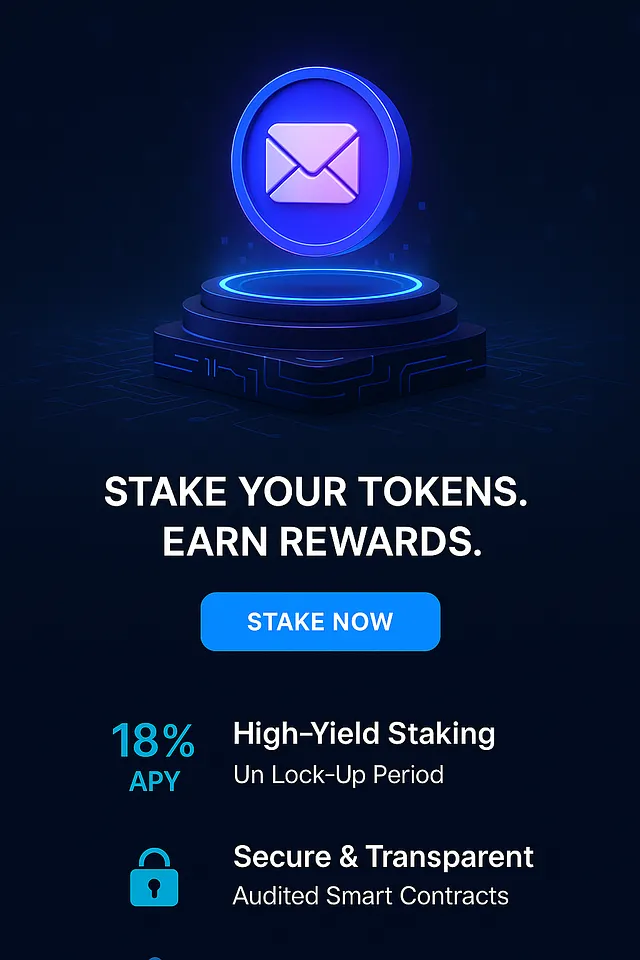
One-line summary like:“Stake now. Earn 18% APY. No lock-in.”
  1. Button CTA
“Stake Now” or “Claim NFT”(Well-designed, colored button — not text links)
  1. Visual Sections
Infographic: Tokenomics, Roadmap, Ecosystem Animated steps: How to connect wallet > stake > earn Promo for upcoming AMA, launch, or collab
  1. Footer
Social media icons (X/Twitter, Discord, Telegram, Medium) Legal disclaimer (very important for token compliance) Tools Blockchain Projects Use: Photoshop/Canva: To design branded email graphics Mailchimp, BeeFree, or Stripo: Drag-and-drop HTML email editors Video embeds: With YouTube, Vimeo, or Web3-native hosting Animated NFTs/headers: For creative drops Campaign Structure: 5-Part Funnel with Segmentation Audience Segments Split list by behavior or signup intent: Airdrop Hunters DeFi Enthusiasts NFT Creators/Collectors Governance Voters/DAO Members Inactive Users Each group gets targeted messaging, while some emails remain shared (global updates). Email 1: Welcome & Smart Segmentation Subject: Welcome! Tell us what you’re here for… Body: Hey [Name], Welcome to [Project Name], the all-in-one platform for DeFi, NFTs, and DAOs. We’d love to personalize your journey. What excites you most? Earn with DeFi Mint or collect NFTs Join a DAO or vote Just exploring [Pick Your Path] → Leads to a tag or segment-based flow. You’ll get tailored updates, resources, and early access to features. See you on-chain,[Project Name] Team Email 2A: DeFi Segment; Feature Benefits Subject: Multiply your crypto — 3 ways to earn with DeFi Body: Hi [Name], Here’s how [Project Name] helps you earn more, safely: Staking Pools with up to 18% APY Liquidity Mining across top tokens Auto-Compounding Vaults (set it and forget it) We’ve built DeFi with simplicity in mind. Start your earning journey in under 2 minutes. [Start Earning] [Read the DeFi Guide] Email 2B: NFT Segment; Creator-Focused Subject: Mint. Earn. Build a fanbase. Body: Hey [Name], [Project Name’s] NFT launchpad gives you more than minting: Low gas minting Instant royalties Community storefronts AI-powered NFT visuals (coming soon) Creators are the core of Web3. Let’s get your next drop seen by the right crowd. [Launch Your NFT] [See Top Collections] Email 2C: DAO Segment; Voter Power Subject: Your vote shapes the future Body: Hi [Name], As a [Project Name] user, you can propose and vote on: New token utilities Treasury spend Partner integrations Community grants One wallet = One voice (or more, via delegated power). [Join the DAO] [Read Governance Docs] Email 3: Global Update; Launch Event / Token Sale Subject: It’s here: Public token launch + whitelist access! Body: Big news, [Name]! The $SPHERE token launches in 3 days. As a subscriber, you’re eligible for early whitelist access. Whitelist benefits: Lower entry price Governance voting power Loyalty rewards Early farming access [Join Whitelist Now] [Read Tokenomics Whitepaper] Email 4: Reminder Based on Behavior DeFi User Didn’t StakeSubject: You picked DeFi, ready to earn? NFT User didn’t mintSubject: Your NFT tools are ready, still waiting on you! DAO User didn’t voteSubject: There’s a proposal waiting for your vote CTA: Encourage immediate action with direct links. Email 5: Community & Trust Building Subject: Why thousands trust [Project Name] Body: Hey [Name], We’re more than a platform , we’re a growing ecosystem built on transparency: Audited smart contracts Community governance Active support and AMAs 30K+ users and counting Join our community and see what Web3 can be. [Join Telegram] [Follow Twitter/X] [Visit Community Portal] Automation Flow (Overview): Welcome email → Segment selection Based on interest, users enter 3–5 email tracks Behavior triggers reminders Broadcast emails for events & launches Winback email if inactive after 2 weeks https://medium.com/media/b1a15808689f20c182a1d2764d7e01f4/href Let’s design a simple 3-email sequence for a fictional blockchain project. Subject: Welcome to [Project Name], Let’s Grow Your Crypto! Body: Hey [First Name], Thanks for joining the Project Name community, your gateway to earning more from your crypto! We’re building a transparent, user-friendly platform where you can stake your tokens, earn rewards, and explore DeFi with ease. Here’s what you can expect: Weekly insights on earning strategies Exclusive platform updates Early access to new features Start now and see how simple passive income can be. [Start Earning] button See you on the chain,The [Project Name] Team EMAIL 2: Educational Value Subject: Not staking yet? Here’s why you should. Body: Hi [First Name], Still exploring? No worrie, we’re here to help you get started. Why staking matters: Earn while you HODL: Your crypto works while you sleep. Secure the network: Your stake helps secure the blockchain. Flexible options: Unstake anytime, no pressure. Learn how it works in 2 minutes: [Watch Quick Video] Got questions? Hit reply. Our community is always here. Earn smart,[Project Name] EMAIL 3: Call to Action & Scarcity Subject: Last chance: 15% APR on new pools ends soon! Body: Hi [First Name], Our special 15% APR pool for [Token] ends in 48 hours! It’s your last chance to lock in boosted returns before the new cycle begins. Don’t miss this opportunity to multiply your passive income. Stake now and watch your earnings grow. [Join the Pool Now] button Happy earning,The [Project Name] Team Email Marketing In Crypto, Web3 n Blockchain was originally published in Coinmonks on Medium, where people are continuing the conversation by highlighting and responding to this story

Author: Medium
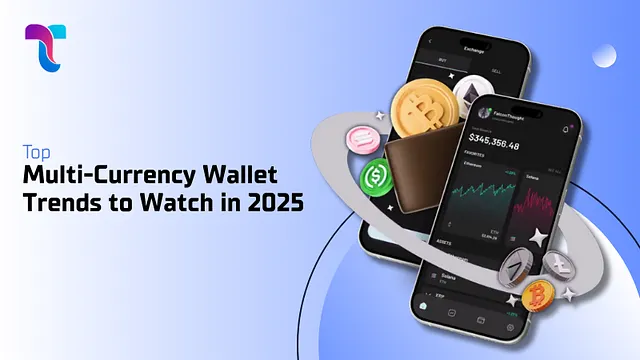
Top Multi-Currency Wallet Trends to Watch in 2025

Top Multi-Currency Wallet Trends to Watch in 2025

The multi-currency wallets are gaining importance in the digital asset system, as in the expanded domain of crypto, users are no longer just dealing with Bitcoin or Ethereum; rather, they are handling portfolios inclusive of altcoins, stablecoins, NFTs, and tokens on multi-chains. And as this space evolves, so do the user requirements. Crypto wallets are moving from merely a tool to store your crypto’s private keys to a better utility, more security, and larger dApp integration. Users tend to move to wallets that offer more features with multiple currencies. In this blog, we will break down what multi-currency wallets are and all the different trends that you can watch in 2025. Let’s break it down, starting from the basics: What is a Multi-Currency Wallet? A multi-currency wallet is one that allows the account holders to store, send, receive, and even manage multiple cryptocurrencies and tokens from a single wallet interface. Instead of jumping from one wallet to another for each coin or each chain, these wallets simplify everything into a single dashboard, supporting Bitcoin, Ethereum, Solana, Polygon, and many more. Multi-currency wallets simplify asset management and make it more efficient, regardless of whether one is a casual investor or a DeFi power user. Top Multi-Currency Wallet Trends to Watch in 2025 Crypto wallets have come a long way from just being simple Bitcoin vaults since their inception in 2009. In 2025, they are reshaping the world by seamlessly integrating trends, such as: Enhancing Wallets with AI AI has found its way to integrate into everything and make life simpler. In crypto wallets, AI is revolutionizing user experiences by providing smarter, safer, and more personalized experiences. It provides real-time analytics, gives personalized insights and fraud detection. This integration boosts decision-making, security, and the overall user engagement in the crypto environment. Decentralized Identity Integration Wallets that are enabled with DID are the foundation of the Web3 ecosystem. Wallets that are integrated with DID allow their users to authenticate themselves, give control over who can have access to their personal data, and allow them to interact with dApps in a secure manner. Collaborative and Social Wallets In collaborative wallets, shared ownership and collective decision-making come into play for cryptocurrency management. These wallets are developed to suit the needs of DAOs and community-driven projects. Social wallets thus support multi-sign approvals in which more than one user must consent to a transaction. NFT-Centric Wallet Features NFT wallets offer great storage facilities and have trading options baked within the app itself. These wallets now act as virtual galleries, marketplaces, and trading platforms for NFTs. This means users no longer need to attach their external wallet to the marketplace. Top wallet service providers integrate with decentralized platforms such as OpenSea and Rarible, giving users a hassle-free experience of buying, selling, or displaying their NFTs. Stacking Support for DeFi Wallet DeFi wallets allow users to access platforms such as PancakeSwap, Aave, and Synthetix with token swaps, liquidity provision, lending, and yield farming. Staking through such wallets has been increasingly simplified over time as a way to earn rewards. Wallets now technically provide a one-click solution to staking through popular networks, thus pushing DeFi adoption further. Examples are Coinbase, MetaMask, Coinomi, etc. Businesses can also get custom DeFi-ready wallets developed with multi-currency and staking support through our crypto wallet development expertise. Cold Storage Integration with Hardware Wallets Hardware wallets are physical devices, like pen drives, used specially to store the private keys of cryptocurrencies. So, in the event you want to use any crypto, simply plug this device into your computer and retrieve all the private keys through which you can unlock your cryptocurrencies. These are way more secure since they never get connected to the Internet, and thus, cannot get hacked. Examples are Ledger Nano S Plus and Trezor. Gamifying the Crypto Wallets Gamification is really bringing a change to how users engage with crypto wallets while also making asset management a fun and rewarding experience. The reward systems of the wallet include point systems, loyalty programs, badges, and cashback rewards to incentivize users to interact. These incentives keep users for long-term engagement and retention. Environmentally Friendly and Sustainable Wallets Proof of Work (PoW) mechanisms, such as those used by Bitcoin, consume an unsustainable amount of energy and thus contribute to global warming. Some wallets donate a portion of their transaction fees towards NGOs that work towards environmental causes to balance the effects of the wallet. Wallets that feature projects like Chia and Algorand promote low-energy consensus mechanisms. Conclusion The multi-currency wallets in 2025 have geared toward all-in-one hubs for security, multi-chain access, DeFi tools, NFT features, and even environmental benefits. Choosing the right wallet boils down to a combination of good user experience and innovation. If you wish to get a custom multi-currency wallet for your firm, then you should contact a company that has been in this field for a long time. Technoloader is a cryptocurrency wallet development company that has been building next-gen crypto wallets for more than 8 years. They make custom wallets that support multiple currencies, which are designed to keep up with these trends to ensure the businesses are ahead in the ever-moving pace of the crypto world. Contact them today and build your own wallet! Top Multi-Currency Wallet Trends to Watch in 2025 was originally published in Coinmonks on Medium, where people are continuing the conversation by highlighting and responding to this story

Author: Medium
Everclear launches TRON Network support, bringing capital efficient rebalancing to top stablecoin network

Everclear launches TRON Network support, bringing capital efficient rebalancing to top stablecoin network

The post Everclear launches TRON Network support, bringing capital efficient rebalancing to top stablecoin network appeared on BitcoinEthereumNews.com. George Town, Cayman Islands – August 28, 2025 – Everclear, the cross-chain clearing and settlement protocol dedicated to eliminating liquidity fragmentation for blockchains and digital assets, announced an integration with the TRON network. This integration facilitates the settlement of onchain transactions without the need for centralized exchanges or fragmented routes, essentially solving liquidity fragmentation for any dApps building on TRON’s vibrant ecosystem of decentralized finance. With a circulating supply of USDT exceeding $82 billion and one of the most active user bases in crypto, TRON has become the backbone of the global stablecoin market and onchain economy. A leader in payments, remittances, and cross-border transactions, TRON’s growth has been fueled by high adoption rates in regions where stablecoins provide access to US dollars. The TRON network is home to 2.86 million daily active users who execute approximately 8.8 million transactions each day. “As stablecoin usage continues to grow globally, capital needs to move where users are — and that activity is overwhelmingly taking place on TRON,” said Dima Khanarin, CEO of the Everclear Foundation. Native TRON support on Everclear provides solvers, bridge operators, and protocol treasuries with access to capital-efficient rebalancing mechanisms. These allow the largest circulating supply of USDT to move seamlessly between TRON and over 20 other blockchains without fragmentation, manual flows, or reliance on centralized exchanges. Everclear’s coordination of global settlement and cross-chain liquidity strengthens TRON’s ability to deliver secure and scalable blockchain solutions, priming the network for even broader institutional adoption. For native USDT (TRC-20) transfers on TRON, solvers can submit rebalancing intents between TRON and EVM-compatible chains by netting opposing transfers automatically and completing the remainder at competitive prices. Whether a bridge is rebalancing liquidity, a protocol is moving treasury, or a solver is playing auctions — cross-chain clearing on TRON flows as seamlessly as…

Author: BitcoinEthereumNews
Exploring the Future of Cryptocurrency: Solana and Remittix's Rise

Exploring the Future of Cryptocurrency: Solana and Remittix's Rise

As we venture into the future of cryptocurrencies, two platforms stand out due to their promising growth trajectories and innovative technologies: Solana and Remittix. Solana has shown a solid foundation that could see its value soar to over $650 by 2026, while Remittix is capturing the interest of traders with its potential for massive gains. The Path to $650: Solana's Growth Trajectory What makes Solana a potential giant in the crypto world is its sophisticated blockchain architecture, designed to facilitate high-speed transactions with minimal fees. This capability is increasingly appealing to developers looking to create decentralized applications (dApps) across various sectors including finance, healthcare, and media. Moreover, the increasing adoption of Solana can be attributed to its robust community and continuous developments, which may very well push its price to the predicted $650 mark by 2026. Remittix: A Dark Horse in Crypto with 4,000% Growth Potential On the other side of the spectrum, Remittix is making waves with its specialized focus on remittance and payment solutions. The platform promises to ease the process of crypto-to-bank transactions, which could revolutionize how freelancers and remote workers manage cross-border payments. With its user-friendly interface and strategic market positioning, Remittix has the potential to deliver up to 4,000% gains to its investors, particularly as it scales its wallet adoption and expands its operational corridors. Why These Platforms Stand Out in the Crowded Crypto Market Solana's promise of scalability and low transaction costs makes it a formidable competitor to Ethereum, while Remittix's niche approach to remittances offers a clear utility that could see rapid adoption among its target demographic. Understanding the Market Dynamics For cryptocurrency investors, understanding the fundamental and technical aspects of platforms like Solana and Remittix is crucial. Solana's strength lies in its high throughput and efficient consensus mechanism, while Remittix offers real-world applications that meet an existing demand in the fintech space. The potential for significant returns on investment makes both platforms attractive options for those looking to diversify their crypto portfolios. However, it's important to keep abreast of market trends and the evolving regulatory landscape. To explore more about these platforms or to start investing, visit the Remittix official website. Remember, while the future looks bright for Solana and Remittix, all investments carry risks, and it's essential to conduct thorough research before making investment decisions. Stay updated with the latest news and developments by visiting their sites and keeping an eye on market trends. Disclaimer: This is a sponsored press release and is for informational purposes only. It does not reflect the views of Bitzo, nor is it intended to be used as legal, tax, investment, or financial advice.

Author: Coinstats
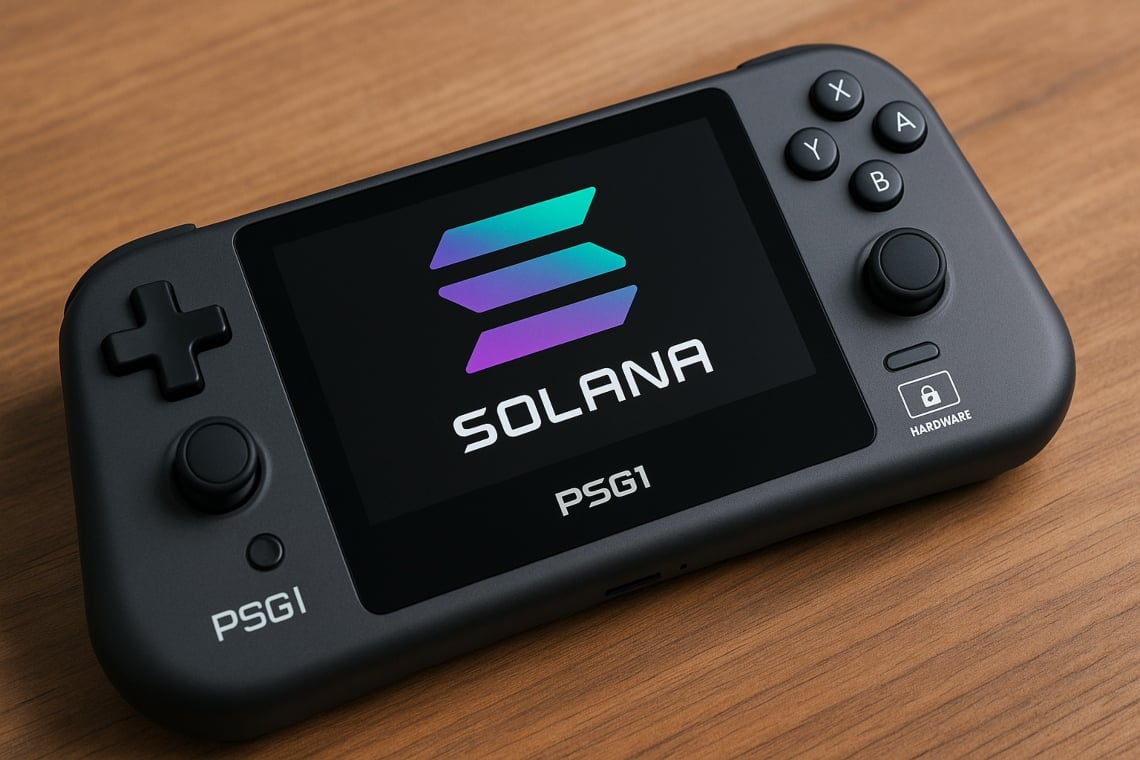
PSG1 Solana, portable Web3 console with hardware wallet: shipments on October 6, 2025

PSG1 Solana, portable Web3 console with hardware wallet: shipments on October 6, 2025

A laptop designed for Web3 gaming and asset custody arrives: PSG1 Solana features an OLED display.

Author: The Cryptonomist