Dapp

Dapps are digital applications that run on a P2P network of computers rather than a single server, typically utilizing smart contracts to ensure transparency and uptime. In 2026, Dapps have achieved mass-market appeal through Account Abstraction, allowing for a "Web2-like" user experience with the security of Web3. This tag covers the entire ecosystem of decentralized software—from social media and productivity tools to governance platforms and identity management.

4957 Articles
Created: 2026/02/02 18:52
Updated: 2026/02/02 18:52

Pi Network Protocol v23 Sparks Surge of Interest in Pi Coin

Pi Network Protocol v23 Sparks Surge of Interest in Pi Coin

TLDR Pi Network’s Protocol v23 enhances scalability and transaction speed for crypto users. The upgrade fosters more community involvement and strengthens Pi’s blockchain ecosystem. Pi Coin sees increased market interest, reaching new highs following Protocol v23’s release. Protocol v23 prepares Pi Network for decentralized finance advancements and mainnet transition. Pi Network has officially launched its [...] The post Pi Network Protocol v23 Sparks Surge of Interest in Pi Coin appeared first on CoinCentral.

Author: Coincentral
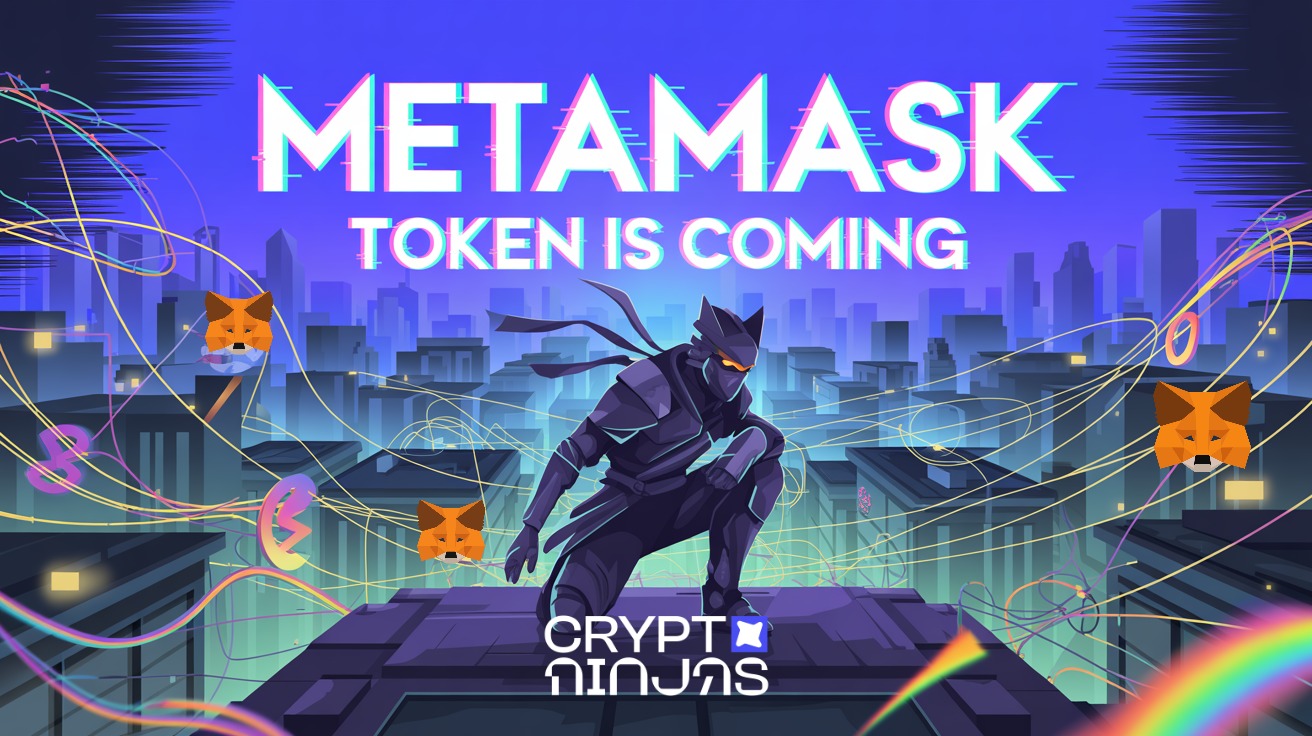
ConsenSys CEO Says It Could Arrive Sooner Than Expected

ConsenSys CEO Says It Could Arrive Sooner Than Expected

The post ConsenSys CEO Says It Could Arrive Sooner Than Expected appeared on BitcoinEthereumNews.com. Key Takeaways: ConsenSys CEO Joseph Lubin confirms that a MetaMask token is on the way. The token will support decentralization, governance, and user rewards. With 30M+ monthly active users, MetaMask is positioned for one of the most impactful token launches in crypto. Ethereum co-founder and ConsenSys CEO Joseph Lubin has confirmed what the crypto industry has speculated for years: a MetaMask token is coming. While no official date has been disclosed, Lubin suggested that the launch could arrive “sooner than you would expect.” The crypto community is now more excited with this announcement, as MetaMask keeps growing its ecosystem with more features and integrations, as well as its own stablecoin. Read More: MetaMask Teases Long-Awaited Token Launch as Talks Resurface Amid Regulatory Caution A Long-Awaited Token Finally on the Horizon Rumors of native MetaMask token have existed since 2021, though ConsenSys has been holding the information confidential. Lubin has recently made a confirmation, which shows that the project is leaving the realm of speculation and entering into reality. The future MASK token is likely to be a major part of decentralizing MetaMask by: Enabling governance rights for users to vote on upgrades and policies. Introducing incentives such as rewards for active wallet activity. Integrating with other ConsenSys services, creating stronger ties within its ecosystem. Provided it is implemented, the launch would turn MetaMask into more than a wallet but a platform that is community-driven, where the governance is central to it. MetaMask’s Scale Makes It a Unique Candidate MetaMask is already the most downloaded Web3 wallet in the world with more than 30 million monthly active users. It has unrivaled potential to catalyze adoption of a native token because of its reach on Ethereum and EVM compatible block chains as well as layer-2 networks. The popularity of the wallet is…

Author: BitcoinEthereumNews
Bitcoin Hyper ($HYPER) Live News Today: Latest Insights for Bitcoin Maxis (September 19)

Bitcoin Hyper ($HYPER) Live News Today: Latest Insights for Bitcoin Maxis (September 19)

Stay Ahead with Our Immediate Analysis of Today’s Bitcoin & Bitcoin Hyper Insights Check out our Live Bitcoin Hyper Updates for September 19, 2025! In 2010, Bitcoin was worth a few cents. One year later, it hit $20. In six years, it was $17,000, and now it’s sitting at over $100K, after hitting an ATH […]

Author: Bitcoinist
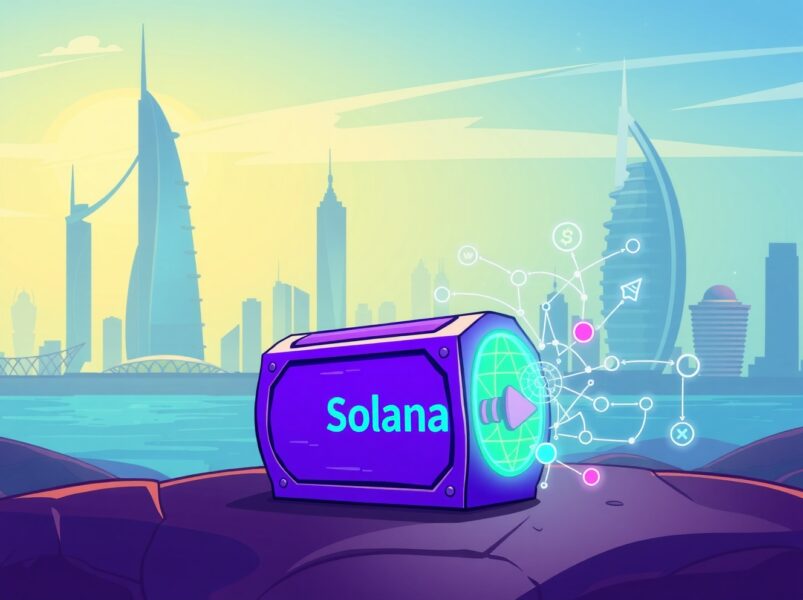
Remarkable Opportunity: Former Pantera Partner Unveils $300M Solana-Focused Treasury in UAE

Remarkable Opportunity: Former Pantera Partner Unveils $300M Solana-Focused Treasury in UAE

BitcoinWorld Remarkable Opportunity: Former Pantera Partner Unveils $300M Solana-Focused Treasury in UAE The cryptocurrency world is buzzing with exciting news from the United Arab Emirates. A significant development is underway that could reshape investment in the Solana ecosystem. A former Pantera Capital partner is establishing Solmate, a substantial Solana-focused treasury worth $300 million right in the heart of the UAE. This move highlights a growing institutional interest in Solana and its potential. What is Solmate’s Solana-Focused Treasury All About? Solmate, the new entity, is set to become a major player in the digital asset investment landscape. Spearheaded by a seasoned veteran from Pantera Capital, this initiative aims to strategically deploy $300 million into projects built on the Solana blockchain. The treasury will primarily target investments within the Solana ecosystem. This includes decentralized applications (dApps), infrastructure projects, and promising new protocols. The goal is to foster innovation and growth, providing crucial capital to developers and entrepreneurs. This dedicated fund signals strong confidence in Solana’s technological capabilities and its long-term viability as a leading blockchain platform. It represents a strategic allocation of capital designed to maximize returns by focusing on a specific, high-potential sector of the crypto market. Why the UAE and Why Solana? The choice of the United Arab Emirates as the base for this new Solana-focused treasury is not coincidental. The UAE has rapidly emerged as a global hub for cryptocurrency and blockchain innovation, attracting talent and capital with its progressive regulations and supportive environment. The UAE offers a clear regulatory framework, which provides certainty for large-scale crypto investments. Its strategic geographical location bridges Eastern and Western markets, enhancing global reach. Solana, on the other hand, is renowned for its high throughput, low transaction costs, and scalability, making it an attractive blockchain for developers and investors alike. The combination of a crypto-friendly jurisdiction and a high-performance blockchain creates a powerful synergy. This setup positions Solmate to capitalize on both regional growth and Solana’s technological advantages, aiming for substantial returns. What Benefits Could This Solana-Focused Treasury Bring? The launch of a $300 million Solana-focused treasury is expected to have a ripple effect across the entire Solana ecosystem. The influx of capital can accelerate development, enhance liquidity, and attract more talent to the network. Key benefits include: Increased Innovation: Funding for cutting-edge projects can lead to new applications and services. Ecosystem Growth: Strengthens Solana’s position against competitors by fostering a robust developer community. Market Confidence: A large institutional investment signals legitimacy and stability to the broader market. Job Creation: New projects often lead to new roles in technology, finance, and marketing. Moreover, this initiative could serve as a blueprint for other institutional investors looking to enter the digital asset space with a focused strategy. It demonstrates a sophisticated approach to crypto investment, moving beyond simple token speculation. Are There Any Challenges or Future Prospects? While the prospects are exciting, any large-scale investment comes with its own set of challenges. Market volatility, regulatory changes, and competition from other blockchains are factors that Solmate will need to navigate. However, the expertise of a former Pantera Capital partner suggests a well-thought-out strategy to mitigate these risks. Looking ahead, this Solana-focused treasury could catalyze further institutional adoption of Solana. If successful, it might encourage other traditional finance players to establish similar dedicated funds, driving more capital into specific blockchain ecosystems. This trend could lead to a more mature and diversified crypto investment landscape globally. The establishment of Solmate’s $300 million Solana-focused treasury in the UAE marks a significant milestone for both the Solana blockchain and the broader cryptocurrency investment community. It underscores the growing confidence in digital assets as a legitimate and profitable investment class, especially when backed by strategic, focused capital. This venture is poised to fuel innovation and accelerate the development of the Solana ecosystem, cementing its place as a key player in the future of decentralized finance. Frequently Asked Questions (FAQs) Q1: What is Solmate? Solmate is a new crypto treasury being established by a former Pantera Capital partner in the United Arab Emirates. It plans to focus its investments primarily on the Solana blockchain ecosystem. Q2: How much capital will Solmate’s Solana-focused treasury manage? Solmate is set to manage a substantial $300 million, which will be strategically deployed into projects and infrastructure within the Solana network. Q3: Why is the UAE chosen as the location for this treasury? The UAE has become a preferred destination for crypto and blockchain ventures due to its progressive regulatory environment, supportive government policies, and its strategic position as a global financial hub. Q4: What kind of projects will the Solana-focused treasury invest in? The treasury intends to invest in a wide range of projects on the Solana blockchain, including decentralized applications (dApps), core infrastructure, and emerging protocols that show strong potential for growth and innovation. Q5: How will this investment impact the Solana ecosystem? This significant investment is expected to boost innovation, enhance liquidity, attract more developers and talent, and ultimately strengthen Solana’s position in the competitive blockchain landscape, fostering overall ecosystem growth. If you found this article insightful, consider sharing it with your network! Your support helps us continue to deliver valuable cryptocurrency news and analysis. Spread the word about this exciting development in the Solana ecosystem! To learn more about the latest crypto market trends, explore our article on key developments shaping Solana’s institutional adoption. This post Remarkable Opportunity: Former Pantera Partner Unveils $300M Solana-Focused Treasury in UAE first appeared on BitcoinWorld.

Author: Coinstats
Why Solana Matters in the Evolving Crypto Ecosystem

Why Solana Matters in the Evolving Crypto Ecosystem

The post Why Solana Matters in the Evolving Crypto Ecosystem appeared on BitcoinEthereumNews.com. Solana is a high-speed, low-cost blockchain built for decentralized apps and crypto projects. Apart from extensive meme coin launches, the platform has also showcased significant progress in the cryptocurrency ecosystem. This article will provide you not only with developments of the platform but also its history, functions, pros, cons, the future of Solana in the ecosystem, and much more. History of Solana The concept of Solana was brought in to address the scalability issues in Ethereum. In 2017, Anatoly Yekovenko, a software engineer at Qualcomm, published a whitepaper draft that introduced the concept of Proof of History (PoH) to determine the date of transactions. This was aimed at making networks faster and more efficient by organizing transactions in a proper timeline. The following year, the whitepaper was published, and Solana Labs was co-founded, which released the Solana Blockchain testnet.   Yekovenko initially developed his project in a private C codebase, but after the advice of Fitzgerald, he changed to Rust due to its safety guarantees and performance potential, and was further supported by Low Level Virtual Machine (LLVM). The project was initially named Loom, but later changed to Solana as one of Ethereum’s projects was also called Loom, which confused users. Notably, the name ‘Solana’ was inspired by Solana Beach in California. In 2019, Solana Labs raised over $20 million from private investors to fund development. The team continued building the network, releasing testnets and improving performance, which marked a key phase of preparation before the mainnet launch. After its Mainnet Beta launch in March 2020, the SOL token was made available to the public through a token sale that raised $1.76 million. The project’s beta network featured basic transaction capabilities and smart contract support. In June 2020, Solana Labs launched the Solana Foundation, a non-profit organization that funds the development…

Author: BitcoinEthereumNews
NEAR Price Surges as Bitwise Predicts Over 7,000% Jump

NEAR Price Surges as Bitwise Predicts Over 7,000% Jump

NEAR jumps 11.56% with AI momentum as Bitwise predicts a $155 target, hinting at a possible 7,000% price explosion.]]>

Author: Crypto News Flash
MetaMask Token: Exciting Launch Could Be Sooner Than Expected

MetaMask Token: Exciting Launch Could Be Sooner Than Expected

BitcoinWorld MetaMask Token: Exciting Launch Could Be Sooner Than Expected The cryptocurrency community is buzzing with exciting news: a native MetaMask token might arrive sooner than many anticipated. This development could reshape how users interact with the popular Web3 wallet and the broader decentralized ecosystem. It signals a significant step forward for one of the most widely used tools in the blockchain space. What’s Fueling the MetaMask Token Buzz? Joseph Lubin, the CEO of ConsenSys, the company behind MetaMask, recently shared insights that ignited this excitement. According to reports from The Block, Lubin indicated that a MetaMask token could launch ahead of previous expectations. This isn’t the first time the idea has surfaced; Dan Finlay, one of MetaMask’s founders, had previously mentioned the possibility of issuing such a token. ConsenSys has been a pivotal player in the Ethereum ecosystem, developing essential infrastructure and applications. MetaMask, their flagship wallet, serves millions of users, providing a gateway to decentralized applications (dApps), NFTs, and various blockchain networks. Therefore, any move to introduce a native token is a major event for the entire Web3 community. Why is a MetaMask Token So Anticipated? The prospect of a MetaMask token generates immense interest because it could introduce new layers of utility and community governance. Users often speculate about the benefits such a token could offer. Here are some key reasons for the high anticipation: Governance Rights: A token could empower users to participate in the future direction and development of MetaMask. This means voting on new features, upgrades, or even changes to the platform’s policies. Ecosystem Rewards: Tokens might be distributed as rewards for active participation, using certain features, or contributing to the MetaMask community. This incentivizes engagement and loyalty. Enhanced Utility: The token could unlock premium features, reduce transaction fees, or provide exclusive access to services within the MetaMask ecosystem or partnered dApps. Decentralization: Introducing a token often aligns with the broader Web3 ethos of decentralization, distributing control and ownership among its users rather than centralizing it within ConsenSys. Consequently, a token launch is seen as a way to deepen user involvement and foster a more robust, community-driven ecosystem around the wallet. Exploring the Potential Impact of a MetaMask Token The introduction of a MetaMask token could have far-reaching implications for the decentralized finance (DeFi) and Web3 landscape. Firstly, it could set a new standard for how popular infrastructure tools engage with their user base. By providing a tangible stake, MetaMask might strengthen its position as a community-governed platform. Moreover, a token could significantly boost the wallet’s visibility and adoption, attracting new users eager to participate in its governance or benefit from its utility. This could also lead to innovative integrations with other blockchain projects, creating a more interconnected and efficient Web3 experience. Ultimately, the success of such a token will depend on its design, utility, and how effectively it engages the global MetaMask community. What Challenges Could a MetaMask Token Face? While the excitement is palpable, launching a MetaMask token also presents several challenges that ConsenSys must navigate carefully. One primary concern is regulatory scrutiny. The classification of cryptocurrency tokens varies across jurisdictions, and ensuring compliance is crucial for long-term success. Furthermore, designing a fair and equitable distribution model is paramount. Ensuring that the token provides genuine utility beyond mere speculation will be another hurdle. A token must integrate seamlessly into the MetaMask experience and offer clear value to its holders. Additionally, managing community expectations and preventing market manipulation will require robust strategies. Addressing these challenges effectively will be key to the token’s sustainable growth and positive reception. What’s Next for the MetaMask Ecosystem? The prospect of a MetaMask token signals an evolving strategy for ConsenSys and the future of Web3 wallets. It reflects a growing trend where foundational tools seek to empower their communities through tokenization. Users are keenly watching for official announcements regarding the token’s mechanics, distribution, and launch timeline. This development could solidify MetaMask’s role not just as a wallet, but as a central pillar of decentralized identity and interaction. The potential for a sooner-than-expected launch adds an element of urgency and excitement, encouraging users to stay informed about every new detail. It represents a significant milestone for a platform that has become synonymous with accessing the decentralized web. Conclusion The hints from ConsenSys CEO Joseph Lubin regarding an earlier launch for the MetaMask token have undoubtedly captured the attention of the entire crypto world. This potential development promises to bring enhanced governance, utility, and community engagement to millions of MetaMask users. While challenges exist, the underlying potential for a more decentralized and user-driven ecosystem is immense. The coming months will likely reveal more about this highly anticipated token, marking a new chapter for one of Web3’s most vital tools. Frequently Asked Questions (FAQs) Q1: What is a MetaMask token? A MetaMask token would be a native cryptocurrency issued by ConsenSys, the company behind the MetaMask wallet. It is expected to offer various utilities, including governance rights, rewards, and access to special features within the MetaMask ecosystem. Q2: Why is ConsenSys considering launching a MetaMask token? ConsenSys is likely exploring a token launch to further decentralize the MetaMask platform, empower its user community with governance rights, incentivize active participation, and potentially unlock new forms of utility and growth for the ecosystem. Q3: What benefits could users gain from a MetaMask token? Users could gain several benefits, such as the ability to vote on MetaMask’s future developments, earn rewards for using the wallet, access exclusive features, or potentially reduce transaction fees. It also provides a direct stake in the platform’s success. Q4: When is the MetaMask token expected to launch? While no official launch date has been confirmed, ConsenSys CEO Joseph Lubin has indicated that the launch could happen sooner than previously expected. The exact timeline remains subject to official announcements from ConsenSys. Q5: How would a MetaMask token impact the broader Web3 ecosystem? A MetaMask token could significantly impact Web3 by setting a precedent for user-owned and governed infrastructure tools. It could drive further decentralization, foster innovation, and strengthen the connection between users and the platforms they rely on, ultimately contributing to a more robust and participatory decentralized internet. To learn more about the latest crypto market trends, explore our article on key developments shaping Ethereum institutional adoption. This post MetaMask Token: Exciting Launch Could Be Sooner Than Expected first appeared on BitcoinWorld.

Author: Coinstats
0G Labs Taps Pyth Network to Power AI L1 Mainnet with 2,000 Price Feeds

0G Labs Taps Pyth Network to Power AI L1 Mainnet with 2,000 Price Feeds

With this exclusive collaboration, Pyth Network will deliver over 2K institutional-scale price feeds to the mainnet of 0G Labs from day one.

Author: Blockchainreporter
Stellar (XLM) Network Enhances USDC Transfers with Circle’s CCTP V2 Integration

Stellar (XLM) Network Enhances USDC Transfers with Circle’s CCTP V2 Integration

The post Stellar (XLM) Network Enhances USDC Transfers with Circle’s CCTP V2 Integration appeared on BitcoinEthereumNews.com. Tony Kim Sep 18, 2025 12:45 Stellar (XLM) integrates Circle’s CCTP V2, enhancing USDC transfers and interoperability across multiple blockchains, including Ethereum and Solana, while boosting liquidity and cross-chain functionality. Stellar (XLM) is set to enhance its network capabilities with the integration of Circle’s Cross-Chain Transfer Protocol (CCTP) V2. This significant update will optimize USDC transfers across the Stellar network, which already supports natively issued USDC, according to Stellar. Enhanced Interoperability The upgrade allows users to seamlessly transfer USDC across Stellar and 15 other blockchains, including Ethereum, Solana, and Base. This development aims to improve interoperability and unlock new use cases within the Stellar ecosystem. Wallets, decentralized applications (dApps), and services utilizing USDC will now have enhanced interaction capabilities with Stellar. Key Features of CCTP V2 CCTP V2 introduces several advantages, notably native interoperability, which makes USDC on Stellar compatible across all CCTP V2-enabled blockchains. Historically, users faced challenges in moving USDC between different chains due to limited liquidity and the need for third-party services or Circle accounts. The integration of CCTP V2 into Stellar connects it to the broader USDC ecosystem, offering deeper liquidity and dynamic management tools for efficient multi-chain operations. Additionally, CCTP V2 provides programmability for developers, allowing them to embed cross-chain transfers directly into their dApps. This enables seamless liquidity movement between chains and the inclusion of metadata for autonomous execution on destination chains via Hooks. Developers can capitalize on Stellar’s fast, cost-effective payments and robust off-ramping capabilities without the need for separate integrations or liquidity strategies. Efficient Liquidity Management The protocol eliminates the necessity for wrapped assets and custodial bridges when transferring USDC across supported chains. CCTP V2 facilitates native USDC burning and minting for cross-chain transfers, settling transactions in seconds, thus reducing bridge risk and enhancing…

Author: BitcoinEthereumNews
From Federated Learning to Decentralized Agent Networks: ChainOpera Project Analysis

From Federated Learning to Decentralized Agent Networks: ChainOpera Project Analysis

ChainOpera leverages Web3-based governance and incentive mechanisms to bring users, developers, GPU/data providers into co-construction and co-governance, allowing AI Agents to not only be "used" but also "co-created and co-owned." Written by 0xjacobzhao In our June research report, "The Holy Grail of Crypto AI: Exploring the Frontiers of Decentralized Training," we mentioned federated learning, a "controlled decentralization" solution situated between distributed and decentralized training. Its core approach is to retain data locally and centrally aggregate parameters, meeting privacy and compliance requirements in healthcare, finance, and other fields. At the same time, we have consistently highlighted the rise of agent networks in previous reports. Their value lies in enabling multi-agent autonomy and division of labor to collaboratively complete complex tasks, driving the evolution from "large models" to "multi-agent ecosystems." Federated learning, with its principle of "data storage within the local machine and incentives based on contribution," lays the foundation for multi-party collaboration. Its distributed nature, transparent incentives, privacy protections, and compliance practices provide directly reusable experience for the Agent Network. Following this path, the FedML team upgraded its open-source nature into TensorOpera (the AI industry infrastructure layer) and then evolved it into ChainOpera (a decentralized agent network). Of course, the Agent Network is not an inevitable extension of federated learning. Its core lies in the autonomous collaboration and task division of multiple agents. It can also be directly built on multi-agent systems (MAS), reinforcement learning (RL), or blockchain incentive mechanisms. 1. Federated Learning and AI Agent Technology Stack Architecture Federated Learning (FL) is a framework for collaborative training without centralized data. Its fundamental principle is that each participant trains the model locally and only uploads parameters or gradients to a coordinating end for aggregation, thereby achieving privacy compliance with "data staying within the domain." Through practical application in typical scenarios such as healthcare, finance, and mobile, FL has entered a relatively mature commercial stage. However, it still faces bottlenecks such as high communication overhead, incomplete privacy protection, and low convergence efficiency due to heterogeneous devices. Compared with other training models, distributed training emphasizes centralized computing power for efficiency and scale, while decentralized training achieves fully distributed collaboration through open computing networks. Federated learning lies somewhere in between, embodying a "controlled decentralization" solution that not only meets industry needs for privacy and compliance but also provides a viable path for cross-institutional collaboration, making it more suitable for transitional deployment architectures within the industry. In the entire AI Agent protocol stack, we divided it into three main layers in our previous research report, namely Agent Infrastructure Layer: This layer provides the lowest-level operational support for agents and is the technical foundation for all agent systems. Core modules: including Agent Framework (agent development and operation framework) and Agent OS (lower-level multi-task scheduling and modular runtime), providing core capabilities for agent lifecycle management. Support modules: such as Agent DID (decentralized identity), Agent Wallet & Abstraction (account abstraction and transaction execution), Agent Payment/Settlement (payment and settlement capabilities). The Coordination & Execution Layer focuses on collaboration among multiple agents, task scheduling, and system incentive mechanisms, and is the key to building the "swarm intelligence" of the agent system. Agent Orchestration: It is a command mechanism used to uniformly schedule and manage the agent lifecycle, task allocation, and execution process. It is suitable for workflow scenarios with central control. Agent Swarm: It is a collaborative structure that emphasizes the collaboration of distributed intelligent agents. It has a high degree of autonomy, division of labor, and flexible collaboration, and is suitable for coping with complex tasks in dynamic environments. Agent Incentive Layer: Builds an economic incentive system for the Agent network to stimulate the enthusiasm of developers, executors, and validators, and provide sustainable power for the intelligent ecosystem. Application & Distribution Layer Distribution subcategories: including Agent Launchpad, Agent Marketplace, and Agent Plugin Network Application subcategories: including AgentFi, Agent Native DApp, Agent-as-a-Service, etc. Consumption subcategory: Agent Social / Consumer Agent, mainly for lightweight scenarios such as consumer social interaction Meme: It is hyped by the Agent concept, lacks actual technical implementation and application landing, and is only driven by marketing. 2. FedML, the Federated Learning Benchmark, and the TensorOpera Full-Stack Platform FedML is one of the earliest open-source frameworks for federated learning and distributed training. Originating from an academic team (USC) and gradually becoming a company-owned product of TensorOpera AI, it provides researchers and developers with tools for cross-institutional and cross-device data collaboration and training. In academia, FedML has become a universal experimental platform for federated learning research, with frequent appearances at top conferences such as NeurIPS, ICML, and AAAI. In industry, FedML has a strong reputation in privacy-sensitive scenarios such as healthcare, finance, edge AI, and Web3 AI, and is considered a benchmark toolchain for federated learning. TensorOpera is FedML's commercialized upgrade into a full-stack AI infrastructure platform for enterprises and developers. While maintaining its federated learning capabilities, it expands to the GPU Marketplace, model serving, and MLOps, thereby tapping into the larger market of the large model and agent era. TensorOpera's overall architecture can be divided into three layers: the Compute Layer (foundation layer), the Scheduler Layer (scheduling layer), and the MLOps Layer (application layer). 1. Compute Layer (bottom layer) The Compute layer is the technical foundation of TensorOpera, building on the open-source DNA of FedML. Its core functions include Parameter Server, Distributed Training, Inference Endpoint, and Aggregation Server. Its value proposition lies in providing distributed training, privacy-preserving federated learning, and a scalable inference engine. It supports the three core capabilities of "Train/Deploy/Federate," covering the entire chain from model training and deployment to cross-institutional collaboration, and serves as the foundation of the entire platform. 2. Scheduler Layer (Middle Layer) The Scheduler layer serves as the computing power trading and scheduling hub, comprised of the GPU Marketplace, Provision, Master Agent, and Schedule & Orchestrate. It supports resource allocation across public clouds, GPU providers, and independent contributors. This layer represents a key milestone in the evolution of FedML to TensorOpera. Through intelligent computing power scheduling and task orchestration, it enables larger-scale AI training and inference, encompassing typical LLM and generative AI scenarios. Furthermore, the Share & Earn model within this layer includes a reserved incentive mechanism interface, potentially enabling compatibility with DePIN or Web3 models. 3. MLOps Layer (Upper Layer) The MLOps layer is the platform's direct service interface for developers and enterprises, encompassing modules such as Model Serving, AI Agent, and Studio. Typical applications include LLM Chatbot, multimodal generative AI, and the developer Copilot tool. Its value lies in abstracting underlying computing power and training capabilities into high-level APIs and products, lowering the barrier to entry. It provides ready-to-use agents, a low-code development environment, and scalable deployment capabilities. It is positioned to compete with next-generation AI infrastructure platforms such as Anyscale, Together, and Modal, serving as a bridge from infrastructure to applications. In March 2025, TensorOpera upgraded to a full-stack platform for AI agents, with core products including the AgentOpera AI App, Framework, and Platform. The application layer provides a multi-agent entry point similar to ChatGPT. The framework layer evolved into "Agentic OS" with a graph-structured multi-agent system and Orchestrator/Router. The platform layer deeply integrates with the TensorOpera model platform and FedML to enable distributed model serving, RAG optimization, and hybrid end-to-end cloud deployment. The overall goal is to create "one operating system, one agent network," enabling developers, enterprises, and users to jointly build a next-generation Agentic AI ecosystem in an open and privacy-protected environment. 3. ChainOpera AI Ecosystem Overview: From Co-founder to Technology Foundation If FedML is the technical core, providing the open-source DNA of federated learning and distributed training, and TensorOpera abstracts FedML's research findings into commercially viable full-stack AI infrastructure, then ChainOpera brings TensorOpera's platform capabilities to the blockchain, creating a decentralized agent network ecosystem through an AI Terminal + Agent Social Network + DePIN model, a computing layer, and an AI-Native blockchain. The core shift lies in the fact that TensorOpera remains primarily focused on enterprises and developers, while ChainOpera leverages Web3-based governance and incentive mechanisms to bring users, developers, and GPU/data providers into the co-construction and co-governance of AI agents, allowing them to be not just "used" but "co-created and co-owned." Co-creators ChainOpera AI provides a toolchain, infrastructure, and coordination layer for ecosystem co-creation through the Model & GPU Platform and Agent Platform, supporting model training, intelligent agent development, deployment, and expansion collaboration. The ChainOpera ecosystem's co-creators include AI agent developers (designing and operating intelligent agents), tool and service providers (templates, MCP, databases, and APIs), model developers (training and publishing model cards), GPU providers (contributing computing power through DePIN and Web2 cloud partners), and data contributors and annotators (uploading and annotating multimodal data). These three core components—development, computing power, and data—jointly drive the continued growth of the intelligent agent network. Co-owners The ChainOpera ecosystem also incorporates a co-ownership mechanism, enabling collaborative network building through collaboration and participation. AI Agent creators are individuals or teams who design and deploy new AI agents through the Agent Platform, responsible for their construction, launch, and ongoing maintenance, driving innovation in functionality and applications. AI Agent participants are members of the community. They participate in the lifecycle of AI agents by acquiring and holding Access Units, supporting their growth and activity during use and promotion. These two roles represent the supply and demand sides, respectively, and together form a model of value sharing and collaborative development within the ecosystem. Ecosystem partners: platforms and frameworks ChainOpera AI collaborates with multiple parties to enhance the platform's usability and security, focusing on Web3 integration. The AI Terminal App integrates wallets, algorithms, and aggregation platforms to enable intelligent service recommendations; the Agent Platform introduces multiple frameworks and zero-code tools to lower the development barrier; models are trained and inferred using TensorOpera AI; and an exclusive partnership with FedML supports privacy-preserving training across institutions and devices. Overall, the platform forms an open ecosystem that balances enterprise-level applications with Web3 user experience. Hardware Portal: AI Hardware & Partners Through partners such as DeAI Phone, wearables, and Robot AI, ChainOpera integrates blockchain and AI into smart terminals, enabling dApp interaction, device-side training, and privacy protection, gradually forming a decentralized AI hardware ecosystem. Core Platform and Technology Foundation: TensorOpera GenAI & FedML TensorOpera provides a full-stack GenAI platform covering MLOps, Scheduler, and Compute; its sub-platform FedML has grown from academic open source to an industrial framework, enhancing AI's ability to "run anywhere and scale arbitrarily." ChainOpera AI Ecosystem 4. ChainOpera Core Products and Full-Stack AI Agent Infrastructure In June 2025, ChainOpera officially launched the AI Terminal App and decentralized technology stack, positioning itself as a "decentralized version of OpenAI." Its core products cover four major modules: application layer (AI Terminal & Agent Network), developer layer (Agent Creator Center), model and GPU layer (Model & Compute Network), and CoAI protocol and dedicated chain, covering a complete closed loop from user entry to underlying computing power and on-chain incentives. The AI Terminal app has integrated BNBChain, supporting on-chain transactions and DeFi agent scenarios. The Agent Creator Center is open to developers, offering capabilities such as MCP/HUB, knowledge base, and RAG, with community agents continuously joining. The CO-AI Alliance has also been launched, connecting with partners such as io.net, Render, TensorOpera, FedML, and MindNetwork. According to the on-chain data of BNB DApp Bay in the past 30 days, it has 158.87K independent users and 2.6 million transaction volumes in the past 30 days. It ranks second in the BSC "AI Agent" category, showing strong on-chain activity. Super AI Agent App – AI Terminal (https://chat.chainopera.ai/) As a decentralized ChatGPT and AI social portal, AI Terminal offers multimodal collaboration, data contribution incentives, DeFi tool integration, cross-platform assistants, and support for AI agent collaboration and privacy protection (Your Data, Your Agent). Users can directly access the open-source DeepSeek-R1 model and community agents on their mobile devices, with language tokens and cryptographic tokens transparently transferred on-chain during interactions. Its value lies in enabling users to transition from "content consumers" to "intelligent co-creators," enabling them to leverage a dedicated agent network across scenarios such as DeFi, RWA, PayFi, and e-commerce. AI Agent Social Network (https://chat.chainopera.ai/agent-social-network) Positioned similarly to LinkedIn + Messenger, but for AI agents, it leverages virtual workspaces and agent-to-agent collaboration mechanisms (MetaGPT, ChatDEV, AutoGEN, and Camel) to transform single agents into multi-agent collaborative networks, encompassing applications in finance, gaming, e-commerce, and research, while gradually enhancing memory and autonomy. AI Agent Developer Platform (https://agent.chainopera.ai/) Providing developers with a "Lego-like" creative experience. Supporting zero-code and modular expansion, blockchain contracts guarantee ownership, DePIN + cloud infrastructure lowers barriers to entry, and the Marketplace provides distribution and discovery channels. Its core goal is to enable developers to quickly reach users, transparently record their contributions to the ecosystem, and earn incentives. AI Model & GPU Platform (https://platform.chainopera.ai/) As the infrastructure layer, DePIN combines with federated learning to address the pain point of Web3 AI's reliance on centralized computing power. Through distributed GPUs, privacy-preserving data training, a model and data marketplace, and end-to-end MLOps, it supports multi-agent collaboration and personalized AI. Its vision is to promote a paradigm shift in infrastructure from "companies dominated by large companies" to "community-based collaboration." 5. ChainOpera AI Roadmap In addition to the official launch of its full-stack AI Agent platform, ChainOpera AI firmly believes that artificial general intelligence (AGI) will emerge from a multimodal, multi-agent collaborative network. Therefore, its long-term roadmap is divided into four phases: The provider receives revenue based on usage. Phase 2 (Agentic Apps → Collaborative AI Economy): Launch AI Terminal, Agent Marketplace, and Agent Social Network to form a multi-agent application ecosystem; connect users, developers, and resource providers through the CoAI protocol, and introduce a user demand-developer matching system and credit system to promote high-frequency interactions and continuous economic activities. Phase 3 (Collaborative AI → Crypto-Native AI): Implemented in DeFi, RWA, payment, e-commerce and other fields, while expanding to KOL scenarios and personal data exchange; Develop dedicated LLM for finance/encryption, and launch Agent-to-Agent payment and wallet systems to promote "Crypto AGI" scenario applications. Phase 4 (Ecosystems → Autonomous AI Economies): Gradually evolve into an autonomous subnet economy, where each subnet is independently governed and tokenized around applications, infrastructure, computing power, models, and data, and collaborates through cross-subnet protocols to form a multi-subnet collaborative ecosystem; at the same time, it moves from Agentic AI to Physical AI (robotics, autonomous driving, aerospace). Disclaimer: This roadmap is for reference only. The timeline and features may be adjusted dynamically due to market conditions and does not constitute a guaranteed delivery commitment. 7. Token Incentives and Protocol Governance ChainOpera has not yet announced a complete token incentive plan, but its CoAI protocol is centered on "co-creation and co-ownership" and uses blockchain and Proof-of-Intelligence mechanisms to achieve transparent and verifiable contribution records: the input of developers, computing power, data and service providers is measured and rewarded in a standardized manner. Users use services, resource providers support operations, and developers build applications, and all participants share the growth dividend; the platform maintains the cycle with a 1% service fee, reward distribution and liquidity support, promoting an open, fair and collaborative decentralized AI ecosystem. Proof-of-Intelligence Learning Framework Proof-of-Intelligence (PoI) is the core consensus mechanism proposed by ChainOpera under the CoAI protocol, aiming to provide a transparent, fair, and verifiable incentive and governance system for decentralized AI. This blockchain-based collaborative machine learning framework, based on Proof-of-Contribution (PoC), aims to address the challenges of insufficient incentives, privacy risks, and lack of verifiability in practical applications of federated learning (FL). This design, centered around smart contracts and combining decentralized storage (IPFS), aggregation nodes, and zero-knowledge proofs (zkSNARKs), achieves five key goals: 1. Fair reward distribution based on contribution, ensuring that trainers are incentivized based on actual model improvements; 2. Maintaining data locality to protect privacy; 3. Introducing robustness mechanisms to combat malicious trainer poisoning or aggregation attacks; 4. Ensuring the verifiability of key computations such as model aggregation, anomaly detection, and contribution assessment through ZKP; and 5. Efficient and versatile application of heterogeneous data and diverse learning tasks. The value of tokens in full-stack AI ChainOpera's token mechanism operates around five major value streams (LaunchPad, Agent API, Model Serving, Contribution, and Model Training), with the core being service fees, contribution confirmation, and resource allocation, rather than speculative returns. AI users: Use tokens to access services or subscribe to applications, and contribute to the ecosystem by providing/labeling/staking data. Agent/Application Developer: Use the platform's computing power and data for development and receive protocol recognition for the Agents, applications, or datasets they contribute. Resource providers: Contribute computing power, data, or models to obtain transparent records and incentives. Governance participants (community & DAO): participate in voting, mechanism design, and ecosystem coordination through tokens. Protocol layer (COAI): Maintain sustainable development through service fees and balance supply and demand using an automated allocation mechanism. Nodes and validators: provide verification, computing power, and security services to ensure network reliability. Protocol Governance ChainOpera utilizes DAO governance, allowing participants to participate in proposals and voting through token staking, ensuring transparent and fair decision-making. Governance mechanisms include a reputation system (to verify and quantify contributions), community collaboration (proposals and voting to drive ecosystem development), and parameter adjustments (data usage, security, and validator accountability). The overall goal is to avoid centralized power, maintain system stability, and foster community co-creation. 8. Team Background and Project Financing The ChainOpera project was co-founded by Professor Salman Avestimehr and Dr. He Chaoyang (Aiden), both experts in federated learning. Other core team members have backgrounds spanning top academic and technology institutions such as UC Berkeley, Stanford, USC, MIT, Tsinghua University, Google, Amazon, Tencent, Meta, and Apple, combining both academic research and practical industry experience. The ChainOpera AI team has grown to over 40 people. Co-founder: Salman Avestimehr Professor Salman Avestimehr is the Dean's Professor of Electrical and Computer Engineering at the University of Southern California (USC). He serves as the founding director of the USC-Amazon Trusted AI Center and leads the USC Information Theory and Machine Learning Laboratory (vITAL). He is the co-founder and CEO of FedML and co-founded TensorOpera/ChainOpera AI in 2022. Professor Salman Avestimehr received his PhD in EECS from UC Berkeley (Best Paper Award). As an IEEE Fellow, he has published over 300 high-level papers in information theory, distributed computing, and federated learning, with over 30,000 citations. He has received numerous international honors, including PECASE, NSF CAREER, and the IEEE Massey Award. He led the creation of the FedML open-source framework, which is widely used in healthcare, finance, and privacy-preserving computing, and forms the core technology foundation of TensorOpera/ChainOpera AI. Co-founder: Dr. Aiden Chaoyang He Dr. Aiden Chaoyang He is the co-founder and president of TensorOpera/ChainOpera AI. He holds a PhD in Computer Science from the University of Southern California (USC) and is the original creator of FedML. His research interests include distributed and federated learning, large-scale model training, blockchain, and privacy-preserving computing. Prior to starting his own business, he worked in R&D at Meta, Amazon, Google, and Tencent. He also held core engineering and management positions at Tencent, Baidu, and Huawei, leading the implementation of multiple internet-grade products and AI platforms. Aiden has published over 30 papers in both academia and industry, with over 13,000 citations on Google Scholar. He has also been awarded the Amazon Ph.D. Fellowship, the Qualcomm Innovation Fellowship, and Best Paper Awards at NeurIPS and AAAI. The FedML framework, which he led in development, is one of the most widely used open-source projects in the federated learning field, supporting an average of 27 billion requests per day. He was also a core author on the FedNLP framework and hybrid model parallel training method, which are widely used in decentralized AI projects such as Sahara AI. In December 2024, ChainOpera AI announced the completion of a $3.5 million seed round, bringing its total raised with TensorOpera to $17 million. The funds will be used to build a blockchain L1 platform and AI operating system for decentralized AI agents. This round was led by Finality Capital, Road Capital, and IDG Capital, with participation from Camford VC, ABCDE Capital, Amber Group, and Modular Capital. The company also received support from prominent institutional and individual investors, including Sparkle Ventures, Plug and Play, USC, and EigenLayer founder Sreeram Kannan and BabylonChain co-founder David Tse. The team stated that this round of funding will accelerate the realization of its vision of "a decentralized AI ecosystem co-owned and co-created by AI resource contributors, developers, and users." 9. Analysis of the Federated Learning and AI Agent Market Landscape There are four main representative federated learning frameworks: FedML, Flower, TFF, and OpenFL. FedML is the most comprehensive, combining federated learning, distributed large-scale model training, and MLOps, making it suitable for industrial deployment. Flower is lightweight and easy to use, with an active community, and is oriented towards teaching and small-scale experiments. TFF, deeply dependent on TensorFlow, has high academic research value but weak industrialization. OpenFL focuses on healthcare and finance, emphasizes privacy compliance, and has a relatively closed ecosystem. Overall, FedML represents an industrial-grade, all-round approach, Flower focuses on ease of use and education, TFF is more focused on academic experiments, and OpenFL has advantages in compliance with vertical industry regulations. At the industrialization and infrastructure level, TensorOpera (the commercialization of FedML) inherits the technical expertise of open-source FedML, providing integrated capabilities for cross-cloud GPU scheduling, distributed training, federated learning, and MLOps. Its goal is to bridge academic research and industrial applications, serving developers, small and medium-sized enterprises, and the Web3/Decentralized Infrastructure (Decentralized Infrastructure) ecosystem. Overall, TensorOpera is like "Hugging Face + W&B for open-source FedML," offering a more comprehensive and versatile full-stack distributed training and federated learning platform, distinguishing it from other platforms focused on community, tools, or a single industry. Among the innovation-tier representatives, ChainOpera and Flock are both attempting to integrate federated learning with Web3, but their approaches differ significantly. ChainOpera builds a full-stack AI agent platform encompassing four layers: access, social networking, development, and infrastructure. Its core value lies in transforming users from "consumers" to "co-creators," enabling collaborative AGI and community-building ecosystems through its AI Terminal and Agent Social Network. Flock, on the other hand, focuses more on blockchain-enhanced federated learning (BAFL), emphasizing privacy protection and incentive mechanisms within a decentralized environment, primarily targeting collaborative verification at the computing and data layers. ChainOpera prioritizes application and agent network implementation, while Flock focuses on strengthening underlying training and privacy-preserving computing. At the agent network level, the most representative project in the industry is Olas Network. ChainOpera, derived from federated learning, builds a full-stack closed loop of models, computing power, and agents, and uses the Agent Social Network as a testing ground to explore multi-agent interaction and social collaboration. Olas Network, rooted in DAO collaboration and the DeFi ecosystem, is positioned as a decentralized autonomous service network. Through Pearl, it launches a directly implementable DeFi revenue scenario, demonstrating a distinct approach from ChainOpera. 10. Investment Logic and Potential Risk Analysis Investment Logic ChainOpera's advantage lies first in its technological moat: from FedML (a benchmark open source framework for federated learning) to TensorOpera (enterprise-level full-stack AI Infra), and then to ChainOpera (Web3 Agent network + DePIN + Tokenomics), it has formed a unique continuous evolution path that combines academic accumulation, industrial implementation and encryption narrative. In terms of application and user scale, AI Terminal has already established an ecosystem with hundreds of thousands of daily active users and thousands of Agents. It ranks first in the AI category on BNBChain DApp Bay, demonstrating clear on-chain user growth and real transaction volume. Its multimodal coverage of crypto-native applications is expected to gradually expand to a wider range of Web2 users. In terms of ecological cooperation, ChainOpera initiated the CO-AI Alliance, and joined forces with partners such as io.net, Render, TensorOpera, FedML, MindNetwork, etc. to build multilateral network effects such as GPU, model, data, and privacy computing; at the same time, it cooperated with Samsung Electronics to verify mobile multimodal GenAI, demonstrating the potential for expansion to hardware and edge AI. In terms of tokens and economic models, ChainOpera distributes incentives around five major value streams (LaunchPad, Agent API, Model Serving, Contribution, and Model Training) based on the Proof-of-Intelligence consensus, and forms a positive cycle through a 1% platform service fee, incentive distribution, and liquidity support, avoiding a single "coin speculation" model and improving sustainability. Potential risks First, the technical implementation is quite challenging. ChainOpera's proposed five-layer decentralized architecture spans a wide range of domains, and cross-layer collaboration (especially in large-scale distributed inference and privacy-preserving training) still faces performance and stability challenges. It has yet to be verified in large-scale applications. Secondly, the ecosystem's user stickiness remains to be seen. While the project has achieved initial user growth, it remains to be seen whether the Agent Marketplace and developer toolchain can maintain long-term activity and high-quality supply. The currently launched Agent Social Network primarily relies on LLM-driven text conversations, and user experience and long-term retention still need further improvement. If the incentive mechanism is not carefully designed, there is a risk of high short-term activity but insufficient long-term value. Finally, the sustainability of the business model remains to be determined. Currently, revenue relies primarily on platform service fees and token circulation, and stable cash flow has yet to be established. Compared to more financial or productivity-focused applications like AgentFi or Payment, the commercial value of the current model requires further verification. Furthermore, the mobile and hardware ecosystems are still in the exploratory stages, leaving market prospects uncertain.

Author: PANews