Dapp

Dapps are digital applications that run on a P2P network of computers rather than a single server, typically utilizing smart contracts to ensure transparency and uptime. In 2026, Dapps have achieved mass-market appeal through Account Abstraction, allowing for a "Web2-like" user experience with the security of Web3. This tag covers the entire ecosystem of decentralized software—from social media and productivity tools to governance platforms and identity management.

4912 Articles
Created: 2026/02/02 18:52
Updated: 2026/02/02 18:52
Little Pepe Presale Gains Traction, Bitcoin Hyper Targets Layer-2, But BlockDAG Takes the Lead With $420M Raise and F1® Deal!

Little Pepe Presale Gains Traction, Bitcoin Hyper Targets Layer-2, But BlockDAG Takes the Lead With $420M Raise and F1® Deal!

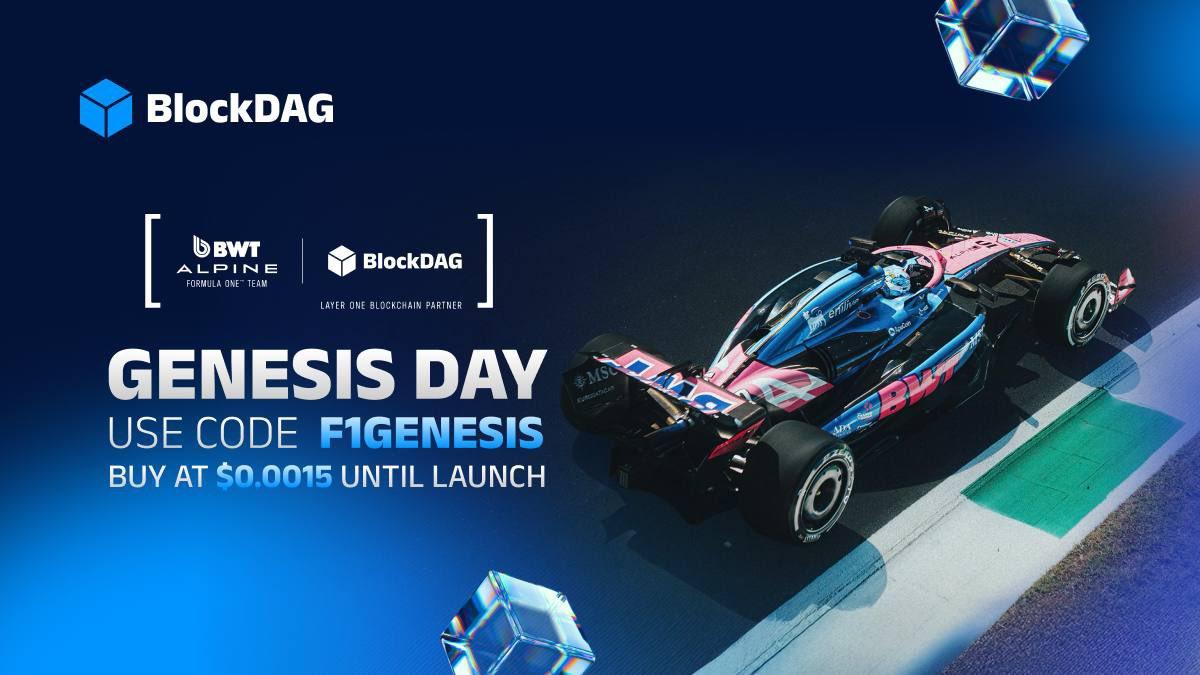
The post Little Pepe Presale Gains Traction, Bitcoin Hyper Targets Layer-2, But BlockDAG Takes the Lead With $420M Raise and F1® Deal! appeared on BitcoinEthereumNews.com. Little Pepe has built hype around meme energy, but the project is still locked in presale stages without clear delivery. Bitcoin Hyper talks about bridging Bitcoin with faster execution, yet beyond fundraising updates, proof of its real network impact hasn’t been shown. So why stick with tokens that are mostly about promises? BlockDAG (BDAG) is already showing how adoption looks in practice. Its deal with the BWT Alpine Formula 1® Team places it directly in front of global audiences, turning blockchain into a visible part of sports culture.  Pair that with a live testnet and hundreds of millions raised, and BlockDAG stands apart as the best crypto presale 2025. For anyone considering the top crypto presale 2025, BlockDAG isn’t just another presale; it’s the project tying legitimacy, delivery, and mainstream recognition together in real time. BlockDAG Marks Mainstream Jump With F1® Deal! When a blockchain project partners with a global sports brand, it steps into a different category of recognition. BlockDAG’s tie-up with the BWT Alpine Formula 1® Team is exactly that moment. It takes the project from being just another presale to a name that audiences outside of crypto now see on the track, in simulators, and through interactive fan experiences.  Sports sponsorships have always been a sign that a brand wants to be taken seriously worldwide, and for BlockDAG, this partnership shows it’s not just targeting crypto enthusiasts, it’s locking in mainstream attention. This deal also has more depth than simple branding. Fans get hands-on with blockchain through activations at Grand Prix weekends, hackathons, and Web3 integrations. By embedding its tech into real events, BlockDAG makes blockchain feel practical and fun, building recognition in places where most crypto projects can’t even get a mention. That kind of exposure is rare, and it’s a big reason investors are watching…

Author: BitcoinEthereumNews
Little Pepe Presale Booms, Pepenode Builds Deflationary Hype, BlockDAG Goes Global at F1® Weekend!

Little Pepe Presale Booms, Pepenode Builds Deflationary Hype, BlockDAG Goes Global at F1® Weekend!

Discover why BlockDAG’s nearly $420M presale and F1® debut in Singapore outshine Little Pepe at $26M and Pepenode at $1.2M—act before prices rise!

Author: Blockchainreporter
BlockDAG vs SpacePay Token: Infrastructure or Illusion?

BlockDAG vs SpacePay Token: Infrastructure or Illusion?

The post BlockDAG vs SpacePay Token: Infrastructure or Illusion? appeared on BitcoinEthereumNews.com. Crypto News Is SpacePay token all talk? Compare its roadmap to BlockDAG’s over $420M presale, live tech, and $0.0015 entry price under the CLAIM offer. Find out which crypto delivers in 2025. SpacePay token has been attracting headlines as a “next‑gen” retail payment solution, promising frictionless transactions between consumers and merchants through blockchain rails. However, while SpacePay token price chatter grows, questions around its actual infrastructure remain. With no public explorer, no wallet tools, and no network stats, its roadmap still leans on pitch decks rather than proven systems. This is where BlockDAG creates a contrast. Backed by over $420 million raised, almost 27 billion coins sold, and a limited $0.0015 CLAIM window in its 31st batch (current batch price $0.03, ROI since batch one 2900%), BlockDAG is delivering live technology instead of aspirational copy. SpacePay Token’s Payment Vision vs Delivery Gap SpacePay positions itself as a futuristic retail blockchain for point‑of‑sale, cross‑border settlements, and instant merchant transactions. Its pitch highlights speed, low fees, and global reach, which have helped generate online buzz about the SpacePay token price and its potential upside as one of the top cryptos to buy in the fintech presale category. Yet a closer inspection reveals a project still in concept mode. There is no running block explorer, no dApp ecosystem, and no wallet interface for early testers. Without a working network, investors are left speculating on marketing promises instead of measuring actual throughput, latency, or settlement metrics. This disconnect between narrative and verifiable infrastructure places SpacePay squarely in the “watch and wait” column for now. BlockDAG’s Infrastructure‑First Execution BlockDAG takes the opposite approach by proving its technology before amplifying its marketing. Its CLAIM offer concrete execution dates rather than vague roadmaps. The protocol already integrates mining systems with real‑time dashboard metrics, an EVM‑compatible low‑code dApp…

Author: BitcoinEthereumNews
USD to Reach Worst Year Since 1973 as Bitcoin Becomes ‘Debasement Trade’: $HYPER to Pump?

USD to Reach Worst Year Since 1973 as Bitcoin Becomes ‘Debasement Trade’: $HYPER to Pump?

The post USD to Reach Worst Year Since 1973 as Bitcoin Becomes ‘Debasement Trade’: $HYPER to Pump? appeared on BitcoinEthereumNews.com. Crypto News The era of USD dominance could be over as the world of finance shifts to stablecoins and the market seeks ‘safer’ assets, according to some analysts. This change could shift money towards Bitcoin ($BTC), which reached a new ATH over the weekend. Already considered ‘digital gold’, $BTC could still have plenty of room to pump as investors continue to snap up its already limited supply. Bitcoin-related projects could benefit too, as investors increasingly favor $BTC. USD On Track For Worst Year Since 1973; Stablecoins Expected to Pump On X yesterday, market analysts at the Kobeissi Letter noted that the market is increasingly shifting away from the USD. As such, investors are moving towards Bitcoin and precious metals, which drive their prices up. 💰Bitcoin, for one, reached a new ATH on Saturday, peaking at around $125.2K before settling around $122K. Meanwhile, gold and silver prices are also up, now worth around $3,938/oz and $48.5/oz respectively. Even more interesting is that these safe-haven assets are rising along with the US stock market. This is atypical of the market, since stocks usually fall when these safe-haven assets grow, according to the Kobeissi Letter. But this new development could indicate a macroeconomic shift. Source: X/@KobeissiLetter This has led to a decline in the USD’s value to -10% YTD, setting it up for its worst year since 1973. Meanwhile, the GENIUS Bill could also end the dominance of traditional banks, as tech companies begin to offer stablecoins, according to Multicoin Cap Co-Founder and Managing Partner Tushar Jain. Source: X/@TusharJain_ All in all, the market could be on the verge of a titanic shift, with Bitcoin and stablecoins taking over what was once the domain of the USD. Bitcoin Hyper: Taking the Bitcoin Ecosystem to the Next Phase of Finance Bitcoin is cementing its…

Author: BitcoinEthereumNews
PUMP Climbs From July Lows, HYPE Nears $49, BlockDAG Expands Globally With F1® Deal and 20K+ Miner Sales!

PUMP Climbs From July Lows, HYPE Nears $49, BlockDAG Expands Globally With F1® Deal and 20K+ Miner Sales!

The crypto market has been buzzing with the Hyperliquid price jump and the PUMP token price rally, two stories that highlight short-term opportunities. Yet while these tokens create trading chatter, BlockDAG is building a much bigger narrative. With a multi-year F1® sponsorship, over 20,000 miners sold worldwide, and $420M raised in its presale, BlockDAG combines […] The post PUMP Climbs From July Lows, HYPE Nears $49, BlockDAG Expands Globally With F1® Deal and 20K+ Miner Sales! appeared first on Live Bitcoin News.

Author: LiveBitcoinNews
AI in crypto: hoe kunstmatige intelligentie de markt, mining en DeFi verandert

AI in crypto: hoe kunstmatige intelligentie de markt, mining en DeFi verandert

Connect met Like-minded Crypto Enthusiasts! Connect op Discord! Check onze Discord   AI schuift de cryptomarkt in een nieuwe fase. Netwerken als Bittensor, Render, NEAR, Story en ICP brengen rekenkracht, data en agents samen op de keten. Hun technologie laat zien dat kunstmatige intelligentie meer doet dan alleen voorspellen: ze verandert hoe crypto werkt, wordt beheerd en zelfs hoe Bitcoin wordt gemined. De scheidslijn tussen blockchain en AI vervaagt snel — en die overlap bepaalt wie straks de infrastructuur van de digitale economie bezit. De belangrijkste spelers in AI-crypto De kruising tussen AI en blockchain heeft in korte tijd een paar duidelijke winnaars opgeleverd. Ze bouwen allemaal aan iets anders, maar delen hetzelfde uitgangspunt: rekenkracht, data en modellen moeten vrij kunnen bewegen tussen gebruikers. Waar de ene munt een marktplaats voor machine learning opzet, richt de andere zich op creatieve rechten of decentrale opslag. Dit zijn de namen die de toon zetten. Bittensor (TAO) Bittensor is het netwerk waar AI-modellen elkaar beoordelen en belonen. Ontwikkelaars sluiten hun model aan op een subnet, dat zich bijvoorbeeld richt op taal, beeld of voorspellingen. De prestaties worden gemeten en vastgelegd, waarna de beste output TAO ontvangt. Zo ontstaat een open ecosysteem waarin samenwerking en competitie in balans blijven. Het project gebruikt een vorm van proof-of-intelligence in plaats van traditionele mining. Niet rekenkracht bepaalt de beloning, maar kwaliteit van resultaat. Inmiddels draaien er meer dan honderd actieve subnets, en het grootste deel van het circulerende aanbod is gestaked. Dat maakt TAO de ruggengraat van een snel groeiende markt voor gedecentraliseerde AI. The internet was meant to be open. https://t.co/7IOPYd9ctH — Openτensor Foundaτion (@opentensor) October 6, 2025 Artificial Superintelligence Alliance (ASI) De Artificial Superintelligence Alliance, kortweg ASI, bundelt drie eerdere AI-projecten: Fetch.ai, SingularityNET en Ocean Protocol. Samen bouwen ze aan een open netwerk waarin data, modellen en autonome agents met elkaar samenwerken zonder tussenkomst van grote techbedrijven. Binnen het ecosysteem voeren digitale agents zelfstandig taken uit — van logistiek en data-analyse tot financiële transacties — terwijl datasets en AI-modellen via slimme contracten worden gedeeld en beloond. De ASI-token vormt de spil van dat systeem: het wordt gebruikt voor betalingen, staking en governance. Het project wil aantonen dat kunstmatige intelligentie niet per se gesloten of gecentraliseerd hoeft te zijn. Door drie sterke communities en technologieën te combineren, probeert ASI een alternatief te bieden voor Big Tech-AI: transparant, samenwerkend en volledig op de keten. https://t.co/cJ57L7tzzm — Artificial Superintelligence Alliance (@ASI_Alliance) September 26, 2025 Render (RNDR) Render levert GPU-kracht aan wie die nodig heeft. Het netwerk koppelt aanbieders van ongebruikte grafische kaarten aan gebruikers die rekenkracht zoeken voor AI-training of generatieve beeldmodellen. Zodra een taak is afgerond en gecontroleerd, betaalt een smart contract automatisch in RNDR. De overstap naar Solana maakte de afhandeling sneller en goedkoper. Inmiddels wordt Render gebruikt voor meer dan alleen visualisaties; ook inferentie en videorendering lopen via het netwerk. Het principe is eenvoudig: wie rekenkracht levert, verdient, en wie capaciteit nodig heeft, betaalt. Dat maakt RNDR tot een schakel tussen Web3 en de explosieve groei van generatieve AI. Beste AltcoinsBekijk onze lijst met de beste altcoins van dit moment en profiteer mee! Wat zijn de beste altcoins in 2025? Het zijn goede tijden voor crypto. Bitcoin start sterk aan Q4, en dat zou zomaar eens kunnen betekenen dat altcoins snel gaan volgen. Maar wat zijn nu de beste altcoins met potentie in 2025? In dit artikel nemen we je mee langs de projecten die eruit springen en mogelijk… Continue reading AI in crypto: hoe kunstmatige intelligentie de markt, mining en DeFi verandert document.addEventListener('DOMContentLoaded', function() { var screenWidth = window.innerWidth; var excerpts = document.querySelectorAll('.lees-ook-description'); excerpts.forEach(function(description) { var excerpt = description.getAttribute('data-description'); var wordLimit = screenWidth wordLimit) { var trimmedDescription = excerpt.split(' ').slice(0, wordLimit).join(' ') + '...'; description.textContent = trimmedDescription; } }); }); NEAR Protocol NEAR staat bekend als toegankelijke layer-1, maar ontwikkelt zich steeds meer tot infrastructuur voor AI-toepassingen. Via Near Tasks kunnen projecten datasets valideren of modellen laten testen door de community. Iedereen die bijdraagt, ontvangt NEAR, terwijl alle resultaten transparant op de keten blijven. NEAR valt vooral op door zijn gebruiksgemak. Transacties zijn goedkoop en bevestigen bijna direct, wat het netwerk geschikt maakt voor ontwikkelaars die willen experimenteren met AI zonder zich druk te maken over kosten of wachttijden. Binnen dat ecosysteem ontstaan tools waarmee data-leveranciers, bouwers en gebruikers elkaar vinden. Zo groeit NEAR langzaam uit tot een knooppunt waar AI-toepassingen niet in een laboratorium blijven hangen, maar echt in de praktijk draaien. Everyone’s building AI. Only one is building the future of AI. Not for platforms. For people. Private, open, autonomous, and yours. Fork that. NEAR is the next major AI company. Watch this. pic.twitter.com/4D956QkTHC — NEAR Protocol (@NEARProtocol) August 12, 2025 Story Protocol Story richt zich op creatief eigendom in het AI-tijdperk. Het netwerk maakt het mogelijk om AI-gegenereerde personages, scripts of muziek te registreren, te licenseren en te verhandelen. Makers krijgen automatisch een vergoeding telkens wanneer hun werk opnieuw wordt gebruikt. Door alles on-chain vast te leggen, voorkomt Story discussies over wie het auteursrecht bezit. De protocol layer fungeert als register én betalingsrail, wat het een van de weinige AI-projecten maakt met een direct juridisch nut. Internet Computer (ICP) ICP van de DFINITY-foundation probeert AI volledig op de keten te draaien. Ontwikkelaars kunnen modellen hosten in de smart contracts van ICP en direct laten reageren op gebruikers. Daardoor ontstaat een backend waar AI-applicaties zonder externe cloudproviders kunnen bestaan. De snelheid en schaalbaarheid maken ICP interessant voor ontwikkelaars van chatbots, analyse-tools en interactieve dApps. Waar anderen infrastructuur buiten de keten gebruiken, probeert ICP het complete web- en AI-stack on-chain te brengen. Welke crypto nu kopen?Wil jij weten welke crypto nu goed is om te kopen? Lees onze handige gids! Welke crypto nu kopen? De rentes zijn officieel omlaag voor het eerst sinds 2024, heeft Fed-voorzitter Jerome Powell vorige week aangekondigd, en dus lijkt de markt klaar om te gaan stijgen. Eén vraag komt telkens terug: welke crypto moet je nu kopen? In dit artikel bespreken we de munten die in 2025 écht het verschil kunnen… Continue reading AI in crypto: hoe kunstmatige intelligentie de markt, mining en DeFi verandert document.addEventListener('DOMContentLoaded', function() { var screenWidth = window.innerWidth; var excerpts = document.querySelectorAll('.lees-ook-description'); excerpts.forEach(function(description) { var excerpt = description.getAttribute('data-description'); var wordLimit = screenWidth wordLimit) { var trimmedDescription = excerpt.split(' ').slice(0, wordLimit).join(' ') + '...'; description.textContent = trimmedDescription; } }); }); Investeringspotentieel met AI crypto AI-coins zijn uitgegroeid tot een aparte markt binnen crypto. Sommige netwerken draaien al, andere leven nog vooral van verwachting. Wie in deze sector belegt, koopt meer dan een token: je koopt toegang tot een ecosysteem dat nog moet bewijzen dat het schaalbaar is. Bittensor (TAO) Bittensor is het referentiepunt in AI-crypto. Het netwerk beloont ontwikkelaars die werkende AI-modellen leveren. Subnets draaien, gebruikers staken, en er is echte activiteit — iets wat in deze niche zeldzaam blijft. Kansen Er is al activiteit, niet alleen whitepapers. Dat maakt TAO zeldzaam in deze sector. De subnets breiden gestaag uit, en staking zorgt voor een vaste basis in de community. Als bedrijven openstaan voor decentrale AI-training, profiteert TAO automatisch. Sommige investeerders zien het al als de “ETH” van AI-netwerken — dat zegt iets over de positie die het heeft opgebouwd. Risico’s De waardering is stevig. De koers weerspiegelt al veel toekomstverwachting. Moeilijk te begrijpen project voor nieuw geld; dat remt instroom. Netwerken als Qubic kunnen sneller of goedkoper worden — dat blijft een bedreiging. En eerlijk gezegd: als de hype afkoelt, verdwijnt ook een deel van de liquiditeit razendsnel. Let’s explain $TAO in simple words. TAO is the native token powering the Bittensor network an open source, decentralized AI economy power by @inspectxyz where anyone can contribute. Use Cases : ⏺️Staking: secure the network. ⏺️Governance: vote on upgrades & proposals.… pic.twitter.com/MS7651Ztpx — Zainab (@uxtazerhzee) September 13, 2025 ASI (Artificial Superintelligence Alliance) ASI is ontstaan uit de fusie van Fetch.ai, SingularityNET en Ocean Protocol. Een ambitieuze poging om de versnipperde AI-sector te bundelen in één netwerk waar agents, data en modellen samenkomen. De technologie is er, de namen zijn bekend, maar de samenhang moet zich nog bewijzen. Kansen Drie sterke communities die samen een veel groter bereik hebben dan afzonderlijk. Minder overlap en concurrentie binnen dezelfde niche — dat kan rust brengen. Als de integratie lukt, ontstaat er een ecosysteem dat groot genoeg is om bedrijven aan te trekken. Er zit veel energie in de visie: een open, gedecentraliseerd alternatief voor Big Tech-AI. Risico’s Fuseren is zelden makkelijk; technische koppelingen kunnen maanden vertraging oplopen. Governance tussen drie oude teams kan frictie geven. Sommige investeerders weten niet wat ze precies bezitten — dat schept verwarring. En mocht één onderdeel falen, dan sleurt het de rest mee. Render (RNDR) Render is concreet: het levert GPU-kracht voor wie dat nodig heeft. In een markt waar rekenkracht schaars en duur is, klinkt dat aantrekkelijk. Gebruikers huren capaciteit, betalen in RNDR, en de aanbieder krijgt direct betaald. Kansen Heel tastbaar: geen beloftes, maar reële vraag naar GPU’s. Grote groeiruimte zolang AI-training exponentieel blijft stijgen. De overstap naar Solana heeft het netwerk sneller en goedkoper gemaakt. Render heeft ook naam buiten crypto, onder kunstenaars en ontwerpers — dat helpt. Risico’s Concurrentie van hyperscalers zoals AWS of Google blijft groot. Netwerkkwaliteit is niet overal gelijk; storingen kosten reputatie. Prijs van GPU’s kan dalen, waardoor de marge krimpt. En als AI-hype afneemt, verdwijnt de vraag even snel als die kwam. $RENDER Elliott Wave Analysis pic.twitter.com/38d3Zjeq1o — More Crypto Online (@Morecryptoonl) October 5, 2025 NEAR Protocol NEAR wil de toegankelijke infrastructuur zijn waarop ontwikkelaars met AI kunnen spelen zonder hoge kosten. Lage fees en snelle afhandeling trekken kleine teams aan die gewoon willen bouwen. Kansen NEAR maakt het eenvoudig om data-taken en modeltests op de keten te draaien. De community is actief en het netwerk blijft technisch stabiel. Voor jonge projecten is het een goedkope plek om te experimenteren. En mocht AI-gebruik in Web3 echt doorbreken, dan zit NEAR al in de juiste hoek. Risico’s Het is geen puur AI-netwerk, dus concurrentie komt van alle kanten. Ontwikkelaars kunnen makkelijk overstappen naar snellere ketens. Veel activiteit, maar nog weinig commerciële dApps met echt bereik. NEAR moet blijven investeren om niet te verzanden tussen infrastructuur en hype. Nieuwe cryptomuntenKom als eerste te weten wat de nieuwste cryptomunten van dit moment zijn! Elke crypto investeerder is er naar op zoek: een nieuwe crypto met groot groeipotentieel. Bitcoin is heel sterk aan Q4 van 2025 begonnen, en dit zou zomaar eens een nieuwe crypto bull run af kunnen trappen. Experts zien kansen in altcoins als Polygon en Best Wallet Token. In dit artikel zetten we de beste munten… Continue reading AI in crypto: hoe kunstmatige intelligentie de markt, mining en DeFi verandert document.addEventListener('DOMContentLoaded', function() { var screenWidth = window.innerWidth; var excerpts = document.querySelectorAll('.lees-ook-description'); excerpts.forEach(function(description) { var excerpt = description.getAttribute('data-description'); var wordLimit = screenWidth wordLimit) { var trimmedDescription = excerpt.split(' ').slice(0, wordLimit).join(' ') + '...'; description.textContent = trimmedDescription; } }); }); Story Story pakt een ander stuk van de puzzel: eigendom. Wie iets maakt met AI, wil bewijs dat het van hem is. Story laat makers hun werk vastleggen, licenseren en automatisch laten vergoeden bij hergebruik. Kansen Eerste serieuze poging om AI-auteursrecht via blockchain te regelen. Kan een vaste plek krijgen in de creatieve industrie als wetgeving dwingender wordt. Transparante vergoedingen — iets waar artiesten al jaren om vragen. Klein project, maar met een thema dat groot wordt zodra rechters zich ermee bemoeien. Risico’s Volledig afhankelijk van juridische ontwikkelingen buiten crypto. Grote platforms zoals Adobe of OpenAI kunnen eigen oplossingen bouwen. Handel in Story-tokens blijft dun; liquiditeit kan opdrogen. En als makers het te ingewikkeld vinden, stopt adoptie voor het echt begint. Internet Computer (ICP) ICP wil dat AI-toepassingen volledig op de keten draaien. Geen cloud, geen externe servers — alles binnen één protocol. Het idee is radicaal en technisch indrukwekkend, maar ook zwaar om uit te voeren. Kansen Eén van de weinige netwerken waar AI-modellen echt on-chain kunnen werken. Sterke technische basis en een team dat de lange adem heeft. Geschikt voor toepassingen waar snelheid en privacy cruciaal zijn. Als het lukt, heeft ICP een niche die moeilijk te kopiëren is. Risico’s Hoge kosten en ingewikkelde infrastructuur — niet voor iedereen haalbaar. Weinig commerciële partners buiten de eigen community. Concurrentie van cloud-AI blijft qua prijs en gebruiksgemak moeilijk te evenaren. ICP kan technisch briljant zijn, maar zakelijk onrendabel blijven. Welke crypto gaat stijgen?Check onze gids over de crypto die volgens ons snel kan gaan stijgen! Welke crypto gaat stijgen in oktober? Het is dé vraag die elke serieuze investeerder bezighoudt. Terwijl de rentes voor het eerst sinds 2024 omlaag zijn, en verschillende economen waarschuwen voor vuurwerk, lijkt de kans op een nieuwe bull run zeker aanwezig. In dit artikel bespreken experts welke munten in 2025 écht groeipotentie laten zien van… Continue reading AI in crypto: hoe kunstmatige intelligentie de markt, mining en DeFi verandert document.addEventListener('DOMContentLoaded', function() { var screenWidth = window.innerWidth; var excerpts = document.querySelectorAll('.lees-ook-description'); excerpts.forEach(function(description) { var excerpt = description.getAttribute('data-description'); var wordLimit = screenWidth wordLimit) { var trimmedDescription = excerpt.split(' ').slice(0, wordLimit).join(' ') + '...'; description.textContent = trimmedDescription; } }); }); Impact op Bitcoin De komst van AI schuift langzaam ook de wereld van Bitcoin mining open. Sinds de halvering van 2024 verdienen miners nog maar de helft per blok — 3,125 BTC. Dat maakt elk kilowattuur belangrijker dan ooit. Met stijgende stroomprijzen en dure apparatuur zoeken bedrijven naar nieuwe manieren om hun rekencapaciteit winstgevend te houden. Een groeiend deel verhuurt zijn servers of GPU’s aan AI-klanten in plaats van ze alleen voor Bitcoin te laten draaien. AI in het miningproces AI vervangt het minen zelf niet, maar maakt het proces efficiënter. Algoritmes sturen installaties aan, voorspellen slijtage en passen stroomverbruik aan op basis van realtime data. In plaats van vaste instellingen bepalen modellen automatisch de ideale balans tussen winst en energieverbruik. Sommige bedrijven gebruiken machine-learning-tools om temperatuur, poolkeuze of output te optimaliseren. Dat levert volgens schattingen van JA Mining tot 23 procent meer efficiëntie op, vooral bij grote installaties met veel ASIC-machines. Miningbedrijven heruitgevonden De halvering duwde miners richting diversificatie. Datacenters die vroeger enkel Bitcoin rekenden, draaien nu ook AI-modellen. Core Scientific sloot in 2024 een contract van $3,5 miljard met AI-bedrijf CoreWeave. Delen van zijn infrastructuur worden nu gebruikt voor high-performance computing naast Bitcoin mining. Hut 8 lanceerde Highrise AI met meer dan 1.000 Nvidia H100-chips. Zo combineert het stabiele AI-inkomsten met zijn bestaande Bitcoin-reserves. Hive Digital Technologies herstructureerde zijn activiteiten en behaalde in 2025 al 9 procent van zijn omzet uit AI. In Australië breidt Iren zijn AI-cloudbusiness snel uit, terwijl het nog altijd meer dan 1.500 BTC per kwartaal produceert. Deze hybride aanpak maakt de sector minder afhankelijk van Bitcoin-prijsfluctuaties en helpt bedrijven hun energie- en kapitaalgebruik beter te spreiden. Energie en duurzaamheid AI vraagt veel stroom, maar kan ook helpen die slimmer te gebruiken. Bedrijven als Iren en Hive schuiven workloads naar daluren, waardoor ze hun contracten optimaal benutten. Dat vermindert druk op het energienet en verlaagt de CO₂-uitstoot. Steeds meer miners werken met hernieuwbare energie en trekken AI-partners aan die hun infrastructuur willen vergroenen. In Texas en Canada ontstaan zo samenwerkingen tussen miners en AI-bedrijven die schone energie willen combineren met rekencapaciteit. Hoe Bitcoin kopen?Bitcoin kopen? Wij leggen je uit hoe en waar je dat het beste kan doen! Waar Bitcoin kopen in 2025? Het kopen van BTC of crypto wordt in Nederland steeds makkelijker. En nu de rentes officieel voor het eerst sinds 2024 omlaag zijn, lijkt het een interessant moment om de markt op te gaan. In deze handleiding laten we je precies zien hoe je dit doet. Stap voor stap leren we… Continue reading AI in crypto: hoe kunstmatige intelligentie de markt, mining en DeFi verandert document.addEventListener('DOMContentLoaded', function() { var screenWidth = window.innerWidth; var excerpts = document.querySelectorAll('.lees-ook-description'); excerpts.forEach(function(description) { var excerpt = description.getAttribute('data-description'); var wordLimit = screenWidth wordLimit) { var trimmedDescription = excerpt.split(' ').slice(0, wordLimit).join(' ') + '...'; description.textContent = trimmedDescription; } }); }); Toekomstvisie voor AI en crypto De kruising tussen AI en crypto wordt steeds concreter. Waar het in 2023 nog ging om losse experimenten, ontstaat in 2025 een functionele markt. Ethereum werkt aan een zogenoemd dAI-team dat agent-identiteit en verificatie op protocolniveau onderzoekt. Dat moet het mogelijk maken dat softwareagents zelfstandig transacties uitvoeren, onderhandelen of liquiditeit verplaatsen. Volgens VanEck kan de jaarlijkse omzet van AI-gerichte cryptonetwerken tegen 2030 oplopen tot ruim 10 miljard dollar, vooral door gedecentraliseerde rekenkracht en modelverificatie. Diezelfde analyse noemt blockchains een noodzakelijk fundament voor AI: ze bieden eigendom, transparantie en bewijs van herkomst. A16z ziet een vergelijkbare verschuiving. Steeds meer nieuwe cryptoprojecten gebruiken AI, vooral in infrastructuur en dataverwerking. Dat levert toepassingen op die verder gaan dan koersvoorspellingen of hype. Er draaien inmiddels AI-agents die transacties uitvoeren, DeFi-posities beheren of prijssignalen analyseren zonder menselijke input. Ook in de hardwarehoek groeit een nieuwe markt. Projecten als Render en io.net bieden GPU-kracht aan voor AI-bedrijven die geen plek meer vinden bij Amazon of Google. Miners en datacenters vullen dat gat met eigen capaciteit. Tegelijk wint het idee van open-source-AI terrein. Netwerken als Bittensor en Story laten zien dat samenwerking tussen duizenden deelnemers kan leiden tot betere modellen dan één centraal bedrijf ooit bouwt. De richting lijkt duidelijk: crypto verschuift van handelssysteem naar coördinatielaag. De code die nu wordt geschreven bepaalt straks hoe digitale arbeid wordt verdeeld — wie rekent, wie betaalt, wie profiteert. Dat gebeurt niet in toekomstplannen, maar al in de praktijk, in lopende netwerken en echte contracten. Crypto marktinzichten 10xResearch - insights in de cryptomarkt Jarenlange expertise in markt onderzoek en technische insights Data gebaseerd op meer dan 50 trading algoritmes Meest recente en accurate marktanalyses 10xResearch review Registreer op 10xResearch Het bericht AI in crypto: hoe kunstmatige intelligentie de markt, mining en DeFi verandert is geschreven door Raul Gavira en verscheen als eerst op Bitcoinmagazine.nl.

Author: Coinstats
Looking For the Top Crypto to Buy in 2025? BlockDAG Stands Out With a $0.0015 Offer While XRP, ADA, and SEI Trail Behind!

Looking For the Top Crypto to Buy in 2025? BlockDAG Stands Out With a $0.0015 Offer While XRP, ADA, and SEI Trail Behind!

As the crypto market continues to evolve in 2025, investor focus has expanded beyond just price charts to include real-world adoption, ecosystem maturity, and strategic visibility. Established names like XRP and Cardano (ADA) continue to command attention due to their legal narratives and academic development paths, while newer contenders such as Sei (SEI) aim to [...] The post Looking For the Top Crypto to Buy in 2025? BlockDAG Stands Out With a $0.0015 Offer While XRP, ADA, and SEI Trail Behind!  appeared first on Blockonomi.

Author: Blockonomi
SpacePay Token’s Pitch vs BlockDAG’s Proof: Which Crypto Deserves Your $100?

SpacePay Token’s Pitch vs BlockDAG’s Proof: Which Crypto Deserves Your $100?

SpacePay token has been attracting headlines as a “next‑gen” retail payment solution, promising frictionless transactions between consumers and merchants through […] The post SpacePay Token’s Pitch vs BlockDAG’s Proof: Which Crypto Deserves Your $100?  appeared first on Coindoo.

Author: Coindoo
The End of USD Dominance? Bitcoin and Bitcoin Hyper Set to Rise in the New Era of Finance

The End of USD Dominance? Bitcoin and Bitcoin Hyper Set to Rise in the New Era of Finance

This change could shift money towards Bitcoin ($BTC), which reached a new ATH over the weekend. Already considered ‘digital gold’, […] The post The End of USD Dominance? Bitcoin and Bitcoin Hyper Set to Rise in the New Era of Finance appeared first on Coindoo.

Author: Coindoo
Why Web3 Investors Are Looking Past Meme Coins Into Infrastructure & DePI

Why Web3 Investors Are Looking Past Meme Coins Into Infrastructure & DePI

For years, crypto was split between two extremes: groundbreaking innovation and pure speculation. Meme coins, powered mostly by internet jokes, hype, and social media trends, captured headlines and fortunes. But they also brought volatility, little real-world use, and left many retail investors burned. Today, the narrative is shifting. Experienced investors, venture capital firms, institutions, and long-time crypto natives are shifting their focus from meme-driven speculation to the serious work of building the foundations of Web3. The focus is less about viral coins and more about the infrastructure and decentralized networks that will power the internet of the future. Why Meme Coins Fall Short Meme coins once drew crowds with their “anyone-can-get-rich” appeal, but they lacked real utility. Their value relied on speculation and hype cycles, making them fragile and risky. This clashes with Web3’s true mission: creating a decentralized, useful, and sustainable internet. Investors now prefer projects with audited code, long-term growth, and regulatory clarity rather than tokens tied to a celebrity tweet. The Rise of Web3 Infrastructure The decentralized web needs strong foundations. Just like roads and power lines built the modern economy, Web3 requires its own digital infrastructure. That’s where investor capital is flowing: Scalability: Faster, cheaper networks (Layer 2s, sidechains) to handle millions of users. Interoperability: Seamless movement of assets across chains through bridges and modular blockchains. Developer Tools: APIs, indexing, and zero-knowledge tech that make it easier to build dApps. Security: Better audits and protection against hacks, restoring trust for mainstream adoption. These “picks and shovels” power the entire ecosystem, ensuring demand regardless of which individual dApps succeed. DePIN: Web3 Meets the Real World The next frontier is Decentralized Physical Infrastructure Networks (DePIN) where blockchain incentives are used to crowdsource real-world infrastructure. Instead of one corporation spending billions, individuals contribute hardware and earn tokens, making networks more cost-efficient and decentralized. Examples include: Decentralized Wireless (DeWi): Community-built internet hotspots. Decentralized Storage: Shared global storage networks. Energy Grids: Peer-to-peer energy trading and smart infrastructure. Mapping & Sensors: Real-time, user-powered data for navigation and monitoring. The appeal is clear: DePIN solves real-world problems, creates steady revenue, scales with user growth, and often fits more easily into regulatory frameworks. With trillions in potential markets like telecom, energy, and data, investors see DePIN as a massive opportunity. The Bigger Picture This move from meme coins to infrastructure marks Web3’s coming of age. Meme coins were the fireworks loud, flashy, and short-lived. Infrastructure and DePIN are the city plans: long-term, practical, and essential. Smart money is no longer chasing hype. It’s investing in the digital railways and decentralized systems that will carry the future economy. The speculative era got attention, but the building era will create lasting value. Why Web3 Investors Are Looking Past Meme Coins Into Infrastructure & DePI was originally published in Coinmonks on Medium, where people are continuing the conversation by highlighting and responding to this story

Author: Medium