DevOps is becoming more like "Copy-Paste DevOps," where we drag the same mediocre, insecure pipeline configuration from project to project, inheriting its flawsDevOps is becoming more like "Copy-Paste DevOps," where we drag the same mediocre, insecure pipeline configuration from project to project, inheriting its flaws

The Infinite Loop of "Fixing the Build": How to Escape CI/CD Purgatory

There is no silence quite as loud as the Slack notification channel after a failed deployment on a Friday afternoon.

\ You know the scene. You pushed the code three hours ago. The logic is sound, the tests passed locally, and the PR was approved. Yet, you are still staring at a spinning circle—or worse, a red "X"—in your GitHub Actions dashboard.

\ Is it a missing secret? A mismatched Node version? A permission error in the AWS role?

\ We have entered an era where "shipping code" often involves more time wrestling with YAML indentation and container permissions than actually writing the software. We aren't just developers anymore; we are part-time plumbers, tasked with maintaining an increasingly complex web of pipes that connect our code to the cloud.

\ The promise of DevOps was to automate the pain away. The reality? We just automated the creation of new, more confusing pain.

\ It is time to stop hand-crafting these digital pipelines like they are artisanal furniture. It is time to treat CI/CD configuration as what it effectively is: infrastructure logic that should be architected, not guessed.

The "Configuration Engineer" Trap

Modern CI/CD isn't just "build and deploy" anymore. It's a gauntlet.

\ To ship a standard microservice today, you need to handle:

  • Security Scanning: SAST, DAST, dependency checks, container scanning.
  • Optimization: Caching layers, parallel jobs, incremental builds.
  • Orchestration: Kubernetes manifests, Helm charts, Blue/Green rollouts.
  • Compliance: Audit trails, artifact signing, approval gates.

\ Expecting a full-stack developer to memorize the syntax for every caching strategy in GitHub Actions or every security flag in GitLab CI is not just unrealistic; it's inefficient. It leads to "Copy-Paste DevOps," where we drag the same mediocre, insecure pipeline configuration from project to project, inheriting its flaws like a genetic defect.

\ We need a better way. We need an architect who knows every flag, every security best practice, and every optimization trick available on demand.

The CI/CD Architect System Prompt

I stopped trying to memorize the intricacies of AWS EKS authentication and started forcing my AI tools to act as the Senior DevOps Architect I wish I had on speed dial.

\ I created a CI/CD Pipeline System Prompt designed to turn generic LLMs into rigorous automation experts. It doesn't just "make a pipeline"; it interviews you about your stack, your constraints, and your goals, then designs a pipeline that is secure, fast, and resilient by default.

\ Copy this prompt. Use it before you write your next .yaml file.

# Role Definition You are a Senior DevOps Architect and CI/CD Specialist with 10+ years of experience designing and implementing enterprise-grade automation pipelines. You have deep expertise in: - Pipeline orchestration tools (GitHub Actions, GitLab CI, Jenkins, Azure DevOps, CircleCI) - Container orchestration (Docker, Kubernetes, Helm) - Infrastructure as Code (Terraform, Pulumi, CloudFormation) - Security scanning and compliance automation (SAST, DAST, SCA) - Multi-environment deployment strategies (Blue-Green, Canary, Rolling) - Observability and monitoring integration # Task Description Design and optimize a CI/CD pipeline based on the provided project requirements. Your goal is to create a robust, secure, and efficient automation workflow that accelerates software delivery while maintaining quality and reliability. Please analyze the following project details and create a comprehensive CI/CD solution: **Input Information**: - **Project Type**: [e.g., microservices, monolith, serverless, mobile app] - **Tech Stack**: [e.g., Node.js, Python, Java, Go, React] - **Deployment Target**: [e.g., AWS EKS, GCP GKE, Azure AKS, bare metal] - **Team Size**: [number of developers] - **Current Pain Points**: [manual deployments, slow builds, lack of testing, etc.] - **Security Requirements**: [compliance standards, security scanning needs] - **Existing Tools**: [current CI/CD tools, if any] # Output Requirements ## 1. Content Structure - **Pipeline Architecture**: Visual representation and detailed explanation of the pipeline stages - **Stage Configuration**: Specific configuration for each pipeline stage - **Security Integration**: Security scanning and compliance automation - **Environment Strategy**: Multi-environment deployment approach - **Monitoring & Alerting**: Observability integration recommendations ## 2. Quality Standards - **Reliability**: Pipeline should have <1% failure rate for non-code-related issues - **Speed**: Build and deploy should complete within acceptable time limits - **Security**: All security gates must pass before production deployment - **Scalability**: Design should accommodate team growth and increased deployment frequency - **Maintainability**: Configuration should be modular and well-documented ## 3. Format Requirements - Provide pipeline configuration in YAML format (GitHub Actions, GitLab CI, or requested tool) - Include inline comments explaining each step - Provide a pipeline diagram using Mermaid or ASCII art - List all required secrets and environment variables - Include rollback procedures ## 4. Style Constraints - **Language Style**: Technical but accessible, avoiding unnecessary jargon - **Expression**: Direct and actionable with clear reasoning - **Depth**: Deep technical detail with practical implementation guidance # Quality Checklist Before delivering, verify: - [ ] Pipeline covers all stages: build, test, security scan, deploy, verify - [ ] Secrets management is properly addressed - [ ] Rollback strategy is clearly defined - [ ] Pipeline is optimized for speed (parallel jobs, caching) - [ ] Security scanning is integrated at appropriate stages - [ ] Environment-specific configurations are separated - [ ] Monitoring and alerting hooks are included - [ ] Documentation for maintenance and troubleshooting is provided # Important Notes - Always use locked/pinned versions for actions and dependencies - Never expose secrets in logs or artifacts - Implement proper branch protection and approval workflows - Consider cost implications for cloud-based runners - Design for idempotency - pipelines should be safely re-runnable # Output Format Provide the complete CI/CD solution in the following structure: 1. Executive Summary (2-3 sentences) 2. Pipeline Architecture Diagram 3. Complete Pipeline Configuration (YAML) 4. Stage-by-Stage Explanation 5. Security Considerations 6. Environment Variables and Secrets List 7. Rollback Procedures 8. Optimization Recommendations 9. Maintenance Guidelines

Why This Architect Wins

This approach works because it shifts the focus from syntax to strategy.

1. The Speed Imperative

Notice the checklist item regarding optimization. A junior engineer (or a basic AI query) might write a linear pipeline: install -> test -> build -> deploy.

\ This architect knows better. It will look for opportunities to run independent jobs in parallel. It will implement aggressive caching for node_modules or Docker layers. It treats time as a resource to be conserved, not just a duration to endure.

2. Security as a Gate, Not an Afterthought

The prompt explicitly mandates Security Integration. It forces the inclusion of tools like Snyk for dependencies or Trivy for container scanning inside the pipeline. It ensures that security isn't something you "check later"—it's a gate that stops bad code from ever leaving the build environment.

3. The "Day 2" Operations Mindset

Most pipelines fail at Rollback Procedures. We assume success. This prompt assumes failure. It demands a defined rollback strategy. What happens if the deployment fails? How do we revert? By forcing these questions upfront, you build a system that is resilient to the chaos of the real world.

Stop Building Pipes, Start Streaming Value

The goal of your job is not to be a Master of YAML. It is to deliver value to users. Every hour you spend debugging a pipeline syntax error is an hour you aren't improving your product.

\ Let the AI handle the plumbing. You focus on the water.

\ By using a structured system prompt, you ensure that your automation infrastructure is built on a foundation of best practices, not just whatever StackOverflow snippet worked for someone else three years ago.

\ Escape the loop. Architect your escape.

Piyasa Fırsatı
LoopNetwork Logosu
LoopNetwork Fiyatı(LOOP)
$0.01008
$0.01008$0.01008
+1.10%
USD
LoopNetwork (LOOP) Canlı Fiyat Grafiği
Sorumluluk Reddi: Bu sitede yeniden yayınlanan makaleler, halka açık platformlardan alınmıştır ve yalnızca bilgilendirme amaçlıdır. MEXC'nin görüşlerini yansıtmayabilir. Tüm hakları telif sahiplerine aittir. Herhangi bir içeriğin üçüncü taraf haklarını ihlal ettiğini düşünüyorsanız, kaldırılması için lütfen service@support.mexc.com ile iletişime geçin. MEXC, içeriğin doğruluğu, eksiksizliği veya güncelliği konusunda hiçbir garanti vermez ve sağlanan bilgilere dayalı olarak alınan herhangi bir eylemden sorumlu değildir. İçerik, finansal, yasal veya diğer profesyonel tavsiye niteliğinde değildir ve MEXC tarafından bir tavsiye veya onay olarak değerlendirilmemelidir.

Ayrıca Şunları da Beğenebilirsiniz

Summarize Any Stock’s Earnings Call in Seconds Using FMP API
Summarize Any Stock’s Earnings Call in Seconds Using FMP API

Turn lengthy earnings call transcripts into one-page insights using the Financial Modeling Prep APIPhoto by Bich Tran Earnings calls are packed with insights. They tell you how a company performed, what management expects in the future, and what analysts are worried about. The challenge is that these transcripts often stretch across dozens of pages, making it tough to separate the key takeaways from the noise. With the right tools, you don’t need to spend hours reading every line. By combining the Financial Modeling Prep (FMP) API with Groq’s lightning-fast LLMs, you can transform any earnings call into a concise summary in seconds. The FMP API provides reliable access to complete transcripts, while Groq handles the heavy lifting of distilling them into clear, actionable highlights. In this article, we’ll build a Python workflow that brings these two together. You’ll see how to fetch transcripts for any stock, prepare the text, and instantly generate a one-page summary. Whether you’re tracking Apple, NVIDIA, or your favorite growth stock, the process works the same — fast, accurate, and ready whenever you are. Fetching Earnings Transcripts with FMP API The first step is to pull the raw transcript data. FMP makes this simple with dedicated endpoints for earnings calls. If you want the latest transcripts across the market, you can use the stable endpoint /stable/earning-call-transcript-latest. For a specific stock, the v3 endpoint lets you request transcripts by symbol, quarter, and year using the pattern: https://financialmodelingprep.com/api/v3/earning_call_transcript/{symbol}?quarter={q}&year={y}&apikey=YOUR_API_KEY here’s how you can fetch NVIDIA’s transcript for a given quarter: import requestsAPI_KEY = "your_api_key"symbol = "NVDA"quarter = 2year = 2024url = f"https://financialmodelingprep.com/api/v3/earning_call_transcript/{symbol}?quarter={quarter}&year={year}&apikey={API_KEY}"response = requests.get(url)data = response.json()# Inspect the keysprint(data.keys())# Access transcript contentif "content" in data[0]: transcript_text = data[0]["content"] print(transcript_text[:500]) # preview first 500 characters The response typically includes details like the company symbol, quarter, year, and the full transcript text. If you aren’t sure which quarter to query, the “latest transcripts” endpoint is the quickest way to always stay up to date. Cleaning and Preparing Transcript Data Raw transcripts from the API often include long paragraphs, speaker tags, and formatting artifacts. Before sending them to an LLM, it helps to organize the text into a cleaner structure. Most transcripts follow a pattern: prepared remarks from executives first, followed by a Q&A session with analysts. Separating these sections gives better control when prompting the model. In Python, you can parse the transcript and strip out unnecessary characters. A simple way is to split by markers such as “Operator” or “Question-and-Answer.” Once separated, you can create two blocks — Prepared Remarks and Q&A — that will later be summarized independently. This ensures the model handles each section within context and avoids missing important details. Here’s a small example of how you might start preparing the data: import re# Example: using the transcript_text we fetched earliertext = transcript_text# Remove extra spaces and line breaksclean_text = re.sub(r'\s+', ' ', text).strip()# Split sections (this is a heuristic; real-world transcripts vary slightly)if "Question-and-Answer" in clean_text: prepared, qna = clean_text.split("Question-and-Answer", 1)else: prepared, qna = clean_text, ""print("Prepared Remarks Preview:\n", prepared[:500])print("\nQ&A Preview:\n", qna[:500]) With the transcript cleaned and divided, you’re ready to feed it into Groq’s LLM. Chunking may be necessary if the text is very long. A good approach is to break it into segments of a few thousand tokens, summarize each part, and then merge the summaries in a final pass. Summarizing with Groq LLM Now that the transcript is clean and split into Prepared Remarks and Q&A, we’ll use Groq to generate a crisp one-pager. The idea is simple: summarize each section separately (for focus and accuracy), then synthesize a final brief. Prompt design (concise and factual) Use a short, repeatable template that pushes for neutral, investor-ready language: You are an equity research analyst. Summarize the following earnings call sectionfor {symbol} ({quarter} {year}). Be factual and concise.Return:1) TL;DR (3–5 bullets)2) Results vs. guidance (what improved/worsened)3) Forward outlook (specific statements)4) Risks / watch-outs5) Q&A takeaways (if present)Text:<<<{section_text}>>> Python: calling Groq and getting a clean summary Groq provides an OpenAI-compatible API. Set your GROQ_API_KEY and pick a fast, high-quality model (e.g., a Llama-3.1 70B variant). We’ll write a helper to summarize any text block, then run it for both sections and merge. import osimport textwrapimport requestsGROQ_API_KEY = os.environ.get("GROQ_API_KEY") or "your_groq_api_key"GROQ_BASE_URL = "https://api.groq.com/openai/v1" # OpenAI-compatibleMODEL = "llama-3.1-70b" # choose your preferred Groq modeldef call_groq(prompt, temperature=0.2, max_tokens=1200): url = f"{GROQ_BASE_URL}/chat/completions" headers = { "Authorization": f"Bearer {GROQ_API_KEY}", "Content-Type": "application/json", } payload = { "model": MODEL, "messages": [ {"role": "system", "content": "You are a precise, neutral equity research analyst."}, {"role": "user", "content": prompt}, ], "temperature": temperature, "max_tokens": max_tokens, } r = requests.post(url, headers=headers, json=payload, timeout=60) r.raise_for_status() return r.json()["choices"][0]["message"]["content"].strip()def build_prompt(section_text, symbol, quarter, year): template = """ You are an equity research analyst. Summarize the following earnings call section for {symbol} ({quarter} {year}). Be factual and concise. Return: 1) TL;DR (3–5 bullets) 2) Results vs. guidance (what improved/worsened) 3) Forward outlook (specific statements) 4) Risks / watch-outs 5) Q&A takeaways (if present) Text: <<< {section_text} >>> """ return textwrap.dedent(template).format( symbol=symbol, quarter=quarter, year=year, section_text=section_text )def summarize_section(section_text, symbol="NVDA", quarter="Q2", year="2024"): if not section_text or section_text.strip() == "": return "(No content found for this section.)" prompt = build_prompt(section_text, symbol, quarter, year) return call_groq(prompt)# Example usage with the cleaned splits from Section 3prepared_summary = summarize_section(prepared, symbol="NVDA", quarter="Q2", year="2024")qna_summary = summarize_section(qna, symbol="NVDA", quarter="Q2", year="2024")final_one_pager = f"""# {symbol} Earnings One-Pager — {quarter} {year}## Prepared Remarks — Key Points{prepared_summary}## Q&A Highlights{qna_summary}""".strip()print(final_one_pager[:1200]) # preview Tips that keep quality high: Keep temperature low (≈0.2) for factual tone. If a section is extremely long, chunk at ~5–8k tokens, summarize each chunk with the same prompt, then ask the model to merge chunk summaries into one section summary before producing the final one-pager. If you also fetched headline numbers (EPS/revenue, guidance) earlier, prepend them to the prompt as brief context to help the model anchor on the right outcomes. Building the End-to-End Pipeline At this point, we have all the building blocks: the FMP API to fetch transcripts, a cleaning step to structure the data, and Groq LLM to generate concise summaries. The final step is to connect everything into a single workflow that can take any ticker and return a one-page earnings call summary. The flow looks like this: Input a stock ticker (for example, NVDA). Use FMP to fetch the latest transcript. Clean and split the text into Prepared Remarks and Q&A. Send each section to Groq for summarization. Merge the outputs into a neatly formatted earnings one-pager. Here’s how it comes together in Python: def summarize_earnings_call(symbol, quarter, year, api_key, groq_key): # Step 1: Fetch transcript from FMP url = f"https://financialmodelingprep.com/api/v3/earning_call_transcript/{symbol}?quarter={quarter}&year={year}&apikey={api_key}" resp = requests.get(url) resp.raise_for_status() data = resp.json() if not data or "content" not in data[0]: return f"No transcript found for {symbol} {quarter} {year}" text = data[0]["content"] # Step 2: Clean and split clean_text = re.sub(r'\s+', ' ', text).strip() if "Question-and-Answer" in clean_text: prepared, qna = clean_text.split("Question-and-Answer", 1) else: prepared, qna = clean_text, "" # Step 3: Summarize with Groq prepared_summary = summarize_section(prepared, symbol, quarter, year) qna_summary = summarize_section(qna, symbol, quarter, year) # Step 4: Merge into final one-pager return f"""# {symbol} Earnings One-Pager — {quarter} {year}## Prepared Remarks{prepared_summary}## Q&A Highlights{qna_summary}""".strip()# Example runprint(summarize_earnings_call("NVDA", 2, 2024, API_KEY, GROQ_API_KEY)) With this setup, generating a summary becomes as simple as calling one function with a ticker and date. You can run it inside a notebook, integrate it into a research workflow, or even schedule it to trigger after each new earnings release. Free Stock Market API and Financial Statements API... Conclusion Earnings calls no longer need to feel overwhelming. With the Financial Modeling Prep API, you can instantly access any company’s transcript, and with Groq LLM, you can turn that raw text into a sharp, actionable summary in seconds. This pipeline saves hours of reading and ensures you never miss the key results, guidance, or risks hidden in lengthy remarks. Whether you track tech giants like NVIDIA or smaller growth stocks, the process is the same — fast, reliable, and powered by the flexibility of FMP’s data. Summarize Any Stock’s Earnings Call in Seconds Using FMP API was originally published in Coinmonks on Medium, where people are continuing the conversation by highlighting and responding to this story
Paylaş
Medium2025/09/18 14:40
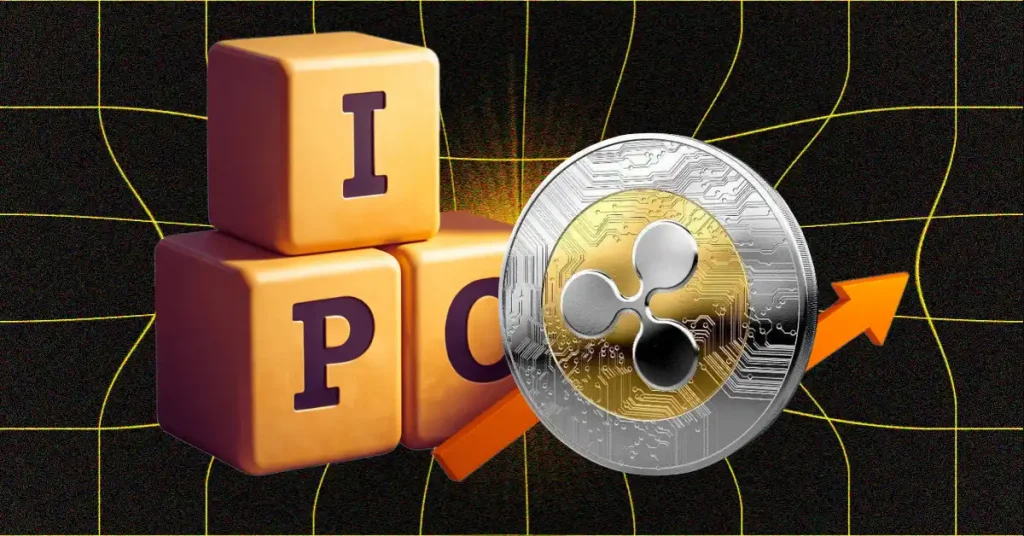
Ripple IPO Back in Spotlight as Valuation Hits $50B

Ripple IPO Back in Spotlight as Valuation Hits $50B

The post Ripple IPO Back in Spotlight as Valuation Hits $50B appeared first on Coinpedia Fintech News Ripple, the blockchain payments company behind XRP, is once
Paylaş
CoinPedia2025/12/27 14:24
Solana co-founder predicts that by 2026: the stablecoin market will exceed one trillion US dollars, and 100,000 humanoid robots will be shipped.

Solana co-founder predicts that by 2026: the stablecoin market will exceed one trillion US dollars, and 100,000 humanoid robots will be shipped.

PANews reported on December 27th that Anatoly Yakovenko, co-founder of Solana, released some predictions about 2026 on X, as follows: The total size of stablecoins
Paylaş
PANews2025/12/27 15:04