BitcoinWorld Halogen Capital Secures $3.2M Seed Funding to Power Real-World Asset Tokenization In a significant boost for Asia’s crypto asset management scene,BitcoinWorld Halogen Capital Secures $3.2M Seed Funding to Power Real-World Asset Tokenization In a significant boost for Asia’s crypto asset management scene,

Halogen Capital Secures $3.2M Seed Funding to Power Real-World Asset Tokenization
2025/12/15 16:10
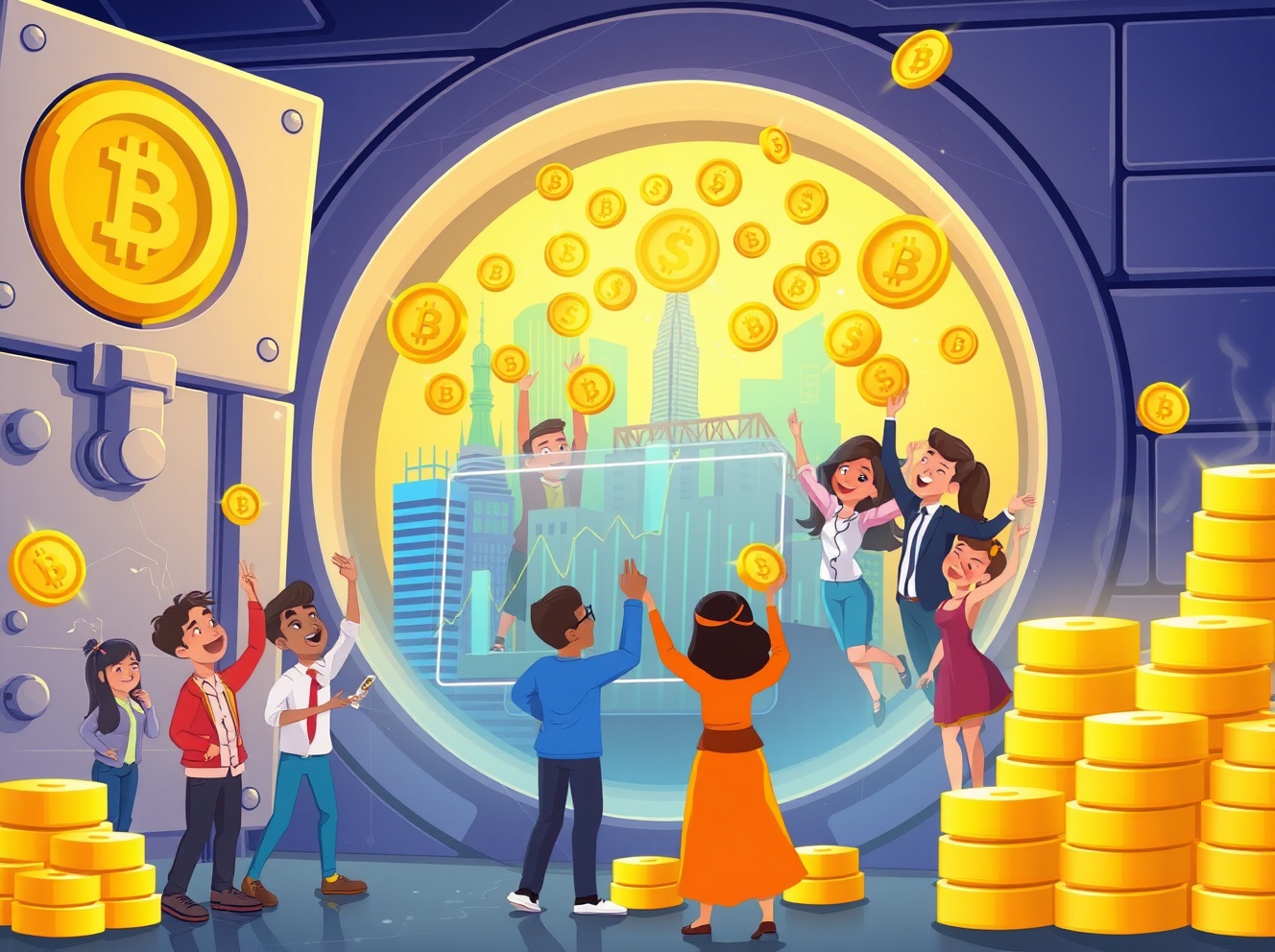
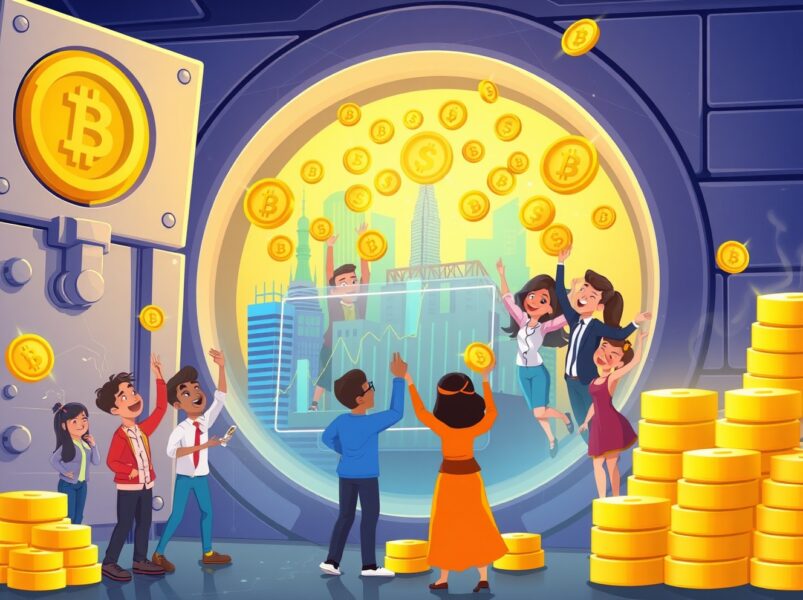
Halogen Capital seed funding powers the tokenization of real estate and bonds in a vibrant cartoon scene.

BitcoinWorld

Halogen Capital Secures $3.2M Seed Funding to Power Real-World Asset Tokenization

In a significant boost for Asia’s crypto asset management scene, Halogen Capital has successfully closed a $3.2 million seed funding round. This capital injection, led by established financial giants, signals strong institutional confidence in the tokenization of real-world assets (RWA). For investors and crypto enthusiasts, this move highlights a pivotal shift from speculative digital assets to tangible, income-generating investments on the blockchain.

What Does Halogen Capital’s Seed Funding Mean for Crypto?

The $3.2 million seed funding for Halogen Capital is more than just a financial headline. It represents a strategic bet on blockchain’s utility beyond cryptocurrency trading. The participation from Kenanga Investment Bank, a major Malaysian investment bank, alongside global venture firms 500 Global and Digital Currency Group (DCG), provides crucial validation. This backing combines traditional finance expertise with deep crypto-native knowledge, creating a powerful foundation for Halogen’s mission.

Therefore, this funding round is a key indicator of growing institutional appetite. It shows that serious players are allocating capital to build the infrastructure that bridges physical assets and digital ledgers.

How Will the Funds Be Used? Expanding the RWA Frontier

Halogen Capital has a clear mandate for its new capital. The primary focus is to accelerate the tokenization of real-world assets. This process involves creating digital tokens on a blockchain that represent ownership or a claim on a physical asset.

The firm plans to expand its work in several key areas:

  • Funds: Tokenizing investment fund units to increase liquidity and accessibility for a broader range of investors.
  • Bonds: Digitizing fixed-income instruments to streamline issuance, settlement, and secondary market trading.
  • Real Estate: Fractionalizing property ownership, allowing investors to buy shares in high-value assets like commercial buildings or developments.

This expansion aims to solve long-standing market problems like illiquidity, high entry barriers, and cumbersome administrative processes.

Why Is Real-World Asset Tokenization a Game-Changer?

Tokenizing RWAs unlocks a transformative set of benefits for the global financial system. Halogen Capital’s seed funding is a direct investment into realizing these advantages.

Firstly, it democratizes access. Imagine being able to invest a small amount in a prime Kuala Lumpur office building or a government bond that was previously out of reach. Tokenization makes this possible through fractional ownership.

Secondly, it enhances liquidity. Traditional assets like real estate are notoriously illiquid. A tokenized market can operate 24/7, enabling faster and easier buying and selling of asset slices.

Moreover, it increases transparency and efficiency. Every transaction is recorded on an immutable blockchain, reducing fraud and automating compliance through smart contracts. This reduces costs and builds trust.

What Are the Challenges and the Road Ahead?

Despite the promise, the path for Halogen Capital and the broader RWA sector is not without hurdles. Regulatory frameworks for tokenized securities are still evolving in Malaysia and globally. Navigating these rules requires close collaboration with authorities like the Securities Commission Malaysia.

Furthermore, technological integration with legacy financial systems poses a challenge. Ensuring secure custody, reliable oracle data for asset pricing, and seamless interoperability are critical technical hurdles that the team must overcome.

However, with its recent seed funding and prestigious backers, Halogen Capital is well-positioned to tackle these issues. The involvement of Kenanga Bank is particularly crucial for regulatory dialogue and bridging traditional and digital finance.

Conclusion: A Building Block for the Future of Finance

Halogen Capital’s successful $3.2 million seed funding round is a milestone for Southeast Asia’s crypto ecosystem. It underscores a mature, next-phase development where blockchain technology is applied to real economic value. The focus on tokenizing funds, bonds, and real estate points to a future where investment is more inclusive, liquid, and efficient. As Halogen deploys this capital, it will serve as a key case study for how traditional and crypto finance can converge to build a more accessible financial world.

Frequently Asked Questions (FAQs)

What is Halogen Capital?
Halogen Capital is a Malaysia-based cryptocurrency and digital asset fund manager focused on investing in blockchain ventures and tokenizing real-world assets.

Who invested in Halogen Capital’s seed round?
The $3.2 million seed funding round was led by Kenanga Investment Bank, with participation from global venture capital firms 500 Global and Digital Currency Group (DCG).

What will Halogen Capital use the funding for?
The capital will be used primarily to expand its platform for tokenizing real-world assets (RWAs), including investment funds, bonds, and real estate properties.

What does “tokenization of real-world assets” mean?
It means creating digital tokens on a blockchain that represent ownership or a financial interest in a physical asset, like a piece of real estate or a bond, allowing it to be traded more easily and in smaller fractions.

Why is RWA tokenization important?
It aims to democratize investing by lowering entry barriers, increase liquidity for traditionally illiquid assets, and improve transparency and efficiency through blockchain technology.

What are the main challenges for RWA tokenization?
The key challenges include evolving and unclear regulatory landscapes, technological integration with existing financial systems, and ensuring secure and reliable asset custody and pricing data.

Found this deep dive into the future of asset management insightful? Share this article on your social media to spark a conversation about how tokenization is reshaping finance in Asia and beyond!

To learn more about the latest trends in real-world asset tokenization, explore our article on key developments shaping the convergence of traditional finance and blockchain technology.

This post Halogen Capital Secures $3.2M Seed Funding to Power Real-World Asset Tokenization first appeared on BitcoinWorld.

Piyasa Fırsatı
SEED Logosu
SEED Fiyatı(SEED)
$0.0004776
$0.0004776$0.0004776
+0.39%
USD
SEED (SEED) Canlı Fiyat Grafiği
Sorumluluk Reddi: Bu sitede yeniden yayınlanan makaleler, halka açık platformlardan alınmıştır ve yalnızca bilgilendirme amaçlıdır. MEXC'nin görüşlerini yansıtmayabilir. Tüm hakları telif sahiplerine aittir. Herhangi bir içeriğin üçüncü taraf haklarını ihlal ettiğini düşünüyorsanız, kaldırılması için lütfen service@support.mexc.com ile iletişime geçin. MEXC, içeriğin doğruluğu, eksiksizliği veya güncelliği konusunda hiçbir garanti vermez ve sağlanan bilgilere dayalı olarak alınan herhangi bir eylemden sorumlu değildir. İçerik, finansal, yasal veya diğer profesyonel tavsiye niteliğinde değildir ve MEXC tarafından bir tavsiye veya onay olarak değerlendirilmemelidir.

Ayrıca Şunları da Beğenebilirsiniz

Trump-Backed WLFI Plunges 58% – Buyback Plan Announced to Halt Freefall

Trump-Backed WLFI Plunges 58% – Buyback Plan Announced to Halt Freefall

World Liberty Financial (WLFI), the Trump-linked DeFi project, is scrambling to stop a market collapse after its token lost over 50% of its value in September. On Friday, the project unveiled a full buyback-and-burn program, directing all treasury liquidity fees to absorb selling pressure. According to a governance post on X, the community approved the plan overwhelmingly, with WLFI pledging full transparency for every burn. The urgency of the move reflects WLFI’s steep losses in recent weeks. WLFI is trading Friday at $0.19, down from its September 1 peak of $0.46, according to CoinMarketCap, a 58% drop in less than a month. Weekly losses stand at 12.85%, with a 15.45% decline for the month. This isn’t the project’s first attempt at intervention. Just days after launch, WLFI burned 47 million tokens on September 3 to counter a 31% sell-off, sending the supply to a verified burn address. For World Liberty Financial, the buyback-and-burn program represents both a damage-control measure and a test of community faith. While tokenomics adjustments can provide short-term relief, the project will need to convince investors that WLFI has staying power beyond interventions. WLFI Launches Buyback-and-Burn Plan, Linking Token Scarcity to Platform Growth According to the governance proposal, WLFI will use fees generated from its protocol-owned liquidity (POL) pools on Ethereum, BNB Chain, and Solana to repurchase tokens from the open market. Once bought back, the tokens will be sent to a burn address, permanently removing them from circulation.WLFI Proposal Source: WLFI The project stressed that this system ties supply reduction directly to platform growth. As trading activity rises, more liquidity fees are generated, fueling larger buybacks and burns. This seeks to create a feedback loop where adoption drives scarcity, and scarcity strengthens token value. Importantly, the plan applies only to WLFI’s protocol-controlled liquidity pools. Community and third-party liquidity pools remain unaffected, ensuring the mechanism doesn’t interfere with external ecosystem contributions. In its proposal, the WLFI team argued that the strategy aligns long-term holders with the project’s future by systematically reducing supply and discouraging short-term speculation. Each burn increases the relative stake of committed investors, reinforcing confidence in WLFI’s tokenomics. To bolster credibility, WLFI has pledged full transparency: every buyback and burn will be verifiable on-chain and reported to the community in real time. WLFI Joins Hyperliquid, Jupiter, and Sky as Buyback Craze Spills Into Wall Street WLFI’s decision to adopt a full buyback-and-burn strategy places it among the most ambitious tokenomic models in crypto. While partly a response to its sharp September price decline, the move also reflects a trend of DeFi protocols leveraging revenue streams to cut supply, align incentives, and strengthen token value. Hyperliquid illustrates the model at scale. Nearly all of its platform fees are funneled into automated $HYPE buybacks via its Assistance Fund, creating sustained demand. By mid-2025, more than 20 million tokens had been repurchased, with nearly 30 million held by Q3, worth over $1.5 billion. This consistency both increased scarcity and cemented Hyperliquid’s dominance in decentralized derivatives. Other protocols have adopted variations. Jupiter directs half its fees into $JUP repurchases, locking tokens for three years. Raydium earmarks 12% of fees for $RAY buybacks, already removing 71 million tokens, roughly a quarter of the circulating supply. Burn-based models push further, as seen with Sky, which has spent $75 million since February 2025 to permanently erase $SKY tokens, boosting scarcity and governance influence. But the buyback phenomenon isn’t limited to DeFi. Increasingly, listed companies with crypto treasuries are adopting aggressive repurchase programs, sometimes to offset losses as their digital assets decline. According to a report, at least seven firms, ranging from gaming to biotech, have turned to buybacks, often funded by debt, to prop up falling stock prices. One of the latest is Thumzup Media, a digital advertising company with a growing Web3 footprint. On Thursday, it launched a $10 million share repurchase plan, extending its capital return strategy through 2026, after completing a $1 million program that saw 212,432 shares bought at an average of $4.71. DeFi Development Corp, the first public company built around a Solana-based treasury strategy, also recently expanded its buyback program to $100 million, up from $1 million, making it one of the largest stock repurchase initiatives in the digital asset sector. Together, these cases show how buybacks, whether in tokenomics or equities, are emerging as a key mechanism for stabilizing value and signaling confidence, even as motivations and execution vary widely
Paylaş
CryptoNews2025/09/26 19:12
Son of filmmaker Rob Reiner charged with homicide for death of his parents
Son of filmmaker Rob Reiner charged with homicide for death of his parents

FILE PHOTO: Rob Reiner, director of "The Princess Bride," arrives for a special 25th anniversary viewing of the film during the New York Film Festival in New York
Paylaş
Rappler2025/12/16 09:59
Bitcoin Peak Coming in 45 Days? BTC Price To Reach $150K

Bitcoin Peak Coming in 45 Days? BTC Price To Reach $150K

The post Bitcoin Peak Coming in 45 Days? BTC Price To Reach $150K appeared first on Coinpedia Fintech News Bitcoin has delivered one of its strongest performances in recent months, jumping from September lows of $108K to over $117K today. But while excitement is high, market watchers warn the clock is ticking.  History shows Bitcoin peaks don’t last forever, and analysts now believe the next major top could arrive within just 45 days, with …
Paylaş
CoinPedia2025/09/18 15:49