XRP price plunges below critical support at $1.30! What does this mean for the market?
Over the past several months, selling pressure on XRP has intensified, with the chart showing a series of lower highs and lower lows. After failing to hold the crucial $1.30 support level, XRP slid to around $1.05, approaching some of the lowest levels seen this year. Technical signals indicate that sellers remain firmly in control in both the short and long term.
XRP’s downward trend remains unbroken
On the daily chart, the breakdown of a descending triangle pattern that has formed since March has further weighed on XRP. Typically, such patterns signal a continuation of the prevailing downtrend, and the breakout resulted in yet another support cluster being lost. The fact that the price remains below the 50, 100, and 200 day moving averages only strengthens the bearish outlook for XRP.
In particular, the 200 day moving average stands at about $1.51. For any meaningful technical recovery, XRP would first need to reclaim levels above this point. Trading volume analysis shows buyer activity remains weak; selling waves have brought volume spikes, but rebound attempts have been very limited.
One of the few promising technical signals for XRP has come from the Relative Strength Index (RSI). With the RSI approaching 35, XRP is nearing oversold conditions. While these levels can sometimes trigger short lived price bounces, a single indicator is not considered sufficient for calling a lasting trend reversal.
Glossary: RSI is a technical indicator that measures the speed and strength of price movements. Values approaching 30 generally indicate oversold conditions, while values nearing 70 suggest overbought territory.
Bitcoin tests a vital support zone
Bitcoin also failed to hold above key moving averages in May, resulting in a fresh wave of declines. Daily charts reveal that the rising channel seen from April to May has broken downward. Though this downturn initially resembled a temporary correction, sellers quickly regained control, leaving the rebound short lived.
Currently, Bitcoin’s 50, 100, and 200 day moving averages remain below $63,000, $68,000, and $76,000 respectively—a structure that underlines persistent market weakness. Notably, stronger volume spikes have occurred on selling days compared to rallies, suggesting sellers are now acting with greater conviction.
| Asset | Current Price Range | Key Resistance | Key Support |
|---|---|---|---|
| XRP | $1.05 | $1.51 | Below $1.30 |
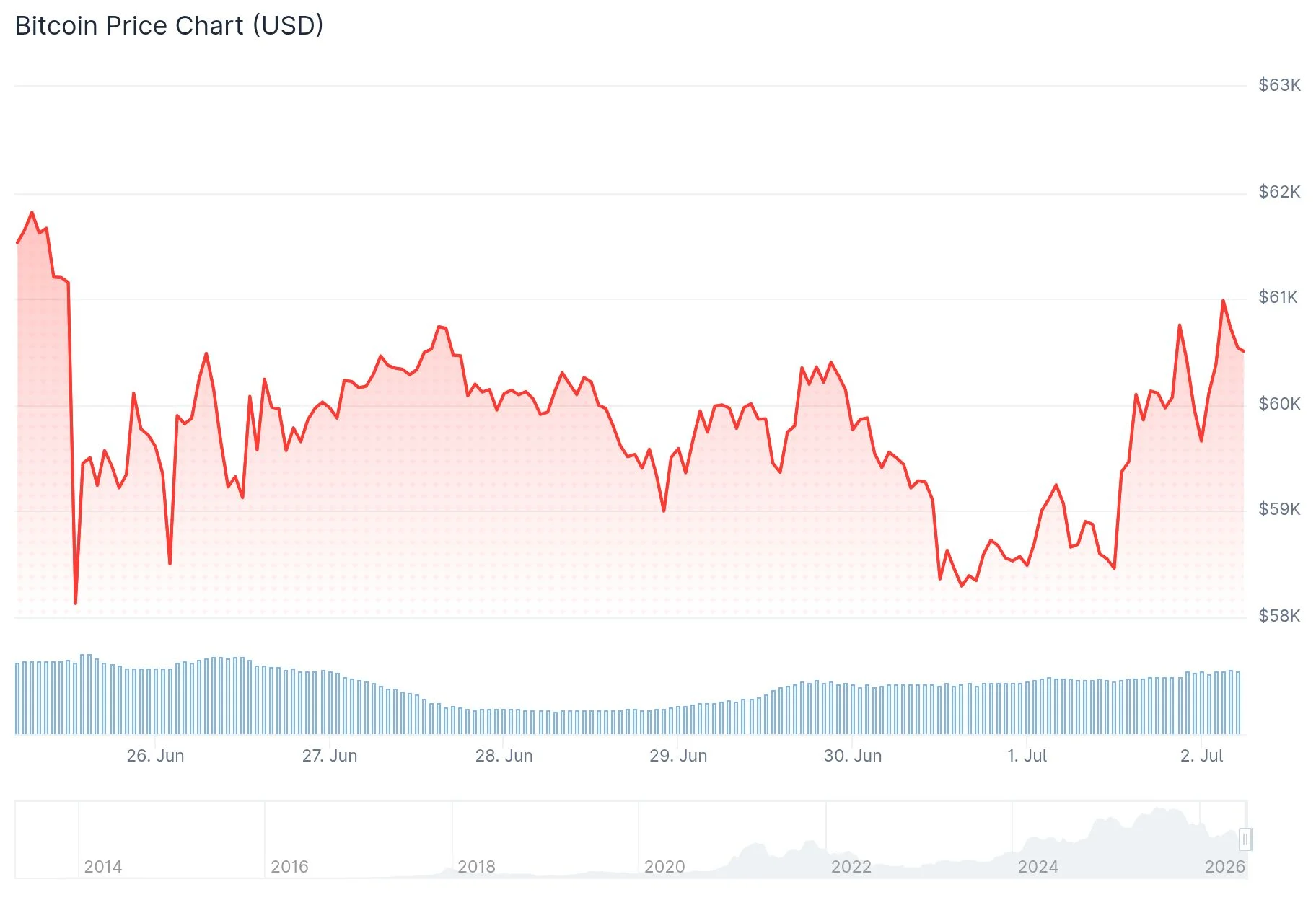
| Bitcoin | $57,000 to $58,000 | $63,000 and higher averages | $52,000 |
| Ethereum | $1,600 | $1,690 and $1,850 | local bottom region |
Right now, the $57,000 to $58,000 range is drawing attention in the market. Should Bitcoin break clearly below this zone, the next historically significant support could come into play at $52,000. While the RSI near 35 keeps the door open for a potential short term bounce, these types of signals tend to have limited impact in an established downtrend.
Ethereum remains under pressure but investor interest persists
Despite its recent weak price performance, Ethereum continues to attract close scrutiny from the market. After a failed rebound attempt, ETH has settled near $1,600, breaking below a descending wedge pattern formed between April and May. This move has reinforced bearish momentum and pushed ETH back toward its local lows.
ETH trading below its 50, 100, and 200 day moving averages leaves its technical prospects clouded. The 50 day moving average at around $1,690 now marks the first key resistance, with longer term averages at $1,850 and $2,280 providing additional upside hurdles. That said, buyers have shown some engagement near support zones during sharp declines, and volume has not completely dried up.
The RSI for Ethereum is hovering near 38, indicating ongoing weakness but not yet signaling total market capitulation. Technically, recapturing the $1,690 level stands as the initial target for ETH; surpassing this could bring $1,850 back into focus as the next milestone.
The post XRP price plunges below critical support at $1.30! What does this mean for the market? appeared first on COINTURK NEWS.


Ayrıca Şunları da Beğenebilirsiniz
Bitcoin (BTC) Bounces Back Above $60K Following Fed Chair Warsh’s Inflation Comments

Bitcoin Price To $80,000: How The February Bullish Trend Can Push It 20% Higher