

Proposed New Bar Course to replace CLP, says deputy law minister
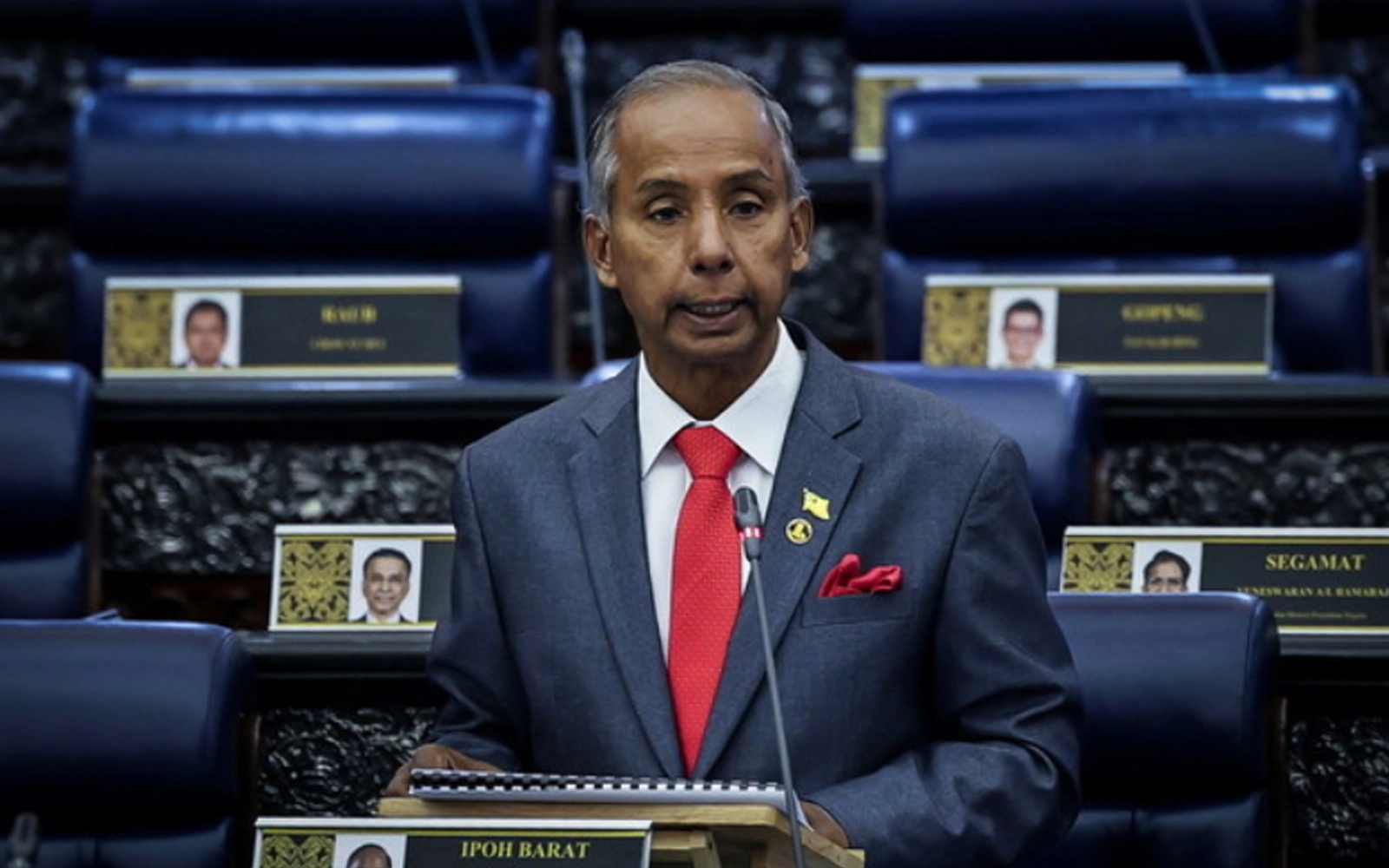 Deputy law and institutional reform minister M Kulasegaran said the conversion course will be held online through a system to be set up by the LPQB. (Bernama pic)
KUALA LUMPUR: The government’s plan to replace the Certificate in Legal Practice (CLP) will see law graduates trained overseas or at some local private institutions go through a new, more practical two-part route into the legal profession, says deputy law and institutional reforms minister M Kulasegaran (PH-Ipoh Barat).
He said that under the proposed New Bar Course (NBC), foreign law graduates would take a three-month online conversion course on the Malaysian legal system, followed by a six-month legal practice postgraduate certificate focused on practical legal skills.
Kulasegaran said the conversion course would be held online through a system to be set up by the Legal Profession Qualifying Board (LPQB) and would include a computer-based test.
He said the LPPC would focus on legal work and practical skills but did not say if there would be an exam component.
Kulasegaran was replying to Takiyuddin Hassan (PN-Kota Bharu) in the Dewan Rakyat today on the status of studies into the NBC – previously proposed as the Common Bar Course – and the articled clerkship route.
He said LPQB completed its study on the NBC curriculum on March 31 and set up another task force on April 27 to work out its implementation. The new study will run from May 1 until April 30 next year.
He said the task force was also helping the LPQB prepare to develop the NBC’s online learning system and computer-based test.
Revival of articled clerkship being studied
Kula also said the government was not trying to delay the return of the articled clerkship route, but needed to study the matter before making a final decision.
He said a separate task force was set up on Feb 23 to review the route’s return.
The study runs from March 1 to Nov 30. Its first phase, which included a review of 10 countries, was completed in May.
Kulasegaran said the task force was now seeking views from the judiciary, Attorney-General’s Chambers, Malaysian Bar, universities, state bar committees, and former articled clerks.
Established under the Legal Profession Act 1976, the articled clerkship programme provided an alternative route for people to qualify as lawyers without attending full-time law school before it was abolished in 1985.
Takiyuddin earlier asked whether the route could be reopened to more than just law firm clerks, including court staff, sessions court registrars, and court interpreters.
Kulasegaran said this was a good proposal as many court staff were already familiar with court processes and regulations.
“They are experts because they work there and know the regulations and laws,” he said, adding that he would raise the proposal with the LPQB.


Ayrıca Şunları da Beğenebilirsiniz

Arthur Hayes Dumps Every Altcoin While Other Analysts Say Altcoin Bull Market Has Started
Bithumb to Temporarily Halt Deposits and Withdrawals for 28 Base Network Tokens

Hacking Incidents Hit All-Time High in Q2 2025, New Report Reveals


Popüler Haberler
Daha fazla
