

Prediction Market Giant Kalshi Explores IPO as Trading Volumes Surge Ahead of U.S. Elections
Key highlights:
- Kalshi is reportedly in discussions with investment banks about a potential initial public offering.
- The prediction market platform has experienced explosive growth as traders increasingly bet on elections, economic data, and global events.
- An IPO would further legitimize the prediction market sector, which has become one of the fastest-growing segments of financial technology.
Kalshi could become the first major prediction market company to go public
Prediction market operator Kalshi is exploring a potential initial public offering, according to reports that the company has begun discussions with investment banks about a future stock market listing.
While the talks remain preliminary, the move highlights the rapid growth of the prediction market industry and Wall Street's increasing interest in alternative trading platforms.
Kalshi has emerged as one of the biggest beneficiaries of the growing popularity of event-based contracts, allowing users to trade on outcomes ranging from elections and inflation reports to Federal Reserve decisions and geopolitical developments.
Prediction markets have gone mainstream
The timing is not surprising.
Prediction markets have experienced a surge in activity over the past two years as traders increasingly use them to express views on real-world events rather than traditional assets.
During the U.S. presidential election cycle, trading volumes across event contracts reached record levels as participants wagered billions of dollars on political outcomes, economic releases, and policy decisions.
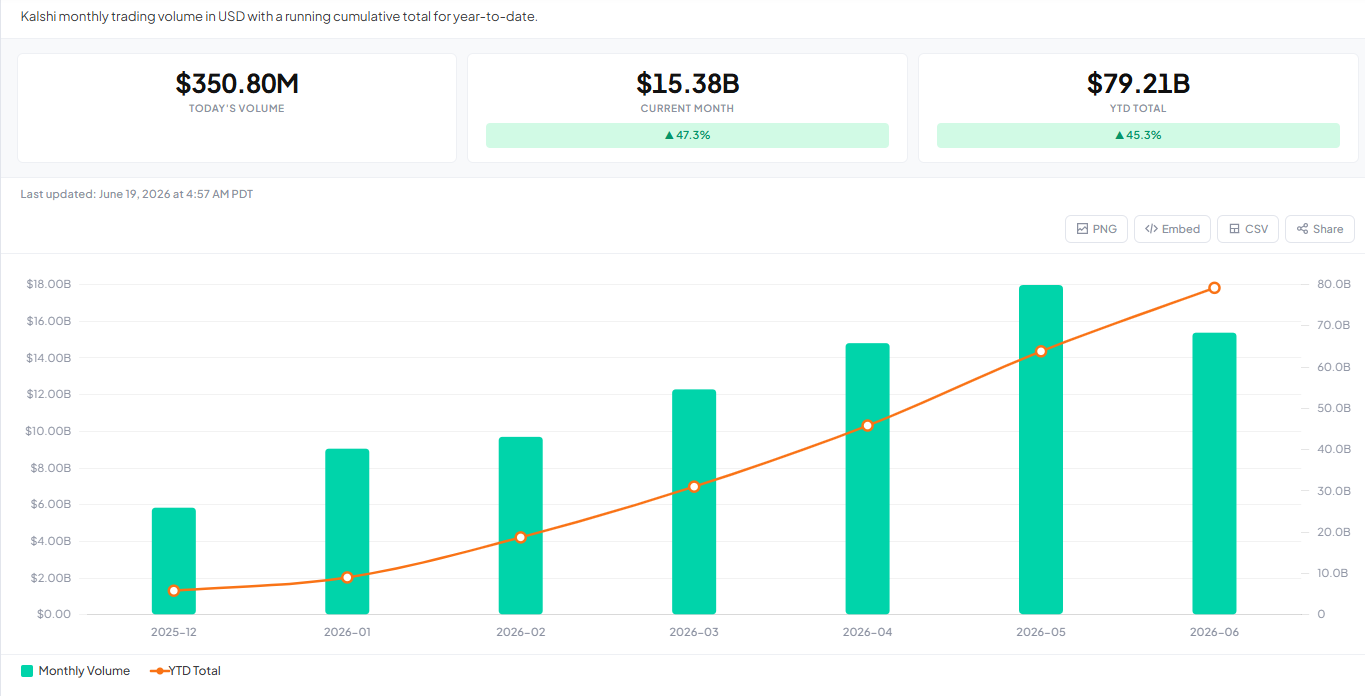
Kalshi has positioned itself at the center of that trend. Its trading volume has been on a steady increase this year.
Unlike many crypto-native prediction platforms, Kalshi operates as a federally regulated exchange under the oversight of the Commodity Futures Trading Commission (CFTC), giving it a unique advantage in the U.S. market.
The regulatory status has helped attract both retail and institutional participants seeking exposure to event-based trading.
Wall Street sees a rapidly growing market
The IPO discussions suggest investment banks believe prediction markets could become a meaningful financial category.
In recent years, investors have shown growing interest in platforms that blend elements of trading, forecasting, and information markets. Supporters argue that prediction markets often provide more accurate forecasts than traditional polling or analyst estimates because participants have financial incentives tied directly to outcomes.
The sector has also attracted significant attention from the crypto industry.
Platforms such as Polymarket have demonstrated strong demand for prediction markets among digital asset users, while Kalshi has focused on building a compliant version of the model within traditional financial markets.
As competition intensifies, public-market capital could provide Kalshi with additional resources to expand its product offerings and strengthen its market position.
What an IPO could mean for the industry
A successful Kalshi IPO would represent a major milestone for prediction markets.
The industry has spent years operating on the fringes of finance, but growing regulatory acceptance and increasing user participation are helping move the sector into the mainstream.
An IPO could also provide investors with a new way to gain exposure to the growth of prediction markets without directly participating in event contracts themselves.
The move comes at a time when financial markets are increasingly embracing alternative asset classes and innovative trading products.
For Kalshi, going public could unlock fresh capital and greater visibility. For the broader industry, it would signal that prediction markets are evolving from a niche product into a recognized segment of global finance.


Ayrıca Şunları da Beğenebilirsiniz

Ethereum Holders Are Under Historic Stress – Is a Major Rebound Next?

Gasps as Trump’s birthday bash leaves White House grounds in ‘terrible’ condition

BAE Systems Stock: Sweden Awards $180M TRIDON Mk2 Air Defense Contract


Popüler Haberler
Daha fazla
