FIFA Super Soccer tops 10M MAUs as Roblox’s World Cup fan hubs span six games through July 31, 2026. Web3 studios can adapt these playbooks—here’s how.FIFA Super Soccer tops 10M MAUs as Roblox’s World Cup fan hubs span six games through July 31, 2026. Web3 studios can adapt these playbooks—here’s how.

Roblox World Cup Fan Hubs: What Web3 Games Can Learn From Mainstream Sports Platforms

2026/06/19 14:31
Okuma süresi: 9 dk
Bu içerikle ilgili geri bildirim veya endişeleriniz için lütfen crypto.news@mexc.com üzerinden bizimle iletişime geçin.

A teenager in Dallas logs into Roblox after school and queues for a five‑a‑side match. Across town, their parent picks up a free wristband tied to a FIFA sponsor activation. Both touch the same global event—but through different, carefully choreographed fan surfaces.

This summer’s Roblox World Cup fan hubs brought a sports mega‑event into mainstream gaming with scale and consistency. FIFA Super Soccer, the official FIFA game on Roblox, now counts more than 10 million monthly actives and over one billion plays to date (FIFA.gg).

For Web3 game builders, the playbook is hiding in plain sight: cross‑experience quests, sponsor‑friendly formats, and tokenless reward loops that still feel meaningful.

Roblox’s World Cup activation is a reminder that sports IP, when paired with accessible social play, can generate outsized reach. Gamefam’s official FIFA World Cup 2026 event on Roblox kicked off June 5 and runs through July 31, 2026, centered on FIFA Super Soccer (GamesBeat). The campaign spans six Gamefam titles, together logging roughly 28 million gameplay sessions per week during the crossover window (GamesBeat).

Meanwhile, the physical tournament footprint is massive. FIFA will stage 13 official Fan Festival sites across host cities—its largest Fan Festival program yet—with more than 40 million supporters welcomed historically (Inside FIFA (FIFA)). Sponsors are integrating tactically: Bank of America is distributing over two million free “Fan Bands” and more than 10 million custom beads across 11 U.S. host cities starting June 11, 2026 (PR Newswire / Bank of America).

Inside Roblox’s World Cup Fan Hubs

Gamefam’s design emphasizes accessible competition, social discovery, and frequent rewards—principles Web3 can adopt without sacrificing on‑chain ownership.

Event cadence and crossover logic

Rather than isolating content in a single title, the activation stitches multiple popular experiences together. Players encounter World Cup‑themed modes, cosmetics, and quests across the network, returning value to each host game while centralizing the FIFA narrative within FIFA Super Soccer.

How the activation unfolds

  1. Kickoff: The official FIFA World Cup 2026 event goes live June 5, 2026, with new modes and cosmetics anchored in FIFA Super Soccer (GamesBeat).
  2. Cross‑experience quests: Limited‑time objectives appear across five additional Gamefam titles, each awarding thematic items or progression.
  3. Weekly refresh: Rotating challenges sustain day‑30 interest and give latecomers a low‑friction way to catch up.
  4. Finale window: Content runs through July 31, 2026, culminating in event‑exclusive cosmetics and bragging rights (GamesBeat).

Why it resonates

It’s familiar. Players understand the rules of football and the cadence of a World Cup. It’s social. Friends can hop between experiences with minimal friction. And it’s collectible. Cosmetics and achievements mark participation without leaning on speculation.

Design Patterns Web3 Studios Should Copy

“Web3 vs. Web2” is the wrong frame. The relevant question is: which parts of mainstream live ops can on‑chain games adopt responsibly?

1) Zero‑friction entry, optional on‑chain

Roblox sign‑in, then play. Web3 should mimic this with guest accounts and optional wallet binding. Consider account abstraction or session keys to keep early steps custodial and revocable, then progressively decentralize for users who opt into trading or governance.

2) Event‑driven live ops over whitepapers

Instead of launching with complex token mechanics, ship narrative seasons tied to cultural calendars (tournaments, holidays, film releases). Roadmaps become content drops, not token unlocks. If/when a token exists, align it to long‑term sinks (crafting, club upgrades) rather than short‑term speculation.

3) Cross‑experience quests and interoperable identity

Gamefam’s six‑game crossover shows that multi‑hub progression can work at scale (GamesBeat). Web3 can implement chain‑verified badges that unlock across partner titles, using allowlists or non‑transferable tokens to prevent farming while respecting player privacy.

4) Sponsor‑safe surfaces

FIFA’s brand partners require age‑appropriate content, predictable moderation, and measurable outcomes. Web3 studios can meet that bar by separating premium marketplace features (KYC‑gated) from general audience spaces, and by providing clear analytics on impressions, quests completed, and retention.

Tokenless Engagement Loops vs. Speculative Loops

Roblox’s World Cup campaign proves you don’t need a token to deliver status and progression. Below is a pragmatic comparison.

Dimension Roblox fan hubs Typical Web3 launch Actionable takeaway Onboarding Email/login, instant play Wallet setup, seed friction Use guest accounts; bind wallets later Economy Cosmetics, time‑boxed rewards Token/NFT pre‑sale hype Prioritize earnable, non‑speculative rewards Live ops Weekly quests, crossover events One‑off mint events Ship seasons; cross‑title quests via shared badges Sponsorship Brand‑safe, measurable activations Unclear compliance surfaces Segment minors; KYC where money changes hands Identity Avatar‑first, portable cosmetics Wallet‑first, asset trading Make avatars primary; let assets be optional IRL bridge Fan festivals, physical goodies Limited offline tie‑ins Link NFC/QR moments to digital badges

Bridging IRL and Digital: The Missed Web3 Opportunity

FIFA’s 13 official Fan Festivals create an enormous offline canvas (Inside FIFA (FIFA)). Add in sponsors like Bank of America distributing millions of “Fan Bands,” and you have millions of touchpoints in the wild (PR Newswire / Bank of America).

Designing the bridge

  1. Tokenize attendance softly: Issue non‑transferable “attendance stamps” via QR/NFC on wristbands. These aren’t meant to trade; they’re proof you showed up.
  2. Map stamps to perks: In‑game cosmetics, queue priority during watch‑party hours, or access to a sponsor mini‑game.
  3. Guard rails: For minors, keep stamps off‑market and in a custodial profile. Let adults export to a self‑custody wallet if they opt in.
  4. Privacy‑first: Avoid collecting personal data at scan time; use rotating codes and allow local verification. Consider zero‑knowledge proof patterns if sensitive attributes are involved.

Why this matters

IRL‑to‑URL loops reward fandom without inviting speculative churn. They also give sponsors a clean metric: redemptions tied to real‑world moments rather than price charts.

Data, Retention, and Measurement

Web3 teams often over‑optimize for mint day and under‑invest in week‑4 and week‑8 retention. The Roblox World Cup model prioritizes steady participation. Replicate that discipline—even if your core loop involves on‑chain assets.

What to measure

  • Event penetration: percentage of monthly players who complete at least one quest in the activation window.
  • Quest completion velocity: median time from first quest to fifth quest.
  • Cross‑hub lift: share of users who visit two or more partner experiences during the campaign period.
  • Cosmetic equip rate: percentage of players equipping at least one event item after 14 days.
  • Sponsor KPIs: scan‑to‑quest conversion, bounce rate at redemption, and repeat participation.

Privacy‑forward architecture

Minimize personal data collection; use pseudonymous identifiers. If rewards implicate value transfer, add KYC only at the point of necessity and segment under‑18 users into walled‑garden experiences that exclude trading. For on‑chain attestations, consider non‑transferable badges and rate‑limit issuance to deter farming.

A Playbook to Pilot Your Own Fan Hub

You don’t need a World Cup license to run a clean seasonal event. Here’s a practical starting line for a Web3 studio.

  1. Choose a cultural anchor: a regional cup, esports qualifier, or music festival that your audience already follows.
  2. Ship a micro‑season: 4–6 weeks of quests, one new challenge each week, and a simple story arc.
  3. Offer cosmetic‑first rewards: badges, jerseys, stadium banners—earnable in play, optionally exportable on‑chain.
  4. Enable guest mode: email/social sign‑in; prompt wallet binding only when users trade or craft.
  5. Launch a partner quest: collaborate with one adjacent game for a crossover objective; share a simple non‑transferable badge standard.
  6. Instrument everything: measure quest starts/completions, cross‑game visits, and 14/30‑day return rates.
  7. Test an IRL touchpoint: limited QR codes at a bar‑watch, campus event, or local tournament; reward with a commemorative digital stamp.
  8. Publish the recap: close the loop with transparent outcomes and tease the next season.

Risks & What Could Go Wrong

  • Over‑financialization: Introducing a token too soon can fracture your audience and invite regulatory attention.
  • Minor safety and consent: Mixing wallets and under‑18 users requires strict segregation and parental controls.
  • IP entanglements: Without proper licenses, using official marks or player likenesses can trigger takedowns.
  • Sybil farming: Open, transferable rewards may be botted; use non‑transferable badges and rate limits.
  • Economy drift: Poorly balanced sinks/sources can turn cosmetic rewards into stealth pay‑to‑win.
  • Operational bloat: Running six‑game crossovers demands tooling; without it, QA debt and burnout mount.
  • Privacy leakage: QR/NFC activations can leak location data if not designed with rotating tokens and minimal logging.
  • Smart‑contract risk: If you do put assets on‑chain, audited contracts and upgrade paths are essential.

If you track sports, gaming, and on‑chain convergence, outlets like Crypto Daily surface timely activations, regulatory shifts, and design trends that can inform your next seasonal roadmap.

Frequently Asked Questions

Is Roblox’s World Cup activation “Web3”?

No. It’s a mainstream, wallet‑free campaign. The relevance to Web3 lies in the design patterns: cross‑experience quests, sponsor‑safe surfaces, and tokenless rewards that drive retention.

What’s the single best lesson for a Web3 game team?

Defer tokens. Nail a seasonal live‑ops cadence with cosmetic‑first rewards and optional wallet binding. Add on‑chain layers once engagement data justifies the extra complexity.

How can Web3 replicate the six‑game crossover effect?

Define a shared badge or quest schema and co‑author a two‑to‑four week event with one partner first. If it works, expand to more titles. Keep rewards non‑transferable initially to curb farming.

Do NFTs still have a role in sports fan hubs?

They can, especially for commemoratives and club passes. Prioritize utility (access, cosmetics, crafting) over speculation, and segment marketplaces for adult users with appropriate compliance.

What’s the right way to involve sponsors?

Offer brand‑safe mini‑games, IRL redemption moments, and clear dashboards on participation. Sponsors like Bank of America are already activating at scale around the World Cup, indicating appetite for measurable experiences (PR Newswire / Bank of America).

What metrics should we prioritize over floor prices?

Quest completion velocity, cross‑hub visitation, 14/30‑day retention, and cosmetic equip rate. These indicate real participation and sponsor value, unlike secondary‑market noise.

Are there legal pitfalls if minors are involved?

Yes. Separate money‑like features behind age gates and KYC, avoid gambling‑adjacent mechanics, honor regional privacy laws, and secure licensing for any IP used. When in doubt, keep rewards cosmetic and non‑transferable.

Disclaimer: This article is provided for informational purposes only. It is not offered or intended to be used as legal, tax, investment, financial, or other advice.


Piyasa Fırsatı
SIX Logosu
SIX Fiyatı(SIX)
$0,00612
$0,00612$0,00612
-3,31%
USD
SIX (SIX) Canlı Fiyat Grafiği

World Cup Combo: Aim for 200x

World Cup Combo: Aim for 200xWorld Cup Combo: Aim for 200x

Combine up to 20 World Cup matches in one order

Sorumluluk Reddi: Bu sitede yeniden yayınlanan makaleler, halka açık platformlardan alınmıştır ve yalnızca bilgilendirme amaçlıdır. MEXC'nin görüşlerini yansıtmayabilir. Tüm hakları telif sahiplerine aittir. Herhangi bir içeriğin üçüncü taraf haklarını ihlal ettiğini düşünüyorsanız, kaldırılması için lütfen crypto.news@mexc.com ile iletişime geçin. MEXC, içeriğin doğruluğu, eksiksizliği veya güncelliği konusunda hiçbir garanti vermez ve sağlanan bilgilere dayalı olarak alınan herhangi bir eylemden sorumlu değildir. İçerik, finansal, yasal veya diğer profesyonel tavsiye niteliğinde değildir ve MEXC tarafından bir tavsiye veya onay olarak değerlendirilmemelidir.

Ayrıca Şunları da Beğenebilirsiniz

Ethereum koers toont zeldzaam dubbel koopsignaal en richt zich op $4.550

Ethereum koers toont zeldzaam dubbel koopsignaal en richt zich op $4.550

Connect met Like-minded Crypto Enthusiasts! Connect op Discord! Check onze Discord   Ethereum laat op de uurgrafiek twee opeenvolgende TD Sequential koopsignalen zien. Deze indicator meet uitputting in een trend en geeft vaak een signaal dat de verkoopdruk kan afnemen. Dit dubbele signaal verschijnt rond het niveau van $4.516, waar de ETH prijs kortstondig steun vindt. Dit type formatie komt zelden voor en wordt daarom extra nauwlettend gevolgd. Wat gaat de Ethereum koers hiermee doen? Ethereum koers test steun rond $4.516 De scherpe daling van de Ethereum koers vanaf de prijszone rond $4.800 bracht de ETH prijs in korte tijd naar ongeveer $4.516. Op dit niveau trad duidelijke koopactiviteit op, waardoor de neerwaartse beweging tijdelijk werd gestopt. Het dubbele signaal dat door de TD Sequential indicator is gegenereerd, viel precies samen met dit prijspunt. De TD Sequential is opgebouwd uit negen candles die een trend meetellen. Wanneer de negende candle verschijnt, kan dit duiden op een trendomslag. In dit geval verschenen zelfs twee signalen kort na elkaar, wat aangeeft dat de verkoopdruk mogelijk uitgeput is. Het feit dat dit gebeurde in een zone waar ETH kopers actief bleven, maakt het patroon extra opvallend. TD Sequential just flashed two buy signals for Ethereum $ETH! pic.twitter.com/JPO8EhiEPi — Ali (@ali_charts) September 16, 2025 Welke crypto nu kopen?Lees onze uitgebreide gids en leer welke crypto nu kopen verstandig kan zijn! Welke crypto nu kopen? Fed-voorzitter Jerome Powell heeft aangekondigd dat de rentes binnenkort zomaar eens omlaag zouden kunnen gaan, en tegelijkertijd blijft BlackRock volop crypto kopen, en dus lijkt de markt klaar om te gaan stijgen. Eén vraag komt telkens terug: welke crypto moet je nu kopen? In dit artikel bespreken we de munten die… Continue reading Ethereum koers toont zeldzaam dubbel koopsignaal en richt zich op $4.550 document.addEventListener('DOMContentLoaded', function() { var screenWidth = window.innerWidth; var excerpts = document.querySelectorAll('.lees-ook-description'); excerpts.forEach(function(description) { var excerpt = description.getAttribute('data-description'); var wordLimit = screenWidth wordLimit) { var trimmedDescription = excerpt.split(' ').slice(0, wordLimit).join(' ') + '...'; description.textContent = trimmedDescription; } }); }); Technische indicatoren schetsen herstelkans voor ETH Naast de dubbele koopsignalen verstrekken ook andere indicatoren belangrijke aanwijzingen. Tijdens de daling van de ETH koers waren grote rode candles zichtbaar, maar na de test van $4.516 stabiliseerde de Ethereum koers. Dit wijst op een mogelijke verschuiving in het evenwicht tussen de bears en bulls. Als deze opwaartse beweging doorzet, liggen de eerste weerstanden rond $4.550. Daarboven wacht een sterkere zone rond $4.650. Deze niveaus zijn in eerdere Ethereum sessies al meerdere keren getest. Een doorbraak zou ruimte openen richting de all-time high van ETH rond $4.953. Wanneer de prijs toch opnieuw onder $4.516 zakt, liggen er zones rond $4.500 en $4.450 waar grotere kooporders worden verwacht. Deze niveaus kunnen als een vangnet fungeren, mocht de druk opnieuw toenemen. Marktdynamiek bevestigt technische indicatoren De huidige situatie volgt op een bredere correctie in de cryptomarkt. Verschillende vooraanstaande crypto tokens zagen scherpe koersdalingen, waarna traders op zoek gingen naar signalen voor een mogelijke ommekeer. Dat juist Ethereum nu een dubbel TD Sequential signaal toont, versterkt de interesse in dit scenario. Fundamenteel blijft Ethereum sterk. Het aantal ETH tokens dat via staking is vastgezet, blijft groeien. Dat verkleint de vrije circulatie en vermindert verkoopdruk. Tegelijk blijft het netwerk intensief gebruikt voor DeFi, NFT’s en stablecoins. Deze activiteiten zorgen voor een stabiele vraag naar ETH, ook wanneer de prijs tijdelijk onder druk staat. Fundamentele drijfveren achter de Ethereum koers De Ethereum koers wordt echter niet alleen bepaald door candles en patronen, maar ook door bredere factoren. Een stijgend percentage van de totale ETH supply staat vast in staking contracten. Hierdoor neemt de liquiditeit op exchanges af. Dit kan prijsschommelingen versterken wanneer er plotseling meer koopdruk ontstaat. Daarnaast is Ethereum nog steeds het grootste smart contract platform. Nieuwe standaarden zoals ERC-8004 en ontwikkelingen rond layer-2 oplossingen houden de activiteit hoog. Deze technologische vooruitgang kan de waardepropositie ondersteunen en zo indirect bijdragen aan een ETH prijsherstel. Het belang van de korte termijn dynamiek De komende handelsdagen zullen duidelijk maken of de bulls genoeg kracht hebben om door de weerstandszone rond $4.550 te breken. Voor de bears ligt de focus juist op het verdedigen van de prijsregio rond $4.516. De whales, die met grote handelsorders opereren, kunnen hierin een beslissende rol spelen. Het dubbele TD Sequential signaal blijft hoe dan ook een zeldzame gebeurtenis. Voor cryptoanalisten vormt het een objectief aanknopingspunt om de kracht van de huidige Ethereum trend te toetsen. Vooruitblik op de ETH koers Ethereum liet twee opeenvolgende TD Sequential signalen zien op de uurgrafiek, iets wat zelden voorkomt. Deze formatie viel samen met steun rond $4.516, waar de bulls actief werden. Als de Ethereum koers boven dit niveau blijft, kan er ruimte ontstaan richting $4.550 en mogelijk $4.650. Zakt de prijs toch opnieuw onder $4.516, dan komen $4.500 en $4.450 in beeld als nieuwe steunzones. De combinatie van zeldzame indicatoren en een sterke fundamentele basis maakt Ethereum interessant voor zowel technische als fundamentele analyses. Of de bulls het momentum echt kunnen overnemen, zal blijken zodra de Ethereum koers de eerstvolgende weerstanden opnieuw test. Koop je crypto via Best Wallet Best wallet is een topklasse crypto wallet waarmee je anoniem crypto kan kopen. Met meer dan 60 chains gesupport kan je al je main crypto coins aanschaffen via Best Wallet. Best wallet - betrouwbare en anonieme wallet Best wallet - betrouwbare en anonieme wallet Meer dan 60 chains beschikbaar voor alle crypto Vroege toegang tot nieuwe projecten Hoge staking belongingen Lage transactiekosten Best wallet review Koop nu via Best Wallet Let op: cryptocurrency is een zeer volatiele en ongereguleerde investering. Doe je eigen onderzoek. Het bericht Ethereum koers toont zeldzaam dubbel koopsignaal en richt zich op $4.550 is geschreven door Dirk van Haaster en verscheen als eerst op Bitcoinmagazine.nl.
Paylaş
Coinstats2025/09/17 23:31
HashKey Capital’s Strategic $540K STO Deposit to Binance Reveals Institutional Crypto Moves Amid Market Turmoil
HashKey Capital’s Strategic $540K STO Deposit to Binance Reveals Institutional Crypto Moves Amid Market Turmoil

BitcoinWorld HashKey Capital’s Strategic $540K STO Deposit to Binance Reveals Institutional Crypto Moves Amid Market Turmoil Institutional cryptocurrency investment
Paylaş
bitcoinworld2026/04/02 18:15
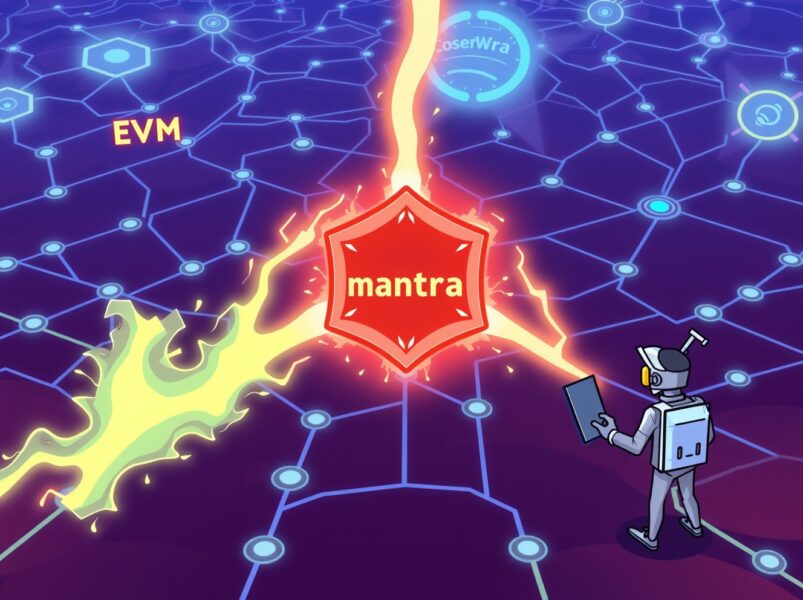
Mantra Native Support: Unlocking Brilliant Interoperability with EVM and CosmWasm

Mantra Native Support: Unlocking Brilliant Interoperability with EVM and CosmWasm

BitcoinWorld Mantra Native Support: Unlocking Brilliant Interoperability with EVM and CosmWasm The blockchain world is constantly evolving, and innovation is key to staying ahead. A significant development has recently emerged from the Mantra ecosystem: the completion of its mainnet upgrade. This crucial update introduces Mantra native support for both the Ethereum Virtual Machine (EVM) and CosmWasm smart contracts, marking a pivotal moment for interoperability and developer flexibility within the Cosmos ecosystem. This move, as reported by CryptoBriefing, positions Mantra as a versatile platform ready to embrace a broader range of decentralized applications (dApps) and foster a more connected blockchain environment. What Does Mantra Native Support Truly Mean for Developers? This upgrade isn’t just a technical tweak; it’s a fundamental expansion of Mantra’s capabilities. By integrating Mantra native support for EVM, the platform now welcomes a vast community of developers familiar with Ethereum’s robust tooling and Solidity programming language. This means dApps originally built for Ethereum can potentially be deployed or adapted on Mantra with greater ease, leveraging existing codebases and expertise. Simultaneously, the inclusion of CosmWasm support caters to the vibrant Cosmos ecosystem. CosmWasm is a powerful smart contract platform built for the Cosmos SDK, offering developers the ability to write secure and efficient smart contracts in Rust. This dual support creates a unique environment where projects can choose the best smart contract execution environment for their specific needs, or even bridge between them. Broader Developer Base: Attracts both EVM and CosmWasm developers. Increased Flexibility: Projects can choose their preferred smart contract language and environment. Enhanced Innovation: Fosters cross-chain development and new use cases. Reduced Migration Barriers: Simplifies bringing existing dApps to Mantra. Why is Dual EVM and CosmWasm Integration a Game Changer for Mantra? The strategic decision to offer Mantra native support for both EVM and CosmWasm addresses a core challenge in the blockchain space: fragmentation. Different blockchain ecosystems often operate in silos, making it difficult for assets and data to flow freely between them. Mantra’s approach aims to break down these barriers, creating a more cohesive and interconnected decentralized landscape. Think of it this way: previously, if you wanted to build an application, you had to pick a side – Ethereum or Cosmos. Now, Mantra offers a bridge, allowing developers to harness the strengths of both worlds. This dual compatibility could lead to innovative hybrid dApps that combine the battle-tested security and liquidity of Ethereum with the scalability and modularity of the Cosmos SDK. It’s about empowering developers to build without compromise. Unlocking Liquidity: Potentially connects Mantra to the massive liquidity pools on Ethereum. Improved Scalability: Leverages Cosmos’s strengths for higher transaction throughput. Future-Proofing: Positions Mantra at the forefront of interoperable blockchain solutions. Diverse Use Cases: Opens doors for complex financial products, gaming, and more. What Opportunities and Challenges Lie Ahead for Mantra? With Mantra native support now live, the opportunities are immense. The platform is poised to attract a wave of new projects and users, eager to explore its enhanced capabilities. Imagine a DeFi protocol built on CosmWasm that can seamlessly interact with ERC-20 tokens on Mantra, or a gaming dApp leveraging EVM compatibility for its NFTs while using Cosmos for its core game logic. These are the kinds of innovative applications that this integration makes possible. However, like any significant technological advancement, challenges remain. Ensuring robust security across both virtual machines, optimizing performance for a growing user base, and effectively educating developers on how to best utilize these new features will be crucial. Mantra will need to continue fostering a strong community and providing excellent developer tools to maximize the potential of this upgrade. The success of this initiative will largely depend on the platform’s ability to onboard projects and users efficiently, demonstrating the tangible benefits of its dual-engine approach. Active community engagement and continuous innovation will be key to solidifying Mantra’s position in the competitive blockchain landscape. The introduction of Mantra native support for both EVM and CosmWasm represents a bold leap forward for the platform and the broader blockchain industry. By fostering greater interoperability and providing unparalleled flexibility for developers, Mantra is paving the way for a new generation of decentralized applications. This strategic move not Pre only enhances Mantra’s appeal but also contributes significantly to the vision of a more connected, efficient, and innovative blockchain ecosystem. The future looks bright for projects building on Mantra, as they can now truly leverage the best of both worlds. Frequently Asked Questions (FAQs) What is Mantra’s mainnet upgrade? Mantra’s mainnet upgrade introduces native support for both Ethereum Virtual Machine (EVM) and CosmWasm smart contracts, significantly expanding its capabilities and developer options. Why is EVM support important for Mantra? EVM support allows Mantra to integrate with the vast Ethereum ecosystem, enabling developers familiar with Solidity and Ethereum tooling to build on Mantra and potentially access Ethereum’s liquidity. What is CosmWasm and why is it included? CosmWasm is a smart contract platform built for the Cosmos SDK, allowing secure and efficient contracts in Rust. Its inclusion broadens Mantra’s appeal to the Cosmos developer community and enhances modularity. How does this dual support benefit users? Users can expect a wider array of dApps, potentially more innovative and robust, benefiting from the combined strengths of both EVM and CosmWasm ecosystems, leading to a richer and more interconnected experience. What kind of projects can now be built on Mantra? A diverse range of projects can be built, from DeFi protocols leveraging Ethereum’s liquidity to gaming dApps using Cosmos’s scalability, and even hybrid applications that combine features from both environments. Did you find this deep dive into Mantra’s latest upgrade insightful? Share this article with your network on social media and spark a conversation about the future of blockchain interoperability! Let’s spread the word about these exciting advancements. To learn more about the latest explore our article on key developments shaping Mantra’s ecosystem future innovations. This post Mantra Native Support: Unlocking Brilliant Interoperability with EVM and CosmWasm first appeared on BitcoinWorld.
Paylaş
Coinstats2025/09/18 01:35

Score Your Share of 50K USDT

Score Your Share of 50K USDTScore Your Share of 50K USDT

Complete DEX+ tasks to unlock the Champion Wheel