Sui gasless stablecoin transfers and confidential payments challenge altcoin ETFs like Grayscale’s HYPE fund. What UX, risk, and adoption data suggest.Sui gasless stablecoin transfers and confidential payments challenge altcoin ETFs like Grayscale’s HYPE fund. What UX, risk, and adoption data suggest.

SUI and Consumer Payments: Can App-Chain UX Beat the Next Wave of Altcoin ETFs?

2026/06/18 22:21
Okuma süresi: 9 dk
Bu içerikle ilgili geri bildirim veya endişeleriniz için lütfen crypto.news@mexc.com üzerinden bizimle iletişime geçin.

A coffee checkout that settles in seconds, costs $0 in gas, and never asks the buyer to hold a chain’s native token. That’s the promise Sui put on the table this spring.

At the same time, Wall Street is packaging new altcoin exposure for brokerage accounts, from staking baskets to single-asset plays. The pitch: convenience, compliance, and familiar rails.

Which experience actually wins a consumer’s day-to-day payment—an app-chain that hides crypto’s rough edges, or an ETF that turns tokens into ticker symbols?

Crypto adoption is bifurcating. On one side, consumer-grade app-chains are racing to make stablecoin payments feel as easy as swiping a card. On the other, asset managers are turning volatile tokens into exchange-traded products that fit into retirement accounts and brokerage apps.

Sui has moved aggressively on the UX front with protocol-level features designed for everyday payments, while Grayscale and peers test the waters for a new wave of altcoin ETFs. Merchants, fintechs, and retail investors each have something at stake: lower fees and faster settlement for the former; regulated exposure and reduced custody headaches for the latter.

Sui’s Consumer Payment Playbook: Gasless, Fast, App-Centric

From wallet friction to invisible fees

On May 20, 2026, Sui announced protocol-level “gasless stablecoin transfers,” allowing supported stablecoin P2P transfers at $0.00 gas on Sui for assets like USDsui, SuiUSDe, AUSD, FDUSD, USDB, USDC, and USDY (Sui Blog (Sui Foundation)). The move targets crypto’s most persistent UX tax: forcing users to acquire and manage a chain’s native token just to send a dollar-pegged asset.

In the same post, Sui highlighted surpassing $1 trillion in stablecoin transfer volume since August 2025—a signal that payments, not just speculation, increasingly anchor activity on the network (Sui Blog (Sui Foundation)).

How a gasless transfer actually works

  1. User initiates a stablecoin send inside a Sui-connected wallet or app.
  2. Protocol-level logic sponsors the gas, so no SUI balance is required from the sender.
  3. The transaction routes and finalizes; the receiver gets the full amount without a fee haircut.
  4. Any sponsorship and accounting occurs under the hood; the UX resembles a free instant transfer.

Protocol-level UX vs. wallet patches

Historically, “gasless” experiences were app-specific, subsidized by a company until the budget ran dry. By embedding the mechanism at the protocol level, Sui reduces the risk that a single app’s economics break the experience. That said, sustainability still depends on network economics, throughput, and governance consensus on who pays for what over time.

What merchants and fintechs actually care about

For consumer payments, the calculus is simple: settlement speed, failure rate, acceptance breadth, and reconciliation. Gasless transfers help on acceptance (no native token hurdle) and predictability (no surprise micro-fees). The remaining work is on- and off-ramps, dispute tooling, recurring payments, and robust merchant dashboards.

Privacy With Auditors In The Loop

Confidential amounts, visible participants

On June 8, 2026, Sui launched confidential transfers into public beta—hiding amounts and balances while preserving sender/receiver visibility, plus auditable, scoped access for compliance partners such as TRM Labs and Merkle Science (Sui Blog (Sui Foundation)).

That model tries to square two competing realities: consumers and businesses don’t want unit-level transparency on every invoice; regulators and banks require visibility to manage risk.

Scoped transparency as a competitive lever

Retail card networks already blend privacy with oversight. On-chain payments must approximate that balance without reintroducing centralized chokepoints. If Sui’s confidential transfers prove performant and compliant in production, they could attract payroll apps, B2B invoicing, and high-volume commerce where revealing counterparties is fine but revealing amounts is sensitive.

Reliability Under Fire: What May Outages Tell Us

The incidents and what was fixed

Uptime is the payment rails’ sacred cow. Between May 28–29, 2026, Sui Mainnet suffered three outages; the first lasted 5 hours and 55 minutes according to contemporaneous reporting (Cointelegraph). The subsequent post‑mortem detailed the halts after a major upgrade and the implemented fixes (Sui Blog (Sui Foundation)).

Perception damage vs. engineering reality

Every modern network has incident windows. For payments, however, a multi-hour halt is an existential brand problem. The core question is whether Sui can keep incidents rare, isolate blast radius, and reduce time-to-recovery. Merchant acquirers will ask for historical uptime, failover plans, and SLAs from any middleware provider integrating Sui.

Mitigation playbook

Payment integrators can build redundancy across chains and stablecoins, queue transactions for later settlement, and surface status pages. The more Sui standardizes around health checks, sequencer transparency, and standardized error codes, the faster fintechs can deliver graceful degradation during edge cases.

Meanwhile, Wall Street Tokenizes the Narrative

Altcoin ETFs step into the spotlight

On June 1, 2026, Grayscale filed an amended S‑1 for the Grayscale Hyperliquid Staking ETF, disclosing HYPE metrics including a 1,000,000,000 max supply, roughly 256 million circulating as of March 31, 2026, a 24‑hour trading volume near $232.7 million, and an aggregate market value around $9.4 billion (SEC EDGAR (Grayscale S‑1/A, Hyperliquid Staking ETF)).

Whether or not specific products launch, filings like this illustrate the pitch: regulated, brokerage-friendly exposure to newer networks without self-custody, slippage anxiety, or bridge risk. For many investors, that’s compelling—especially in tax-advantaged accounts. But ETFs abstract away the utility layer. You’re not paying for coffee with an ETF share.

Payments rails vs. brokerage rails: a practical comparison

Dimension App‑chain payments (Sui) Altcoin ETFs Primary user action Send/receive stablecoins inside apps Buy/sell shares via brokerage Fees visible to end user Gasless for supported stablecoins; merchant spread Brokerage commissions, fund fees, spread Custody User or integrator custody of stablecoins Fund custodian; no self-custody Utility Medium of exchange; programmable settlement Price exposure; no payment utility Regulatory perimeter Money transmission, AML/KYC; evolving Securities regulation; established Volatility exposure Stablecoin peg risk; FX-like Underlying token volatility via share price Integration complexity Wallets, on/off-ramps, merchant APIs Brokerage account access

The matrix shows they’re complements, not substitutes: ETFs solve access to asset price risk; app-chains solve access to digital money movement.

Hero graphic from Sui’s May 20, 2026 blog post announcing gasless stablecoin transfers — visually highlights the zero-fee stablecoin transfer claim that underpins Sui’s push for payments UX. — Source: Sui Blog (Sui Foundation)

Who Wins the Next 24 Months? Scenarios and Metrics

Scenario A: ETF-led mainstreaming

If more altcoin ETFs clear regulatory review, brokerage channels may onboard millions to passive exposure. That could lower unit costs of capital for ecosystems but won’t by itself create payment volume.

Scenario B: App‑chain‑first payments

If Sui’s gasless transfers and confidential payments gain traction with wallets, payroll platforms, and merchant acquirers, consumer use may grow independent of token price cycles. Stability, not speculation, would be the lead indicator.

Blended path: exposure funds the checkout

Most likely, ETFs expand awareness while app-chains battle for real utility. The cross-over happens when brokerages and neobanks embed on-chain dollar rails behind the scenes.

What to watch

  • Uptime and time-to-recovery metrics from Sui and major integrators.
  • Active merchant locations, payment volume, and refund/chargeback tooling on Sui-based apps.
  • Stablecoin diversification: how many regulated issuers and bank partners are live.
  • Confidential transfer adoption by payroll, B2B invoicing, and NGOs.
  • ETF approval cadence and net inflows versus altcoin spot markets.

Risks & What Could Go Wrong

  • Network reliability: Additional multi-hour outages could deter enterprise payment integrations, even if fixes are fast.
  • Economic sustainability: Protocol-level gas sponsorship must remain viable under stress and spam conditions.
  • Regulatory friction: Confidential transfers could face scrutiny if controls aren’t demonstrably effective.
  • Stablecoin counterparty risk: Depegs or issuer failures would ripple through payment flows.
  • ETF uncertainty: Regulators may limit or reshape staking or single-asset products, shifting the narrative.
  • Merchant adoption gap: Without robust tooling and on/off-ramps, superior UX features won’t translate into live checkouts.

For ongoing context across both rails—the product UX on app-chains and the market structure around ETFs—Crypto Daily tracks protocol updates, filings, and adoption stories in one place (Crypto Daily).

Frequently Asked Questions

Do Sui’s gasless transfers really mean zero fees for users?

For supported stablecoins, Sui’s protocol-level design enables $0.00 gas on peer-to-peer transfers, so users don’t need SUI to send those assets. Economic sponsorship and anti-spam design still matter in practice, but the end-user sees no gas deduction (Sui Blog (Sui Foundation)).

How private are Sui’s confidential transfers?

Amounts and balances are hidden, while sender and receiver remain visible. Sui’s public beta also supports scoped, auditable access for compliance partners like TRM Labs and Merkle Science—aiming to balance privacy with oversight (Sui Blog (Sui Foundation)).

What did the May 2026 outages imply for using Sui in payments?

The network experienced three halts over May 28–29, with one nearly six hours. Post‑mortems cited fixes after a major upgrade. For payments, sustained improvement on uptime and recovery will be essential before large merchants commit (Sui Blog (Sui Foundation); Cointelegraph).

Can altcoin ETFs drive consumer payments adoption?

Indirectly at best. ETFs can expand awareness and capital access, but they don’t provide transactional utility. Payments adoption depends on stable rails, UX, and merchant integration—not fund flows.

What does the Hyperliquid S‑1/A tell us about the ETF trend?

It signals growing interest in packaging newer network exposure for brokerage channels, listing token metrics like supply, volume, and market value in a regulated filing (SEC EDGAR). Approval is not guaranteed, but the direction is clear.

How should a startup decide between building on Sui payments vs. waiting on ETFs?

They solve different problems. If you need money movement and programmable settlement, test Sui’s features now while building redundancy. If your goal is investor access and price exposure, monitor ETF approvals and brokerage integrations.

Is Sui’s $1T+ stablecoin volume a reliable adoption signal?

It shows significant transfer activity since August 2025 as reported by Sui itself (Sui Blog (Sui Foundation)). Volume alone isn’t the whole story; watch unique senders, merchant integrations, and failed/queued transactions.

Disclaimer: This article is provided for informational purposes only. It is not offered or intended to be used as legal, tax, investment, financial, or other advice.


World Cup Combo: Aim for 200x

World Cup Combo: Aim for 200xWorld Cup Combo: Aim for 200x

Combine up to 20 World Cup matches in one order

Sorumluluk Reddi: Bu sitede yeniden yayınlanan makaleler, halka açık platformlardan alınmıştır ve yalnızca bilgilendirme amaçlıdır. MEXC'nin görüşlerini yansıtmayabilir. Tüm hakları telif sahiplerine aittir. Herhangi bir içeriğin üçüncü taraf haklarını ihlal ettiğini düşünüyorsanız, kaldırılması için lütfen crypto.news@mexc.com ile iletişime geçin. MEXC, içeriğin doğruluğu, eksiksizliği veya güncelliği konusunda hiçbir garanti vermez ve sağlanan bilgilere dayalı olarak alınan herhangi bir eylemden sorumlu değildir. İçerik, finansal, yasal veya diğer profesyonel tavsiye niteliğinde değildir ve MEXC tarafından bir tavsiye veya onay olarak değerlendirilmemelidir.

Ayrıca Şunları da Beğenebilirsiniz

Ethereum koers toont zeldzaam dubbel koopsignaal en richt zich op $4.550

Ethereum koers toont zeldzaam dubbel koopsignaal en richt zich op $4.550

Connect met Like-minded Crypto Enthusiasts! Connect op Discord! Check onze Discord   Ethereum laat op de uurgrafiek twee opeenvolgende TD Sequential koopsignalen zien. Deze indicator meet uitputting in een trend en geeft vaak een signaal dat de verkoopdruk kan afnemen. Dit dubbele signaal verschijnt rond het niveau van $4.516, waar de ETH prijs kortstondig steun vindt. Dit type formatie komt zelden voor en wordt daarom extra nauwlettend gevolgd. Wat gaat de Ethereum koers hiermee doen? Ethereum koers test steun rond $4.516 De scherpe daling van de Ethereum koers vanaf de prijszone rond $4.800 bracht de ETH prijs in korte tijd naar ongeveer $4.516. Op dit niveau trad duidelijke koopactiviteit op, waardoor de neerwaartse beweging tijdelijk werd gestopt. Het dubbele signaal dat door de TD Sequential indicator is gegenereerd, viel precies samen met dit prijspunt. De TD Sequential is opgebouwd uit negen candles die een trend meetellen. Wanneer de negende candle verschijnt, kan dit duiden op een trendomslag. In dit geval verschenen zelfs twee signalen kort na elkaar, wat aangeeft dat de verkoopdruk mogelijk uitgeput is. Het feit dat dit gebeurde in een zone waar ETH kopers actief bleven, maakt het patroon extra opvallend. TD Sequential just flashed two buy signals for Ethereum $ETH! pic.twitter.com/JPO8EhiEPi — Ali (@ali_charts) September 16, 2025 Welke crypto nu kopen?Lees onze uitgebreide gids en leer welke crypto nu kopen verstandig kan zijn! Welke crypto nu kopen? Fed-voorzitter Jerome Powell heeft aangekondigd dat de rentes binnenkort zomaar eens omlaag zouden kunnen gaan, en tegelijkertijd blijft BlackRock volop crypto kopen, en dus lijkt de markt klaar om te gaan stijgen. Eén vraag komt telkens terug: welke crypto moet je nu kopen? In dit artikel bespreken we de munten die… Continue reading Ethereum koers toont zeldzaam dubbel koopsignaal en richt zich op $4.550 document.addEventListener('DOMContentLoaded', function() { var screenWidth = window.innerWidth; var excerpts = document.querySelectorAll('.lees-ook-description'); excerpts.forEach(function(description) { var excerpt = description.getAttribute('data-description'); var wordLimit = screenWidth wordLimit) { var trimmedDescription = excerpt.split(' ').slice(0, wordLimit).join(' ') + '...'; description.textContent = trimmedDescription; } }); }); Technische indicatoren schetsen herstelkans voor ETH Naast de dubbele koopsignalen verstrekken ook andere indicatoren belangrijke aanwijzingen. Tijdens de daling van de ETH koers waren grote rode candles zichtbaar, maar na de test van $4.516 stabiliseerde de Ethereum koers. Dit wijst op een mogelijke verschuiving in het evenwicht tussen de bears en bulls. Als deze opwaartse beweging doorzet, liggen de eerste weerstanden rond $4.550. Daarboven wacht een sterkere zone rond $4.650. Deze niveaus zijn in eerdere Ethereum sessies al meerdere keren getest. Een doorbraak zou ruimte openen richting de all-time high van ETH rond $4.953. Wanneer de prijs toch opnieuw onder $4.516 zakt, liggen er zones rond $4.500 en $4.450 waar grotere kooporders worden verwacht. Deze niveaus kunnen als een vangnet fungeren, mocht de druk opnieuw toenemen. Marktdynamiek bevestigt technische indicatoren De huidige situatie volgt op een bredere correctie in de cryptomarkt. Verschillende vooraanstaande crypto tokens zagen scherpe koersdalingen, waarna traders op zoek gingen naar signalen voor een mogelijke ommekeer. Dat juist Ethereum nu een dubbel TD Sequential signaal toont, versterkt de interesse in dit scenario. Fundamenteel blijft Ethereum sterk. Het aantal ETH tokens dat via staking is vastgezet, blijft groeien. Dat verkleint de vrije circulatie en vermindert verkoopdruk. Tegelijk blijft het netwerk intensief gebruikt voor DeFi, NFT’s en stablecoins. Deze activiteiten zorgen voor een stabiele vraag naar ETH, ook wanneer de prijs tijdelijk onder druk staat. Fundamentele drijfveren achter de Ethereum koers De Ethereum koers wordt echter niet alleen bepaald door candles en patronen, maar ook door bredere factoren. Een stijgend percentage van de totale ETH supply staat vast in staking contracten. Hierdoor neemt de liquiditeit op exchanges af. Dit kan prijsschommelingen versterken wanneer er plotseling meer koopdruk ontstaat. Daarnaast is Ethereum nog steeds het grootste smart contract platform. Nieuwe standaarden zoals ERC-8004 en ontwikkelingen rond layer-2 oplossingen houden de activiteit hoog. Deze technologische vooruitgang kan de waardepropositie ondersteunen en zo indirect bijdragen aan een ETH prijsherstel. Het belang van de korte termijn dynamiek De komende handelsdagen zullen duidelijk maken of de bulls genoeg kracht hebben om door de weerstandszone rond $4.550 te breken. Voor de bears ligt de focus juist op het verdedigen van de prijsregio rond $4.516. De whales, die met grote handelsorders opereren, kunnen hierin een beslissende rol spelen. Het dubbele TD Sequential signaal blijft hoe dan ook een zeldzame gebeurtenis. Voor cryptoanalisten vormt het een objectief aanknopingspunt om de kracht van de huidige Ethereum trend te toetsen. Vooruitblik op de ETH koers Ethereum liet twee opeenvolgende TD Sequential signalen zien op de uurgrafiek, iets wat zelden voorkomt. Deze formatie viel samen met steun rond $4.516, waar de bulls actief werden. Als de Ethereum koers boven dit niveau blijft, kan er ruimte ontstaan richting $4.550 en mogelijk $4.650. Zakt de prijs toch opnieuw onder $4.516, dan komen $4.500 en $4.450 in beeld als nieuwe steunzones. De combinatie van zeldzame indicatoren en een sterke fundamentele basis maakt Ethereum interessant voor zowel technische als fundamentele analyses. Of de bulls het momentum echt kunnen overnemen, zal blijken zodra de Ethereum koers de eerstvolgende weerstanden opnieuw test. Koop je crypto via Best Wallet Best wallet is een topklasse crypto wallet waarmee je anoniem crypto kan kopen. Met meer dan 60 chains gesupport kan je al je main crypto coins aanschaffen via Best Wallet. Best wallet - betrouwbare en anonieme wallet Best wallet - betrouwbare en anonieme wallet Meer dan 60 chains beschikbaar voor alle crypto Vroege toegang tot nieuwe projecten Hoge staking belongingen Lage transactiekosten Best wallet review Koop nu via Best Wallet Let op: cryptocurrency is een zeer volatiele en ongereguleerde investering. Doe je eigen onderzoek. Het bericht Ethereum koers toont zeldzaam dubbel koopsignaal en richt zich op $4.550 is geschreven door Dirk van Haaster en verscheen als eerst op Bitcoinmagazine.nl.
Paylaş
Coinstats2025/09/17 23:31
HashKey Capital’s Strategic $540K STO Deposit to Binance Reveals Institutional Crypto Moves Amid Market Turmoil
HashKey Capital’s Strategic $540K STO Deposit to Binance Reveals Institutional Crypto Moves Amid Market Turmoil

BitcoinWorld HashKey Capital’s Strategic $540K STO Deposit to Binance Reveals Institutional Crypto Moves Amid Market Turmoil Institutional cryptocurrency investment
Paylaş
bitcoinworld2026/04/02 18:15
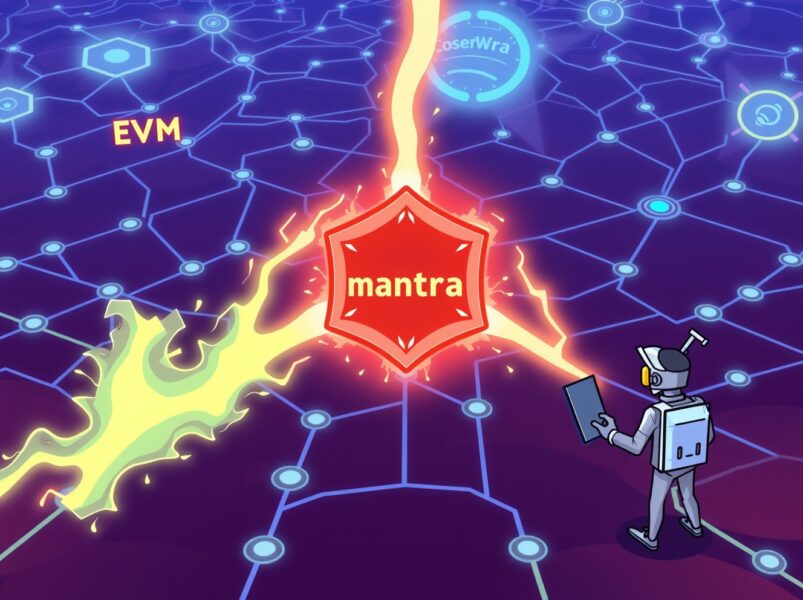
Mantra Native Support: Unlocking Brilliant Interoperability with EVM and CosmWasm

Mantra Native Support: Unlocking Brilliant Interoperability with EVM and CosmWasm

BitcoinWorld Mantra Native Support: Unlocking Brilliant Interoperability with EVM and CosmWasm The blockchain world is constantly evolving, and innovation is key to staying ahead. A significant development has recently emerged from the Mantra ecosystem: the completion of its mainnet upgrade. This crucial update introduces Mantra native support for both the Ethereum Virtual Machine (EVM) and CosmWasm smart contracts, marking a pivotal moment for interoperability and developer flexibility within the Cosmos ecosystem. This move, as reported by CryptoBriefing, positions Mantra as a versatile platform ready to embrace a broader range of decentralized applications (dApps) and foster a more connected blockchain environment. What Does Mantra Native Support Truly Mean for Developers? This upgrade isn’t just a technical tweak; it’s a fundamental expansion of Mantra’s capabilities. By integrating Mantra native support for EVM, the platform now welcomes a vast community of developers familiar with Ethereum’s robust tooling and Solidity programming language. This means dApps originally built for Ethereum can potentially be deployed or adapted on Mantra with greater ease, leveraging existing codebases and expertise. Simultaneously, the inclusion of CosmWasm support caters to the vibrant Cosmos ecosystem. CosmWasm is a powerful smart contract platform built for the Cosmos SDK, offering developers the ability to write secure and efficient smart contracts in Rust. This dual support creates a unique environment where projects can choose the best smart contract execution environment for their specific needs, or even bridge between them. Broader Developer Base: Attracts both EVM and CosmWasm developers. Increased Flexibility: Projects can choose their preferred smart contract language and environment. Enhanced Innovation: Fosters cross-chain development and new use cases. Reduced Migration Barriers: Simplifies bringing existing dApps to Mantra. Why is Dual EVM and CosmWasm Integration a Game Changer for Mantra? The strategic decision to offer Mantra native support for both EVM and CosmWasm addresses a core challenge in the blockchain space: fragmentation. Different blockchain ecosystems often operate in silos, making it difficult for assets and data to flow freely between them. Mantra’s approach aims to break down these barriers, creating a more cohesive and interconnected decentralized landscape. Think of it this way: previously, if you wanted to build an application, you had to pick a side – Ethereum or Cosmos. Now, Mantra offers a bridge, allowing developers to harness the strengths of both worlds. This dual compatibility could lead to innovative hybrid dApps that combine the battle-tested security and liquidity of Ethereum with the scalability and modularity of the Cosmos SDK. It’s about empowering developers to build without compromise. Unlocking Liquidity: Potentially connects Mantra to the massive liquidity pools on Ethereum. Improved Scalability: Leverages Cosmos’s strengths for higher transaction throughput. Future-Proofing: Positions Mantra at the forefront of interoperable blockchain solutions. Diverse Use Cases: Opens doors for complex financial products, gaming, and more. What Opportunities and Challenges Lie Ahead for Mantra? With Mantra native support now live, the opportunities are immense. The platform is poised to attract a wave of new projects and users, eager to explore its enhanced capabilities. Imagine a DeFi protocol built on CosmWasm that can seamlessly interact with ERC-20 tokens on Mantra, or a gaming dApp leveraging EVM compatibility for its NFTs while using Cosmos for its core game logic. These are the kinds of innovative applications that this integration makes possible. However, like any significant technological advancement, challenges remain. Ensuring robust security across both virtual machines, optimizing performance for a growing user base, and effectively educating developers on how to best utilize these new features will be crucial. Mantra will need to continue fostering a strong community and providing excellent developer tools to maximize the potential of this upgrade. The success of this initiative will largely depend on the platform’s ability to onboard projects and users efficiently, demonstrating the tangible benefits of its dual-engine approach. Active community engagement and continuous innovation will be key to solidifying Mantra’s position in the competitive blockchain landscape. The introduction of Mantra native support for both EVM and CosmWasm represents a bold leap forward for the platform and the broader blockchain industry. By fostering greater interoperability and providing unparalleled flexibility for developers, Mantra is paving the way for a new generation of decentralized applications. This strategic move not Pre only enhances Mantra’s appeal but also contributes significantly to the vision of a more connected, efficient, and innovative blockchain ecosystem. The future looks bright for projects building on Mantra, as they can now truly leverage the best of both worlds. Frequently Asked Questions (FAQs) What is Mantra’s mainnet upgrade? Mantra’s mainnet upgrade introduces native support for both Ethereum Virtual Machine (EVM) and CosmWasm smart contracts, significantly expanding its capabilities and developer options. Why is EVM support important for Mantra? EVM support allows Mantra to integrate with the vast Ethereum ecosystem, enabling developers familiar with Solidity and Ethereum tooling to build on Mantra and potentially access Ethereum’s liquidity. What is CosmWasm and why is it included? CosmWasm is a smart contract platform built for the Cosmos SDK, allowing secure and efficient contracts in Rust. Its inclusion broadens Mantra’s appeal to the Cosmos developer community and enhances modularity. How does this dual support benefit users? Users can expect a wider array of dApps, potentially more innovative and robust, benefiting from the combined strengths of both EVM and CosmWasm ecosystems, leading to a richer and more interconnected experience. What kind of projects can now be built on Mantra? A diverse range of projects can be built, from DeFi protocols leveraging Ethereum’s liquidity to gaming dApps using Cosmos’s scalability, and even hybrid applications that combine features from both environments. Did you find this deep dive into Mantra’s latest upgrade insightful? Share this article with your network on social media and spark a conversation about the future of blockchain interoperability! Let’s spread the word about these exciting advancements. To learn more about the latest explore our article on key developments shaping Mantra’s ecosystem future innovations. This post Mantra Native Support: Unlocking Brilliant Interoperability with EVM and CosmWasm first appeared on BitcoinWorld.
Paylaş
Coinstats2025/09/18 01:35

Score Your Share of 50K USDT

Score Your Share of 50K USDTScore Your Share of 50K USDT

Complete DEX+ tasks to unlock the Champion Wheel