June 2026 upgrade: Dromos Labs replaces Aerodrome’s gauge voting with Predictive Allocation, turning liquidity into forecasts; AERO jumped ~22% on the news.June 2026 upgrade: Dromos Labs replaces Aerodrome’s gauge voting with Predictive Allocation, turning liquidity into forecasts; AERO jumped ~22% on the news.

Aerodrome’s Prediction-Market Liquidity Upgrade: Is DEX Design Becoming More Game-Like?

2026/06/17 14:41
Okuma süresi: 9 dk
Bu içerikle ilgili geri bildirim veya endişeleriniz için lütfen crypto.news@mexc.com üzerinden bizimle iletişime geçin.

On Base, liquidity often follows narratives. But in mid-June 2026, the narrative itself became the mechanism: Aerodrome’s developer Dromos Labs unveiled “Predictive Allocation,” a design that turns liquidity steering into a forecasting contest.

Within hours, traders noticed the meta shifting from “vote and bribe next week” to “predict where demand will land.” Media reports said AERO rallied roughly 22% as derivatives activity swelled, signaling real money was paying attention.

If this upgrade lands as promised in July, a DEX’s core loop—where to put capital and when—could feel less like budgeting emissions and more like placing informed bets on future flow.

Liquidity as a Forecasting Game

Dromos Labs announced on June 14, 2026 that Aerodrome will replace its weekly gauge voting with a system called Predictive Allocation, scheduled to roll out in July 2026 (CoinDesk). Founder Alex Cutler framed it plainly: the design is meant to make liquidity move “in an anticipatory way,” rewarding participants—humans or AI agents—who correctly forecast where demand will appear (CoinDesk).

The day after the news, one report recorded a ~22% intraday jump in AERO with derivatives volume near $46.25M, reflecting a rush to reprice the token’s future cash flows and governance value (CoinPedia). Whether the rally endures will depend on execution and adoption, but the immediate reaction suggests the market sees more than a cosmetic tweak.

From Gauges to Guesses: Why Replace Weekly Votes?

For the last few years, the ve(3,3) playbook popularized by Velodrome-style DEXs has centered on weekly gauge votes and bribes to direct emissions toward desired pools. It is effective at allocating incentives but inherently slow and often reactive.

The old model: ve(3,3) gauge voting

Token lockers vote on which pairs receive emissions. Projects bribe voters to attract flow. LPs follow the incentives, and the loop repeats weekly. The system is transparent, but coordination frequently trails behind actual trading demand, especially during fast-moving market regimes.

What broke down in practice

  1. Latency: weekly cycles lag sudden narrative shifts, causing slippage spikes and missed volume.
  2. Reflexivity: bribes chase last week’s winners, reinforcing backward-looking allocations.
  3. Overhead: protocols burn runway bribing even when marginal volume has cooled.
  4. Complacency: passive LPs lean on scheduled votes rather than active market sensing.

Predictive Allocation aims to compress that latency by rewarding foresight, not just stake-weighted preference. Per Dromos’ announcement, the target is anticipatory rebalancing that better matches real flow (CoinDesk).

How Predictive Allocation Could Work Under the Hood

The full spec has not been publicly finalized at the time of writing, but the direction is clear from statements by Dromos Labs. The mechanism is positioned to collect forecasts about where liquidity will be needed and then distribute rewards to those whose predictions line up with realized demand.

From signals to steering

In broad strokes, a forecasting-driven liquidity design could follow this path:

  1. Participants submit forecasts indicating which pairs will require deeper liquidity or generate net volume over a coming epoch.
  2. The protocol aggregates signals and probabilistically weights emissions or routing toward the most credible forecasts.
  3. After the epoch, realized metrics—e.g., volume share, slippage reduction, fee capture—are observed.
  4. Forecasters are scored based on accuracy, with rewards distributed accordingly; inaccurate forecasts incur opportunity cost and possibly penalties.
  5. Reputation or performance weight increases for accurate participants, improving their influence in future rounds.

What changes for users

Traders still want best execution and low slippage. LPs still want sustainable fees net of impermanent loss. The novelty is the role of forecasters—which may include funds, individual analysts, and AI agents—who win or lose based on whether they correctly anticipate demand. That dynamic could reduce the protocol’s dependency on blunt bribes and inject richer information into how liquidity is routed.

Early Market Signals and What They Mean

Initial market reaction was swift. Coverage on June 15 cited a ~22% AERO surge and roughly $46.25M in derivatives turnover on the session, indicating speculators were repositioning around anticipated fee flows and incentive cuts or boosts (CoinPedia).

Price reaction vs. protocol reality

Token spikes following upgrade announcements are not new. What matters is throughput: depth where it’s needed, lower slippage on narrative pairs, and net fee capture that compensates LP risk. Dromos’ own framing—the design aims to reward correct foresight—sets a high bar for measurable outcomes (CoinDesk).

What good looks like in Q3–Q4 2026

  • Latency reduction: liquidity shifts toward spiking pairs within the epoch, not weeks later.
  • Lower bribe reliance: emissions directed by predictive accuracy instead of pure vote-buying.
  • Broader participation: AI agents and quant desks contribute forecasts that measurably improve routing.
  • Resilience: fewer whipsaws during narrative reversals as signals hedge across scenarios.

Game Design Lessons Migrating Into DEXs

Prediction-market mechanics have seeped into crypto UX for years—from points seasons to trading quests and decentralized forecasting platforms. Aerodrome’s move suggests core liquidity plumbing may now borrow directly from game design: shorter feedback loops, skill-based rewards, and portable reputation.

Dimension Gauge Voting (ve(3,3)) Predictive Allocation (Aerodrome) Baseline AMM/Order Book Decision cycle Weekly epochs Forecast-driven epochs (aiming for anticipatory shifts) Continuous, reactive Reward driver Stake-weighted votes + bribes Accuracy of demand forecasts Realized volume and maker rebates Primary beneficiaries Token lockers, bribers Skilled forecasters (funds, AI agents), responsive LPs Active market makers, latency-sensitive traders Attack surface Vote buying, governance capture Data gaming, manipulation of signals, wash flows MEV, spoofing (for order books), sandwich risk UX feel Budgeting and lobbying Forecasting and scoring Execution-focused

Where the “game” metaphor helps

Good games align incentives with feedback. If rewards scale with true predictive skill, capital should congregate around better forecasters, improving depth where it matters. Conversely, if the scoring is exploitable, the game devolves into farming patterns that don’t help traders.

Who Stands to Gain — and Who Doesn’t

Quant funds and AI agents

Per Dromos’ comments, AI agents are first-class citizens in this design (CoinDesk). Systematic strategies that ingest on-chain flow, funding rates, social data, and cross-venue order flow could build robust forecasting models. If the scoring function is well-calibrated, those models might compound influence over time.

Retail LPs and protocol teams

Retail LPs may benefit from deeper, timelier pools on hot pairs—if forecasts are accurate. Protocol teams launching tokens might find it cheaper to spark liquidity without recurring bribes, provided they can convince forecasters their demand is real and imminent.

Less obvious losers

Stake-heavy vote buyers that excelled in the bribe era could lose relative power if accuracy outranks stake. Also at risk: passive capital that relied on weekly habits rather than live signals.

Emissions‑accuracy chart from Aero’s economic case showing on‑target emissions rising from 48% (epoch signal) → 64% (predictive signal) → 70% (predictive + gauge caps), quantifying the claimed efficiency improvements of Predictive Allocation. — Source: Aero (aero.xyz) / Dromos Labs

What to Watch Through 2026

With rollout slated for July 2026 and market attention already piqued, these markers will help separate promise from noise:

  • Specification clarity: how forecasts are submitted, verified, and scored; whether forecasts are binary, ranked, or continuous.
  • Anti-gaming design: protections against wash trading to “prove” demand, plus safeguards against oracle manipulation.
  • Latency and granularity: epoch length, mid-epoch updates, and whether liquidity can adapt intra-epoch without whipsawing LPs.
  • MEV interplay: whether predictive reweighting introduces exploitable patterns for searchers or mitigates sandwich risk by deepening hot pools.
  • Outcome metrics: slippage on top pairs during news shocks; fee APR stability versus standard ve(3,3) baselines.
  • Cross-protocol effects: whether other Base DEXs or EVM venues adopt similar mechanics if Aerodrome’s KPIs improve.

Risks & What Could Go Wrong

  • Signal manipulation: adversaries could manufacture “demand” (wash flow, spoof interest) to profit from forecast rewards.
  • Feedback traps: if scoring overweights recent flow, the system may chase noise and amplify false positives.
  • Complexity tax: retail users may find forecasting mechanics opaque, reducing broad participation.
  • AI arms race: well-capitalized agents could dominate forecasting influence, crowding out smaller players.
  • Regulatory ambiguity: if incentives resemble wagering, some jurisdictions might scrutinize design features even if no off-chain payouts exist.
  • Implementation risk: bugs in scoring, emissions routing, or epoch settlement can cause misallocations or funds at risk.

Nothing in this article is investment advice. Forecasting systems are experimental and subject to smart-contract, market, and regulatory risks.

For continuing coverage of DeFi market structure changes and on-chain liquidity design, Crypto Daily tracks protocol releases, audits, and governance shifts across major ecosystems. Follow our reporting at Crypto Daily.

Frequently Asked Questions

What exactly did Dromos Labs announce for Aerodrome?

On June 14, 2026 Dromos Labs said Aerodrome will introduce “Predictive Allocation,” replacing weekly gauge voting. The goal is to make liquidity move in an anticipatory way and reward participants who forecast where demand will appear, including AI agents (CoinDesk).

When will Predictive Allocation go live?

Dromos indicated a July 2026 rollout. As with any on-chain upgrade, timelines can shift depending on audits, testing, and governance, so watch official channels for final dates (CoinDesk).

How is this different from gauge voting and bribes?

Gauge voting directs emissions based on stake-weighted preferences and bribes. Predictive Allocation, by contrast, is positioned to reward accuracy in forecasting real demand. Rather than paying voters to support a pool, protocols and traders are incentivized to provide correct signals ahead of time.

Did AERO’s price react to the announcement?

One media report recorded an ~22% AERO rally with derivatives volume near $46.25M following the announcement, reflecting rapid repricing by traders. Price reactions are volatile and may not persist (CoinPedia).

Who can participate as a forecaster?

Based on public commentary, users, funds, and AI agents could all participate. The details—such as interface, data requirements, and scoring—should be clarified once documentation is released by the team (CoinDesk).

What are the main risks for LPs?

Potential risks include misallocated emissions if forecasts are wrong, increased complexity for strategy selection, and new vectors for manipulation. LPs should monitor slippage, realized fee APR, and stability across epochs before sizing positions.

Is DEX design becoming more game-like?

Yes, in the sense that mechanisms are adopting scoring, reputation, and skill-based rewards. The test is whether these game elements produce better real-world outcomes—deeper liquidity when it’s needed and fairer execution for traders—without opening exploitable loopholes.

Disclaimer: This article is provided for informational purposes only. It is not offered or intended to be used as legal, tax, investment, financial, or other advice.


Piyasa Fırsatı
SQUID MEME Logosu
SQUID MEME Fiyatı(GAME)
$31.7485
$31.7485$31.7485
+8.67%
USD
SQUID MEME (GAME) Canlı Fiyat Grafiği

World Cup Combo: Aim for 200x

World Cup Combo: Aim for 200xWorld Cup Combo: Aim for 200x

Combine up to 20 World Cup matches in one order

Sorumluluk Reddi: Bu sitede yeniden yayınlanan makaleler, halka açık platformlardan alınmıştır ve yalnızca bilgilendirme amaçlıdır. MEXC'nin görüşlerini yansıtmayabilir. Tüm hakları telif sahiplerine aittir. Herhangi bir içeriğin üçüncü taraf haklarını ihlal ettiğini düşünüyorsanız, kaldırılması için lütfen crypto.news@mexc.com ile iletişime geçin. MEXC, içeriğin doğruluğu, eksiksizliği veya güncelliği konusunda hiçbir garanti vermez ve sağlanan bilgilere dayalı olarak alınan herhangi bir eylemden sorumlu değildir. İçerik, finansal, yasal veya diğer profesyonel tavsiye niteliğinde değildir ve MEXC tarafından bir tavsiye veya onay olarak değerlendirilmemelidir.

Ayrıca Şunları da Beğenebilirsiniz

Ethereum koers toont zeldzaam dubbel koopsignaal en richt zich op $4.550

Ethereum koers toont zeldzaam dubbel koopsignaal en richt zich op $4.550

Connect met Like-minded Crypto Enthusiasts! Connect op Discord! Check onze Discord   Ethereum laat op de uurgrafiek twee opeenvolgende TD Sequential koopsignalen zien. Deze indicator meet uitputting in een trend en geeft vaak een signaal dat de verkoopdruk kan afnemen. Dit dubbele signaal verschijnt rond het niveau van $4.516, waar de ETH prijs kortstondig steun vindt. Dit type formatie komt zelden voor en wordt daarom extra nauwlettend gevolgd. Wat gaat de Ethereum koers hiermee doen? Ethereum koers test steun rond $4.516 De scherpe daling van de Ethereum koers vanaf de prijszone rond $4.800 bracht de ETH prijs in korte tijd naar ongeveer $4.516. Op dit niveau trad duidelijke koopactiviteit op, waardoor de neerwaartse beweging tijdelijk werd gestopt. Het dubbele signaal dat door de TD Sequential indicator is gegenereerd, viel precies samen met dit prijspunt. De TD Sequential is opgebouwd uit negen candles die een trend meetellen. Wanneer de negende candle verschijnt, kan dit duiden op een trendomslag. In dit geval verschenen zelfs twee signalen kort na elkaar, wat aangeeft dat de verkoopdruk mogelijk uitgeput is. Het feit dat dit gebeurde in een zone waar ETH kopers actief bleven, maakt het patroon extra opvallend. TD Sequential just flashed two buy signals for Ethereum $ETH! pic.twitter.com/JPO8EhiEPi — Ali (@ali_charts) September 16, 2025 Welke crypto nu kopen?Lees onze uitgebreide gids en leer welke crypto nu kopen verstandig kan zijn! Welke crypto nu kopen? Fed-voorzitter Jerome Powell heeft aangekondigd dat de rentes binnenkort zomaar eens omlaag zouden kunnen gaan, en tegelijkertijd blijft BlackRock volop crypto kopen, en dus lijkt de markt klaar om te gaan stijgen. Eén vraag komt telkens terug: welke crypto moet je nu kopen? In dit artikel bespreken we de munten die… Continue reading Ethereum koers toont zeldzaam dubbel koopsignaal en richt zich op $4.550 document.addEventListener('DOMContentLoaded', function() { var screenWidth = window.innerWidth; var excerpts = document.querySelectorAll('.lees-ook-description'); excerpts.forEach(function(description) { var excerpt = description.getAttribute('data-description'); var wordLimit = screenWidth wordLimit) { var trimmedDescription = excerpt.split(' ').slice(0, wordLimit).join(' ') + '...'; description.textContent = trimmedDescription; } }); }); Technische indicatoren schetsen herstelkans voor ETH Naast de dubbele koopsignalen verstrekken ook andere indicatoren belangrijke aanwijzingen. Tijdens de daling van de ETH koers waren grote rode candles zichtbaar, maar na de test van $4.516 stabiliseerde de Ethereum koers. Dit wijst op een mogelijke verschuiving in het evenwicht tussen de bears en bulls. Als deze opwaartse beweging doorzet, liggen de eerste weerstanden rond $4.550. Daarboven wacht een sterkere zone rond $4.650. Deze niveaus zijn in eerdere Ethereum sessies al meerdere keren getest. Een doorbraak zou ruimte openen richting de all-time high van ETH rond $4.953. Wanneer de prijs toch opnieuw onder $4.516 zakt, liggen er zones rond $4.500 en $4.450 waar grotere kooporders worden verwacht. Deze niveaus kunnen als een vangnet fungeren, mocht de druk opnieuw toenemen. Marktdynamiek bevestigt technische indicatoren De huidige situatie volgt op een bredere correctie in de cryptomarkt. Verschillende vooraanstaande crypto tokens zagen scherpe koersdalingen, waarna traders op zoek gingen naar signalen voor een mogelijke ommekeer. Dat juist Ethereum nu een dubbel TD Sequential signaal toont, versterkt de interesse in dit scenario. Fundamenteel blijft Ethereum sterk. Het aantal ETH tokens dat via staking is vastgezet, blijft groeien. Dat verkleint de vrije circulatie en vermindert verkoopdruk. Tegelijk blijft het netwerk intensief gebruikt voor DeFi, NFT’s en stablecoins. Deze activiteiten zorgen voor een stabiele vraag naar ETH, ook wanneer de prijs tijdelijk onder druk staat. Fundamentele drijfveren achter de Ethereum koers De Ethereum koers wordt echter niet alleen bepaald door candles en patronen, maar ook door bredere factoren. Een stijgend percentage van de totale ETH supply staat vast in staking contracten. Hierdoor neemt de liquiditeit op exchanges af. Dit kan prijsschommelingen versterken wanneer er plotseling meer koopdruk ontstaat. Daarnaast is Ethereum nog steeds het grootste smart contract platform. Nieuwe standaarden zoals ERC-8004 en ontwikkelingen rond layer-2 oplossingen houden de activiteit hoog. Deze technologische vooruitgang kan de waardepropositie ondersteunen en zo indirect bijdragen aan een ETH prijsherstel. Het belang van de korte termijn dynamiek De komende handelsdagen zullen duidelijk maken of de bulls genoeg kracht hebben om door de weerstandszone rond $4.550 te breken. Voor de bears ligt de focus juist op het verdedigen van de prijsregio rond $4.516. De whales, die met grote handelsorders opereren, kunnen hierin een beslissende rol spelen. Het dubbele TD Sequential signaal blijft hoe dan ook een zeldzame gebeurtenis. Voor cryptoanalisten vormt het een objectief aanknopingspunt om de kracht van de huidige Ethereum trend te toetsen. Vooruitblik op de ETH koers Ethereum liet twee opeenvolgende TD Sequential signalen zien op de uurgrafiek, iets wat zelden voorkomt. Deze formatie viel samen met steun rond $4.516, waar de bulls actief werden. Als de Ethereum koers boven dit niveau blijft, kan er ruimte ontstaan richting $4.550 en mogelijk $4.650. Zakt de prijs toch opnieuw onder $4.516, dan komen $4.500 en $4.450 in beeld als nieuwe steunzones. De combinatie van zeldzame indicatoren en een sterke fundamentele basis maakt Ethereum interessant voor zowel technische als fundamentele analyses. Of de bulls het momentum echt kunnen overnemen, zal blijken zodra de Ethereum koers de eerstvolgende weerstanden opnieuw test. Koop je crypto via Best Wallet Best wallet is een topklasse crypto wallet waarmee je anoniem crypto kan kopen. Met meer dan 60 chains gesupport kan je al je main crypto coins aanschaffen via Best Wallet. Best wallet - betrouwbare en anonieme wallet Best wallet - betrouwbare en anonieme wallet Meer dan 60 chains beschikbaar voor alle crypto Vroege toegang tot nieuwe projecten Hoge staking belongingen Lage transactiekosten Best wallet review Koop nu via Best Wallet Let op: cryptocurrency is een zeer volatiele en ongereguleerde investering. Doe je eigen onderzoek. Het bericht Ethereum koers toont zeldzaam dubbel koopsignaal en richt zich op $4.550 is geschreven door Dirk van Haaster en verscheen als eerst op Bitcoinmagazine.nl.
Paylaş
Coinstats2025/09/17 23:31
HashKey Capital’s Strategic $540K STO Deposit to Binance Reveals Institutional Crypto Moves Amid Market Turmoil
HashKey Capital’s Strategic $540K STO Deposit to Binance Reveals Institutional Crypto Moves Amid Market Turmoil

BitcoinWorld HashKey Capital’s Strategic $540K STO Deposit to Binance Reveals Institutional Crypto Moves Amid Market Turmoil Institutional cryptocurrency investment
Paylaş
bitcoinworld2026/04/02 18:15
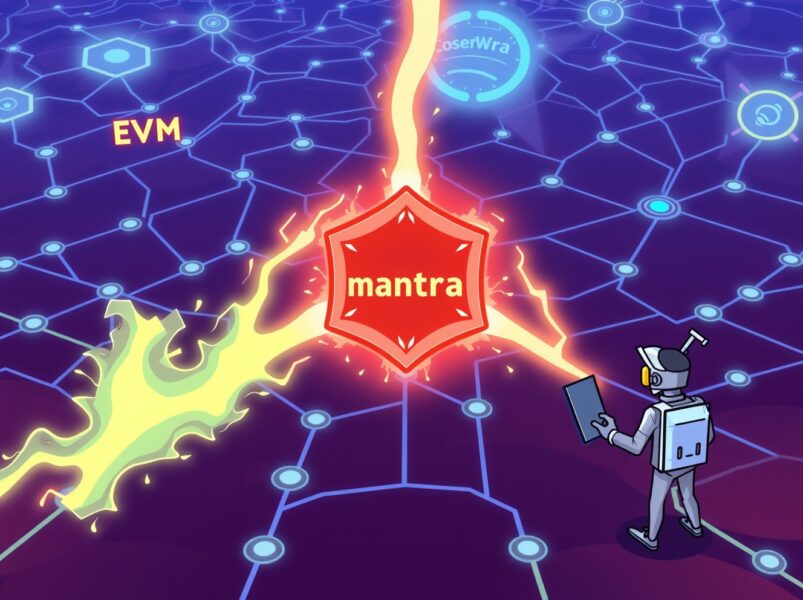
Mantra Native Support: Unlocking Brilliant Interoperability with EVM and CosmWasm

Mantra Native Support: Unlocking Brilliant Interoperability with EVM and CosmWasm

BitcoinWorld Mantra Native Support: Unlocking Brilliant Interoperability with EVM and CosmWasm The blockchain world is constantly evolving, and innovation is key to staying ahead. A significant development has recently emerged from the Mantra ecosystem: the completion of its mainnet upgrade. This crucial update introduces Mantra native support for both the Ethereum Virtual Machine (EVM) and CosmWasm smart contracts, marking a pivotal moment for interoperability and developer flexibility within the Cosmos ecosystem. This move, as reported by CryptoBriefing, positions Mantra as a versatile platform ready to embrace a broader range of decentralized applications (dApps) and foster a more connected blockchain environment. What Does Mantra Native Support Truly Mean for Developers? This upgrade isn’t just a technical tweak; it’s a fundamental expansion of Mantra’s capabilities. By integrating Mantra native support for EVM, the platform now welcomes a vast community of developers familiar with Ethereum’s robust tooling and Solidity programming language. This means dApps originally built for Ethereum can potentially be deployed or adapted on Mantra with greater ease, leveraging existing codebases and expertise. Simultaneously, the inclusion of CosmWasm support caters to the vibrant Cosmos ecosystem. CosmWasm is a powerful smart contract platform built for the Cosmos SDK, offering developers the ability to write secure and efficient smart contracts in Rust. This dual support creates a unique environment where projects can choose the best smart contract execution environment for their specific needs, or even bridge between them. Broader Developer Base: Attracts both EVM and CosmWasm developers. Increased Flexibility: Projects can choose their preferred smart contract language and environment. Enhanced Innovation: Fosters cross-chain development and new use cases. Reduced Migration Barriers: Simplifies bringing existing dApps to Mantra. Why is Dual EVM and CosmWasm Integration a Game Changer for Mantra? The strategic decision to offer Mantra native support for both EVM and CosmWasm addresses a core challenge in the blockchain space: fragmentation. Different blockchain ecosystems often operate in silos, making it difficult for assets and data to flow freely between them. Mantra’s approach aims to break down these barriers, creating a more cohesive and interconnected decentralized landscape. Think of it this way: previously, if you wanted to build an application, you had to pick a side – Ethereum or Cosmos. Now, Mantra offers a bridge, allowing developers to harness the strengths of both worlds. This dual compatibility could lead to innovative hybrid dApps that combine the battle-tested security and liquidity of Ethereum with the scalability and modularity of the Cosmos SDK. It’s about empowering developers to build without compromise. Unlocking Liquidity: Potentially connects Mantra to the massive liquidity pools on Ethereum. Improved Scalability: Leverages Cosmos’s strengths for higher transaction throughput. Future-Proofing: Positions Mantra at the forefront of interoperable blockchain solutions. Diverse Use Cases: Opens doors for complex financial products, gaming, and more. What Opportunities and Challenges Lie Ahead for Mantra? With Mantra native support now live, the opportunities are immense. The platform is poised to attract a wave of new projects and users, eager to explore its enhanced capabilities. Imagine a DeFi protocol built on CosmWasm that can seamlessly interact with ERC-20 tokens on Mantra, or a gaming dApp leveraging EVM compatibility for its NFTs while using Cosmos for its core game logic. These are the kinds of innovative applications that this integration makes possible. However, like any significant technological advancement, challenges remain. Ensuring robust security across both virtual machines, optimizing performance for a growing user base, and effectively educating developers on how to best utilize these new features will be crucial. Mantra will need to continue fostering a strong community and providing excellent developer tools to maximize the potential of this upgrade. The success of this initiative will largely depend on the platform’s ability to onboard projects and users efficiently, demonstrating the tangible benefits of its dual-engine approach. Active community engagement and continuous innovation will be key to solidifying Mantra’s position in the competitive blockchain landscape. The introduction of Mantra native support for both EVM and CosmWasm represents a bold leap forward for the platform and the broader blockchain industry. By fostering greater interoperability and providing unparalleled flexibility for developers, Mantra is paving the way for a new generation of decentralized applications. This strategic move not Pre only enhances Mantra’s appeal but also contributes significantly to the vision of a more connected, efficient, and innovative blockchain ecosystem. The future looks bright for projects building on Mantra, as they can now truly leverage the best of both worlds. Frequently Asked Questions (FAQs) What is Mantra’s mainnet upgrade? Mantra’s mainnet upgrade introduces native support for both Ethereum Virtual Machine (EVM) and CosmWasm smart contracts, significantly expanding its capabilities and developer options. Why is EVM support important for Mantra? EVM support allows Mantra to integrate with the vast Ethereum ecosystem, enabling developers familiar with Solidity and Ethereum tooling to build on Mantra and potentially access Ethereum’s liquidity. What is CosmWasm and why is it included? CosmWasm is a smart contract platform built for the Cosmos SDK, allowing secure and efficient contracts in Rust. Its inclusion broadens Mantra’s appeal to the Cosmos developer community and enhances modularity. How does this dual support benefit users? Users can expect a wider array of dApps, potentially more innovative and robust, benefiting from the combined strengths of both EVM and CosmWasm ecosystems, leading to a richer and more interconnected experience. What kind of projects can now be built on Mantra? A diverse range of projects can be built, from DeFi protocols leveraging Ethereum’s liquidity to gaming dApps using Cosmos’s scalability, and even hybrid applications that combine features from both environments. Did you find this deep dive into Mantra’s latest upgrade insightful? Share this article with your network on social media and spark a conversation about the future of blockchain interoperability! Let’s spread the word about these exciting advancements. To learn more about the latest explore our article on key developments shaping Mantra’s ecosystem future innovations. This post Mantra Native Support: Unlocking Brilliant Interoperability with EVM and CosmWasm first appeared on BitcoinWorld.
Paylaş
Coinstats2025/09/18 01:35

Score Your Share of 50K USDT

Score Your Share of 50K USDTScore Your Share of 50K USDT

Complete DEX+ tasks to unlock the Champion Wheel