

US March Nonfarm Payrolls: Critical Rebound to 60K Forecast After February’s Stumble
BitcoinWorld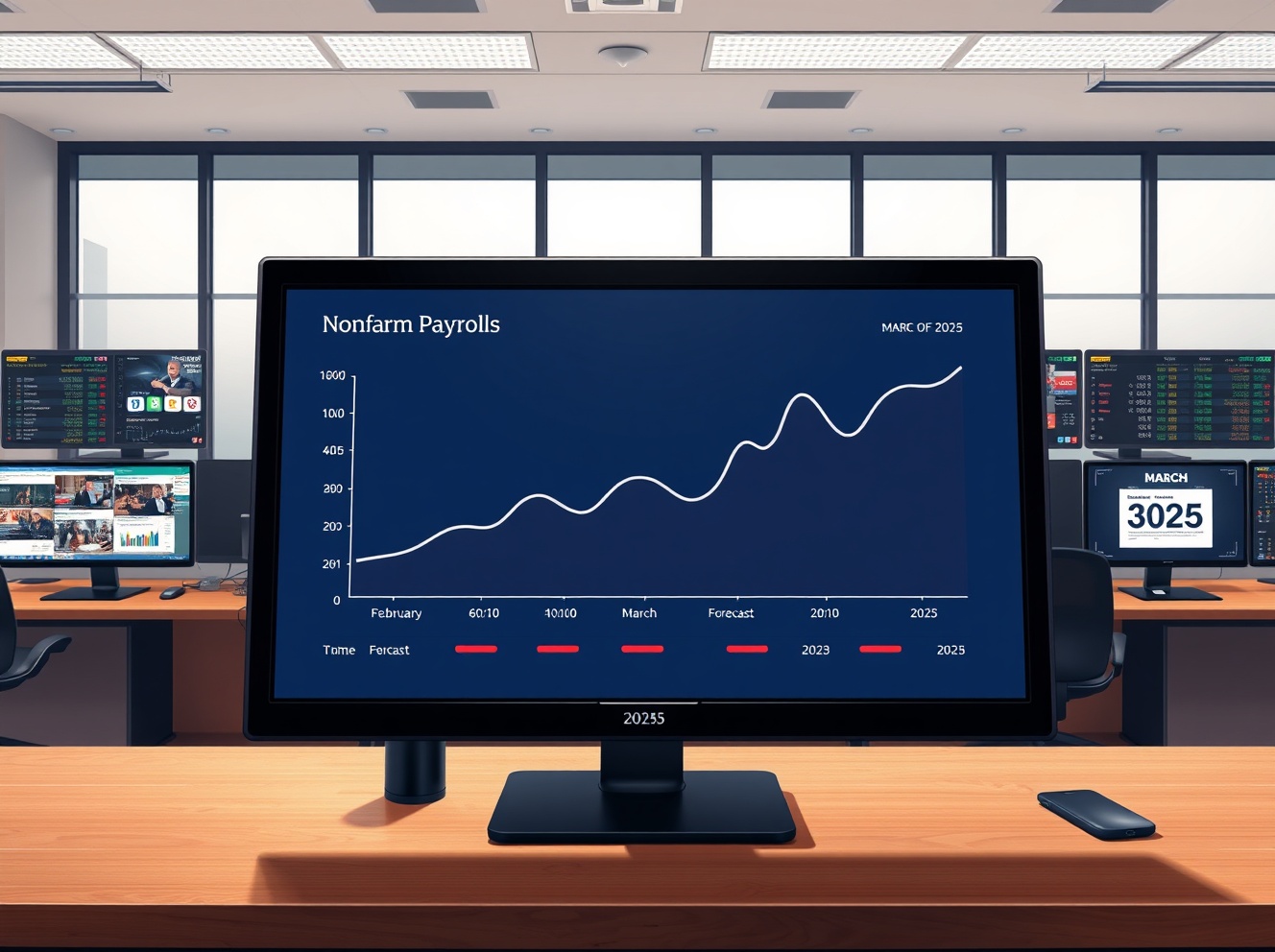
US March Nonfarm Payrolls: Critical Rebound to 60K Forecast After February’s Stumble
WASHINGTON, D.C. – March 2025. The United States labor market stands at a pivotal juncture as economists forecast a significant rebound in March Nonfarm Payrolls to 60,000 new jobs. This anticipated recovery follows a notably disappointing February report that fell short of expectations, placing intense scrutiny on the upcoming data release from the Bureau of Labor Statistics. The March jobs report will serve as a critical barometer for the health of the U.S. economy, influencing Federal Reserve policy decisions and market sentiment globally.
Analyzing the US March Nonfarm Payrolls Forecast
Economists from major financial institutions unanimously project a rebound in job creation for March. Consequently, the consensus estimate centers on 60,000 new Nonfarm Payroll positions. This forecast represents a substantial recovery from February’s anemic growth. Furthermore, it aligns with broader economic indicators suggesting underlying labor market resilience. The forecast incorporates several key data points.
- Weekly unemployment claims data, which have remained near historic lows.
- Business sentiment surveys indicating stable hiring intentions.
- Service sector activity, which continues to show expansion.
Market analysts closely monitor these leading indicators. Therefore, the 60,000 figure reflects a cautious yet optimistic assessment of current conditions. However, significant regional and sectoral variations likely persist beneath the headline number.
Contextualizing the Disappointing February Report
The February 2025 employment situation report delivered a surprise to markets. Initially, economists expected moderate job gains. Instead, the report showed markedly weaker growth. This outcome triggered immediate analysis across Wall Street and Washington. Several transient factors potentially contributed to the February slowdown.
| Potential Factor | Impact Assessment |
|---|---|
| Severe Winter Weather | Disrupted construction and leisure activities in key regions. |
| Post-Holiday Seasonal Adjustments | Larger-than-typical recalibration after January revisions. |
| Temporary Sector Volatility | Notable contractions in retail and temporary help services. |
Most analysts characterize the February weakness as temporary. Importantly, the unemployment rate held steady at a low level. Additionally, wage growth maintained a moderate pace. These accompanying metrics suggest the labor market’s foundation remained intact despite the payrolls disappointment.
Expert Analysis on Labor Market Dynamics
Dr. Anya Sharma, Chief Economist at the Global Economic Institute, provides crucial context. “The monthly payrolls number exhibits inherent volatility,” Sharma explains. “A single soft report does not establish a trend. We must examine the three-month moving average for clearer signals.” This perspective underscores the importance of the March data. It will either confirm a one-month anomaly or suggest a more concerning deceleration.
Similarly, Michael Chen, a senior labor market analyst, highlights sector-specific trends. “We observe robust hiring in healthcare, professional services, and government,” Chen notes. “Conversely, manufacturing and information sectors face headwinds. The March report will reveal if this divergence continues.” This sectoral analysis provides depth beyond the headline figure.
The Broader Economic Impact of Employment Data
The Nonfarm Payrolls report carries immense weight for the broader economy. First, it directly influences consumer confidence and spending. Households with stable employment drive approximately 70% of U.S. economic activity. Second, the data critically informs Federal Reserve monetary policy. The Fed’s dual mandate prioritizes maximum employment and price stability.
A confirmed rebound to 60,000 jobs would support arguments for maintaining current interest rate policies. Conversely, another weak report could fuel discussions about potential policy easing. Financial markets react sharply to these implications. Bond yields, equity valuations, and currency exchange rates all respond to payroll surprises.
International observers also monitor U.S. jobs data closely. As the world’s largest economy, American labor market health affects global trade and capital flows. Strong U.S. employment typically signals robust import demand, benefiting export-oriented economies worldwide.
Historical Precedents and Recovery Patterns
Historical analysis reveals that soft payroll months often precede rebounds. For instance, similar patterns occurred in 2019 and 2016. In both cases, temporary slowdowns gave way to renewed hiring momentum. The current economic expansion, while mature, continues to demonstrate cyclical resilience.
Labor force participation rates provide another critical lens. Recent years show a gradual recovery in participation, particularly among prime-age workers. This trend suggests available labor supply exists to support job growth. The March report will include updated participation data, offering insights into worker engagement.
Methodology and Data Collection Insights
The Bureau of Labor Statistics employs two surveys for its monthly report. The establishment survey produces the headline Nonfarm Payrolls figure. Simultaneously, the household survey calculates the unemployment rate. These surveys sometimes present divergent short-term signals due to methodological differences.
Understanding this framework is essential for proper interpretation. Revisions to prior months’ data are also standard. The March report will include revisions to January and February figures, potentially altering the recent trend. Analysts always emphasize the importance of looking at revised data for accurate assessment.
Conclusion
The forecast for US March Nonfarm Payrolls points decisively toward a rebound to 60,000 new jobs. This anticipated recovery would alleviate concerns sparked by February’s disappointing performance. The data will provide crucial evidence about the labor market’s underlying strength. Moreover, it will significantly influence monetary policy and economic outlooks. All stakeholders—from policymakers to investors to the public—await this vital economic indicator. Its release will shape narratives about economic resilience and trajectory for the remainder of 2025.
FAQs
Q1: What are Nonfarm Payrolls?
The Nonfarm Payrolls (NFP) represent the total number of paid U.S. workers, excluding farm employees, private household employees, non-profit organization employees, and government employees. It is a primary monthly indicator of U.S. economic health.
Q2: Why was the February 2025 jobs report considered disappointing?
The February report showed job growth significantly below economist forecasts and recent trends, raising questions about potential labor market softening, though many analysts attributed it to temporary factors like weather.
Q3: Who releases the Nonfarm Payrolls data and when?
The U.S. Bureau of Labor Statistics (BLS), part of the Department of Labor, releases the Employment Situation report, which includes the NFP number, typically on the first Friday of each month at 8:30 AM Eastern Time.
Q4: How does the Federal Reserve use this data?
The Federal Reserve uses NFP data to assess progress toward its maximum employment mandate, informing decisions on interest rates and other monetary policy tools aimed at maintaining economic stability.
Q5: What sectors are most closely watched in the jobs report?
Analysts closely monitor sectors like leisure and hospitality, professional and business services, healthcare, manufacturing, and retail trade for signs of strength or weakness, as they often lead broader employment trends.
This post US March Nonfarm Payrolls: Critical Rebound to 60K Forecast After February’s Stumble first appeared on BitcoinWorld.


Ayrıca Şunları da Beğenebilirsiniz
XRP Market Cap Analysis Reveals Daunting Challenge to Reclaim #3 Cryptocurrency Spot

Strait of Hormuz: President Trump’s Strategic Pivot to Reopen Critical Shipping Lane




