

Bitcoin (BTC) Price: The Options Market Is Flashing a Warning Sign Bulls Can’t Ignore
TLDR
- Bitcoin is trading between $60,000 and $73,000, with $60K as key support
- A “negative gamma” zone below $68K could trigger accelerated selling toward $60K or lower
- Analyst Aksel Kibar predicts a potential drop to $52,500 if lower support breaks
- Bitcoin ETFs saw $174 million in outflows on Wednesday
- Large Bitcoin holders have turned net sellers, with apparent demand negative by 63,000 tokens
Bitcoin is holding inside a tight trading range between $60,000 and $73,000, but data shows the market structure is becoming increasingly fragile. The largest cryptocurrency by market cap dropped as much as 3.6% to $65,709 on Thursday before recovering slightly.
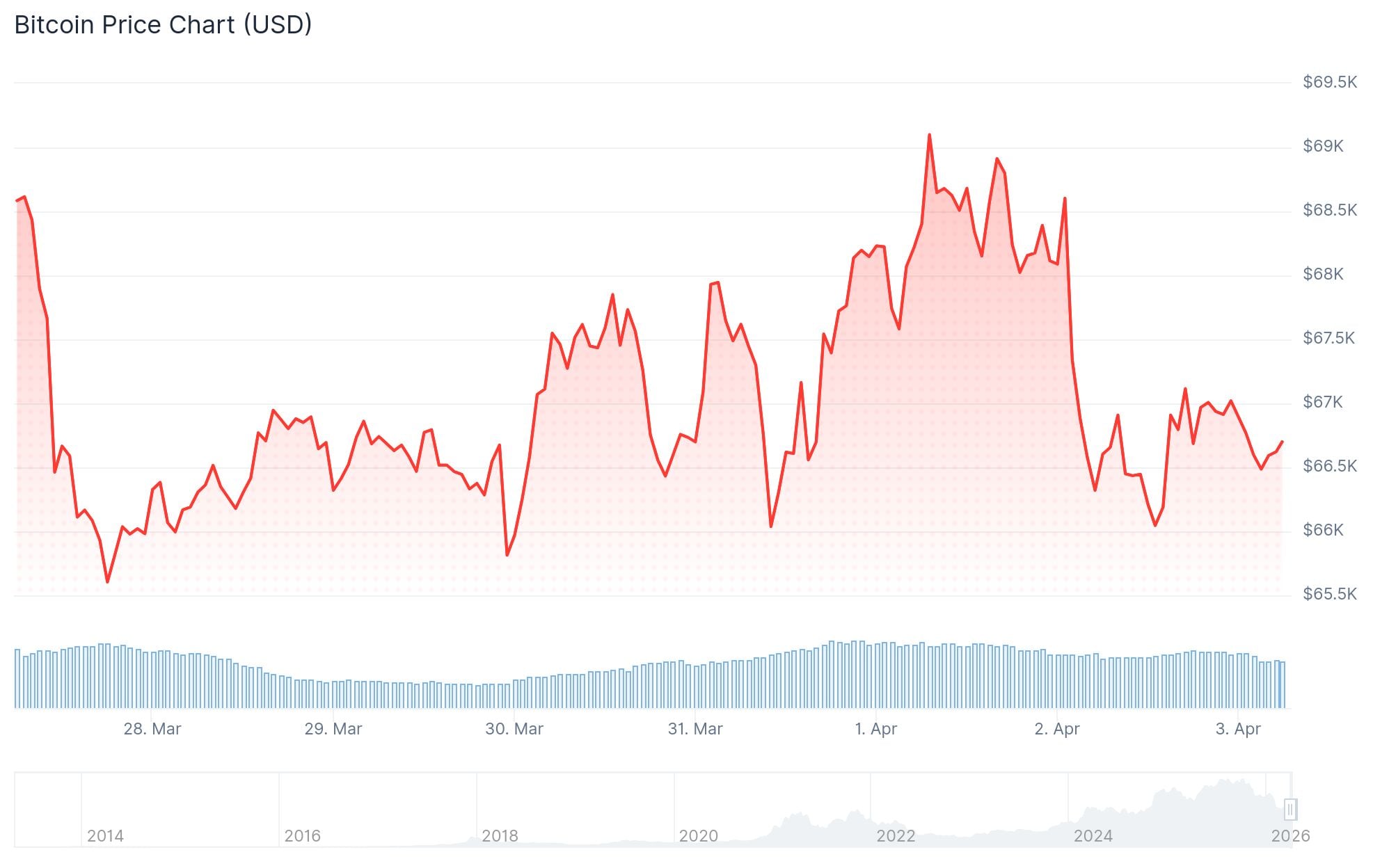 Bitcoin (BTC) Price
President Trump’s renewed aggressive stance toward Iran has rattled energy markets, with WTI crude oil surging past $111 a barrel. Bitcoin reacted, slipping roughly 2% over 24 hours to around $67,000.
The Negative Gamma Problem
Options data from Deribit and Glassnode shows a build-up of put options between $68,000 and the mid-$50,000s. This creates what traders call a “negative gamma” zone.
 Source: Deribit
In simple terms: as prices fall below $68,000, market makers are forced to sell Bitcoin to hedge their own risk. That selling pushes prices lower, which triggers more selling — a feedback loop.
Glassnode stated in its weekly report: “A move into this zone could trigger accelerated selling as hedging flows reinforce downside momentum, turning what would otherwise be a gradual move into a sharper repricing, with a potential revisit of the $60K level.”
With liquidity still thin following the March 27 options expiry and Easter holidays approaching, there may not be enough buyers to absorb that pressure.
Analyst Flags $52,500 Target
Bitcoin’s aggregated open interest remains below $20 billion, a level last seen in early February when BTC traded near $79,000. Liquidation heatmap data from Hyblock shows heavy long positions at risk between $63,000 and $65,000.
Demand metrics are also weak. CryptoQuant reported that apparent demand was negative by about 63,000 tokens as of late March. Large holders have turned net sellers over the past year.
US spot Bitcoin ETFs recorded $174 million in net outflows on Wednesday. March saw roughly $1.1 billion in net inflows, but those flows have proven sensitive to macro shifts.
Bitcoin is down 45% from its October peak of $126,000.
The post Bitcoin (BTC) Price: The Options Market Is Flashing a Warning Sign Bulls Can’t Ignore appeared first on CoinCentral.


Ayrıca Şunları da Beğenebilirsiniz

Three Robotics Companies Attracting Major Investor Interest in 2025

Ripple Joins SWIFT Messaging Network and Banking Tools: Key Details




