MoneyGram has officially become a validator on the Solana network, marking a new milestone in the blockchain strategy of one of the world's largest money transfer companies. The move comes just weeks MoneyGram has officially become a validator on the Solana network, marking a new milestone in the blockchain strategy of one of the world's largest money transfer companies. The move comes just weeks

MoneyGram Becomes a Solana Validator When Traditional Remittance Companies Start Building Blockchain Infrastructure

MoneyGram has officially become a validator on the Solana network, marking a new milestone in the blockchain strategy of one of the world's largest money transfer companies. The move comes just weeks after MoneyGram launched its own stablecoin, MGUSD, signaling that the company is no longer merely using blockchain as a payment tool but is now directly participating in the infrastructure that powers the network.
This development reflects a broader trend across the financial industry: traditional remittance companies are increasingly integrating stablecoins and blockchain into their core business models. As the global stablecoin market continues to expand, MoneyGram's decision to become a Solana validator could signal that the remittance industry is entering its most significant transformation since the rise of the Internet.
 

Key Takeaways

  • MoneyGram has officially become a validator on the Solana network.
  • The company will directly validate transactions and stake SOL tokens.
  • The move follows the launch of MoneyGram's stablecoin, MGUSD.
  • It represents the next phase of the company's blockchain strategy, which has been developing for more than five years.
  • Stablecoins are becoming a core technology within the global remittance industry.
  • Traditional financial companies are increasingly participating in blockchain infrastructure rather than simply relying on third-party services.
 

What Is MoneyGram Doing on Solana?

For many years, MoneyGram was primarily known as an international money transfer company.
However, with its new role on Solana, the company is no longer just a blockchain user—it has become part of the network itself.
As a validator, MoneyGram will:
  • Validate transactions on Solana.
  • Participate in block production.
  • Help maintain network operations.
  • Stake SOL tokens to support the Proof-of-Stake consensus mechanism.
This allows the company to participate directly in blockchain operations rather than simply building services on top of blockchain technology.
The move is significant because it demonstrates that blockchain is becoming part of MoneyGram's core technology infrastructure rather than remaining an experimental tool.


What Is a Validator and Why Does It Matter?

Validators are network nodes responsible for confirming transactions and maintaining blockchain integrity.
On Solana, validators play several critical roles:
  • Verifying transaction validity.
  • Processing network data.
  • Participating in the Proof-of-Stake consensus process.
  • Helping ensure network security and stability.
Traditionally, validators are typically:
  • Blockchain infrastructure providers.
  • Crypto investment firms.
  • Technology companies.
  • Community participants.
It is relatively uncommon for a traditional remittance company like MoneyGram to join this group.
This highlights how blockchain is increasingly attracting major financial institutions at the infrastructure level rather than merely as end users.
 

From Remittance Services to Blockchain Infrastructure

This latest development is not an isolated event.
Over the past five years, MoneyGram has steadily expanded its involvement in digital assets.

Phase One: Blockchain Experimentation

Initially, the company focused on identifying solutions that could reduce the cost of international money transfers.
Blockchain was viewed as a technology capable of:
  • Reducing settlement times.
  • Lowering intermediary costs.
  • Improving transaction efficiency.

Phase Two: Stablecoin Integration

MoneyGram later expanded into stablecoin-related products and services.
Stablecoins offer several advantages:
  • Instant value transfer.
  • Continuous 24/7 operation.
  • More efficient cross-border payments.

Phase Three: Blockchain Infrastructure Participation

Becoming a Solana validator demonstrates that the company is entering a new phase.
Rather than simply building services on blockchain networks, MoneyGram is now directly participating in network operations.
 

MGUSD and MoneyGram's Stablecoin Strategy

Another important component of this strategy is MGUSD.
MGUSD is a stablecoin developed by MoneyGram to support the company's global payment network.
The combination of:
  • A proprietary stablecoin.
  • Blockchain infrastructure participation.
  • A global remittance network.
could create a significant competitive advantage for MoneyGram in the future.
Rather than relying entirely on third-party stablecoins such as USDC or USDT, the company is building its own payment ecosystem.
This approach may help:
  • Improve control over payment flows.
  • Reduce reliance on external providers.
  • Enhance product integration.
  • Optimize operational costs.
 

Why Are Stablecoins Becoming So Important for Remittances?

The international remittance industry has long faced several structural challenges.

Slow Settlement Times

Many cross-border payments still require hours or even days to settle.

High Costs

Transactions often pass through multiple intermediaries, increasing fees.

Limited Operating Hours

Traditional banking systems generally do not operate continuously.
Stablecoins address many of these issues.

Near-Instant Settlement

Blockchain networks can process transactions within seconds or minutes.

24/7 Availability

Transactions can occur at any time, including weekends and holidays.

Lower Costs

Many intermediaries can be eliminated from the payment process.

Global Scalability

Users across different countries can transact on the same infrastructure.
For these reasons, stablecoins are increasingly becoming the foundational technology of the modern remittance industry.
 

Why Did MoneyGram Choose Solana?

Solana has become one of the most widely used blockchains for payment applications.
Several factors make it attractive:

High Speed

The network can process thousands of transactions per second.

Low Fees

Transaction costs are significantly lower than on many competing blockchains.

Strong Stablecoin Ecosystem

Solana is attracting substantial activity involving USDC and other stablecoins.

Suitability for Large-Scale Payments

This is especially important for a global remittance company such as MoneyGram.
Direct participation in the network also allows the company to gain deeper insight into the infrastructure supporting its services.
 

What Does This Mean for the Crypto Market?

MoneyGram becoming a Solana validator carries implications far beyond a single company.

Broader Blockchain Adoption

More traditional businesses are directly participating in blockchain ecosystems.

Continued Stablecoin Expansion

Financial institutions increasingly view stablecoins as the future of payments infrastructure.

Blockchain Infrastructure as a Strategic Asset

Companies no longer want to be merely customers of blockchain networks—they want to help build and operate them.

Changing Competition in the Remittance Industry

Companies that adopt stablecoins and blockchain infrastructure early may gain substantial advantages in cost efficiency and transaction speed.
 

Conclusion

MoneyGram's decision to become a Solana validator is another sign that blockchain technology is becoming increasingly integrated into the traditional financial system. After years of experimentation and digital asset adoption, the company is now directly participating in blockchain infrastructure while simultaneously developing its own stablecoin to support its global payments network.
As stablecoins continue to emerge as a critical payment technology, MoneyGram's latest move suggests that the future of remittances may involve not only using blockchain but also directly building and operating blockchain networks that support global financial activity.
 

FAQ

What does it mean that MoneyGram became a Solana validator?

It means the company directly participates in transaction validation, operates a network node, and stakes SOL tokens on the Solana blockchain.

What is the role of a validator?

Validators confirm transactions, maintain network security, and help ensure that the blockchain operates reliably.

What is MGUSD?

MGUSD is a stablecoin developed by MoneyGram to support payment and remittance activities.

Why are stablecoins important for remittances?

Stablecoins enable faster payments, lower transaction costs, and 24/7 global operations.

What impact does this have on the crypto market?

The development demonstrates that traditional financial companies are becoming increasingly involved in blockchain infrastructure and stablecoins, helping accelerate mainstream adoption of digital asset technology.
 
Disclaimer: The information provided here is for informational purposes only and should not be considered financial, investment, legal, or professional advice. Always conduct your own research, consider your financial situation, and, if necessary, consult with a licensed professional before making any decisions.
Возможности рынка
Логотип 4
4 Курс (4)
--
----
USD
График цены 4 (4) в реальном времени

Описание: Криптопульс использует возможности ИИ и открытые источники, чтобы мгновенно сообщать вам о самых актуальных трендах токенов. За экспертной аналитикой и подробной информацией перейдите на MEXC Обучение.

Статьи, размещенные на этой странице, взяты из открытых источников и представлены исключительно для информационных целей. Они не отражают позицию или взгляды MEXC. Все права принадлежат Nguyen Rin Hoang. Если вы считаете, что какой-либо контент нарушает права третьей стороны, пожалуйста, свяжитесь с service@support.mexc.com для оперативного удаления. MEXC не гарантирует точность, полноту или своевременность любого контента и не несет ответственности за любые действия, предпринятые на основе предоставленной информации. Содержание не является финансовым, юридическим или другим профессиональным советом, а также не должно интерпретироваться как рекомендация или одобрение со стороны MEXC. Для получения экспертных мнений и углубленного анализа посетите MEXC Обучение.

Узнайте больше о 4

Подробнее
Риски KIMI/USDT: Ликвидация, ценообразование, финансирование и неопределенность IPO Kimi — объяснение
Риски KIMI/USDT: Ликвидация, ценообразование, финансирование и неопределенность IPO Kimi — объяснение

Краткое описание KIMIUSDT предоставляет соответствующим требованиям трейдерам доступ к деривативам до IPO, связанным с Moonshot AI, но также несет риски, которые существенно отличаются от покупки обыч
2026/08/07
Прогноз цены акций Кими? Оценка Муншот ИИ и перспективы IPO на 2026–2030 годы
Прогноз цены акций Кими? Оценка Муншот ИИ и перспективы IPO на 2026–2030 годы

Сводка В настоящее время нет официальной публичной цены акций Кими, поскольку ИИ «Муншот» остается частной компанией. Поэтому ответственный прогноз акций Кими должен в первую очередь сосредоточиться н
2026/08/07
Как торговать KIMIUSDT на MEXC: гайд по фьючерсам Kimi до IPO

Как торговать KIMIUSDT на MEXC: гайд по фьючерсам Kimi до IPO

Сводка MEXC запустила Фьючерсы KIMIUSDT на премаркет до IPO 6 авг. 2026 года, предоставив соответствующим требованиям трейдерам возможность открывать левериджные позиции Лонг или Шорт на основе рыночн
2026/08/07
Подробнее

Последние новости о 4

Подробнее
Обзор финансовых результатов Tesla за 1 квартал 2026 года: поставки восстановились, но качество маржи остается главным испытанием
Обзор финансовых результатов Tesla за 1 квартал 2026 года: поставки восстановились, но качество маржи остается главным испытанием

Tesla сообщила о своих финансовых результатах за первый квартал 2026 года 22 апреля 2026 года после закрытия рынка в США. За квартал компания поставила 358 023 автомобиля, получила общую выручку в размере $22,4 млрд и отчиталась о чистой прибыли по GAAP, приходящейся на долю обыкновенных акционеров, в размере $477 млн. Общая валовая маржа по GAAP улучшилась до 21,1%, а операционная маржа достигла 4,2%. Главный сигнал заключается не только в том, что поставки Tesla восстановились после слабой базы предыдущего года. Более важный вопрос заключается в том, смогут ли более высокие объемы поставок, доходы, связанные с FSD, снижение затрат на автомобили и улучшение маржи в автомобильном секторе восстановить уверенность в истории прибыльности Tesla. Для инвесторов, ожидающих следующий отчет TSLA, первый квартал создает важнейшее испытание для второго квартала: определение того, сможет ли рост объемов устойчиво трансформироваться в более качественные доходы.
2026/07/09
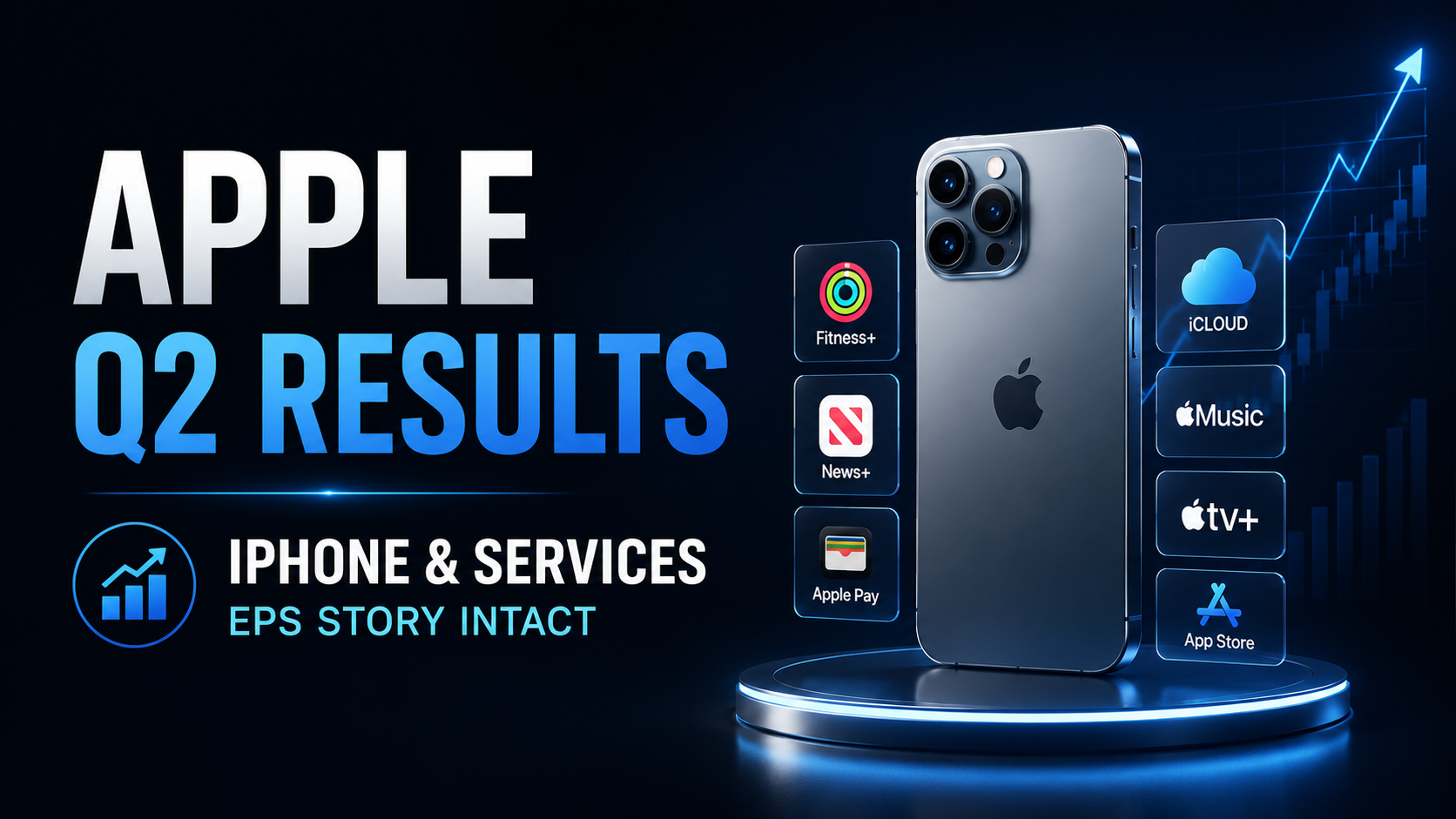
Обзор финансовых результатов Apple за 2 квартал 2026 финансового года: доходы от iPhone и рост сервисов поддерживают историю EPS
Обзор финансовых результатов Apple за 2 квартал 2026 финансового года: доходы от iPhone и рост сервисов поддерживают историю EPS

Компания Apple 30 апреля 2026 года опубликовала финансовые результаты за второй квартал 2026 финансового года, завершившийся 28 марта 2026 года. Квартальная выручка достигла $111,2 млрд, увеличившись на 17% в годовом исчислении, а разводненная прибыль на акцию (EPS) выросла на 22% до $2,01. Согласно заявлению Apple, этот период установил новые исторические мартовские рекорды по общей выручке, доходам от iPhone и EPS, в то время как выручка подразделения Services (Сервисы) достигла нового абсолютного максимума. Этот отчет продемонстрировал результаты, выходящие далеко за рамки обычного аппаратного цикла. Показатели Apple за второй квартал подтвердили, что устойчивый спрос на iPhone, рост сегмента сервисов и масштабные программы возврата капитала по-прежнему работают в синергии, защищая сильные позиции компании по росту прибыли на акцию. Для инвесторов, отслеживающих отчетность Apple, динамику AAPL или дату следующего релиза, ключевой вопрос после Q2 заключается в том, сможет ли Apple сохранять свою премиальную оценку, пока рынок находится в ожидании более мощных катализаторов в сфере ИИ и обновления продуктовых линеек.
2026/07/09
Открытый интерес Hyperliquid достиг 11,5 млрд $: расширяются ли ончейн-перпетуалы на рынки акций США?


Открытый интерес Hyperliquid достиг 11,5 млрд $: расширяются ли ончейн-перпетуалы на рынки акций США?

Открытый интерес Hyperliquid достиг примерно 11,5 млрд $, что является новым максимумом для 2026 года, при этом рынки HIP-3 внесли почти 4 млрд $. Контракт, привязанный к S&P 500, стал крупнейшим рынком HIP-3, в то время как контракты, отслеживающие SK Hynix и Micron Technology, отражают растущий спрос на экспозицию, связанную с ИИ и полупроводниками.
2026/07/28
Подробнее

В тренде

Трендовые криптовалюты, которые в настоящее время привлекают значительное внимание рынка

Недавно добавленные

Криптовалюты недавно внесенные в листинг и доступные для торговли