Critical Warning: Fed’s Schmid Says Oil-Driven Inflation May Not Be Transitory
BitcoinWorld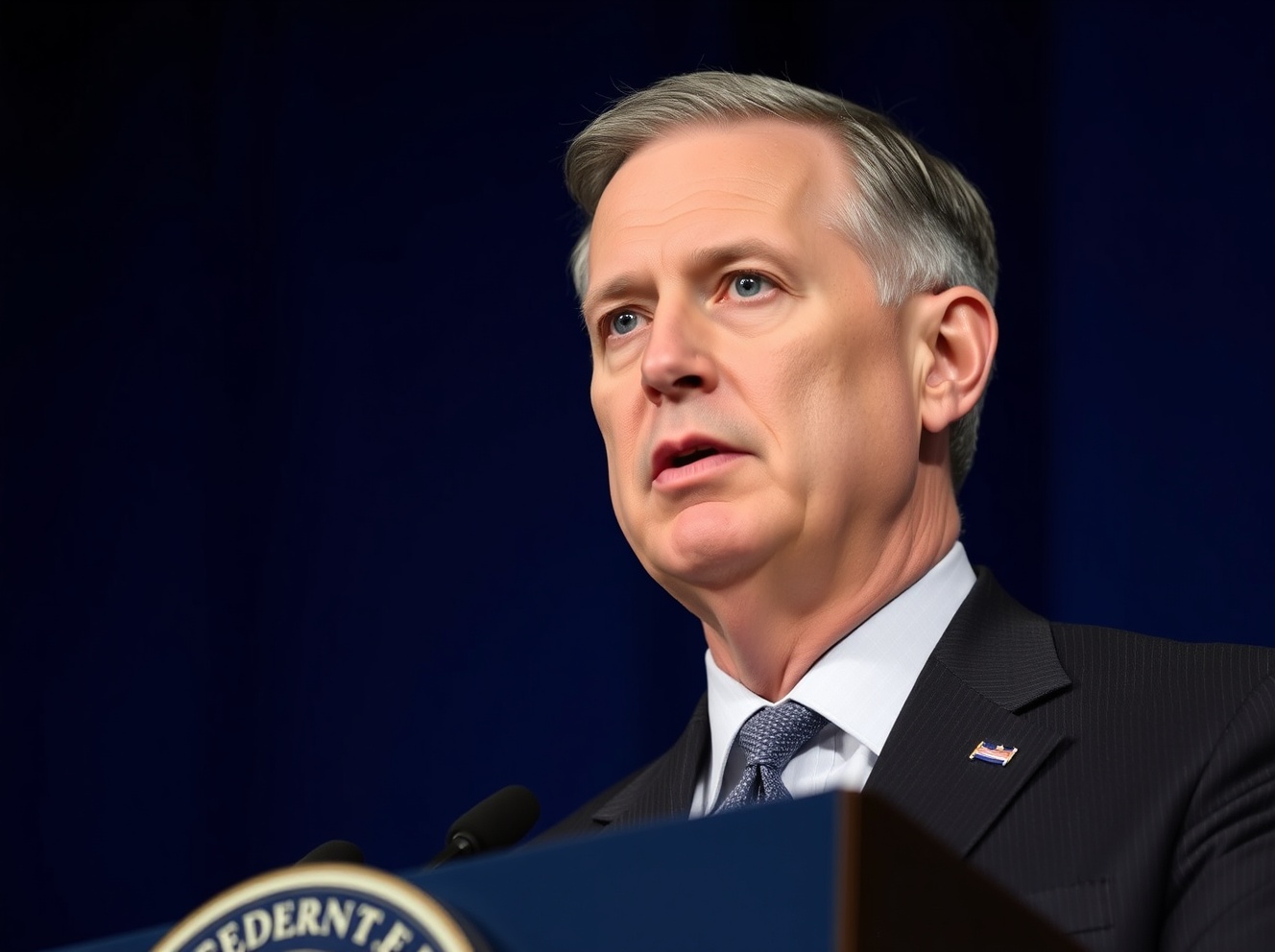
Critical Warning: Fed’s Schmid Says Oil-Driven Inflation May Not Be Transitory
Federal Reserve Bank of Kansas City President Jeffrey Schmid delivered a critical warning on Tuesday, stating that policymakers cannot assume inflation stemming from higher oil prices will be transitory. This significant statement comes amid renewed volatility in global energy markets and persistent inflationary pressures that continue to challenge central bank strategies. Schmid’s remarks, delivered during a monetary policy conference in Kansas City, Missouri, signal a potentially hawkish shift in the Federal Reserve’s approach to energy-driven price increases as the institution navigates complex economic terrain in 2025.
Federal Reserve Confronts Persistent Inflation Risks
Jeffrey Schmid’s comments represent a notable departure from previous Federal Reserve communications regarding energy price fluctuations. Historically, central bankers have often treated oil price spikes as temporary shocks that would naturally dissipate without requiring aggressive monetary policy responses. However, Schmid explicitly challenged this assumption during his prepared remarks. He emphasized that sustained increases in energy costs can create second-round effects throughout the economy.
These effects include higher transportation expenses, increased production costs for manufacturers, and elevated consumer expectations for future inflation. Consequently, the Federal Reserve must remain vigilant against these persistent inflationary pressures. Schmid’s analysis reflects growing concern within the Federal Open Market Committee about the durability of current inflation trends. His warning comes at a crucial juncture for monetary policy formulation.
Energy Market Dynamics and Economic Impact
The global energy landscape has undergone substantial transformation since the pandemic era supply disruptions. Geopolitical tensions in key producing regions, combined with shifting demand patterns and climate-related production constraints, have created a fundamentally different market structure. Unlike previous decades where supply shocks were typically temporary, current conditions suggest more structural changes are underway.
Schmid specifically referenced several concerning developments:
- Production constraints in traditional oil-producing nations
- Geopolitical instability affecting major supply routes
- Climate policy transitions limiting investment in conventional energy
- Rebounding industrial demand from developing economies
These factors collectively create an environment where energy prices may remain elevated for extended periods. The Federal Reserve must therefore consider these developments when formulating monetary policy. Schmid’s warning suggests the institution may need to maintain higher interest rates for longer than previously anticipated to combat inflation effectively.
Historical Context of Oil Price Inflation
To understand Schmid’s warning fully, we must examine historical precedents where energy price increases triggered sustained inflation. The 1970s oil crises provide the most instructive comparison, though Schmid carefully noted important differences between that era and current conditions. During the 1970s, the Federal Reserve initially treated oil price spikes as temporary supply shocks, only to discover they had embedded inflationary expectations throughout the economy.
This historical lesson appears to inform Schmid’s current caution. He referenced Federal Reserve research showing that when energy price increases persist beyond six months, they frequently lead to broader inflationary pressures. The transmission mechanism operates through multiple channels:
| Transmission Channel | Impact Mechanism | Typical Time Lag |
|---|---|---|
| Direct Energy Costs | Higher fuel and utility bills | Immediate to 3 months |
| Production Inputs | Increased manufacturing and transport costs | 3-6 months |
| Wage-Price Spiral | Compensation demands reflecting higher living costs | 6-12 months |
| Inflation Expectations | Consumer and business pricing behavior adjustments | 12+ months |
Schmid emphasized that the Federal Reserve’s current challenge involves preventing these transmission mechanisms from activating fully. His statement suggests the institution may need to act preemptively rather than reactively when confronting energy-driven inflation.
Monetary Policy Implications for 2025
Schmid’s warning carries significant implications for Federal Reserve policy decisions throughout 2025. If energy price increases prove persistent rather than transitory, the central bank may need to maintain restrictive monetary policy for an extended period. This approach would contrast with market expectations for imminent rate cuts that have prevailed in recent months. Schmid specifically addressed this tension during his remarks.
He noted that while the Federal Reserve has made substantial progress against inflation since the peak levels of 2022-2023, the “last mile” of returning to the 2% target may prove particularly challenging. Energy prices represent a critical variable in this final phase of disinflation. Schmid’s comments suggest the Federal Reserve may prioritize inflation containment over economic stimulus, even if this approach slows economic growth temporarily.
Several key policy considerations emerge from Schmid’s analysis:
- Interest rate trajectory may remain higher for longer
- Balance sheet reduction could continue at current pace
- Forward guidance may emphasize inflation risks over growth concerns
- Policy flexibility remains essential given uncertain energy markets
Expert Perspectives on Schmid’s Warning
Economic analysts have offered varied interpretations of Schmid’s statements. Some view his comments as signaling a broader shift within the Federal Reserve toward greater concern about persistent inflation. Others interpret his remarks as representing his personal policy perspective rather than official Federal Reserve guidance. Regardless of interpretation, Schmid’s position as a voting member of the Federal Open Market Committee in 2025 gives his views particular significance.
Former Federal Reserve economists note that Schmid’s background in banking supervision and risk management may influence his cautious approach to inflation risks. His career includes extensive experience identifying and mitigating financial system vulnerabilities, a perspective that likely informs his current assessment of inflation dynamics. This risk-focused mindset appears evident in his warning about non-transitory energy price effects.
Global Economic Considerations
Schmid’s warning extends beyond domestic American concerns to encompass global economic stability. Many central banks worldwide face similar challenges from energy price volatility, creating potential synchronization in monetary policy responses. The European Central Bank, Bank of England, and other major institutions have expressed comparable concerns about persistent inflation drivers.
This global dimension adds complexity to the Federal Reserve’s decision-making process. Schmid acknowledged that international policy coordination, while challenging, could help mitigate some inflationary pressures. However, he emphasized that domestic price stability remains the Federal Reserve’s primary mandate, regardless of international considerations. This position suggests the institution will prioritize American economic conditions when formulating policy responses to energy-driven inflation.
Conclusion
Federal Reserve official Jeffrey Schmid’s warning about non-transitory inflation from higher oil prices represents a significant development in monetary policy discourse. His statement challenges conventional assumptions about energy price effects and suggests the Federal Reserve may need to maintain vigilant anti-inflation policies throughout 2025. As global energy markets continue evolving amid geopolitical and climate-related transformations, central bankers face complex challenges in distinguishing temporary fluctuations from persistent trends. Schmid’s analysis provides crucial insight into how the Federal Reserve approaches these difficult determinations while pursuing its dual mandate of price stability and maximum employment.
FAQs
Q1: What specifically did Federal Reserve official Jeffrey Schmid say about oil prices and inflation?
Schmid stated that policymakers cannot assume inflation stemming from higher oil prices will be transitory, warning that sustained energy cost increases can create second-round inflationary effects throughout the economy.
Q2: How might Schmid’s warning affect Federal Reserve interest rate decisions in 2025?
If the Federal Reserve adopts Schmid’s perspective, it may maintain higher interest rates for longer than markets currently expect, prioritizing inflation containment over economic stimulus despite potential growth impacts.
Q3: What historical precedents inform Schmid’s concern about oil-driven inflation?
The 1970s oil crises provide the most relevant comparison, when initial treatment of price spikes as temporary shocks allowed inflationary expectations to become embedded, requiring more aggressive policy responses later.
Q4: How do energy price increases translate into broader inflation throughout the economy?
Transmission occurs through direct energy costs, production input increases, potential wage-price spirals, and shifting inflation expectations, with effects spreading over months to years.
Q5: Does Schmid’s view represent official Federal Reserve policy or his personal perspective?
While Schmid’s comments reflect his personal analysis as a regional Federal Reserve president, his position as a 2025 voting member of the Federal Open Market Committee gives his views particular significance in policy deliberations.
This post Critical Warning: Fed’s Schmid Says Oil-Driven Inflation May Not Be Transitory first appeared on BitcoinWorld.
You May Also Like

FCA, crackdown on crypto

Mockery Is Chelsea And Liam Rosenior’s Biggest Enemy