

Oleg Bevz Of INPUT Global: How The $7T Reputation Economy Is Reshaping Trust In Fintech And Web3
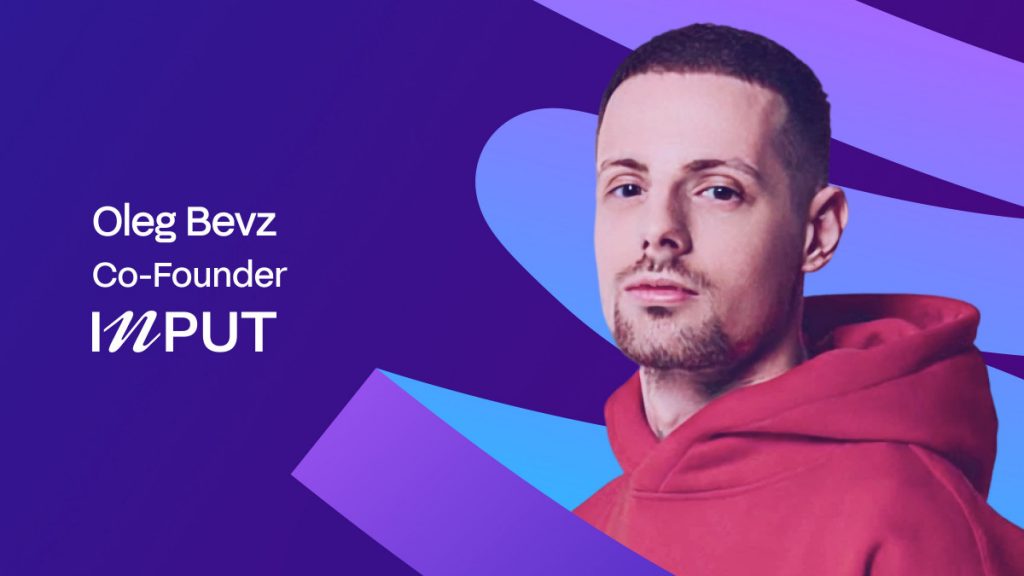
Reputation is becoming core infrastructure in emerging tech — and the numbers are starting to reflect that.
According to CEOWorld, roughly 50% of a company’s market value is now directly tied to its CEO’s reputation. Communications agency INPUT Global sees this playing out in real time: across tech, fintech, Web3, and iGaming, requests for founder-led trust building have surged, and reputation management has become the number one ask from clients.
The reason is straightforward. In an era of AI-generated noise and oversaturated markets where every corporate marketing tool has been used and reused, founder reputation is one of the few places where you can still genuinely stand out. Audiences don’t just buy products — they buy into people. And for B2B companies, investor-dependent businesses, and anyone operating in fintech or crypto, that trust isn’t a nice-to-have. It’s the actual reason deals get closed.
In a conversation with Oleg Bevz, Co-Founder of INPUT Global, MPost explored what this shift really means for founders in 2026 — why personal brand is now infrastructure, what’s driving the trust-first shift across crypto and fintech in a post-rug-pull era, and how the reputation economy has grown to an estimated $7 trillion. The conversation also covers Voice , INPUT Global’s proprietary framework for making personal brand growth measurable and predictable, and why being visible to AI systems has become the new benchmark for credibility.
Several years ago, product and technology overshadowed founder reputation. What has changed?
Founder reputation has always been a strong marketing instrument, and many have used it effectively. Think of the large brands built around founders you know and love. The reason it’s getting so much attention now is that many companies are struggling to attract attention and trust in oversaturated markets where every corporate marketing tool has been used and reused a hundred times over. Founder marketing is one of the few directions where you can still genuinely stand out.
In which emerging tech sectors is founder reputation acting as infrastructure most visibly?
First of all, this isn’t really about sectors — it’s about the type of business and what it’s trying to achieve. In B2B, founder reputation is critical. I know you, I trust you, I pay you. That’s the whole logic. The same applies to any business heavily dependent on investor relations. There, how a founder presents the company is the actual reason people believe in it. Not the deck. Not the numbers. The person.
Layering in sectors: any business where companies are trusting you with their money — fintech, crypto, asset management — needs founder-led marketing. Not as a nice-to-have. As infrastructure. And mass consumers gravitate strongly toward founders who feel familiar, approachable, and genuinely entertaining. That’s exactly why more and more influencers, instead of selling ad slots, are simply launching their own brands.
CEOWorld says 50% of a company’s reputation is tied to its CEO. Will this share grow, decline, or stay stable over the next five years?
It will grow. And I’d go further than just the CEO. We’re already seeing companies invest not only in the founder’s personal brand but also in those of their CTOs, business development leads, product leaders, and marketing leads — the people who actually build the business. This hasn’t been a one-man show for a long time. It has evolved into something far more structured, where each leader carries their own narrative, their own goals, and their own audience.
The CEO speaks to investors. The CTO speaks to the developer community — the builders in the ecosystem, if we’re talking Web3. The CPO speaks to retail users and the broader mass audience. Each of them creates content built specifically for that audience. It’s not one voice anymore. It’s a coordinated system.
You mentioned a $7 trillion reputation economy forecast. Which segments will drive this growth?
It’s a complex number to unpack. On one end you have influencers, opinion leaders, and celebrities using their reputation to build brands and sell products directly to their audiences. On the other end you have founders of multimillion-dollar companies winning major contracts and closing significant deals because of who they are, not just what their company does. The whole spectrum in between is what makes that number what it is.
What has been the main catalyst for the trust-first shift in crypto and fintech over the past three years?
It’s largely a reaction to the massive wave of one-day tokens that launched, pumped, and disappeared within days or weeks. Because of that, retail investors now want to see exactly who they’re giving their money to. Reputation, as an institution, gives you at least one guarantee: a person can only rug once.
Can you describe the key components of Voice and how it links to real business outcomes?
Most founders have no idea whether their personal brand is actually working. They post, get some likes, someone says “great content” at a conference — and that’s it. No number. No signal. Just vibes. Voice exists to fix that. It gives you a score: one number that tells you where you stand and what’s dragging you down.
Under the hood it looks at five things: how consistently you show up, how far your content travels beyond your own audience, how deeply people engage, what external sources say about you, and whether your reach is actually growing. Each carries a different weight because not all signals matter equally. And the whole framework adjusts to what you’re actually trying to achieve — building investor credibility looks very different from growing a user base.
What are the most common mistakes founders make when building a personal brand?
The biggest mistake is one that marketers from the last decade are responsible for. They taught everyone that content is king — but forgot to mention that distribution is queen. Knowing how to make good content means nothing if you don’t know how to move it: which channels, which tools, which combinations actually work. That means collaborations, paid amplification, podcast appearances, media placements, and interviews — plus building your own formats that earn real engagement and organic reach on their own terms. Most founders are sitting on decent content and starving for attention. The content isn’t the problem. The distribution is.
How do AI systems interpret content, and what makes certain types more visible and trustworthy?
AI doesn’t read your content the way a human does — and it definitely doesn’t work the way Google did. It doesn’t scroll or click. It chunks your text into small blocks, scores each one, and decides whether you’re worth citing or not. The old internet rewarded keywords. The new one rewards two things: structure and specificity. Direct answer first, always — not a warmup paragraph, not context. The answer, in the first two sentences. And specificity: “the market is growing” gets ignored, while “the market grew 23% in Q3 2025” gets cited. Numbers, dates, concrete facts.
How are AI systems already using founder reputation signals to rank companies? What do founders overlook?
AI evaluates content through E-E-A-T: Experience, Expertise, Authoritativeness, and Trustworthiness. Two of those four signals are measured at the person level, not the company or brand level. The non-obvious part is how the system decides you’re real. It cross-references: your name in a publication, your quotes in someone else’s article, your profile linked to actual credentials. A Wikipedia page alone lifts your visibility in ChatGPT by 7x — not because Wikipedia is prestigious, but because it’s external validation. The system is essentially doing what any smart person does before a meeting: verifying you exist, that others have vouched for you, and that your story is consistent across sources.
Which tools will become essential for founder reputation management in Web3? What should founders start adopting now?
The question assumes the wrong hierarchy. Tools and technology are infrastructure — they help you produce more, faster, cheaper, and that’s real, but it’s secondary. The foundation of a personal brand is not how you produce content. It’s what you say, how you say it, how you distribute it, and whether people actually find you interesting. No tool solves that. As for the tools themselves, there are already thousands on the market with hundreds launching every month. The best advice is simple: don’t get attached to any single one. The market is moving too fast. Keep testing, keep switching, keep finding what works for how you specifically think and create.
Where should a young fintech founder start building a reputation that drives real trust?
Three steps, and they map exactly to how we think about this inside the Voice framework. First, figure out who you are — your story, your expertise, your specific angle on the industry, and just as importantly, how you’re going to make it interesting. Not just what you know, but how you tell it. Second, start posting consistently. Pick a cadence — two or three times a week — and stick to it. That alone is already enough to start building something real. Most people underestimate how far simple consistency gets you. Third, remember that content is king but distribution is queen. Plan your collaborations, think about how to amplify what you create, and get it in front of people who don’t follow you yet. Those three steps are 70% of the work, especially at the beginning. The founders who start here build something that actually lasts.
The post Oleg Bevz Of INPUT Global: How The $7T Reputation Economy Is Reshaping Trust In Fintech And Web3 appeared first on Metaverse Post.
You May Also Like

Aave DAO to Shut Down 50% of L2s While Doubling Down on GHO

DeAgentAI releases new white paper, detailing $AIA token economics and staking model


