

FBI Warns of Fake Token Scam Targeting TRON Users
A new crypto scam is making users nervous. The FBI has warned about a fake token targeting people on the TRON network. Scammers are sending tokens that look official. These tokens use the FBI name and even show its seal. This makes them look real at first glance.
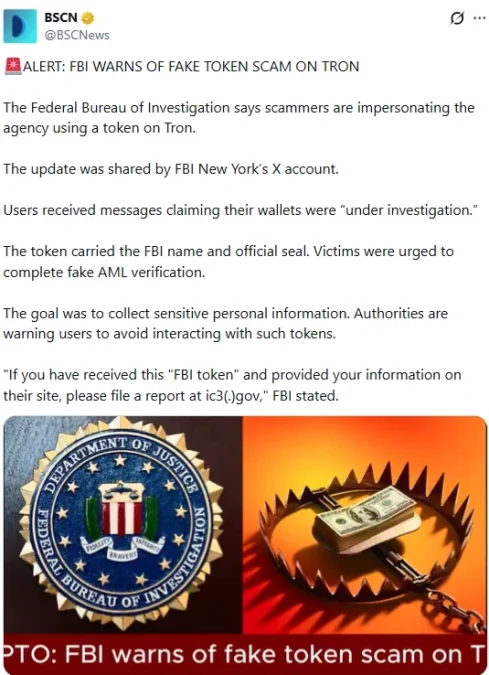
After that, users receive messages. The message claims their wallet is “under investigation.” It creates fear and pressure. Then, users are asked to take action. They are told to complete a fake verification process. This is where the real danger begins. The FBI shared this warning through its New York office. It asked users to stay alert and avoid such tokens.
How the Scam Works?
The scam follows a simple but clever plan. First, scammers send a fake token to a user’s wallet. This token appears without any action from the user. Next, the user receives a message. It says there is a problem with their wallet. It may mention legal action or frozen funds.
Then comes the trap. The message links to a fake website. It asks the user to complete “AML verification.” This step asks for personal details. It may include names, IDs, or wallet data. Once users share this information, scammers can use it. They may steal funds or commit identity fraud. Because of this, even one small mistake can cause a big loss.
Many Wallets Already Targeted
Reports say this scam has already reached many users. Around 700+ TRON wallets have been targeted. These wallets hold over $1 million in USDT. Scammers also use a method called address poisoning. This means they send small tokens to make their address look familiar. Later, users may send funds to the wrong address by mistake. This trick works because people often trust addresses they have seen before. So, the scam is not just about messages. It also plays with user habits.
FBI Shares Safety Advice
The FBI has given clear advice to users. First, never trust random tokens sent to your wallet. If you did not ask for it, ignore it. Second, never share your personal details on unknown websites. No real agency will ask for this through a token or random message.
Third, always verify information from official sources. Visit trusted websites like ic3.gov or the FBI’s main page. If someone has already shared their details, they should act fast. The FBI asks victims to report the case immediately. Quick action may help reduce damage.
Stay Careful in the Crypto Space
This scam shows a bigger issue in crypto. Anyone can send tokens to your wallet. This makes it easy for scammers to reach users. While many users still trust messages that look official.
Because of this, scams keep evolving. The best defense is simple. Stay calm and double-check everything. If something feels urgent or scary, it may be a trick. In crypto, safety depends on awareness. Additionally, right now, staying alert matters more than ever.
The post FBI Warns of Fake Token Scam Targeting TRON Users appeared first on Coinfomania.
You May Also Like

bluesky funding disclosed: $100M Series B led

Market Strategist Says the USA Just Nuked XRP. Here’s What Happened

