For nearly two decades, the Technology sector was defined by the relentless migration toward centralized public clouds. However, 2026 marks the definitive arrivalFor nearly two decades, the Technology sector was defined by the relentless migration toward centralized public clouds. However, 2026 marks the definitive arrival

The Cloud 3.0 Manifest: Sovereignty, Geopatriation, and the Rise of the Distributed Backbone

2026/02/22 05:00
3 min read

For nearly two decades, the Technology sector was defined by the relentless migration toward centralized public clouds. However, 2026 marks the definitive arrival of “Cloud 3.0.” This era is defined not by where data is stored, but by how it is governed and processed across a fragmented global landscape. Driven by the “Paradox of Sovereignty,” businesses are no longer content with a “one-size-fits-all” infrastructure. Instead, the modern enterprise is embracing “Geopatriation”—the strategic return of critical workloads to local or private infrastructure—and the adoption of “Sovereign Cloud” architectures. This shift represents a fundamental rebuilding of the digital foundations upon which all future innovation depends.

The Geopatriation Movement

In 2026, the concept of “Geopatriation” has moved from a niche technical strategy to a core Business imperative. Large organizations have realized that while the public cloud offers unmatched scalability, it often introduces unacceptable levels of jurisdictional risk and “latency-to-insight.”

The Cloud 3.0 Manifest: Sovereignty, Geopatriation, and the Rise of the Distributed Backbone

Geopatriation involves migrating specific, high-value applications from global public clouds back to on-premises data centers or nationally hosted “Sovereign Enclaves.” This is not an abandonment of the cloud, but a refinement of it. Companies are repatriating data to:

  • Ensure Regulatory Compliance: Adhering to strict national data residency laws that vary wildly between the EU, Asia, and North America.

  • Reduce “Cloud Tax”: Avoiding the escalating “Egress Fees” and unpredictable “Consumption Volatility” that characterized the early 2020s.

  • Optimize for AI Training: Building “Private AI Superfactories” where proprietary datasets can be used to fine-tune models without ever exposing sensitive intellectual property to the public internet.

Cloud 3.0: The Active Enabler

Unlike its predecessors, Cloud 3.0 is an “Active Enabler” of intelligence. It is no longer just “Storage and Compute”; it is a “Living Ecosystem” of modular services. In 2026, the cloud is “AI-Native” by design. This means the infrastructure itself predicts “Workload Spikes” and dynamically reallocates “Compute Cycles” across distributed networks.

The architecture of Cloud 3.0 is built on three pillars:

  1. Hybrid-Sovereign Integration: Seamlessly blending public cloud flexibility with the security of private, sovereign infrastructure.

  2. Edge-First Connectivity: Shifting processing power to the “Edge” of the network—near the sensors and the users—to enable sub-millisecond response times for 6G sensing and autonomous systems.

  3. Intent-Driven Provisioning: Instead of manually configuring servers, developers now “Express Intent” (e.g., “I need a low-latency environment for a 5,000-agent swarm”), and the Cloud 3.0 backbone autonomously assembles the necessary resources.

The Energy Crisis and Infrastructure Density

The massive energy requirements of Artificial Intelligence have forced a revolution in data center density. In 2026, we are seeing the rise of “Liquid-Cooled Modular Racks” that pack 10x the compute power into the same physical footprint as legacy systems. Furthermore, “Energy-Aware Scheduling” allows Cloud 3.0 to route heavy compute tasks to data centers powered by “Real-Time Renewable Excess,” effectively turning the global cloud into a tool for “Grid Stabilization.”

Conclusion: Constructing the Durable Foundation

Cloud 3.0 is the “Year of Truth” for infrastructure. It is the realization that the digital economy requires a backbone that is as resilient as it is intelligent. The companies that master “Distributed Sovereignty” in 2026 will not just be faster; they will be “Untethered” from the limitations of legacy centralized thinking.

Comments
Market Opportunity
Cloud Logo
Cloud Price(CLOUD)
$0.03688
$0.03688$0.03688
-1.96%
USD
Cloud (CLOUD) Live Price Chart
Disclaimer: The articles reposted on this site are sourced from public platforms and are provided for informational purposes only. They do not necessarily reflect the views of MEXC. All rights remain with the original authors. If you believe any content infringes on third-party rights, please contact service@support.mexc.com for removal. MEXC makes no guarantees regarding the accuracy, completeness, or timeliness of the content and is not responsible for any actions taken based on the information provided. The content does not constitute financial, legal, or other professional advice, nor should it be considered a recommendation or endorsement by MEXC.

You May Also Like

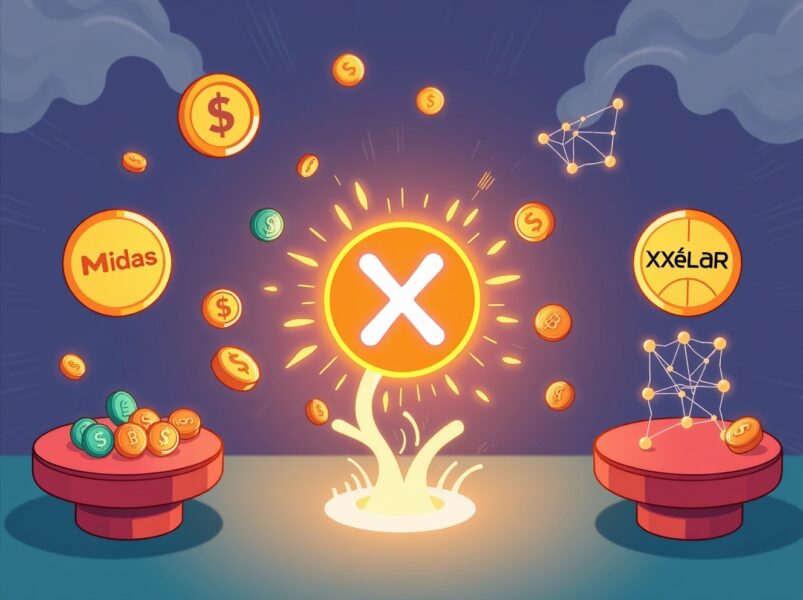
Revolutionary: Midas and Axelar Launch Tokenized XRP with 8% Target Yield

Revolutionary: Midas and Axelar Launch Tokenized XRP with 8% Target Yield

BitcoinWorld Revolutionary: Midas and Axelar Launch Tokenized XRP with 8% Target Yield The cryptocurrency world is constantly evolving, bringing exciting new opportunities for investors. A recent development has captured significant attention: the launch of tokenized XRP by Midas and Axelar. This innovative collaboration aims to transform how you interact with your XRP holdings, potentially offering an attractive yield. What is Tokenized XRP (mXRP) and Why Does it Matter? Imagine holding your favorite digital asset, XRP, but also having the ability to earn a passive income from it. That is precisely what Midas, an asset tokenization platform, has achieved by partnering with Axelar, a leading blockchain interoperability protocol. Together, they have introduced mXRP, a tokenized version of XRP that comes with a compelling target annual yield. This initiative is more than just another crypto product; it represents a significant step forward in making digital assets work harder for their holders. By tokenizing XRP, Midas is essentially creating a digital representation of the asset on a different blockchain, allowing it to participate in decentralized finance (DeFi) activities that were previously inaccessible to native XRP. The immediate appeal lies in the product’s base annual yield, which currently hovers around 8%. Midas and Axelar have publicly stated their commitment to maintaining this yield within a 6% to 8% range, providing a degree of stability and predictability often sought after in the volatile crypto market. This stable yield target is a crucial differentiator, aiming to attract both new and experienced crypto participants looking for reliable returns. How Does This Partnership Benefit XRP Holders? The collaboration between Midas and Axelar brings distinct advantages to the XRP community and the broader crypto ecosystem. Here’s a closer look at the key benefits: Enhanced Utility for XRP: Traditionally, XRP has been known for its speed and low transaction costs, primarily used for cross-border payments. With mXRP, the asset gains new utility within the DeFi space, expanding its potential applications beyond its native blockchain. Attractive Yield Opportunities: The 8% target yield on tokenized XRP is highly competitive, especially when compared to traditional savings accounts or even some other crypto staking options. This allows XRP holders to potentially grow their assets passively. Increased Accessibility: Axelar’s interoperability protocol ensures that mXRP can seamlessly move across various blockchain networks. This means greater flexibility and access to a wider range of DeFi protocols and applications for mXRP holders. Diversification of Investment Strategies: For investors looking to diversify their crypto portfolio, mXRP offers a unique blend of exposure to XRP’s value proposition combined with the income-generating potential of DeFi. Institutional Interest: The structured nature and targeted yield of products like mXRP could attract more institutional investors to the XRP ecosystem, further validating its market presence and utility. Moreover, the partnership leverages the strengths of both platforms. Midas excels in asset tokenization, providing the infrastructure to create and manage mXRP. Axelar, on the other hand, ensures secure and efficient cross-chain communication, making mXRP truly interoperable. This synergy is vital for the product’s success and broad adoption. Navigating the Future of Tokenized XRP: What Should Investors Consider? While the launch of tokenized XRP presents exciting prospects, it is important for investors to approach it with a clear understanding of the crypto landscape. The target yield, while appealing, is not guaranteed and can be subject to market conditions and the underlying mechanisms used to generate that yield. As with any crypto investment, understanding the technology, the partners involved, and the potential risks is paramount. Investors should research Midas and Axelar thoroughly, understanding their security practices, audit reports, and track records. Always remember that the crypto market can be volatile, and while attractive yields are offered, capital is always at risk. The emergence of mXRP underscores a broader trend in the digital asset space: the increasing sophistication of financial products built on blockchain technology. As more assets become tokenized and interoperability improves, we can expect to see even more innovative offerings that bridge traditional finance with the decentralized world. This evolution offers unprecedented opportunities for those willing to learn and adapt. Conclusion: A New Horizon for XRP and DeFi The collaboration between Midas and Axelar to launch tokenized XRP with an 8% target yield marks a significant milestone. It not only enhances the utility and earning potential for XRP holders but also demonstrates the power of blockchain interoperability and asset tokenization in creating new financial instruments. This development opens up a new horizon for investors seeking to integrate passive income strategies with their digital asset holdings, pushing the boundaries of what is possible in decentralized finance. Frequently Asked Questions (FAQs) Q1: What is mXRP? A1: mXRP is a tokenized XRP, a digital representation of XRP created by Midas in partnership with Axelar. It aims to offer holders a base annual yield, currently around 8%, by enabling XRP to participate in broader DeFi activities. Q2: How is the 8% target yield generated? A2: While the specific mechanisms are managed by Midas, such yields in DeFi typically come from activities like lending protocols, liquidity provision, or other yield-generating strategies. Midas and Axelar aim to maintain the base yield between 6% and 8%. Q3: Is mXRP the same as native XRP? A3: No, mXRP is a tokenized version of XRP, meaning it is a representation of XRP on a different blockchain, enabled by Midas and Axelar’s technology. Native XRP exists on the XRP Ledger. Q4: What role does Axelar play in this launch? A4: Axelar is a blockchain interoperability protocol. Its role is crucial in ensuring that mXRP can securely and seamlessly move and operate across various blockchain networks, enhancing its utility and accessibility within the DeFi ecosystem. Q5: What are the risks associated with investing in mXRP? A5: Like all cryptocurrency investments, mXRP carries risks including market volatility, smart contract risks, and potential fluctuations in the target yield. Investors should conduct their own research and understand these risks before investing. Share This Insight! Found this article on tokenized XRP insightful? Share it with your network and help others understand this exciting development in the crypto space! Your shares help us bring more valuable content to the community. To learn more about the latest crypto market trends, explore our article on key developments shaping the future of decentralized finance price action. This post Revolutionary: Midas and Axelar Launch Tokenized XRP with 8% Target Yield first appeared on BitcoinWorld.
Share
Coinstats2025/09/22 19:30
Wormhole’s W token enters ‘value accrual’ phase with strategic reserve

Wormhole’s W token enters ‘value accrual’ phase with strategic reserve

Wormhole has moved beyond its distribution phase, initiating a new strategy. By allocating on-chain and off-chain protocol revenue to a dedicated treasury, the cross-chain protocol is creating a direct link between its commercial success and the value of its native…
Share
Crypto.news2025/09/18 03:05
XRP Price Prediction February 2026: Senator Warren Warns Fed as Pepeto’s 100x Presale Steals the Spotlight From Ripple

XRP Price Prediction February 2026: Senator Warren Warns Fed as Pepeto’s 100x Presale Steals the Spotlight From Ripple

Senator Elizabeth Warren reportedly sent a letter to Fed Chair Jerome Powell and Treasury Secretary Scott Bessent demanding they not […] The post XRP Price Prediction
Share
Coindoo2026/02/22 05:55