Compare BlockDAG, Toncoin, and Cronos. See X100 mining up to 2,000 BDAG daily, Toncoin’s Telegram reach, and Cronos’ DeFi growth with ETF hopes.Compare BlockDAG, Toncoin, and Cronos. See X100 mining up to 2,000 BDAG daily, Toncoin’s Telegram reach, and Cronos’ DeFi growth with ETF hopes.

BlockDAG’s X100 Miner Produces 2,000 Coins Each Day, While CRO Hunts ETF Approval & TON Rides on 900M Users
BlockDAG

Energy efficiency and practical use are shaping the next stage of the crypto market. Toncoin is seeing growth through its integration with Telegram, giving access to hundreds of millions of users. Cronos, meanwhile, is drawing attention with its DeFi rise and ongoing speculation about a staked ETF.

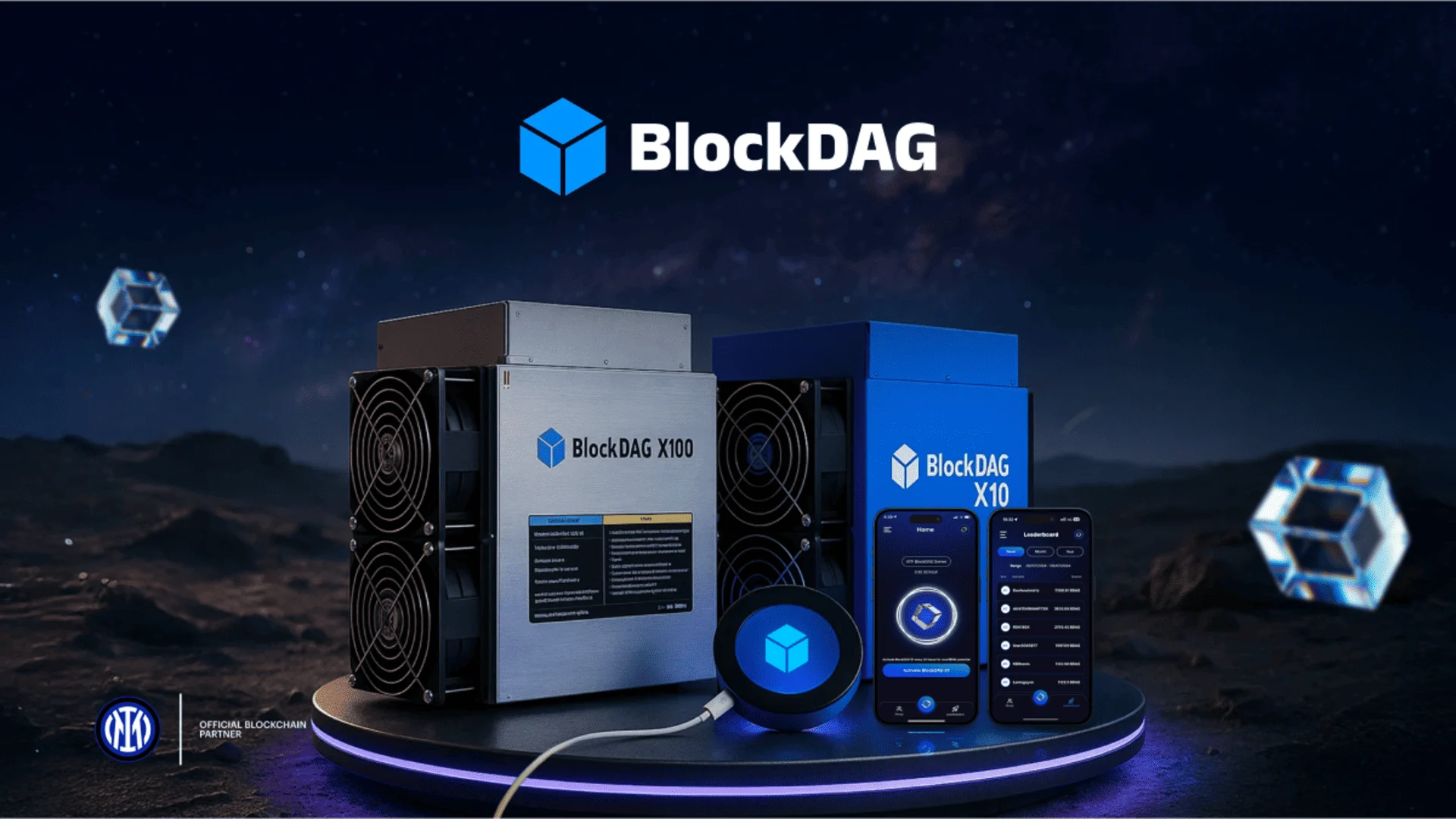
BlockDAG, however, is introducing the most concrete change, reshaping mining with a hybrid system that combines sustainability with measurable rewards. With the X100 miner producing up to 2,000 BDAG every day and hardware already distributed, BlockDAG (BDAG) is showing that mining can be profitable while still accessible and environmentally responsible.

BlockDAG’s X100 Miner Brings New Life to Mining

Mining has often faced criticism for high power use and falling profits, especially for those starting out. BlockDAG is addressing this challenge with a hybrid model that improves efficiency while keeping rewards strong. By merging Directed Acyclic Graph (DAG) technology with Proof-of-Work (PoW), the system reduces wasted effort while protecting the role of miners.

The X100 miner is central to this setup, capable of producing up to 2,000 BDAG daily. This isn’t only theory, since units are already in circulation, and early users are calculating actual returns with presale prices. Currently priced at $0.0276 in batch 29, the growth is striking. Since batch 1, BlockDAG has achieved a 2,660% ROI. More than 25.4 billion BDAG are sold, and the presale has raised $383 million, ranking it among the leading projects in terms of active funding.

Unlike older networks, BlockDAG avoids the trade-off between profit and sustainability. It offers a system that is both efficient and rewarding, unlike traditional PoW chains such as Bitcoin, where rising electricity costs and higher difficulty rates are squeezing miners. BlockDAG instead presents a pathway that lowers entry barriers while increasing earning potential.

AD 4nXfj7BxenVKesmDkoGNBt50Da86iWpircfkvLoBBZcErVbGco9XscUrg92uSZ54mwCqD aO1NTSjhVvBxUKNO136SlqpFLmbQAoX2 B0 d0z7E GVlCsYDiaX 225yoTGZeXTrmRnw?key=iE6T8ZkDC1Y 33yhVa Mg

This makes it an appealing choice for those priced out of Bitcoin mining. With the network developing and hardware already being delivered, BlockDAG is proving that sustainable and profitable mining is not only possible but gaining real momentum.

Cronos Builds Strength as ETF Plans and DeFi Activity Rise

The Cronos price has gained strong momentum, rising 15.8% to $0.172 after an important update linked to an ETF. Canary Capital recently submitted a filing for the “Canary CRO Trust,” which would serve as a staked Cronos ETF, offering U.S. users a regulated path to access CRO rewards. This development has sparked a clear reaction across the market, reflecting growing belief in the project’s future direction.

AD 4nXfb7w l7fwcp3CBy0isElGHczVVztDPkCl2Fwj MAgAQSPGjqdiVn3fMYDiPP5pMd9SOHTpoIcjfzRDPLZd9 SyXW nx myo2aVsvjHDp9w0 89568F dpLPn5pmf FgkoW9lgo?key=iE6T8ZkDC1Y 33yhVa Mg

Alongside this, the DeFi space on the Cronos Chain continues to grow. Its Total Value Locked (TVL) has now passed $781 million. This growth is supported by Cronos’ compatibility with Ethereum and Cosmos through IBC, which increases both its utility and its user base. Technical signs also point to a stronger trend ahead, as CRO has broken out from a descending triangle pattern and the RSI has moved up to 67.

Toncoin Gains Ground Through Telegram’s Massive Reach

The Toncoin price is drawing new attention as it benefits from direct use within the Telegram ecosystem. With more than 900 million users on Telegram, Toncoin gains a major advantage through built-in tools like Premium subscriptions and rewards for content creators. This level of integration creates a strong foundation for long-term adoption.

Earlier this year, TON touched a high near $8.25 before dipping and then recovering to around $3.56 by the end of July. This rebound shows growing trust in its ongoing roadmap. Projections now suggest that Toncoin could climb to $10 by 2025 and potentially reach $50 by 2030, helped by more staking, ecosystem development, and increased usage within Telegram.

AD 4nXdY60ByLCOSf0nhi gpLl0RqRqbAOCl6Puxsm6A BYznWK4i rfTEX 9Xb22SiKQsHo6N2 jo9FOteS1v9xgTN6dlSpoKq57tgbrjRHbUDenXRnm7uWxEX8g4FBRV7gI9he72K CQ?key=iE6T8ZkDC1Y 33yhVa Mg

What sets Toncoin apart is its ability to link blockchain features with one of the world’s largest messaging apps. This real-world link provides an edge in both usage and reach. As the network continues to grow, the Toncoin TON price surge looks supported by real progress and not just market speculation.

A Closer Look at Real Utility and Long-Term Models

As crypto projects move toward utility and profitability, only a few succeed in offering both. Toncoin uses its Telegram link to boost adoption, while Cronos gains strength from DeFi growth and ETF speculation. Yet, BlockDAG provides a more practical answer by solving mining inefficiencies directly.

Its hybrid consensus and X100 miner produce up to 2,000 BDAG each day, with real users already tracking returns. With more than $383 million raised in crypto presale and hardware in circulation, BlockDAG is not just talking about progress, it is showing it. For those focused on sustainability and steady rewards, BlockDAG presents a framework designed for lasting results.

AD 4nXdvMp4iM1AJ8P3ONWDTvmOQhrd497cWbLIRNrCyJs8W55LcOp86MUTyqx5msUMRLISLpDXcTFI N1yI uhlH8fLad6J6KgmMsIYpGN6UPqFldcba8hVPNQ380lBKqhgDSVBVjBtfA?key=iE6T8ZkDC1Y 33yhVa Mg

Presale: https://purchase.blockdag.network

Website: https://blockdag.network

Telegram: https://t.me/blockDAGnetworkOfficial

Discord: https://discord.gg/Q7BxghMVyu 

This article is not intended as financial advice. Educational purposes only.

Market Opportunity
DeFi Logo
DeFi Price(DEFI)
$0.000327
$0.000327$0.000327
+3.80%
USD
DeFi (DEFI) Live Price Chart
Disclaimer: The articles reposted on this site are sourced from public platforms and are provided for informational purposes only. They do not necessarily reflect the views of MEXC. All rights remain with the original authors. If you believe any content infringes on third-party rights, please contact service@support.mexc.com for removal. MEXC makes no guarantees regarding the accuracy, completeness, or timeliness of the content and is not responsible for any actions taken based on the information provided. The content does not constitute financial, legal, or other professional advice, nor should it be considered a recommendation or endorsement by MEXC.

You May Also Like

The Channel Factories We’ve Been Waiting For

The Channel Factories We’ve Been Waiting For

The post The Channel Factories We’ve Been Waiting For appeared on BitcoinEthereumNews.com. Visions of future technology are often prescient about the broad strokes while flubbing the details. The tablets in “2001: A Space Odyssey” do indeed look like iPads, but you never see the astronauts paying for subscriptions or wasting hours on Candy Crush.  Channel factories are one vision that arose early in the history of the Lightning Network to address some challenges that Lightning has faced from the beginning. Despite having grown to become Bitcoin’s most successful layer-2 scaling solution, with instant and low-fee payments, Lightning’s scale is limited by its reliance on payment channels. Although Lightning shifts most transactions off-chain, each payment channel still requires an on-chain transaction to open and (usually) another to close. As adoption grows, pressure on the blockchain grows with it. The need for a more scalable approach to managing channels is clear. Channel factories were supposed to meet this need, but where are they? In 2025, subnetworks are emerging that revive the impetus of channel factories with some new details that vastly increase their potential. They are natively interoperable with Lightning and achieve greater scale by allowing a group of participants to open a shared multisig UTXO and create multiple bilateral channels, which reduces the number of on-chain transactions and improves capital efficiency. Achieving greater scale by reducing complexity, Ark and Spark perform the same function as traditional channel factories with new designs and additional capabilities based on shared UTXOs.  Channel Factories 101 Channel factories have been around since the inception of Lightning. A factory is a multiparty contract where multiple users (not just two, as in a Dryja-Poon channel) cooperatively lock funds in a single multisig UTXO. They can open, close and update channels off-chain without updating the blockchain for each operation. Only when participants leave or the factory dissolves is an on-chain transaction…
Share
BitcoinEthereumNews2025/09/18 00:09
Polygon Tops RWA Rankings With $1.1B in Tokenized Assets

Polygon Tops RWA Rankings With $1.1B in Tokenized Assets

The post Polygon Tops RWA Rankings With $1.1B in Tokenized Assets appeared on BitcoinEthereumNews.com. Key Notes A new report from Dune and RWA.xyz highlights Polygon’s role in the growing RWA sector. Polygon PoS currently holds $1.13 billion in RWA Total Value Locked (TVL) across 269 assets. The network holds a 62% market share of tokenized global bonds, driven by European money market funds. The Polygon POL $0.25 24h volatility: 1.4% Market cap: $2.64 B Vol. 24h: $106.17 M network is securing a significant position in the rapidly growing tokenization space, now holding over $1.13 billion in total value locked (TVL) from Real World Assets (RWAs). This development comes as the network continues to evolve, recently deploying its major “Rio” upgrade on the Amoy testnet to enhance future scaling capabilities. This information comes from a new joint report on the state of the RWA market published on Sept. 17 by blockchain analytics firm Dune and data platform RWA.xyz. The focus on RWAs is intensifying across the industry, coinciding with events like the ongoing Real-World Asset Summit in New York. Sandeep Nailwal, CEO of the Polygon Foundation, highlighted the findings via a post on X, noting that the TVL is spread across 269 assets and 2,900 holders on the Polygon PoS chain. The Dune and https://t.co/W6WSFlHoQF report on RWA is out and it shows that RWA is happening on Polygon. Here are a few highlights: – Leading in Global Bonds: Polygon holds 62% share of tokenized global bonds (driven by Spiko’s euro MMF and Cashlink euro issues) – Spiko U.S.… — Sandeep | CEO, Polygon Foundation (※,※) (@sandeepnailwal) September 17, 2025 Key Trends From the 2025 RWA Report The joint publication, titled “RWA REPORT 2025,” offers a comprehensive look into the tokenized asset landscape, which it states has grown 224% since the start of 2024. The report identifies several key trends driving this expansion. According to…
Share
BitcoinEthereumNews2025/09/18 00:40
Explosive 25% Penalty On Nations Trading With Tehran

Explosive 25% Penalty On Nations Trading With Tehran

The post Explosive 25% Penalty On Nations Trading With Tehran appeared on BitcoinEthereumNews.com. Trump Iran Tariffs: Explosive 25% Penalty On Nations Trading
Share
BitcoinEthereumNews2026/02/07 08:10