

👨🏿🚀TechCabal Daily – inDrive’s new side hustle
TGIF. 
If you haven’t seen TechCabal’s Headlines yet, you should watch the show where we break down all the headlines in the African tech ecosystem of the week. You can watch Headlines here.

 with John Ohio
- South Africans, say hello to inDrive ads!
- Nigeria’s 2027 digital transformation goal
- Who secured the bag?

- World Wide Web 3
- Job Openings
Features
Quick Fire with John Ohio
 John Ohio, Product Design Lead at SeamlessHR, working across AI integration and DesignOps
John Ohio is a Product Design Lead at SeamlessHR, an HR and fintech platform serving businesses across Africa. His work sits at the intersection of AI integration, high-risk digital infrastructure, and scalable design systems. He has contributed to large-scale product transformations, including the redesign of recruitment and workforce systems, AI-enabled initiatives, and enterprise UX governance across multi-product ecosystems. His focus is on building resilient digital platforms where usability, compliance, and business logic must coexist.
- Explain what you do to a 5-year-old.
I design how computer tools look and behave. I also make sure that if something goes wrong, the system can recover or clearly explain what happened. So it doesn’t just look nice, it works the way it should.
- In what ways do you use integrated AI systems for design? Give us an example.
I use AI in two ways. First, as a design partner, to explore edge cases, test complex decision paths, and stress-test workflows quickly. Second, as part of the product itself.
For example, in recruitment software, AI can assist with screening patterns or flagging anomalies. But the real design challenge isn’t the model, it’s how people interact with it. We design transparency, feedback loops, and override controls so AI supports human judgment instead of quietly replacing it.
- Why did you embrace AI for your design processes? What relevance did you notice, and how has it contributed to the products you ship at SeamlessHR?
Enterprise systems are no longer linear. They’re layered with permissions, compliance rules, and risk thresholds. AI helps surface patterns and compress iteration cycles. What became clear early is that AI doesn’t replace design thinking; it exposes weak design thinking. If your flows aren’t structured, AI amplifies the confusion. If your systems are coherent, AI accelerates them.
FINCRA X ATS Nairobi 2026

As Headline Sponsor of ATS 2026, Fincra is building the financial rails that connect Africa to the global financial ecosystem through resilient infrastructure that delivers. Get started with Fincra.
Ride-hailing
inDrive introduces in-app advertising in South Africa
 Image Source: TechCabal
If you’re an inDrive user in South Africa, you’ll begin to see ads the next time you open the app to request a ride, instead of just watching the little car icon drive to your location. Welcome to inDrive Ads.
Here’s what happened: Ride-hailing platform, inDrive, has launched an in-app advertising platform in South Africa, placing banner ads in what it calls “low-friction” moments, like while the rider waits for their driver or during the trip.
Why is inDrive doing this? The ride-hailing business is a tightrope. Riders are price-sensitive, especially to increments. Drivers are commission-sensitive and push for price increments. Platforms, on the other hand, are margin-sensitive. In South Africa, where Bolt, Uber, and inDrive already compete on price, there’s little room to squeeze either side without backlash. For inDrive, ads have become its way out of that standoff. Advertising gives them revenue that doesn’t depend on each trip.
What it means: Africa’s ride-hailing market is crowded. While Uber continues to maintain a significant revenue share, Bolt differentiates itself with lower commissions, and inDrive, with a negotiation-based fare model that appeals to price-sensitive riders. Launching ads isn’t an admission of a failed model.
However, it does signal that ride commissions alone may not be enough for long-term sustainability.
Ads are the new side hustle: inDrive’s new experiment with in-app ads is not the first SaaS monetisation play we’ve seen on the continent. In 2024, Nigeria’s Chowdeck, a food delivery app, introduced in-app ads to add a new revenue source. Since then, Chowdeck has evolved to running an events-based advertising business on the side, while also selling airtime.
In Chowdeck’s case, it’s a super-app play. For inDrive, a ride-hailing platform, it seems like a low-effort way to make more money during wait times. Yet, two things will matter: inDrive’s scale and users’ willingness to click on ads while they wait for their rides. If it works, could we see the likes of Bolt and Uber adopt the same gimmick?
Discover providers and manage logistics in one secure platform.
The Logistics Marketplace connects health buyers – governments, partners, humanitarian organizations & manufacturers with logistics providers across Africa. Backed by Global Fund & Gates Foundation Join for free today.
Telecoms
Nigeria restates its 2027 commitment to digital transformation
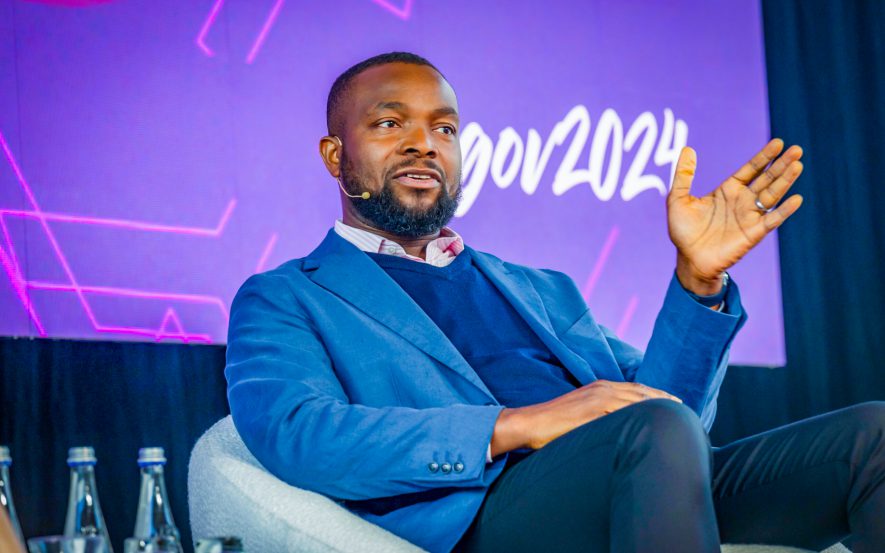 Nigeria’s Minister Communications, Innovation and Digital Economy, Bosun Tijani. Image source: Google
Nigeria’s Minister of Communications, Innovation, and Digital Economy, Dr. Bosun Tijani, has said the country’s digital infrastructure will “come alive” by 2027 as the government ramps up investments nationwide.
The government is expanding 90,000 km of fibre optic networks, adding 3,700 rural towers, and upgrading communication satellites. About 20 million Nigerians who currently lack home internet are expected to get connected as these projects roll out.
Beyond hardware infrastructure like cables and towers, the 3 Million Technical Talent (3MTT) programme, a digital skills literacy drive to train three million Nigerian youths by 2027, is now 10% complete. AI-driven training in local languages is equipping Nigerians to fully use the expanding digital ecosystem, according to Tijani.
On the research front, the government is investing ₦12 billion ($8.8 million) across six universities to strengthen digital economy projects and build Nigeria’s capacity for innovation.
The takeaway: By 2027, Nigeria could move from patchy connections to a digital ecosystem where millions more can work, learn, and trade online, finally bringing the country closer to its digital ambitions. Yet, that would depend heavily on follow-through.
Get the Nimbus Aid Foundation’s 2025 Impact Report
Nimbus Aid Foundation’s 2025 Impact Report shows how ₦50M in DOOH advertising transformed 33 women-led businesses, driving 65% traffic growth and moving beneficiaries from pre-revenue to post-revenue. Download here.
Insights
Funding Tracker
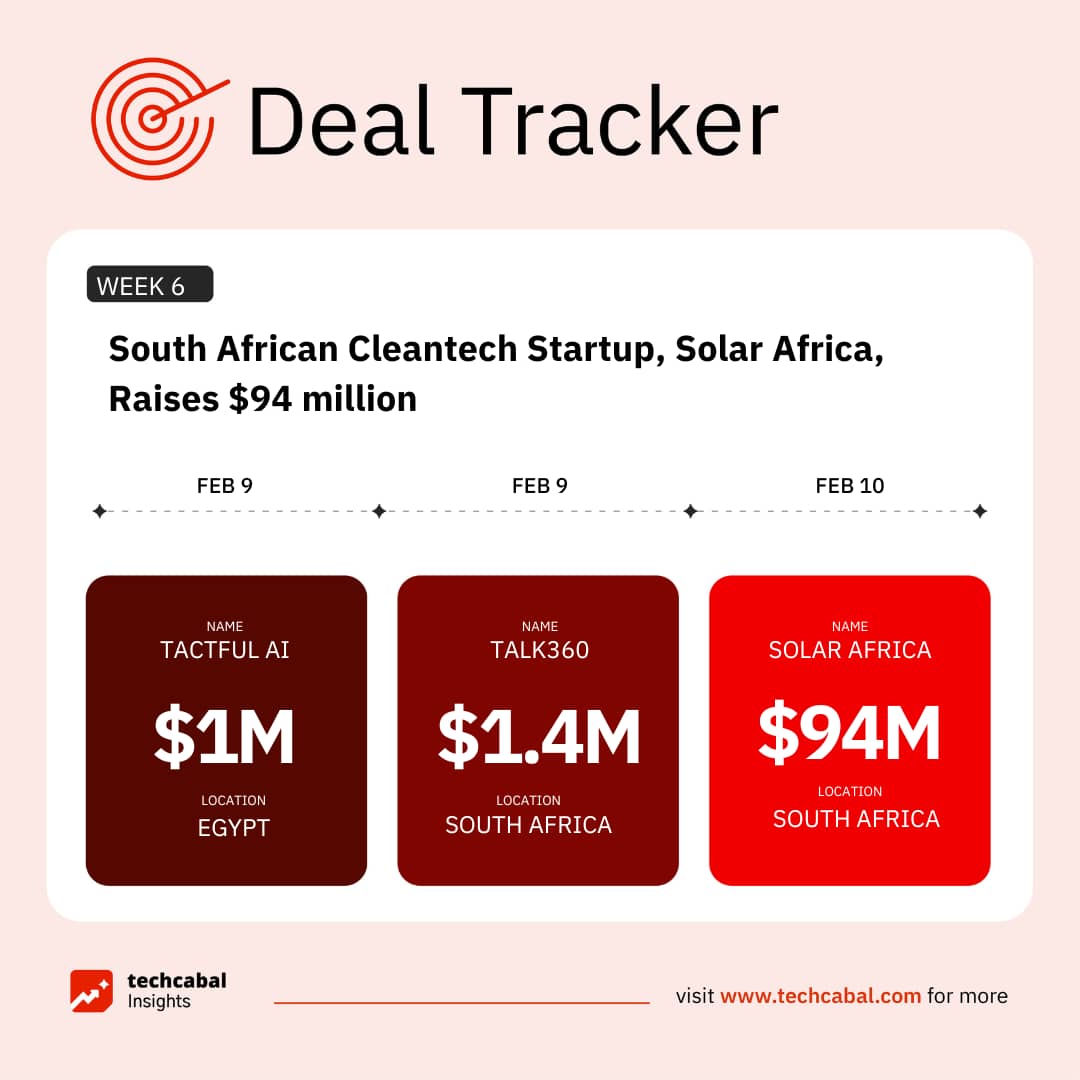 Image source: Success Sotonwa for TechCabal Insights
Solar Africa, a South African clean tech startup, secured $94 million in debt funding. The funding was led by Rand Merchant Bank and Investec. (Feb 10)
Here is the other deal for the week:
- Tactful AI, an Egyptian customer experience startup, raised $1 million in pre-series A funding from Foras AI and M Empire, with participation from a group of prominent deep-tech angel investors. (Feb 9)
- Talk360, a South African telecommunications startup, raised $1.4 million in secondary investment from HAVAÍC with support from Universum Wealth. (Feb 9)
Follow us on Twitter, Instagram, and LinkedIn for more funding announcements. Before you go, here’s everything you need to know about the launch of our State of Tech in Africa Report for 2025. Find out more here.
Join the second edition of The Citizen Townhall
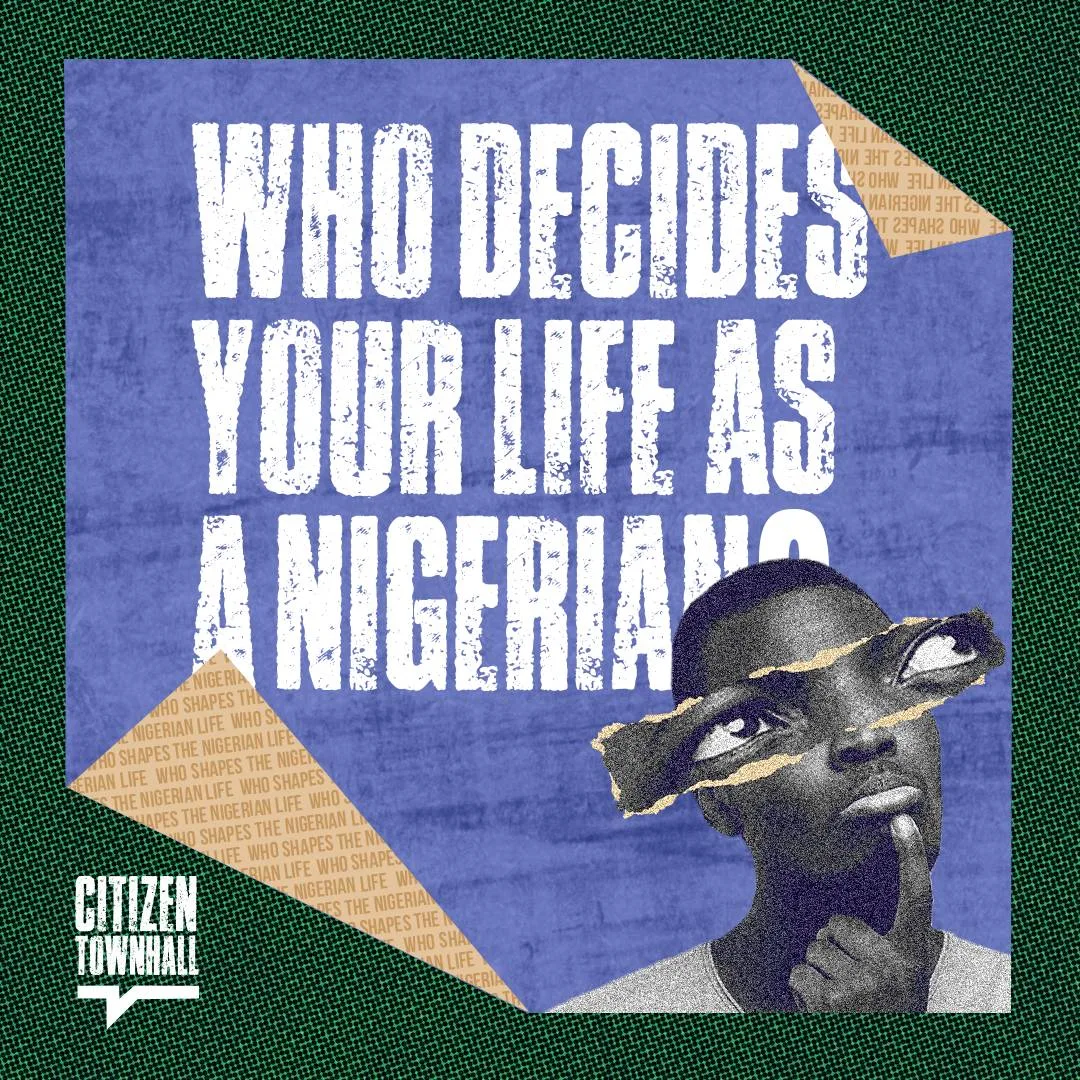
Tech is political!
Political decisions shape and reshape the tech landscape every single day. So here’s the big question: Who gets to shape our lives and what can we do about it?
That’s the conversation we’ll be having at the second edition of The Citizen Townhall; on February 28, in Lagos. Join the conversation. Register now for FREE.
CRYPTO TRACKER
The World Wide Web3
Source:

|
Coin Name |
Current Value |
Day |
Month |
|---|---|---|---|
| Bitcoin | $67,006 |
– 0.61% |
– 27.10% |
| Ether | $1,966 |
– 0.28% |
– 37.23% |
| BNB | $614 |
+ 0.37% |
– 32.20% |
| Solana | $80.67 |
– 1.95% |
– 41.72% |
* Data as of 06.55 AM WAT, February 13, 2026.
JOB OPENINGS
- Big Cabal Media — Associate Videographer/Video Editor (full-time); Senior Financial Analyst (full-time); Zikoko Citizen Reporter (full-time); Content Creator (contract); Journalist (contract); Project Associate (contract); Senior Editor (contract); Senior Writer; Business Development Executive — Lagos, Nigeria
- Piggyvest — Senior Accounting Associate, Customer Success Intern — Lagos, Nigeria
- Buffer — Senior Engineer, Growth Marketing — Remote
- Moniepoint — Several roles — Remote (Nigeria)
- FirstBank — Business Development Lead, eCommerce & Retail — Lagos, Nigeria
- Wave — Machine Learning Scientist — Nairobi, Kenya
- Pavago — Customer Success Manager — Remote (Kenya)
There are more jobs on TechCabal’s job board. If you have job opportunities to share, please submit them at bit.ly/tcxjobs.
- My Life In Tech: Why GetEquity’s COO thinks processes matter more than presence
- This Enugu-based startup believes Nigeria can manufacture world-class drones locally Jumia’s China bet drives 82% surge in international sales
Written by: Opeyemi Kareem, Emmanuel Nwosu, and Success Sotonwa
Edited by: Ganiu Oloruntade
Want more of TechCabal?
Sign up for our insightful newsletters on the business and economy of tech in Africa.
- The Next Wave: futuristic analysis of the business of tech in Africa.
- Francophone Weekly by TechCabal: insider insights and analysis of Francophone’s tech ecosystem
P:S If you’re often missing TC Daily in your inbox, check your Promotions folder and move any edition of TC Daily from “Promotions” to your “Main” or “Primary” folder and TC Daily will always come to you.

You May Also Like

Crypto Shows Mixed Reaction To Rate Cuts and Powell’s Speech

Hedera (HBAR) Price Today, Chart & Market Cap | Live HBAR to USD Converter
