

WeFi CEO Maksym Sakharov On How Crypto Payments Are Redefining Global Finance
Cryptocurrency payments are gaining prominence in the financial ecosystem as they provide faster, lower-cost, and more inclusive methods for transferring value both across borders and in daily transactions, addressing the limitations of traditional financial systems and broadening access to global payment networks.
Industry forecasts indicate that global payments revenue is expected to exceed USD 3 trillion by 2028, with non-cash transactions projected to grow at a compound annual growth rate of over 10%, approaching three trillion transactions by that year.
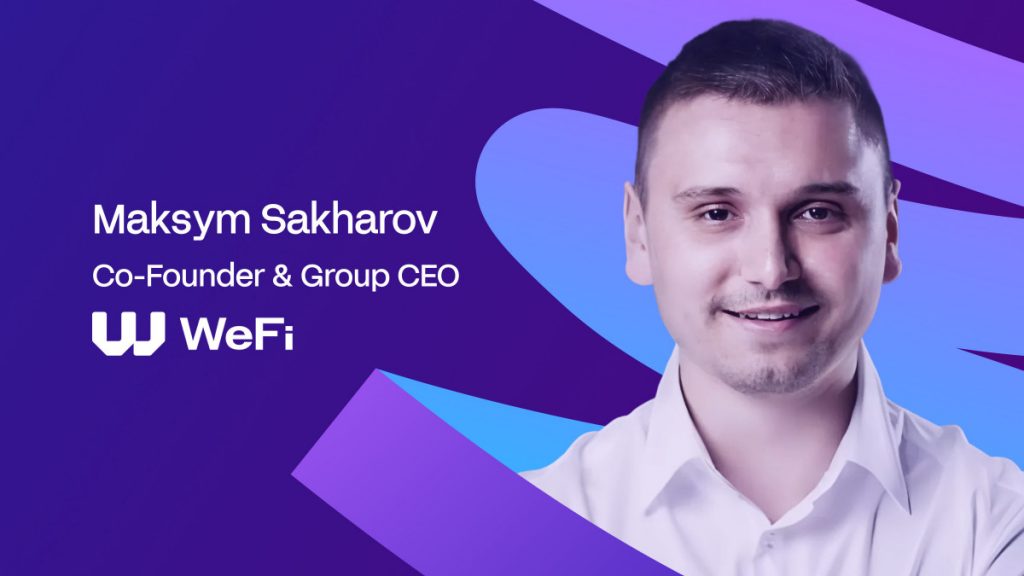
In an interview with Mpost, Maksym Sakharov, co-founder and group CEO of WeFi, the world’s first deobanking platform, offered insights into the evolving landscape of cryptocurrency payments, remittances, and real-world use cases driving the next phase of adoption. He discussed how WeFi is developing user-friendly, compliant infrastructure to make cryptocurrency practical, accessible, and scalable for everyday financial activities worldwide.
In today’s environment of inflation, capital controls, and geopolitical instability, why are cryptocurrency payments becoming more important than ever?
Traditional financial systems have borders and gatekeepers, and in case things become unstable, those gates can close or cost way too much to keep open. However, crypto offers a different way to send money around the world without needing anyone’s permission, and this is a hedge and a lifeline, especially for people in economies with high inflation.
It is also an alternative rail for businesses that have to deal with sanctions or currency controls, since it’s not so much about ideology as it is about practical resilience. When the traditional system is under stress, it isn’t just nice to have options; it is necessary.
How are cryptocurrency solutions improving cross-border payments and remittances compared to traditional financial systems?
The most obvious improvements have to do with cost, speed, and access. Traditional systems, which use several middle banks, often take three to six business days and can cost between 5% and 10%. For a small portion of that price, a cryptocurrency-based transfer, particularly one utilizing stablecoins, can settle in a matter of minutes, if not seconds.
Additionally, it eliminates the requirement that a recipient must have a particular bank account in a particular nation; all that is required is a smartphone and an internet connection, meaning, just like data, value is being moved instantly and globally.
WeFi aims to make cryptocurrency payments feel familiar and low-risk. What design and technical choices help bridge the gap between Web2 finance and Web3 systems?
We start by tucking away the technical overhead. A user doesn’t have to understand blockchain to benefit from it, so we just made sure our interface looks and feels cleaner than a modern banking app, while the complexity stays behind the scenes.
Furthermore, we allow for distributed custody, so customers aren’t solely responsible for their digital assets, and we provide seamless stablecoin on/off ramps to protect them from volatility.
Compliance is also a key part of the WeFi platform, and it is built into the system rather than added later. The goal is to give people the benefits of Web3, including speed, global reach, and control, through a Web2-level experience, which many are still more comfortable with.
Where do tokenization and DeFi fit into the future of global payments?
Tokenization makes assets into financial tools that can be used instead of just being static holdings. On the other hand, DeFi makes money programmable, so it can be used for payments, savings, and credit all at once. WeFi has accounts that allow for this flexibility while remaining easy to use, even for people who aren’t tech-savvy.
What does “building real infrastructure” mean in practical terms for WeFi, and which components of your platform are most critical to scaling cryptocurrency payments?
It means paying attention to the key details that users need every day, like accounts, cards, settlements, compliance, and uptime. Payments can only scale when they work all the time and not just in demos.
That’s why stablecoin rails, programmable accounts, and payment integrations that work across borders without any problems are our top priorities.
WeFi now has more than 150,000 users in more than 80 countries, and WFI’s market cap is over $200 million. What made that happen?
That growth has come from utility, not hype. People signed up to the platform because they needed what it offered, which is access to efficient, borderless financial tools, including payments, savings, and other everyday money matters. So, the token’s value is based on how many people use it for fees, rewards, and access in that ecosystem, not on how much it is traded.
How do you balance the need for speed and transparency that cryptocurrency users have with the need to follow the rules?
We see compliance as a part of the product. Blockchain systems make the process possible because they offer levels of transparency and automation that traditional finance can’t match.
We also make sure to get the right licenses and registrations in every place we do business because we know that users feel safe when the rules are clear.
Over the next 5 years, what needs to happen for cryptocurrency payments to reach true mainstream adoption?
Three things need to come together. First, regulations have to be clear all over the world so that builders can work safely and users can trust them.
Second, the user experience must become invisible, meaning the technology should stay behind simple interfaces.
Lastly, there must be a significant number of acceptable use cases. I’m not talking only about crypto-native stores — we’ll need to see everyday bills, payroll, and subscriptions paid using digital assets.
Essentially, mainstream adoption means crypto getting to the point where it can be used for the boring yet important parts of people’s financial lives without them thinking too much about it, and we’re working toward that reality.
The post WeFi CEO Maksym Sakharov On How Crypto Payments Are Redefining Global Finance appeared first on Metaverse Post.
You May Also Like

Crypto Shows Mixed Reaction To Rate Cuts and Powell’s Speech

Hedera (HBAR) Price Today, Chart & Market Cap | Live HBAR to USD Converter
