How the Jeffrey Epstein files could indirectly affect Africa by intensifying global scrutiny of financial governance, compliance standards, and institutional accountabilityHow the Jeffrey Epstein files could indirectly affect Africa by intensifying global scrutiny of financial governance, compliance standards, and institutional accountability

How the Jeffrey Epstein Files Could Indirectly Affect Africa

2026/02/05 09:23
3 min read
How the Jeffrey Epstein files could indirectly affect Africa by intensifying global scrutiny of financial governance, compliance standards, and institutional accountability.
Global scrutiny and financial governance

The renewed attention around the Jeffrey Epstein files has reactivated global debates on transparency, accountability, and the monitoring of elite financial networks. While the case itself is rooted outside the continent, its ripple effects may influence how African economies engage with global finance. International regulators are sharpening their focus on beneficial ownership, intermediary accountability, and cross-border capital flows. As a result, African jurisdictions integrated into global markets may face higher expectations around disclosure and oversight.

Multilateral institutions such as the World Bank and the International Monetary Fund increasingly embed governance benchmarks into lending and policy advice. Therefore, even indirect global scandals can accelerate reforms already underway across African financial systems.

Compliance standards and capital access

In addition, the global compliance environment is tightening. Financial centres worldwide are reassessing exposure to reputational risk, particularly where opaque structures or weak enforcement persist. African banks and investment authorities that demonstrate strong compliance may benefit from clearer differentiation, while slower reformers could face higher transaction costs.

Guidance from bodies such as the Financial Action Task Force continues to shape how correspondent banking relationships are assessed. Consequently, indirect pressure from high-profile international cases reinforces the importance of regulatory credibility for African economies seeking sustained capital inflows.

Development finance and donor expectations

Development finance is also evolving in this context. Donors and development partners are placing greater emphasis on institutional integrity and risk management. As governance narratives gain prominence globally, African governments may encounter more detailed due diligence processes linked to budget support, infrastructure finance, and blended finance initiatives.

Institutions such as the African Development Bank already prioritise transparency and safeguards. However, heightened global awareness could accelerate alignment between African public institutions and international best practices.

Private investment and reputational dynamics

Private investors are equally sensitive to reputational signals. Asset managers, pension funds, and family offices are reassessing governance exposure across emerging markets. Therefore, African markets that communicate regulatory clarity and ethical standards may strengthen their appeal.

This dynamic is particularly relevant as African economies deepen ties with the Gulf region, where sovereign and private capital remains active, linking naturally to FurtherArabia coverage of evolving compliance expectations. Strong governance frameworks help ensure these partnerships remain resilient.

Africa’s adaptive advantage

Overall, the indirect effects of the Jeffrey Epstein files are less about the case itself and more about the global environment it reinforces. Africa enters this phase with a growing reform agenda, expanding regulatory capacity, and increasing awareness of reputational economics. While challenges remain, data indicates that countries investing in institutional quality are better positioned to absorb external shocks.

Thus, the episode may serve as an external catalyst, encouraging alignment between Africa’s long-term development goals and the evolving norms of global finance.

The post How the Jeffrey Epstein Files Could Indirectly Affect Africa appeared first on FurtherAfrica.

Disclaimer: The articles reposted on this site are sourced from public platforms and are provided for informational purposes only. They do not necessarily reflect the views of MEXC. All rights remain with the original authors. If you believe any content infringes on third-party rights, please contact service@support.mexc.com for removal. MEXC makes no guarantees regarding the accuracy, completeness, or timeliness of the content and is not responsible for any actions taken based on the information provided. The content does not constitute financial, legal, or other professional advice, nor should it be considered a recommendation or endorsement by MEXC.

You May Also Like

Cashing In On University Patents Means Giving Up On Our Innovation Future
Cashing In On University Patents Means Giving Up On Our Innovation Future

The post Cashing In On University Patents Means Giving Up On Our Innovation Future appeared on BitcoinEthereumNews.com. “It’s a raid on American innovation that would deliver pennies to the Treasury while kneecapping the very engine of our economic and medical progress,” writes Pipes. Getty Images Washington is addicted to taxing success. Now, Commerce Secretary Howard Lutnick is floating a plan to skim half the patent earnings from inventions developed at universities with federal funding. It’s being sold as a way to shore up programs like Social Security. In reality, it’s a raid on American innovation that would deliver pennies to the Treasury while kneecapping the very engine of our economic and medical progress. Yes, taxpayer dollars support early-stage research. But the real payoff comes later—in the jobs created, cures discovered, and industries launched when universities and private industry turn those discoveries into real products. By comparison, the sums at stake in patent licensing are trivial. Universities collectively earn only about $3.6 billion annually in patent income—less than the federal government spends on Social Security in a single day. Even confiscating half would barely register against a $6 trillion federal budget. And yet the damage from such a policy would be anything but trivial. The true return on taxpayer investment isn’t in licensing checks sent to Washington, but in the downstream economic activity that federally supported research unleashes. Thanks to the bipartisan Bayh-Dole Act of 1980, universities and private industry have powerful incentives to translate early-stage discoveries into real-world products. Before Bayh-Dole, the government hoarded patents from federally funded research, and fewer than 5% were ever licensed. Once universities could own and license their own inventions, innovation exploded. The result has been one of the best returns on investment in government history. Since 1996, university research has added nearly $2 trillion to U.S. industrial output, supported 6.5 million jobs, and launched more than 19,000 startups. Those companies pay…
Share
BitcoinEthereumNews2025/09/18 03:26
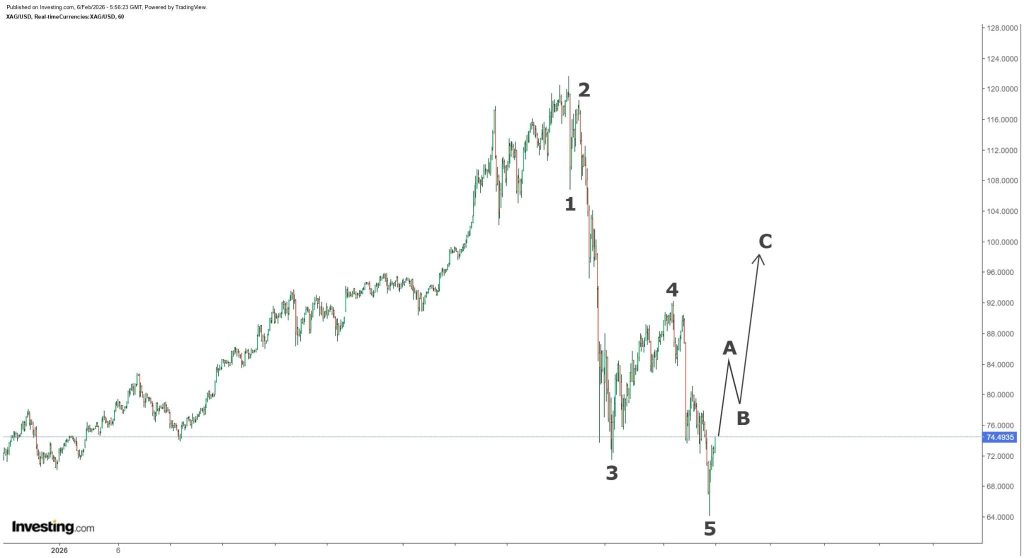
Silver Price Crash Is Over “For Real This Time,” Analyst Predicts a Surge Back Above $90

Silver Price Crash Is Over “For Real This Time,” Analyst Predicts a Surge Back Above $90

Silver has been taking a beating lately, and the Silver price hasn’t exactly been acting like a safe haven. After running up into the highs, the whole move reversed
Share
Captainaltcoin2026/02/07 03:15
Citi Caps Year-End at $4,300, But ETF outflows Challenge Outlook

Citi Caps Year-End at $4,300, But ETF outflows Challenge Outlook

The post Citi Caps Year-End at $4,300, But ETF outflows Challenge Outlook appeared on BitcoinEthereumNews.com. Ethereum Price Prediction: Citi Caps Year-End at $4,300, But ETF outflows Challenge Outlook Disclaimer: The information found on NewsBTC is for educational purposes only. It does not represent the opinions of NewsBTC on whether to buy, sell or hold any investments and naturally investing carries risks. You are advised to conduct your own research before making any investment decisions. Use information provided on this website entirely at your own risk. Related News © 2025 NewsBTC. All Rights Reserved. This website uses cookies. By continuing to use this website you are giving consent to cookies being used. Visit our Privacy Center or Cookie Policy. I Agree Source: https://www.newsbtc.com/news/ethereum/ethereum-price-prediction-citi-caps-year-end-at-4300-but-etf-outflows-challenge-outlook/
Share
BitcoinEthereumNews2025/09/18 14:30