Bitcoin (CRYPTO: BTC) has long been valued for its ability to store and move value without intermediaries. Yet the native layer’s scalability limits and limitedBitcoin (CRYPTO: BTC) has long been valued for its ability to store and move value without intermediaries. Yet the native layer’s scalability limits and limited

Bitcoin-native USDT Protocol Joins CTDG Dev Hub
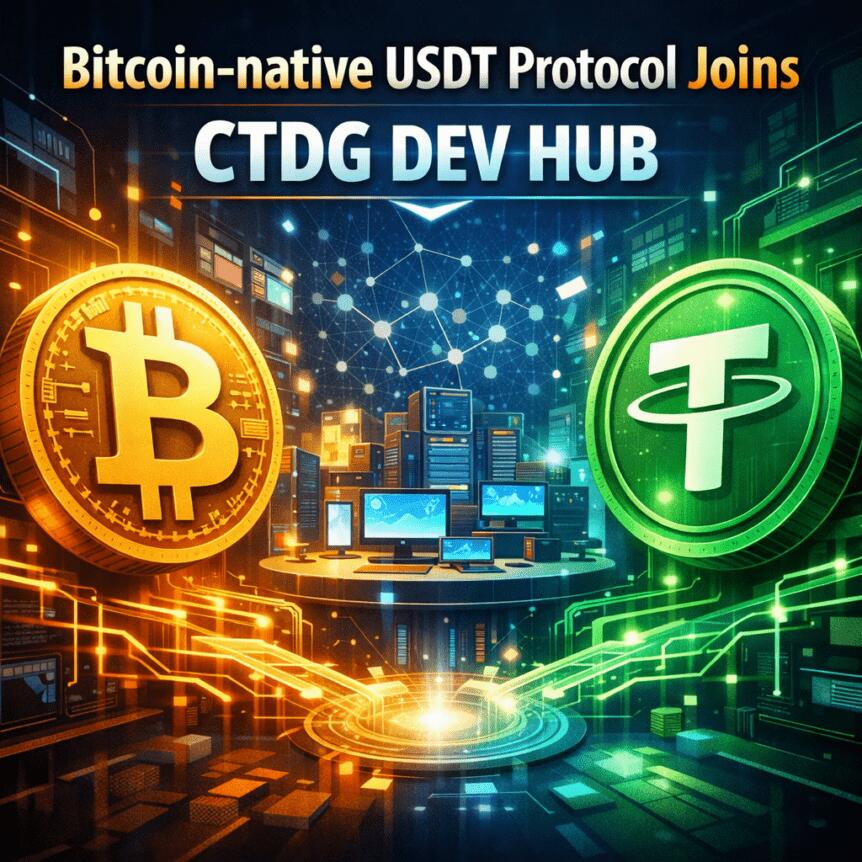
Bitcoin-Native Usdt Protocol Joins Ctdg Dev Hub

Bitcoin (CRYPTO: BTC) has long been valued for its ability to store and move value without intermediaries. Yet the native layer’s scalability limits and limited programmability initially constrained use cases such as high-frequency payments and complex, on-chain smart contracts. In 2018, developers introduced a layer-2 solution called the Lightning Network, designed to move much of the transactional load off-chain by establishing payment channels between counterparties. This off-chain model accelerates settlement, reduces fees, and makes everyday transactions more practical on the Bitcoin network. The Lightning Network’s design helps ensure that the blockchain remains secure while confirming a large portion of activity outside the main chain, setting the stage for broader merchant adoption and consumer use on Bitcoin.

Beyond speeding up payments, Bitcoin’s ecosystem has gradually expanded its programmable capabilities through secondary protocols. One notable project is RGB, an open-source framework that broadens Bitcoin’s functionality by enabling private, off-chain transactions for smart contracts and other digital assets. RGB powers decentralized applications (DApps) and tokenization, allowing digital assets beyond BTC to exist atop the original blockchain. This approach preserves Bitcoin’s security while enabling asset issuance, transfers, and state transitions in a manner that can be validated client-side, without crowding the base layer.

Key takeaways

  • The Lightning Network remains central to scaling Bitcoin for everyday use, delivering rapid settlement and low costs through off-chain channels.
  • RGB expands Bitcoin’s programmability by enabling private, off-chain smart contracts and tokenized assets, complementing Lightning’s payment rails.
  • Utexo, now joined by CTDG Dev Hub as a participant, explores native USDT transfers on Bitcoin by blending Lightning with RGB’s asset model, reducing reliance on wrapping and bridging.
  • The native rails approach aims to keep most transaction logic off Bitcoin’s base layer while still anchoring final settlement to the chain’s security.
  • A single integration flow via an SDK and REST API could streamline developer activity, lowering the operational burden of setting up nodes and managing channels.

Tickers mentioned: $BTC, $USDT

Market context: The push toward layer-2 scalability on Bitcoin aligns with broader market interest in faster, cheaper payments and more flexible asset issuance on-chain, even as regulators and institutions assess risk and custody considerations for new Bitcoin-native assets.

Why it matters

At the core of this development is a practical attempt to unify speed, security, and programmability on a single chain. The Lightning Network provides the acceleration, while RGB supplies the asset logic needed for token issuance and smart contracts without bloating Bitcoin’s base layer. By coupling these two technologies, Utexo envisions a pathway for native USDT transfers on Bitcoin that do not rely on traditional wrapping or bridging, which inherently introduces additional layers of risk and trust assumptions. This combination could simplify user experiences by presenting a unified flow for payments and asset transfers while retaining Bitcoin’s security guarantees at settlement.

In traditional bridging, tokens are moved across different networks through custodial or semi-custodial bridges, creating potential attack surfaces. The native rails approach—conducting execution off-chain and settling on-chain—strives to minimize these risks, letting users benefit from Lightning’s speed and RGB’s tokenization without introducing new trust dependencies. The approach also addresses cost dynamics; since most activity happens off-chain, the cost behavior may become less susceptible to episodic Bitcoin mempool congestion, potentially enabling more predictable transaction fees as throughput grows.

Crucially, the project emphasizes accessibility for developers. The proposed SDK and REST API aim to standardize how Lightning channels are opened and routed, how failures are managed, and how RGB assets are issued and transferred. By consolidating these capabilities into a single interface, Utexo lowers the barrier to building Bitcoin-native financial applications and reduces the manual overhead that typically accompanies Lightning node management and RGB state tracking. In short, this could shift Bitcoin from a primarily store-of-value and settlement layer toward a more versatile platform for on-chain and off-chain asset activity.

What to watch next

  • Public milestones for Utexo’s integration, including documentation updates and sample workflows demonstrating native USDT transfers on Bitcoin.
  • The rollout of the SDK and REST API, including developer onboarding timelines and early adopter use cases.
  • CTDG Dev Hub’s governance and collaborative proposals related to Bitcoin-based infrastructure, with feedback from the community and validators.
  • Evidence of interoperability tests between Lightning, RGB, and the Bitcoin base layer, including latency, settlement finality, and asset-state correctness.
  • Any regulatory or custody developments that could influence the adoption of native Bitcoin assets and layer-2 tooling for fiat-pegged tokens.

Sources & verification

  • Details on Utexo’s integration and its positioning within the CTDG Dev Hub ecosystem.
  • Official documentation and demonstrations around the Lightning Network’s role in Bitcoin scaling and its interaction with RGB.
  • CTDG Dev Hub announcements and governance discussions related to Bitcoin-based development and funding for infrastructure experiments.
  • Background on RGB’s asset model and client-side validation approach as described in developer resources and related explainer materials.

Bitcoin-native USDT rails: marrying Lightning and RGB on Bitcoin

Bitcoin’s scaling story is evolving beyond simply pushing more transactions through a congested mainnet. The collaboration between Lightning and RGB opens a pathway to native stablecoin transfers on Bitcoin, demonstrated through Utexo’s latest explorations. By integrating Lightning’s fast, low-cost payment channels with RGB’s off-chain asset framework, the project seeks to enable USDT transfers that are issued and transferred via a client-side validation model while using Bitcoin primarily as the security anchor for final settlement. In practice, this means the bulk of activity—issuance, routing, and state transitions—occurs off-chain, with Bitcoin’s layer-1 beneath providing the ultimate settlement guarantee and protection against double-spending.

At a technical level, the architecture is designed to separate execution from base-layer congestion. When throughput increases, most of the interaction happens off-chain, so the user experience remains quick and predictable, while the base layer remains uncluttered by every microtransaction. Lightning handles the payment flow and routing, enabling near-instantaneous transfers with minimal fees. RGB handles the token logic, permitting USDT to exist as a digital asset within the Bitcoin ecosystem without transferring the asset onto another chain. The combined model reduces the need for cross-chain bridges and the associated risk vectors, offering a more streamlined path to Bitcoin-native asset liquidity.

For developers, the promise is a single, cohesive integration path. The SDK and REST API are designed to expose Lightning execution and RGB asset operations through one interface, simplifying channel management, payment failure handling, and asset issuance and transfers. The end result could be a more approachable toolkit for building Bitcoin-native financial services—ranging from lightweight payments to programmable stablecoins—without sacrificing the security advantages of the base layer. As protocol experimentation proceeds within the CTDG ecosystem, Utexo’s approach will be subject to community review, governance input, and practical testing in real-world workflows.

This article was originally published as Bitcoin-native USDT Protocol Joins CTDG Dev Hub on Crypto Breaking News – your trusted source for crypto news, Bitcoin news, and blockchain updates.

Market Opportunity
native coin Logo
native coin Price(NATIVE)
$0.00002374
$0.00002374$0.00002374
+0.84%
USD
native coin (NATIVE) Live Price Chart
Disclaimer: The articles reposted on this site are sourced from public platforms and are provided for informational purposes only. They do not necessarily reflect the views of MEXC. All rights remain with the original authors. If you believe any content infringes on third-party rights, please contact service@support.mexc.com for removal. MEXC makes no guarantees regarding the accuracy, completeness, or timeliness of the content and is not responsible for any actions taken based on the information provided. The content does not constitute financial, legal, or other professional advice, nor should it be considered a recommendation or endorsement by MEXC.

You May Also Like

Bad News for European Crypto Holders? EU Calls For Harsher Crypto Regulation Despite MiCA

Bad News for European Crypto Holders? EU Calls For Harsher Crypto Regulation Despite MiCA

EU regulators push stricter crypto rules beyond MiCA, seeking ESMA oversight, cybersecurity audits, and AMLR bans on privacy tokens. European regulators are now calling louder for stricter crypto rules.  France’s AMF, Austria’s FMA and Italy’s CONSOB are now arguing that the Markets in Crypto-Assets Regulation (also known as MiCA framework) is not enough to manage […] The post Bad News for European Crypto Holders? EU Calls For Harsher Crypto Regulation Despite MiCA appeared first on Live Bitcoin News.
Share
LiveBitcoinNews2025/09/18 13:00
Here’s Why This Analyst Predicts Shiba Inu 568% Surge
Here’s Why This Analyst Predicts Shiba Inu 568% Surge

Popular community member Heber Mayen suggests that Shiba Inu is poised for an explosive breakout. In a tweet yesterday, Mayen shared Shiba Inu’s one-month price chart, showing the asset up 3.65% over the past 30 days to $0.00001345.Visit Website
Share
The Crypto Basic2025/09/19 14:59
AVAX One Unveils Ambitious $550M Avalanche Reserve Plan

AVAX One Unveils Ambitious $550M Avalanche Reserve Plan

BitcoinWorld AVAX One Unveils Ambitious $550M Avalanche Reserve Plan In a groundbreaking move that’s sending ripples across both traditional finance and the cryptocurrency world, Nasdaq-listed AgriFORCE (AGRI) is making waves with its audacious plan to rebrand as AVAX One. This strategic pivot marks a significant first: a publicly traded company on a major exchange explicitly dedicating its core strategy to investing in Avalanche (AVAX) reserves. For anyone tracking the evolving landscape of digital assets, the emergence of AVAX One signals a bold new chapter. What Does the AVAX One Rebrand Mean for Investors? The decision by AgriFORCE to transform into AVAX One is far more than just a name change; it’s a complete strategic overhaul. The company will now focus intensely on accumulating and managing Avalanche (AVAX) reserves. This commitment positions AVAX One as a unique player in the public market, offering traditional investors a direct avenue to exposure in a prominent layer-1 blockchain. Pioneering Public Exposure: AVAX One is set to become the first Nasdaq-listed entity to center its operations around a specific cryptocurrency, offering a new model for institutional crypto adoption. Significant Capital Commitment: The firm has already secured a substantial $300 million through a private investment in public equity (PIPE) deal. This initial capital infusion demonstrates strong investor confidence in the new direction. Targeting Growth: The ambition doesn’t stop there. AVAX One intends to raise an additional $250 million, aiming for a total of $550 million dedicated to building its AVAX reserves. This aggressive strategy underscores the company’s belief in Avalanche’s long-term potential. Powering Up AVAX One: The Role of Key Advisors To navigate this innovative venture, AVAX One is bringing in some heavy hitters from both traditional finance and the crypto industry. The caliber of these individuals speaks volumes about the serious intent behind this rebranding. The company has announced that two highly respected figures are expected to join its advisory board: Anthony Scaramucci: Founder of SkyBridge Capital, a global investment firm. Scaramucci is well-known for his insights into financial markets and his increasing involvement in the crypto space. His presence lends significant credibility and strategic guidance to AVAX One. Brett Tejpaul: Head of Coinbase Institutional. Tejpaul brings extensive experience from one of the leading cryptocurrency exchanges, offering invaluable expertise in digital asset markets, custody, and institutional trading strategies. These appointments suggest a robust framework for governance and strategic direction, blending deep financial acumen with specialized cryptocurrency knowledge. Their collective wisdom will be crucial in guiding AVAX One‘s investment decisions and market positioning. The Ambitious $550M Target for AVAX One Reserves – A Bold Move? The ambitious target for AVAX One‘s Avalanche reserves, aiming for a total of $550 million, is a testament to the company’s conviction in the Avalanche ecosystem. This substantial capital allocation positions AVAX One to potentially become a major holder of AVAX, with significant implications for both the company and the broader Avalanche network. Investing directly in a digital asset like AVAX comes with both opportunities and considerations: Potential for Appreciation: If Avalanche continues to grow and gain adoption, the value of AVAX One‘s reserves could appreciate significantly, benefiting shareholders. Ecosystem Participation: Holding substantial AVAX could allow AVAX One to participate in Avalanche’s governance, staking, and decentralized finance (DeFi) activities, potentially generating additional yield. Market Volatility: Like all cryptocurrencies, AVAX is subject to market volatility. AVAX One‘s strategy will need to account for these fluctuations and manage risk effectively. This strategic shift highlights a growing trend where traditional companies are seeking direct exposure to the crypto market, recognizing its potential for innovation and financial growth. In conclusion, AgriFORCE’s transformation into AVAX One is a landmark event, showcasing a Nasdaq-listed company’s full embrace of the digital asset economy. With substantial funding already secured, an ambitious reserve target, and a stellar advisory board, AVAX One is poised to be a significant player in the Avalanche ecosystem and a bellwether for institutional crypto adoption. This bold move will undoubtedly be watched closely by investors and the crypto community alike, as it charts new territory for public companies in the digital age. Frequently Asked Questions (FAQs) What is AVAX One? AVAX One is the new name for AgriFORCE (AGRI), a Nasdaq-listed company that is rebranding to focus its core business strategy on investing in and holding Avalanche (AVAX) cryptocurrency reserves. Why is AgriFORCE rebranding to AVAX One? AgriFORCE is rebranding to AVAX One to pivot its business model entirely towards the digital asset space, specifically focusing on Avalanche (AVAX) as its primary investment vehicle. This strategic shift aims to capitalize on the growth potential of the cryptocurrency market. Who are the key advisors for AVAX One? The advisory board for AVAX One is expected to include high-profile figures such as Anthony Scaramucci, founder of SkyBridge Capital, and Brett Tejpaul, head of Coinbase Institutional. Their expertise will guide the company’s new direction. What is Avalanche (AVAX)? Avalanche (AVAX) is a high-performance blockchain platform designed for decentralized applications (dApps) and custom blockchain networks. It is known for its speed, security, and scalability, making it a prominent player in the layer-1 blockchain space. What does the $550M target for AVAX One reserves mean? The $550 million target signifies the total amount of capital AVAX One aims to raise and dedicate to acquiring and holding Avalanche (AVAX) tokens. This includes $300 million already raised and an additional $250 million targeted for future fundraising. Did you find this article insightful? Share it with your network and help spread the word about this pioneering move in the crypto investment landscape! To learn more about the latest crypto market trends, explore our article on key developments shaping Avalanche price action. This post AVAX One Unveils Ambitious $550M Avalanche Reserve Plan first appeared on BitcoinWorld.
Share
Coinstats2025/09/22 19:40