The post Solana gets a TD buy trigger near $100, but upside for SOL depends on… appeared on BitcoinEthereumNews.com. The TD Sequential accurately marked Solana’The post Solana gets a TD buy trigger near $100, but upside for SOL depends on… appeared on BitcoinEthereumNews.com. The TD Sequential accurately marked Solana’

Solana gets a TD buy trigger near $100, but upside for SOL depends on…

The TD Sequential accurately marked Solana’s local top in early January, preceding the sharp decline that followed. 

Since then, the downside sequence has completed, and the indicator has now flashed a fresh buy signal. 

This shift matters because it appears after exhaustion rather than during distribution. The signal suggests downside momentum has likely run its course. 

However, it does not imply a trend reversal. Instead, it points to a short-term recovery window where sellers lose control. 

Solana [SOL] price responding positively reinforces this interpretation. Still, the signal works best when aligned with structure, which remains mixed.

Solana price rebounds but stays capped by regression resistance

Solana’s price has rebounded cleanly from the $100 support, a level that has repeatedly attracted demand. From this base, price has recovered toward $104, confirming buyer presence. 

However, the broader structure still reflects a descending regression trend that continues to cap upside attempts. 

Price remains above the regression mean, which previously rejected recovery rallies near $120 and $146. Therefore, the rebound currently reflects stabilization rather than strength. 

As long as the price holds above $100, recovery attempts remain valid. However, failure to reclaim the regression mean would keep the move corrective.

Source: TradingView

MACD remains below the zero line, confirming the broader bearish structure. However, its behavior has changed. 

The histogram is flattening rather than expanding lower, signaling that selling pressure is easing. This stabilization aligns with price holding support instead of accelerating downward. 

Importantly, previous declines saw MACD momentum deepen aggressively. This time, momentum loss appears controlled. That shift supports a recovery narrative. 

However, MACD has not turned positive. Therefore, the indicator favors stabilization and relief rather than a sustained upside impulse.

Aggressive spot buying supports the bounce

Spot Taker CVD remained buyer-dominant at press time, showing that traders continue to execute market buys despite recent downside pressure. 

This behavior matters because it reflects urgency rather than hesitation. Earlier in the decline, aggressive buying failed to lift price, as sellers absorbed demand near resistance. 

Now, price responds more constructively, indicating absorption has begun translating into recovery. That shift suggests selling pressure has weakened. However, buyer dominance alone does not guarantee continuation. Sellers still appear near overhead levels, especially below regression resistance. 

Still, sustained taker buying limits downside risk. Buyers consistently defend dips instead of waiting for deeper pullbacks.

As long as taker dominance persists, price is likely to maintain upward drift rather than sharp rejection. The metric supports a controlled recovery, not an impulsive breakout.

Source: CryptoQuant

Solana exchange outflows reduce immediate sell pressure

Spot Netflows remain negative, with approximately $52.4 million in SOL leaving exchanges during the latest session as price rebounds toward $104. 

This scale of withdrawal signals reduced supply available for immediate selling. Besides, these outflows continue even as price recovers, suggesting holders prefer custody over distribution into strength. 

This behavior contrasts with typical relief rallies, where inflows often increase. However, negative netflows do not guarantee upside. 

They simply reduce forced sell pressure during pullbacks. When combined with buyer-dominant spot activity, the setup favors stabilization. Sellers face a tighter supply, while buyers encounter less overhead liquidity. 

As long as netflows remain negative, downside extensions become harder to sustain. This dynamic supports the ongoing recovery structure.

Source: CryptoQuant

In summary, Solana’s recovery reflects genuine stabilization supported by a TD buy signal, easing momentum, strong spot demand, and continued exchange outflows. 

However, price remains capped below descending regression resistance. As a result, the move currently favors controlled recovery rather than trend reversal. 

Sustained upside would require reclaiming key regression levels, while holding $100 keeps the recovery intact.


Final Thoughts

  • Solana’s recovery looks deliberate, driven by steady demand rather than emotional short covering.
  • Trend resistance still defines risk, making continuation dependent on the buyer’s follow-through.
Next: Ethereum: Vitalik moved 705 ETH and the market panicked – Here’s what happened

Source: https://ambcrypto.com/solana-gets-a-td-buy-trigger-near-100-but-upside-for-sol-depends-on/

Disclaimer: The articles reposted on this site are sourced from public platforms and are provided for informational purposes only. They do not necessarily reflect the views of MEXC. All rights remain with the original authors. If you believe any content infringes on third-party rights, please contact service@support.mexc.com for removal. MEXC makes no guarantees regarding the accuracy, completeness, or timeliness of the content and is not responsible for any actions taken based on the information provided. The content does not constitute financial, legal, or other professional advice, nor should it be considered a recommendation or endorsement by MEXC.

You May Also Like

Cashing In On University Patents Means Giving Up On Our Innovation Future

Cashing In On University Patents Means Giving Up On Our Innovation Future

The post Cashing In On University Patents Means Giving Up On Our Innovation Future appeared on BitcoinEthereumNews.com. “It’s a raid on American innovation that would deliver pennies to the Treasury while kneecapping the very engine of our economic and medical progress,” writes Pipes. Getty Images Washington is addicted to taxing success. Now, Commerce Secretary Howard Lutnick is floating a plan to skim half the patent earnings from inventions developed at universities with federal funding. It’s being sold as a way to shore up programs like Social Security. In reality, it’s a raid on American innovation that would deliver pennies to the Treasury while kneecapping the very engine of our economic and medical progress. Yes, taxpayer dollars support early-stage research. But the real payoff comes later—in the jobs created, cures discovered, and industries launched when universities and private industry turn those discoveries into real products. By comparison, the sums at stake in patent licensing are trivial. Universities collectively earn only about $3.6 billion annually in patent income—less than the federal government spends on Social Security in a single day. Even confiscating half would barely register against a $6 trillion federal budget. And yet the damage from such a policy would be anything but trivial. The true return on taxpayer investment isn’t in licensing checks sent to Washington, but in the downstream economic activity that federally supported research unleashes. Thanks to the bipartisan Bayh-Dole Act of 1980, universities and private industry have powerful incentives to translate early-stage discoveries into real-world products. Before Bayh-Dole, the government hoarded patents from federally funded research, and fewer than 5% were ever licensed. Once universities could own and license their own inventions, innovation exploded. The result has been one of the best returns on investment in government history. Since 1996, university research has added nearly $2 trillion to U.S. industrial output, supported 6.5 million jobs, and launched more than 19,000 startups. Those companies pay…
Share
BitcoinEthereumNews2025/09/18 03:26
China Blocks Nvidia’s RTX Pro 6000D as Local Chips Rise

China Blocks Nvidia’s RTX Pro 6000D as Local Chips Rise

The post China Blocks Nvidia’s RTX Pro 6000D as Local Chips Rise appeared on BitcoinEthereumNews.com. China Blocks Nvidia’s RTX Pro 6000D as Local Chips Rise China’s internet regulator has ordered the country’s biggest technology firms, including Alibaba and ByteDance, to stop purchasing Nvidia’s RTX Pro 6000D GPUs. According to the Financial Times, the move shuts down the last major channel for mass supplies of American chips to the Chinese market. Why Beijing Halted Nvidia Purchases Chinese companies had planned to buy tens of thousands of RTX Pro 6000D accelerators and had already begun testing them in servers. But regulators intervened, halting the purchases and signaling stricter controls than earlier measures placed on Nvidia’s H20 chip. Image: Nvidia An audit compared Huawei and Cambricon processors, along with chips developed by Alibaba and Baidu, against Nvidia’s export-approved products. Regulators concluded that Chinese chips had reached performance levels comparable to the restricted U.S. models. This assessment pushed authorities to advise firms to rely more heavily on domestic processors, further tightening Nvidia’s already limited position in China. China’s Drive Toward Tech Independence The decision highlights Beijing’s focus on import substitution — developing self-sufficient chip production to reduce reliance on U.S. supplies. “The signal is now clear: all attention is focused on building a domestic ecosystem,” said a representative of a leading Chinese tech company. Nvidia had unveiled the RTX Pro 6000D in July 2025 during CEO Jensen Huang’s visit to Beijing, in an attempt to keep a foothold in China after Washington restricted exports of its most advanced chips. But momentum is shifting. Industry sources told the Financial Times that Chinese manufacturers plan to triple AI chip production next year to meet growing demand. They believe “domestic supply will now be sufficient without Nvidia.” What It Means for the Future With Huawei, Cambricon, Alibaba, and Baidu stepping up, China is positioning itself for long-term technological independence. Nvidia, meanwhile, faces…
Share
BitcoinEthereumNews2025/09/18 01:37
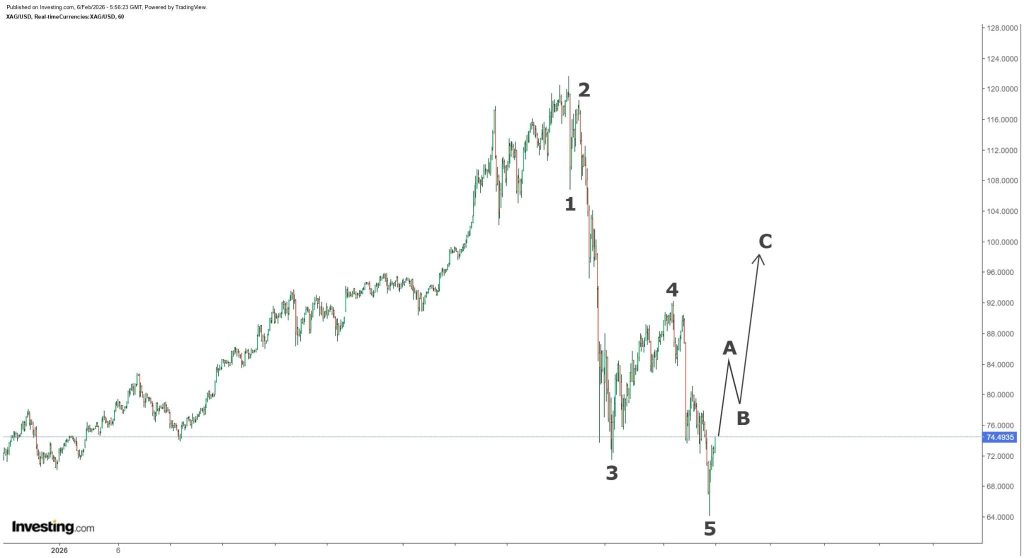
Silver Price Crash Is Over “For Real This Time,” Analyst Predicts a Surge Back Above $90

Silver Price Crash Is Over “For Real This Time,” Analyst Predicts a Surge Back Above $90

Silver has been taking a beating lately, and the Silver price hasn’t exactly been acting like a safe haven. After running up into the highs, the whole move reversed
Share
Captainaltcoin2026/02/07 03:15