

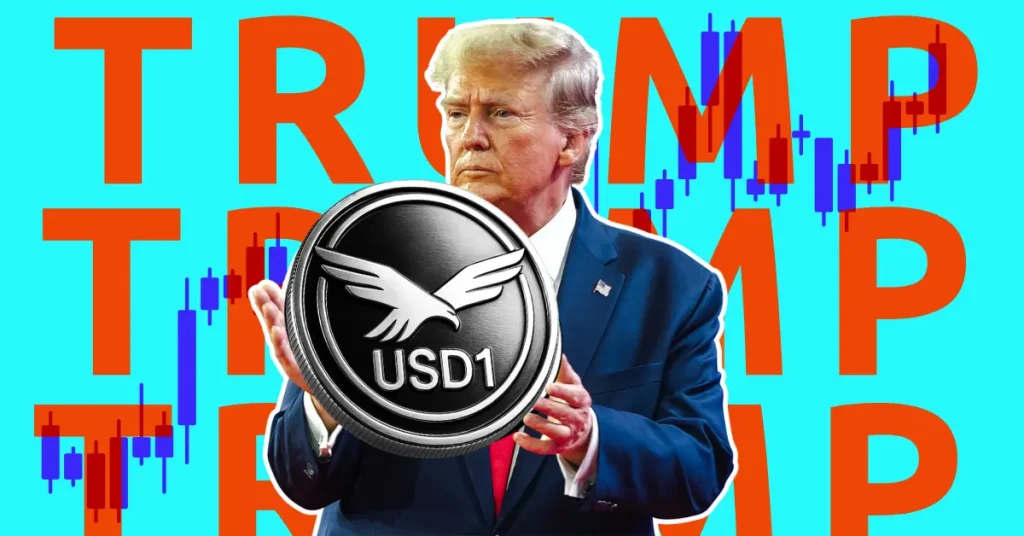
Trump-Backed USD1 Stablecoin Explodes to $5B in Less Than a Year
The post Trump-Backed USD1 Stablecoin Explodes to $5B in Less Than a Year appeared first on Coinpedia Fintech News
The Trump-linked USD1 stablecoin has surged past a $5 billion market capitalization, quickly cementing its place as the fifth-largest stablecoin globally. In doing so, USD1 has overtaken PayPal’s PYUSD and climbed into the top 25 cryptocurrencies by overall market value, according to CoinMarketCap data. The rapid rise has caught the market’s attention, especially given that the stablecoin has achieved this scale in less than a year.
Donald Trump Jr., co-founder of World Liberty Financial, highlighted the milestone on X, pointing to growing institutional interest and accelerating adoption. The pace of growth has positioned USD1 as one of the fastest-scaling stablecoins the market has seen so far.
Growth Fueled by New Products and Treasury Moves
Behind USD1’s momentum is an aggressive expansion strategy by World Liberty Financial. Earlier this year, the firm unveiled “World Liberty Markets,” a new platform that allows users to borrow digital assets using USD1 as collateral. The platform also supports major stablecoins like USDT and USDC, along with tokenized Bitcoin, broadening its appeal to both retail and institutional users.
At the same time, World Liberty has moved to strengthen USD1’s supply through governance. A recent community vote approved using part of the project’s treasury to expand stablecoin issuance, helping meet growing demand. The firm has also signaled plans to launch real-world asset products backed by USD1, further embedding the stablecoin into on-chain financial infrastructure.
Banking Ambitions Spark Regulatory Debate
USD1’s rapid rise comes alongside a controversial push into traditional finance. Earlier this month, WLTC Holdings LLC, an affiliate of World Liberty Financial, applied with the Office of the Comptroller of the Currency (OCC) to establish a national trust bank focused on stablecoin issuance.
- Also Read :
- Why Are Bitcoin, XRP, and Ethereum Prices Falling Today?
- ,
The move immediately drew political scrutiny. Senator Elizabeth Warren urged the OCC to halt its review, citing concerns over the project’s ties to former President Donald Trump. The OCC responded by stating that World Liberty’s application would be evaluated under the same standards as any other filing.
World Liberty co-founder Zach Witkoff has defended the application, arguing that a national trust bank would build on USD1’s rapid growth and provide a stronger regulatory foundation for future expansion.
Security Concerns Add Another Layer
Warren has also raised alarms about USD1’s connection to PancakeSwap, a decentralized exchange where the stablecoin is actively traded. She previously warned the Treasury Department that the platform has been linked to illicit fund flows, questioning whether the partnership could pose national security risks.
World Liberty maintains that its operations remain compliant and that USD1’s growth reflects legitimate market demand rather than political backing.
As USD1 continues its climb, it now sits at the center of both market excitement and regulatory debate. Its rise highlights how quickly politically linked crypto projects can scale, but also how fast they can attract scrutiny as they push deeper into the financial system.
Never Miss a Beat in the Crypto World!
Stay ahead with breaking news, expert analysis, and real-time updates on the latest trends in Bitcoin, altcoins, DeFi, NFTs, and more.
 Subscribe to News
FAQs
Its growth was driven by new lending products, treasury-backed issuance expansion, and early institutional interest boosting liquidity.
Lawmakers have questioned its banking ambitions and DeFi exposure, though regulators say it’s being reviewed like any other applicant.
Like all stablecoins, risks include regulation and platform exposure, but USD1 claims compliance and demand-driven growth so far.
You May Also Like

Gold continues to hit new highs. How to invest in gold in the crypto market?

Layer Brett Picked As The Best Crypto To Buy Now By Experts Over Pi Coin & VeChain
