PayPal’s return with Paga signals it has chosen predictability over control
In December 2025, Technext framed PayPal’s Africa strategy as an admission of defeat. The argument was simple and, at the time, convincing.
PayPal could not dominate African markets the way it had elsewhere. Regulation, fragmented infrastructure, local fintech depth, and years of cautious half-entries had forced the company to abandon the fantasy of control and instead partner its way into relevance.
That framing resonated because it matched history. Nigerians, in particular, had lived with PayPal’s limitations since the early 2000s and learned to read restraint as reluctance. Social media arguments frame this perfectly well.
One month later, PayPal went live in Nigeria through Paga.
On the surface, this appears to be a contradiction. How does a company that has “accepted defeat” suddenly move forward with a full operational launch? But the contradiction only exists if defeat is understood as withdrawal. What PayPal actually accepted was the failure of its old model. What followed was execution.
The Paga launch is not tentative, nor is it a pilot. It allows Nigerian users “link their PayPal accounts directly to their Paga wallets to receive cross-border payments from PayPal-supported markets, shop with global PayPal merchants, and access their funds locally.”
Funds can be withdrawn in naira, transferred to bank accounts, or spent within the Paga ecosystem. This is not PayPal testing Nigeria. This is PayPal committing to Nigeria on terms it believes will work.
Otto Williams, PayPal’s Senior Vice President for Middle East and Africa, has been remarkably consistent about what those terms are.
In the interview conducted around the partnership announcement, he said, “We’ve long recognised Nigeria as one of the most entrepreneurial and globally connected markets in Africa.” That sentence matters because it pushes back against the idea that PayPal’s caution was rooted in doubt about demand.
Demand was never the problem. Structure was.
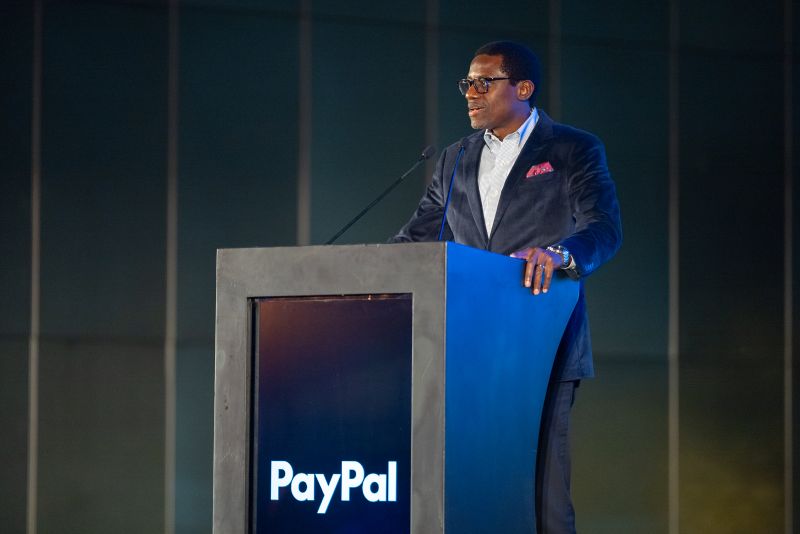 Otto Williams, PayPal’s Senior Vice President, Regional Head for the Middle East and Africa
“As is the case with expansion into any market, we recognise that success requires the right partner and the right local infrastructure,” Williams added. That is the quiet admission at the heart of both the December framing and the January reality.
PayPal did not lose belief in Nigeria. It lost faith in going it alone.
Why PayPal’s moving forward after ‘defeat’ is the point
The backlash that often accompanies PayPal announcements in Nigeria is less about anger than exhaustion. Users are sceptical because they have seen announcements that led nowhere. The documents around this launch show a company that understands scepticism and has chosen not to argue with it.
Instead of promising everything, PayPal has delivered what Williams calls “the core, high-value capabilities that Nigerians have been requesting for years.”
Those are his words, and they are carefully chosen. This partnership enables users to “receive payments from more than 200 countries, withdraw funds instantly in Naira, and shop globally at merchants that accept PayPal.”
There is no claim of feature parity with the US or Europe. There is no attempt to oversell access. PayPal is explicitly prioritising what works over what looks impressive.
That restraint is not defensive but is strategic. Williams explained that PayPal is “working customer-back and removing friction in areas where global commerce has traditionally been difficult.” In Nigeria, that friction is settlement, reliability, and trust. By integrating with Paga, a platform with over 21 million users and established local rails, PayPal is choosing predictability over control.
This is where the December “defeat” framing becomes more interesting, not less. If defeat meant abandoning dominance, then this launch is proof that PayPal believes relevance does not require ownership. Williams said partnerships like Paga are “essential to our growth strategy.”
Not complementary. Not temporary. Essential.
The announcement reinforces that logic. It frames the integration as “a seamless bridge between global earnings and local use” and positions PayPal as part of Nigeria’s existing financial life rather than an alternative to it. PayPal is no longer trying to reshape how Nigerians move money but is inserting itself into flows that already exist.
Williams’ comments underline that shift. “If Nigerian consumers, creators, and businesses can connect to the global economy as easily as anyone anywhere else, then this partnership is working.” That is a measurable outcome, not a branding goal.
PayPal did accept defeat. Then it moved on. What went live in January is not defiance of criticism, but confidence in a new definition of winning.
The post PayPal’s return with Paga signals it has chosen predictability over control first appeared on Technext.
You May Also Like

Three Must-Attend Side Events at Korea Blockchain Week 2025

Kraken's Big Hint: Pi Coin Set for Exchange Listing In 2026