Global markets are digesting a wave of geopolitical shocks, from renewed conflict in Eastern Europe to rising tensions across Latin America. In this environmentGlobal markets are digesting a wave of geopolitical shocks, from renewed conflict in Eastern Europe to rising tensions across Latin America. In this environment

USDT Anchors Venezuela’s Post-Maduro Oil Trade

2026/01/06 14:32
4 min read
USDT Anchors Venezuela’s Post-Maduro Oil Trade

Global markets are digesting a wave of geopolitical shocks, from renewed conflict in Eastern Europe to rising tensions across Latin America. In this environment, Venezuela’s political rupture following the arrest of Nicolás Maduro is sending ripples far beyond Caracas. One of the clearest signals is not found in diplomacy or military headlines, but in payments. USDT is quietly strengthening its position as a core settlement tool in Venezuela’s oil trade.

Global Uncertainty Reshapes Energy Flows

The past weeks have underscored how fragile global energy logistics remain. Disruptions in shipping lanes, sanctions enforcement, and leadership changes often do not stop oil from moving, but they complicate how it gets paid for. Energy traders increasingly focus on settlement risk rather than supply risk.

Venezuela finds itself caught between overlapping strains. Long-standing sanctions have cut the country off from much of the global banking system, and the latest political turmoil has made counterparties even more cautious.

Traders say payments routed through traditional banks now face longer delays, as correspondent institutions tighten checks or step back altogether. In response, market participants are falling back on tools that work regardless of local institutions.

Why USDT Keeps Oil Deals Alive

Stablecoins are not new to Venezuela’s oil trade, but their role is expanding. USDT stands out because of its liquidity and acceptance. Traders describe it as “the only instrument everyone agrees on” when banks hesitate or freeze transfers.

The logic is simple. Oil cargoes still need payment. Refiners and middlemen want speed and predictability. USDT allows near-instant settlement, reduces exposure to blocked accounts, and avoids multi-day clearing delays. In volatile moments, those features matter more than ideology or innovation.

One trader involved in Latin American crude flows noted that stablecoins now function like an informal clearing system. They bridge gaps when formal rails fail. After Maduro’s arrest, that bridge has become more heavily used.

Political Shock Accelerates A Quiet Shift

Maduro’s detention has not halted production overnight, but it has blurred authority. Questions over who signs contracts, who controls accounts, and which obligations remain valid have multiplied. In such conditions, counterparties look for settlement methods that sit outside domestic control.

USDT has become a practical alternative. It bypasses local banks and can be accessed through international exchanges and OTC desks. While some deals still require stablecoins to be converted into cash at a later stage, the first leg of settlement is increasingly taking place on-chain.

FactorBefore arrestAfter arrest
Bank transfersSlow, restrictedMore delays, higher risk
Sanctions exposureHighHigher due to uncertainty
Stablecoin useCommon but selectiveExpanding and normalized
Preferred assetUSD, euroUSDT dominates

Oil settlements at a glance

This shift does not signal confidence in crypto markets. It reflects a lack of alternatives.

Risks Behind The Convenience

Analysts warn that reliance on USDT carries its own risks. Regulatory scrutiny remains a constant threat. Any change in stablecoin oversight or issuer policy could disrupt flows overnight. There is also concentration risk, since most settlements lean on a single asset.

Transparency remains a sticking point. Stablecoin settlements often leave fewer visible traces, which could complicate oversight for future governments and international counterparts. Even if a post-Maduro administration moves to restore conventional payment channels, shifting traders back may not be straightforward.

Many market participants view the current setup as a stopgap, but one that could outlive the crisis itself. Once a payment method proves fast and dependable, it tends to stick, particularly when it fills gaps that traditional systems have struggled to close.

What This Means Beyond Venezuela

The broader implication reaches beyond one country. USDT’s growing role in oil settlements highlights how digital dollars now serve as shock absorbers in global trade. They step in when politics disrupt finance.

For the crypto industry, this reinforces a familiar theme. Stablecoins gain relevance not during booms, but during stress. Their value lies in function, not narrative.

To sum up, Maduro’s arrest has reshaped Venezuela’s political landscape, but it has also sharpened an economic reality. As long as uncertainty clouds banks and contracts, USDT will remain central to how Venezuelan oil gets paid for. In times of upheaval, the most reliable systems are often the least visible.

The post USDT Anchors Venezuela’s Post-Maduro Oil Trade appeared first on NFT Plazas.

Market Opportunity
Polytrade Logo
Polytrade Price(TRADE)
$0.03225
$0.03225$0.03225
-0.98%
USD
Polytrade (TRADE) Live Price Chart
Disclaimer: The articles reposted on this site are sourced from public platforms and are provided for informational purposes only. They do not necessarily reflect the views of MEXC. All rights remain with the original authors. If you believe any content infringes on third-party rights, please contact service@support.mexc.com for removal. MEXC makes no guarantees regarding the accuracy, completeness, or timeliness of the content and is not responsible for any actions taken based on the information provided. The content does not constitute financial, legal, or other professional advice, nor should it be considered a recommendation or endorsement by MEXC.

You May Also Like

Fed Acts on Economic Signals with Rate Cut

Fed Acts on Economic Signals with Rate Cut

In a significant pivot, the Federal Reserve reduced its benchmark interest rate following a prolonged ten-month hiatus. This decision, reflecting a strategic response to the current economic climate, has captured attention across financial sectors, with both market participants and policymakers keenly evaluating its potential impact.Continue Reading:Fed Acts on Economic Signals with Rate Cut
Share
Coinstats2025/09/18 02:28
Ray Dalio Raises Alarms on Potential State Overreach with Digital Currencies
Ray Dalio Raises Alarms on Potential State Overreach with Digital Currencies

The post Ray Dalio Raises Alarms on Potential State Overreach with Digital Currencies appeared on BitcoinEthereumNews.com. Renowned for his keen perspectives on
Share
BitcoinEthereumNews2026/02/11 01:07
Breaking: CME Group Unveils Solana and XRP Options

Breaking: CME Group Unveils Solana and XRP Options

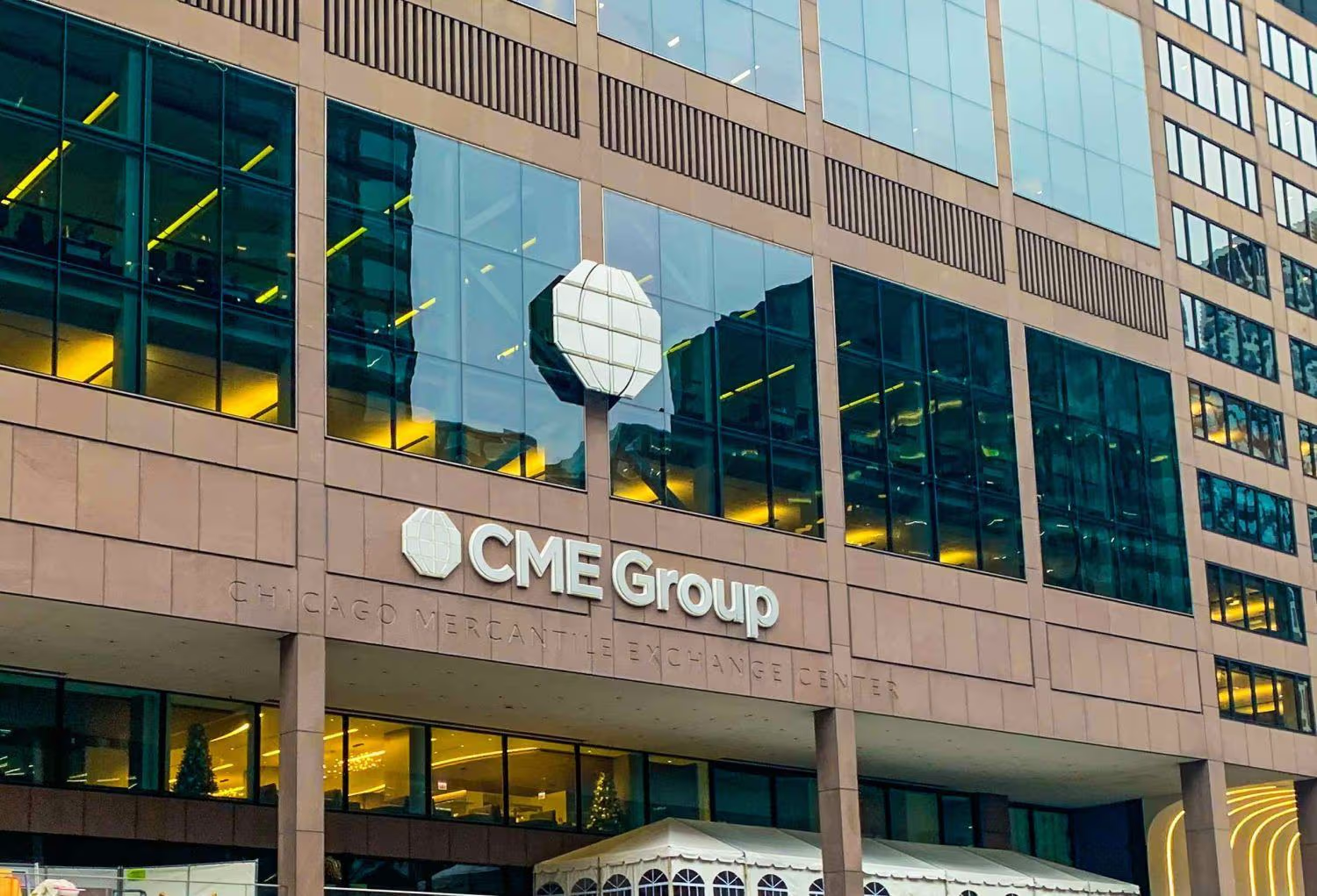
CME Group launches Solana and XRP options, expanding crypto offerings. SEC delays Solana and XRP ETF approvals, market awaits clarity. Strong institutional demand drives CME’s launch of crypto options contracts. In a bold move to broaden its cryptocurrency offerings, CME Group has officially launched options on Solana (SOL) and XRP futures. Available since October 13, 2025, these options will allow traders to hedge and manage exposure to two of the most widely traded digital assets in the market. The new contracts come in both full-size and micro-size formats, with expiration options available daily, monthly, and quarterly, providing flexibility for a diverse range of market participants. This expansion aligns with the rising demand for innovative products in the crypto space. Giovanni Vicioso, CME Group’s Global Head of Cryptocurrency Products, noted that the new options offer increased flexibility for traders, from institutions to active individual investors. The growing liquidity in Solana and XRP futures has made the introduction of these options a timely move to meet the needs of an expanding market. Also Read: Vitalik Buterin Reveals Ethereum’s Bold Plan to Stay Quantum-Secure and Simple! Rapid Growth in Solana and XRP Futures Trading CME Group’s decision to roll out options on Solana and XRP futures follows the substantial growth in these futures products. Since the launch of Solana futures in March 2025, more than 540,000 contracts, totaling $22.3 billion in notional value, have been traded. In August 2025, Solana futures set new records, with an average daily volume (ADV) of 9,000 contracts valued at $437.4 million. The average daily open interest (ADOI) hit 12,500 contracts, worth $895 million. Similarly, XRP futures, which launched in May 2025, have seen significant adoption, with over 370,000 contracts traded, totaling $16.2 billion. XRP futures also set records in August 2025, with an ADV of 6,600 contracts valued at $385 million and a record ADOI of 9,300 contracts, worth $942 million. Institutional Demand for Advanced Hedging Tools CME Group’s expansion into options is a direct response to growing institutional interest in sophisticated cryptocurrency products. Roman Makarov from Cumberland Options Trading at DRW highlighted the market demand for more varied crypto products, enabling more advanced risk management strategies. Joshua Lim from FalconX also noted that the new options products meet the increasing need for institutional hedging tools for assets like Solana and XRP, further cementing their role in the digital asset space. The launch of options on Solana and XRP futures marks another step toward the maturation of the cryptocurrency market, providing a broader range of tools for managing digital asset exposure. SEC’s Delay on Solana and XRP ETF Approvals While CME Group expands its offerings, the broader market is also watching the progress of Solana and XRP exchange-traded funds (ETFs). The U.S. Securities and Exchange Commission (SEC) has delayed its decisions on multiple crypto-related ETF filings, including those for Solana and XRP. Despite the delay, analysts anticipate approval may be on the horizon. This week, REX Shares and Osprey Funds are expected to launch an XRP ETF that will hold XRP directly and allocate at least 40% of its assets to other XRP-related ETFs. Despite the delays, some analysts believe that approval could come soon, fueling further interest in these assets. The delay by the SEC has left many crypto investors awaiting clarity, but approval of these ETFs could fuel further momentum in the Solana and XRP futures markets. Also Read: Tether CEO Breaks Silence on $117,000 Bitcoin Price – Market Reacts! The post Breaking: CME Group Unveils Solana and XRP Options appeared first on 36Crypto.
Share
Coinstats2025/09/18 02:35