The way people shop is changing not just in terms of what they buy, but how they move between platforms, devices, and environments. The lines between physical andThe way people shop is changing not just in terms of what they buy, but how they move between platforms, devices, and environments. The lines between physical and

Omnichannel Shopping 2.0: Blending Online, Social, and VR/AR Retail in 2026

2025/12/18 12:01
4 min read

The way people shop is changing not just in terms of what they buy, but how they move between platforms, devices, and environments. The lines between physical and digital stores continue to blur, and retailers are adjusting their strategies to meet customers where they are whether that’s on a website, through a social media feed, or in a virtual showroom.

Omnichannel retail isn’t new, but what’s emerging now is a more integrated version. Instead of focusing on isolated channels, businesses are finding ways to connect the entire experience from browsing to checkout, from phone to store shelf. As more people use mobile, social, and immersive platforms for everyday interactions, this blend of formats is becoming part of how brands operate.

These shifts are part of broader 2026 online shopping trends. Many stores are no longer relying on a single storefront to drive sales. They’re building flexible ecosystems that combine ecommerce websites, influencer-driven content, interactive messaging, and even virtual environments where customers can explore and compare products at their own pace.

Social Commerce as a Discovery Engine

Social platforms have become more than marketing tools; they’re sales channels in their own right. Features like in-app shopping, product tagging, and creator-driven product demos make it easier for users to buy directly within the platforms they use every day.

Retailers are using these tools not only to showcase products, but also to gather feedback and test demand. Comments, shares, and reactions offer insight into what resonates. Unlike traditional advertising, this creates a more conversational and less intrusive form of engagement.

Brands that do well here aren’t just pushing promotions. They’re building relationships through storytelling, behind-the-scenes content, and user-generated feedback that helps shape future offerings.

The Role of Augmented and Virtual Experiences

VR and AR tools are becoming more accessible, not just for large brands but also for independent sellers and small retail teams. These technologies support product visualization, showroom browsing, and even virtual consultations.

For example:

  • AR allows customers to preview furniture in their living room or try on glasses using their phone camera.
  • VR opens the possibility of walking through a digital showroom or pop-up store, often from within a gaming console or headset.

These tools remove uncertainty from buying decisions. Instead of relying on static images or written descriptions, customers can interact with products in more natural ways. This helps reduce returns, increase satisfaction, and build trust even without physical contact.

Seamless Movement Between Channels

Customers don’t experience a brand through one channel they interact across many. What matters is that the transitions between those touchpoints are smooth.

Whether someone discovers a product on Instagram, adds it to their wishlist via a mobile app, then completes the purchase on a laptop, the experience should feel consistent. Product details, saved preferences, and order history should carry across devices and formats.

That’s why retailers are investing in platforms that can sync inventory, marketing, and customer data across multiple endpoints. This allows them to support flexible paths to purchase whether through self-checkout, in-store pickup, or same-day delivery.

Personalization With Care

As data collection becomes more advanced, personalization tools are helping businesses offer more relevant experiences. However, this requires balance. People want helpful suggestions not invasive messaging.

Good personalization:

  • Reflects previous browsing or purchase history
  • Offers meaningful recommendations (not just more ads)
  • Allows customers to opt in or out without friction

Done right, this approach creates a sense of familiarity and respect—making customers feel understood, not watched.

Final Thoughts

Omnichannel Shopping 2.0 isn’t about adding more channels. It’s about connecting them in ways that support the way people naturally explore, compare, and decide. The tools—social feeds, AR previews, personalized emails are only as useful as the strategies behind them.

What defines success in this next phase of retail is not just presence, but consistency. It’s about helping customers move freely between touchpoints without having to start over every time. By blending digital, social, and immersive formats, brands can create a more adaptive, useful, and customer-centered experience one that meets real needs across any channel.

Comments
Market Opportunity
Victoria VR Logo
Victoria VR Price(VR)
$0.002602
$0.002602$0.002602
+0.19%
USD
Victoria VR (VR) Live Price Chart
Disclaimer: The articles reposted on this site are sourced from public platforms and are provided for informational purposes only. They do not necessarily reflect the views of MEXC. All rights remain with the original authors. If you believe any content infringes on third-party rights, please contact service@support.mexc.com for removal. MEXC makes no guarantees regarding the accuracy, completeness, or timeliness of the content and is not responsible for any actions taken based on the information provided. The content does not constitute financial, legal, or other professional advice, nor should it be considered a recommendation or endorsement by MEXC.

You May Also Like

Tom Lee’s BitMine approaches 50% of goal to hold 5% Ethereum supply

Tom Lee’s BitMine approaches 50% of goal to hold 5% Ethereum supply

The post Tom Lee’s BitMine approaches 50% of goal to hold 5% Ethereum supply appeared on BitcoinEthereumNews.com. Key Takeaways Tom Lee’s Bitmine Immersion (BMNR) have reached nearly 50% of their goal to hold 5% of Ethereum’s total supply. BMNR has been steadily increasing its Ethereum holdings by buying during market dips, reflecting an institutional acquisition strategy. Tom Lee-led Bitmine Immersion (BMNR) is approaching 50% of its goal to hold 5% of Ethereum’s total supply. BMNR has been methodically increasing its Ethereum holdings through targeted purchases during market dips, aligning with Lee’s vision of positioning the company as a major institutional holder of the asset. Lee’s approach with BMNR mirrors strategies seen in other crypto-focused firms, emphasizing Ethereum as a key reserve asset amid growing regulatory clarity in the US. Ethereum remains a dominant blockchain network increasingly adopted by institutions for its smart contract capabilities and layer 2 scaling solutions. Source: https://cryptobriefing.com/tom-lee-bmnr-ethereum-treasury-strategy/
Share
BitcoinEthereumNews2025/10/03 08:46
Pippin (PIPPIN) Price Prediction 2026–2030: Can PIPPIN Hit $0.70 Soon?

Pippin (PIPPIN) Price Prediction 2026–2030: Can PIPPIN Hit $0.70 Soon?

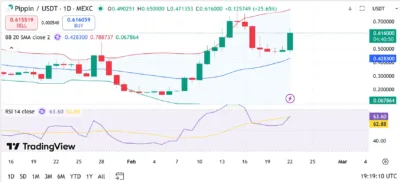
PIPPIN has surged sharply on the daily timeframe, printing a powerful bullish candle with over 25% gains. RSI is holding above 60, signaling strengthening momentum
Share
Coinstats2026/02/23 04:29
‘Love Island Games’ Season 2 Release Schedule—When Do New Episodes Come Out?

‘Love Island Games’ Season 2 Release Schedule—When Do New Episodes Come Out?

The post ‘Love Island Games’ Season 2 Release Schedule—When Do New Episodes Come Out? appeared on BitcoinEthereumNews.com. LOVE ISLAND GAMES — Episode 201 — Pictured: Ariana Madix — (Photo by: Ben Symons/PEACOCK via Getty Images) Ben Symons/PEACOCK via Getty Images We’ve got a text! It’s time for another season of Love Island Games. With fan-favorites returning in hopes of winning the $250,000 cash prize, read on to learn more about Love Island Games Season 2, including the release schedule so you don’t miss a second of drama. Love Island Games is a spinoff in the Love Island franchise that first premiered in 2023. The show follows a similar format to the original series, but with one major twist: all contestants are returning Islanders from previous seasons of Love Island from around the world, including the USA, UK, Australia and more. Another big difference is that games take on much more importance in Love Island Games than the mothership version, with the results “determining advantages, risks, and even who stays and who goes,” according to Peacock. Vanderpump Rules star Ariana Madix is taking over hosting duties for Love Island Games Season 2, replacing Love Island UK star Maya Jama who hosted the first season. Iain Stirling returns as the show’s narrator, while UK alum Maura Higgins will continue to host the Saturday show Love Island: Aftersun. ForbesWho’s In The ‘Love Island Games’ Season 2 Cast? Meet The IslandersBy Monica Mercuri Jack Fowler and Justine Ndiba were named the first-ever winners of Love Island Games in 2023. Justine had previously won Love Island USA Season 2 with Caleb Corprew, while Jack was a contestant on Love Island UK Season 4. In March 2024, Fowler announced on his Instagram story that he and Justine decided to remain “just friends.” The Season 2 premiere revealed the first couples of the season: Andrea Carmona and Charlie Georgios, Andreina Santos-Marte and Tyrique Hyde,…
Share
BitcoinEthereumNews2025/09/18 04:50