BitcoinWorld SEC investigation into Aave protocol concludes, bringing a major victory for DeFi clarity In a landmark announcement for decentralized finance, AaveBitcoinWorld SEC investigation into Aave protocol concludes, bringing a major victory for DeFi clarity In a landmark announcement for decentralized finance, Aave

SEC investigation into Aave protocol concludes, bringing a major victory for DeFi clarity

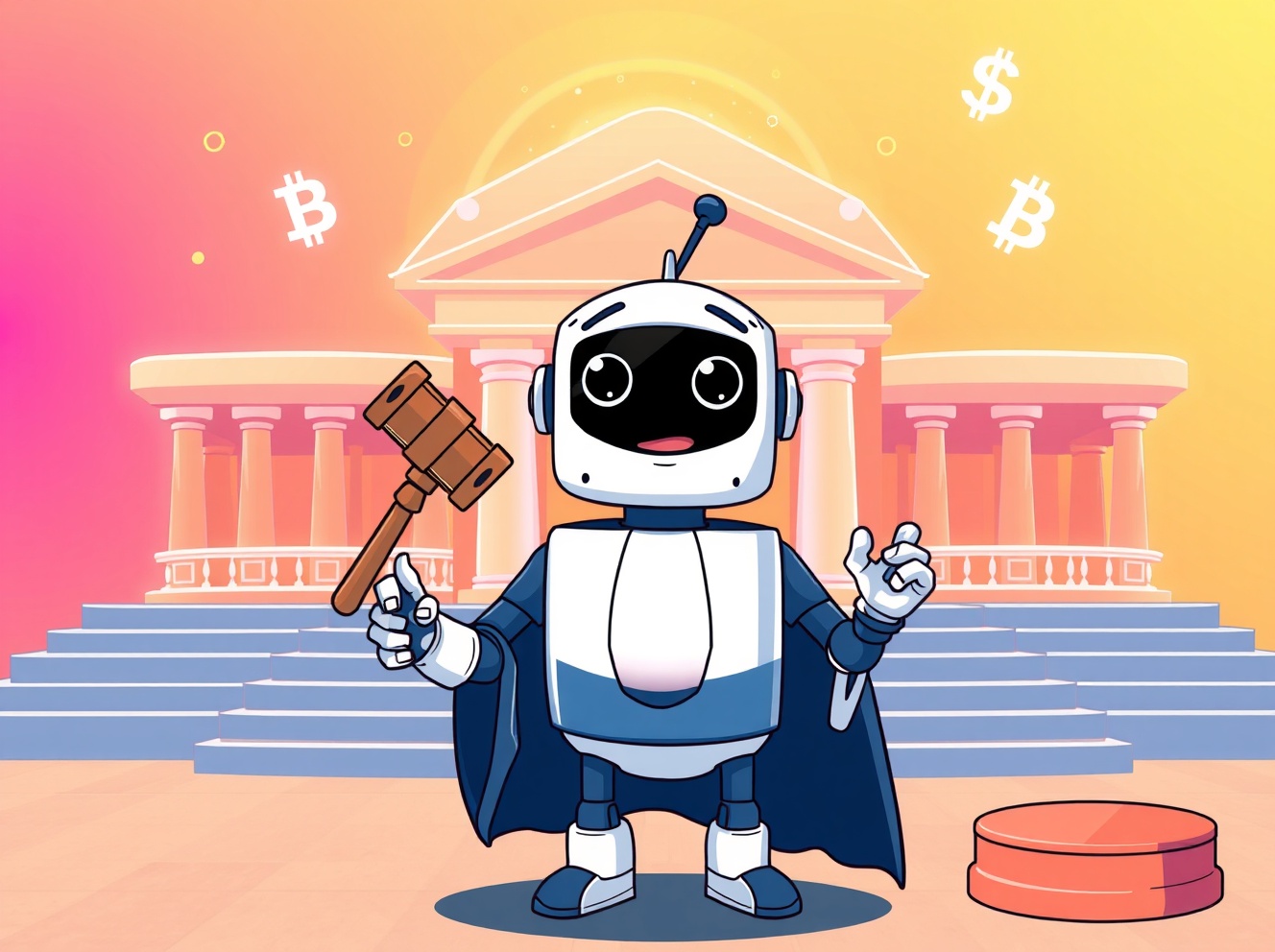
A cartoon illustration symbolizing the conclusion of the SEC investigation into Aave and the clarity it brings to DeFi.

BitcoinWorld

SEC investigation into Aave protocol concludes, bringing a major victory for DeFi clarity

In a landmark announcement for decentralized finance, Aave founder Stani Kulechov revealed the U.S. Securities and Exchange Commission (SEC) has officially closed its four-year SEC investigation into Aave. This pivotal moment lifts a cloud of uncertainty that has loomed over one of DeFi’s foundational protocols, signaling a potential shift in how regulators view open-source, non-custodial financial software.

What does the SEC investigation into Aave conclusion mean for DeFi?

The closure of this lengthy SEC investigation into Aave is more than just good news for a single project. It represents a significant data point for the entire decentralized finance ecosystem. For years, DeFi builders have operated under the shadow of potential regulatory action, unsure of how their innovations would be classified. The conclusion of this probe suggests that the SEC, after a thorough review, did not find grounds to pursue enforcement against the core Aave protocol’s operations.

This outcome provides a crucial reference point. It implies that well-structured, truly decentralized protocols where control is diffused among users and developers may exist outside the traditional scope of securities regulation. However, it’s vital to understand this is not a blanket approval. The decision likely hinged on Aave’s specific architecture and governance model.

Why is regulatory clarity so crucial for crypto’s future?

Uncertainty is the enemy of innovation, especially in technology. The conclusion of the SEC investigation into Aave helps replace vague fears with a clearer, though still evolving, framework. This clarity benefits everyone involved:

  • For Developers: They can build with more confidence, focusing on technology rather than legal guesswork.
  • For Investors: Reduced regulatory risk can make the DeFi space more attractive and stable.
  • For the Ecosystem: Clear rules of the road encourage responsible growth and mainstream adoption.

Think of it this way: builders were trying to construct a new city without a zoning map. This development doesn’t give them the entire map, but it clearly marks one major district as approved for development.

What challenges remain for DeFi after this SEC decision?

While the end of the SEC investigation into Aave is a positive step, the journey toward comprehensive DeFi regulation is far from over. The regulatory landscape remains a complex patchwork. Other agencies, like the CFTC, may have differing views, and international regulations vary widely.

Furthermore, the SEC’s focus may now shift to other areas within crypto, such as:

  • Centralized exchanges and their listings
  • Staking-as-a-service offerings
  • The classification of other DeFi tokens and governance models

The key takeaway is that this decision creates a precedent, not a permanent shield. The onus remains on projects to prioritize decentralization, transparency, and compliance where applicable.

Actionable insights for the crypto community

So, what can you do with this information? First, recognize that regulatory engagement is becoming more nuanced. The end of the SEC investigation into Aave shows that dialogue and operational transparency matter. For users, it’s a reminder to support protocols with strong governance and a commitment to working within developing legal frameworks.

For builders, the message is to architect for decentralization from the ground up. The technical and legal structure of a protocol is now its first line of defense. This event should encourage more projects to openly engage with policymakers to shape sensible rules.

In summary, the conclusion of the SEC’s long-running probe into Aave is a triumphant moment for decentralized finance. It cuts through years of fog, providing a beacon of clarity that allows developers to build with renewed purpose and confidence. While regulatory journeys are never fully complete, this milestone marks a critical turn towards a future where innovation and responsibility can coexist. The path forward for DeFi looks brighter and more defined.

Frequently Asked Questions (FAQs)

Q: Does this mean the SEC approves of Aave and all DeFi?
A: No. Closing an investigation is not an endorsement. It means the SEC, based on its review, chose not to pursue an enforcement action at this time against the Aave protocol. It sets a positive precedent but does not grant universal approval.

Q: Will this affect the price of the AAVE token?
A: While reducing a major regulatory overhang is fundamentally positive, cryptocurrency prices are influenced by many factors. This news may improve long-term investor sentiment, but short-term price action is unpredictable.

Q: How does this impact other DeFi protocols like Compound or MakerDAO?
A: It provides a helpful reference point. Protocols with similar degrees of decentralization and non-custodial models may find this outcome encouraging. However, each project’s specific details will be evaluated separately by regulators.

Q: What was the SEC investigating for four years?
A> While the SEC does not publicly detail closed investigations, it likely examined whether the Aave protocol, its operations, or its native token (AAVE) constituted an unregistered security offering under U.S. law.

Q: Can the SEC reopen this investigation later?
A> Technically, yes. Regulatory agencies can revisit matters if new evidence or activities emerge. However, formally closing an investigation typically indicates they consider the matter resolved based on current information.

Q: What should I do as a DeFi user following this news?
A> Continue to practice due diligence. This news reduces systemic regulatory risk for one segment of DeFi, but it does not eliminate other risks like smart contract bugs or market volatility. Always understand the protocols you use.

Found this breakdown of the SEC investigation into Aave conclusion helpful? Share this article with your network on Twitter or LinkedIn to spread the word about this major development for regulatory clarity in decentralized finance. Helping the community stay informed strengthens the entire ecosystem!

To learn more about the latest DeFi and regulatory trends, explore our article on key developments shaping the future of cryptocurrency institutional adoption.

This post SEC investigation into Aave protocol concludes, bringing a major victory for DeFi clarity first appeared on BitcoinWorld.

Market Opportunity
AaveToken Logo
AaveToken Price(AAVE)
$178.83
$178.83$178.83
-2.36%
USD
AaveToken (AAVE) Live Price Chart
Disclaimer: The articles reposted on this site are sourced from public platforms and are provided for informational purposes only. They do not necessarily reflect the views of MEXC. All rights remain with the original authors. If you believe any content infringes on third-party rights, please contact service@support.mexc.com for removal. MEXC makes no guarantees regarding the accuracy, completeness, or timeliness of the content and is not responsible for any actions taken based on the information provided. The content does not constitute financial, legal, or other professional advice, nor should it be considered a recommendation or endorsement by MEXC.

You May Also Like

More On-Chain Activity as Over 131,000 Cardano Transactions Feature NIGHT Tokens

More On-Chain Activity as Over 131,000 Cardano Transactions Feature NIGHT Tokens

The launch of NIGHT, the native token of Midnight, has significantly impacted the number of transactions across the broader Cardano ecosystem. Cardano founder Charles
Share
Coinstats2025/12/18 15:13
What is Ethereum’s Fusaka Upgrade? Everything You Need to Know

What is Ethereum’s Fusaka Upgrade? Everything You Need to Know

Over the past few weeks, one of the most talked-about topics within the crypto community has been Ethereum’s Fusaka upgrade. What exactly is this upgrade, and how does it affect the Ethereum blockchain and the average crypto investor? This article will be the only explainer guide you need to understand the details of this upgrade within the Ethereum ecosystem. Why Does Ethereum Undergo Upgrades? To understand what the Fusaka upgrade will achieve, it is essential to comprehend what Ethereum’s upgrades aim to accomplish. The layer-1 Ethereum network was originally designed as a proof-of-work (PoW) blockchain. This implied that miners were actively behind the block mining process. While this consensus mechanism ensured security for the L1 blockchain, it also triggered slower transactions. The Ethereum development team unveiled a detailed roadmap, outlining various upgrades that will fix most of the network’s issues. These problems include its scalability issue, which refers to the network’s ability to process transactions faster. Currently, the Ethereum blockchain processes fewer transactions per second compared to most blockchains using the proof-of-stake (PoS) consensus mechanism. Over the past decade, Ethereum’s developers have implemented most of these upgrades, enhancing the blockchain’s overall performance. Here is a list of the upgrades that Ethereum has undergone: Frontier: July 2015 Frontier Thawing: September 2015 Homestead: March 2016 DAO Fork: July 2016 Tangerine Whistle: October 2016 Spurious Dragon: November 2016 Byzantium: October 2017 Constantinople: February 2019 Petersburg: February 2019 Istanbul: December 2019 Muir Glacier: January 2020 Berlin: April 2021 London: August 2021 Arrow Glacier: December 2021 Gray Glacier: June 2022 The Merge: September 2022 Bellatrix: September 2022 Paris: September 2022 Shanghai: April 2023 Capella: April 2023 Dencun (Cancun-Deneb): March 2024 Pectra (Prague-Electra): May 2025 Most of these upgrades (forks) addressed various Ethereum Improvement Proposals (EIPs) geared towards driving the blockchain’s growth. For instance, the Merge enabled the transition from the PoW model to a proof of stake (PoS) algorithm. This brought staking and network validators into the Ethereum mainnet. Still, this upgrade failed to unlock the much-needed scalability. For most of Ethereum’s existence, it has housed layer-2 networks, which leverage Ethereum’s infrastructure to tackle the scalability issue. While benefiting from the L1 blockchain’s security and decentralization, these L2 networks enable users to execute lightning-fast transactions. Last year’s Dencun upgrade made transacting on layer-2 networks even easier with the introduction of proto-danksharding (EIP-4844). Poised to address the scalability issue, this upgrade introduces data blobs. You can think of these blobs as temporary, large data containers that enable cheaper, yet temporary, storage of transactions on L2 networks. The effect? It reduces gas fees, facilitating cheaper transaction costs on these L2 rollups. The Pectra upgrade, unveiled earlier this year, also included EIPs addressing the scalability issue plaguing the Ethereum ecosystem. The upcoming upgrade, Fusaka, will help the decade-old blockchain network to become more efficient by improving the blob capacity. What is Ethereum’s Fusaka Upgrade? Fusaka is an upgrade that addresses Ethereum’s scalability issue, thereby making the blockchain network more efficient. As mentioned earlier, Fusaka will bolster the blob capacity for layer-2 blockchains, which refers to the amount of temporary data the network can process. This will help facilitate faster transactions on these L2 scaling solutions. It is worth noting that upon Fusaka’s completion, users will be able to save more when performing transactions across layer-2 networks like Polygon, Arbitrum, and Base. The upgrade has no direct positive impact on the L1 blockchain itself. On September 18th, Christine Kim, representing Ethereum core developers, confirmed the launch date for Fusaka via an X post. Following an All Core Developers Consensus (ACDC) call, the developer announced that the Ethereum Fusaka upgrade will take place on December 3rd. Ahead of the upgrade, there will be three public testnets. Fusaka will first be deployed on Holesky around October 1st. If that goes smoothly, it will move to Sepolia on October 14th. Finally, it will be on the Hoodi testnet on October 28th. Each stage provides developers and node operators with an opportunity to identify and address bugs, run stress tests, and verify that the network can effectively handle the new features. Running through all three testnets ensures that by the time the upgrade is ready for mainnet, it will have been thoroughly tested in different environments. Crucial to the Fusaka upgrade are the Blob Parameter Only (BPO) forks, which will enhance the blob capacity without requiring end-users of the blockchain network to undergo any software changes. For several months, the Ethereum development team has been working towards unveiling the BPO-1 and BPO-2 forks. Blockchain developers have pooled resources to develop Fusaka through devnets. Following performances from devnet-5, developers within the ecosystem confirmed that the BPO upgrades will come shortly after the Fusaka mainnet debut. Approximately two weeks after the mainnet launch, on December 17th, the BPO-1 fork will increase the blob target/max from 6/9 to 10/15. Then, two weeks later, on January 7th, 2026, the BPO-2 fork is expected to expand capacity further to a metric of 14/21. Ultimately, the Fusaka upgrade would have doubled the blob capacity, marking a pivotal move for the Ethereum ecosystem. Impact on the Ethereum Ecosystem Admittedly, the Ethereum ecosystem is expected to see more developers and users join the bandwagon. With the introduction of faster and cheaper transactions, developers and business owners can explore more efficient ways to build on the L1 blockchain. This means we can see initiatives like crypto payment solutions and more decentralized finance (DeFi) projects enter the Ethereum bandwagon. Users, on the other hand, will benefit as they execute cheaper on-chain transactions. Despite the benefits from this initiative, some in the crypto community worry about the reduction in Ethereum’s gwei (the smallest unit of the Ether coin). Shortly after the Dencun upgrade, Ethereum’s median gas fee dropped to 1.7 gwei. Fast-forward to the present, and the median gas fee sits at 0.41 gwei, according to public data on Dune. This drop hints at the drastic reduction in gas fees, which could affect those staking their crypto holdings on the L1 blockchain, making it less attractive to stakers. Since the Fusaka upgrade aims to reduce the L2 network gas fee further, some observers may worry that crypto stakers will receive fewer block rewards. Time will tell if the Ethereum development team will explore new incentives for those participating in staking. Will Ether’s Price Pump? There is no guarantee that Ether (ETH) will jump following Fusaka’s launch in December. This is because the second-largest cryptocurrency saw no significant price movement during past major upgrades. According to data from CoinMarketCap, ETH sold for approximately $4,400 at the time of writing. Notably, the coin saw its current all-time high (ATH) of $4,900 roughly a month ago. The price pump was fueled by consistent Ether acquisitions by exchange-traded fund (ETF) buyers and crypto treasury firms. Source: CoinMarketCap Although these upgrades do not guarantee a surge in ETH’s price, they have a lasting impact on the underlying Ethereum blockchain. Conclusion Over the past 10 years, the Ethereum network has had no rest as it constantly ships out new upgrades to make its mainnet more scalable. The Fusaka upgrade aims to make Ethereum layer-2 networks cheaper to use. To ensure its smooth usage, several testnets are lined up. Stay tuned for updates on how Ethereum will be post-Fusaka. The post What is Ethereum’s Fusaka Upgrade? Everything You Need to Know appeared first on Cointab.
Share
Coinstats2025/09/20 06:57
Vitalik Buterin Suggests Simplifying Ethereum to Boost User Understanding

Vitalik Buterin Suggests Simplifying Ethereum to Boost User Understanding

The post Vitalik Buterin Suggests Simplifying Ethereum to Boost User Understanding appeared on BitcoinEthereumNews.com. Ethereum trustlessness requires broader
Share
BitcoinEthereumNews2025/12/18 15:13