Nigeria’s inflation rate has fallen from 22.22% in June to 14.45% in November 2025, representing a 7.77 percentage…Nigeria’s inflation rate has fallen from 22.22% in June to 14.45% in November 2025, representing a 7.77 percentage…

From 22% to 14%: How 6 months of falling inflation is reshaping Nigeria’s digital lending industry

2025/12/16 02:29
4 min read

Nigeria’s inflation rate has fallen from 22.22% in June to 14.45% in November 2025, representing a 7.77 percentage point drop in just six months. It’s the steepest sustained decline the country has seen in years, and it’s quietly transforming the ₦2.1 trillion digital lending industry.

For most of 2024 and early 2025, Nigeria’s digital lenders were in survival mode. Inflation was so high that Nigerians weren’t borrowing to buy appliances or expand businesses; they were borrowing just to eat.

Food inflation had soared above 40% in late 2024, forcing millions to take loans for rice, rent, and transport. By January 2025, retail loans had surged 92.2% to ₦1.73 trillion, reflecting desperate survival borrowing rather than productive economic activity.

The problem for lenders was predictable. When people borrow out of desperation, they struggle to repay. Default rates climbed throughout the first half of 2025, with the Central Bank of Nigeria’s Q2 Credit Condition Survey reporting higher default rates for both secured and unsecured lending.

The IMF warned that rising non-performing loans in Nigeria’s fast-growing fintech sector posed potential risks to financial stability.

Then something shifted. In July, inflation dropped to 21.88%, a modest 0.34 percentage point decline, but the first sign that the worst might be over. By August, the drop accelerated to 20.12%, down 1.76 points. September brought 18.02%, another 2.10-point plunge. October delivered 16.05%, the lowest rate since March 2022. And now November’s 14.45% confirms this isn’t a blip. It’s a trend.

The most significant change has been in food inflation. From a peak above 40% in late 2024, food inflation has crashed to just 11.08% in November. This matters enormously for digital lenders because food was the primary driver of survival borrowing.

Read also: From 18.02% to 16.05%: Can fintech companies ride Nigeria’s inflation wave?

When Nigerians were spending 60-70% of their income on food alone, loan repayment became nearly impossible. Now, with food prices stabilising during harvest season and a stronger naira reducing import costs, households have more breathing room.

The National Bureau of Statistics reports that staple items like beans, garri, tomatoes, beef, and rice have shown month-on-month price decreases. This isn’t just statistical noise, it’s real relief felt in markets across Lagos, Abuja, and beyond.

How inflation is changing digital lending

The implications for digital lending are profound.

First, the nature of borrowing is shifting. When inflation was above 20%, loans were a last resort for survival. At 14.45%, borrowing can return to its more productive purpose: financing business expansion, purchasing inventory, or investing in education.

Second, repayment capacity is improving. With prices stabilising, borrowers have more disposable income left after covering essentials. The difference between 22% and 14% inflation might sound abstract, but for a household earning ₦150,000 monthly, it’s the difference between having ₦10,000 or ₦30,000 left after basic expenses. This is money that can go toward loan repayment.

Third, risk models are becoming more reliable. During periods of hyperinflation, credit scoring breaks down because everyone becomes a high-risk borrower regardless of their actual financial behaviour. As inflation stabilises, lenders can better distinguish between creditworthy and risky customers.

But the digital lending industry isn’t out of the woods yet. The Central Bank of Nigeria has held its monetary policy rate at 27%, making borrowing still expensive for most Nigerians. Until the CBN begins cutting rates, which likely won’t happen until inflation shows sustained stability below 15%, the cost of loans remains prohibitive for many potential borrowers.

Rethinking consumer credit financing in Nigeria- A call to actionFILE PHOTO: A man counts Nigerian naira notes in a marketplace as people struggle with the economic hardship and cashflow problems ahead of Nigeria’s Presidential elections, in Yola, Nigeria, February 22, 2023. REUTERS/Esa Alexander/File Photo

Additionally, new regulations are squeezing margins. The Digital and Electronic Lending Operations Network (DEON) Consumer Lending Regulations, which took effect in July 2025, have imposed strict compliance requirements. Industry estimates suggest compliance and legal spending now consume close to 7% of operating costs for digital lenders, more than double the 2022 level.

The sector has also grown crowded. The number of approved digital lenders surged 166% to 461 by August 2025, up from 173 in April 2023. With improving conditions, consolidation seems inevitable as stronger players acquire struggling competitors.

Looking ahead to 2026

If inflation continues its downward trajectory and the CBN begins cutting rates in early 2026, Nigeria’s digital lending industry could finally transition from crisis management to sustainable growth.

The six-month drop from 22% to 14% has created the foundation. Now, lenders are waiting to see if the structure they built on it can actually hold.

Disclaimer: The articles reposted on this site are sourced from public platforms and are provided for informational purposes only. They do not necessarily reflect the views of MEXC. All rights remain with the original authors. If you believe any content infringes on third-party rights, please contact service@support.mexc.com for removal. MEXC makes no guarantees regarding the accuracy, completeness, or timeliness of the content and is not responsible for any actions taken based on the information provided. The content does not constitute financial, legal, or other professional advice, nor should it be considered a recommendation or endorsement by MEXC.

You May Also Like

Why Smart Whales Abandon Cardano And Solana, Choosing Pepeto Presale For 100x Potential
Why Smart Whales Abandon Cardano And Solana, Choosing Pepeto Presale For 100x Potential

But a new player is emerging quickly: Pepeto (PEPETO), still in presale at just $0.000000153, already garnering over $6.7 million. […] The post Why Smart Whales Abandon Cardano And Solana, Choosing Pepeto Presale For 100x Potential appeared first on Coindoo.
Share
Coindoo2025/09/20 01:35
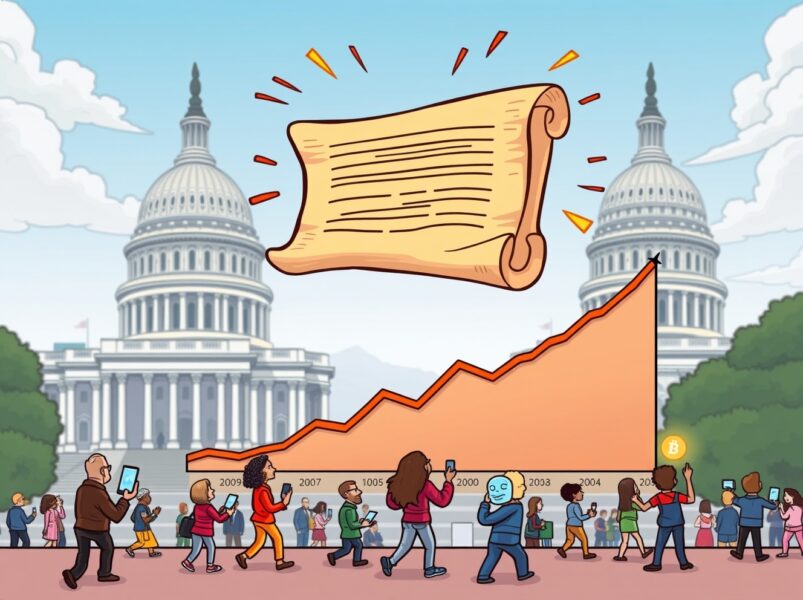
US Crypto Legislation: Unlocking a New Era for the Market Cycle

US Crypto Legislation: Unlocking a New Era for the Market Cycle

BitcoinWorld US Crypto Legislation: Unlocking a New Era for the Market Cycle Get ready for a potentially monumental shift in the crypto world! Galaxy Digital CEO Mike Novogratz has shared a fascinating prediction: significant US crypto legislation could fundamentally reshape the market’s traditional four-year cycle. This isn’t just speculation; it points to a future where crypto’s trajectory might look very different from what we’ve seen before. How is US Crypto Legislation Changing the Game? In a recent interview with Bloomberg, Novogratz highlighted two key pieces of legislation: the Genius Act and the CLARITY Act. These aren’t just bureaucratic terms; they represent a concerted effort to bring clarity and regulation to the cryptocurrency space. The Genius Act, enacted in July, focuses on stablecoin regulation. This is crucial because stablecoins, which are cryptocurrencies pegged to a stable asset like the US dollar, are becoming central to many digital transactions. The CLARITY Act aims to provide a clearer market structure. This means establishing defined rules for how cryptocurrencies are traded and regulated, making the market more transparent and accessible. Novogratz believes these legislative developments will act as a powerful magnet, drawing a massive influx of new investors into the market. Imagine millions of new participants feeling confident enough to engage with digital assets thanks to clear guidelines. Will We See a Different Crypto Market Cycle This Time? One of Novogratz’s most intriguing predictions challenges the historical pattern of crypto. He suggests that this current cycle might not conclude with the kind of large-scale sell-off that characterized previous Bitcoin (BTC) peaks. Historically, after major bull runs, investors often sold off their holdings, leading to significant market corrections. Consider the cycles of 2017 and 2021. Both saw incredible highs followed by substantial downturns as investors took profits. However, Novogratz argues that the investment environment has undergone a significant transformation. The presence of robust US crypto legislation is a key factor here, fostering a more mature market. The Power of Legitimized Stablecoins and Wider Adoption What exactly is different now? A major part of Novogratz’s argument centers on legalized stablecoins. These digital assets are poised to become seamlessly integrated into our daily lives. Think about using them directly within apps on your iPhone or across various social media platforms. This widespread usability has profound implications: Reduced Volatility Concerns: For everyday transactions, stablecoins offer the speed and efficiency of crypto without the wild price swings often associated with assets like Bitcoin or Ethereum. Easier Onboarding for New Users: When stablecoins are integrated into familiar platforms, the barrier to entry for new users dramatically decreases. People can engage with digital assets without needing to navigate complex exchanges immediately. Mainstream Acceptance: This level of integration pushes cryptocurrency further into the mainstream, moving it beyond niche trading circles and into everyday commerce. The clarity provided by US crypto legislation around these assets builds trust and encourages broader adoption. Navigating the Future: Opportunities and Potential Hurdles While the outlook is overwhelmingly positive, it’s also wise to consider the evolving landscape. The introduction of comprehensive US crypto legislation presents both immense opportunities and potential hurdles. Opportunities: A clearer regulatory framework can attract institutional investors, foster innovation within the blockchain space, and provide consumer protection, all contributing to a more robust and sustainable market. Potential Hurdles: Crafting effective legislation is complex. There might be ongoing debates, adjustments, and unforeseen impacts that could influence market dynamics. The industry will need to adapt to new compliance requirements. Ultimately, a regulated environment aims to create a more predictable and secure space for growth, benefiting both seasoned investors and newcomers alike. A New Dawn for Crypto Market Cycles Mike Novogratz’s vision paints an exciting picture for the future of cryptocurrency. The advent of clear US crypto legislation, particularly the Genius and CLARITY Acts, appears set to usher in a new era. This could mean a departure from the dramatic boom-and-bust cycles of the past, paving the way for more sustained growth and widespread adoption. As stablecoins become integral to our digital interactions, the crypto market is evolving into a more mature, integrated, and accessible financial ecosystem. The potential for a less volatile, more inclusive market is truly transformative. Frequently Asked Questions About Crypto Legislation Q1: What is the significance of the Genius Act and CLARITY Act? A1: The Genius Act focuses on regulating stablecoins, providing a clear framework for their issuance and use. The CLARITY Act aims to establish a clear market structure for cryptocurrencies, defining how they are traded and regulated. Together, they bring much-needed legal certainty to the crypto space. Q2: How could new US crypto legislation prevent large-scale sell-offs? A2: Novogratz suggests that with increased regulatory clarity and the widespread integration of stablecoins into daily apps, the market will attract a broader base of long-term investors. This could lead to more stable growth and reduce the likelihood of the rapid, panic-driven sell-offs seen after previous market peaks. Q3: How will legalized stablecoins change everyday use? A3: Legitimized stablecoins are expected to be integrated into common applications on devices like iPhones and social media platforms. This will make them easier to use for everyday transactions, payments, and remittances, much like traditional digital currency, but with the benefits of blockchain technology. Q4: What are the main benefits of clearer US crypto legislation for investors? A4: Clear legislation provides several benefits: it reduces regulatory uncertainty, which can attract more institutional and retail investors; it offers better consumer protection; and it fosters a more predictable and stable environment for innovation and growth within the crypto market. Q5: Are there any potential challenges with new crypto legislation? A5: While largely positive, challenges could include the complexity of implementing and enforcing new regulations, the need for continuous adaptation as technology evolves, and potential disagreements within the industry or among regulators on specific rules. However, these are part of any maturing market. If you found this article insightful, consider sharing it with your network! Help us spread the word about the exciting future of cryptocurrency and how US crypto legislation is shaping it. Your shares help inform and educate others about these pivotal market changes. To learn more about the latest crypto market trends, explore our article on key developments shaping Bitcoin and Ethereum institutional adoption. This post US Crypto Legislation: Unlocking a New Era for the Market Cycle first appeared on BitcoinWorld.
Share
Coinstats2025/09/24 12:25
XRP Price Prediction February 2026: Senator Warren Warns Fed as Pepeto’s 100x Presale Steals the Spotlight From Ripple

XRP Price Prediction February 2026: Senator Warren Warns Fed as Pepeto’s 100x Presale Steals the Spotlight From Ripple

Senator Elizabeth Warren reportedly sent a letter to Fed Chair Jerome Powell and Treasury Secretary Scott Bessent demanding they not […] The post XRP Price Prediction
Share
Coindoo2026/02/22 05:55