Tether-backed Twenty One Capital lists via SPAC as Bitcoin cools and DAT mNAV premiums compress, forcing the firm to prove it is more than a BTC hoard. Twenty One Capital, a cryptocurrency treasury firm, experienced market turbulence following its public…Tether-backed Twenty One Capital lists via SPAC as Bitcoin cools and DAT mNAV premiums compress, forcing the firm to prove it is more than a BTC hoard. Twenty One Capital, a cryptocurrency treasury firm, experienced market turbulence following its public…

Tether-backed Twenty One Capital jolted as Bitcoin slide hits DAT valuations

2025/12/10 21:29
3 min read

Tether-backed Twenty One Capital lists via SPAC as Bitcoin cools and DAT mNAV premiums compress, forcing the firm to prove it is more than a BTC hoard.

Summary
  • Twenty One Capital, majority-owned by Tether and Bitfinex with SoftBank backing, went public via Cantor Fitzgerald SPAC amid a Bitcoin drawdown.​
  • Holding over 43,500 BTC, the firm faces DAT-sector scrutiny as investors focus on mNAV and demand real business lines beyond a simple Bitcoin treasury.​
  • CEO Jack Maller touts future Bitcoin credit and lending products, but with only four staff and no roadmap, the market questions its differentiation

Twenty One Capital, a cryptocurrency treasury firm, experienced market turbulence following its public debut on Wall Street, according to market data.

The company, which holds over 43,500 Bitcoins, went public through a Special Purpose Acquisition Company (SPAC) deal backed by Cantor Fitzgerald, an investment banking and brokerage firm. Cantor Fitzgerald is currently chaired by Brandon Lutnick, son of U.S. Secretary of Commerce Howard Lutnick.

Twenty-one Capital sheds after going public

Twenty One Capital is majority-owned by Tether and cryptocurrency exchange Bitfinex, with Japanese technology investor SoftBank holding a minority stake. The firm’s Bitcoin holdings make it the third-largest corporate holder of the cryptocurrency globally, according to industry rankings.

The company’s market debut coincides with a decline in Bitcoin (BTC) prices from October all-time highs, placing pressure on the digital asset treasury (DAT) sector. The timing has created challenges for the newly public company as the broader cryptocurrency market faces headwinds.

Jack Maller, CEO of Twenty One Capital, stated that the company currently employs four full-time staff members. The firm has not yet disclosed a timeline or roadmap for product launches.

Maller indicated that Twenty One Capital aims to differentiate itself from other digital asset treasury companies by building business operations beyond simply holding Bitcoin reserves. The CEO mentioned potential future offerings including Bitcoin credit and lending products, though specific details were not provided.

“We were shocked, to put it lightly, that someone like MicroStrategy was just going to simply finance buying Bitcoin just with debt forever,” Maller stated, referencing a competitor in the space.

The digital asset treasury sector faces scrutiny as cryptocurrency market values decline. Market participants are focusing on mNAV (Market Net Asset Value), a metric that compares a company’s overall valuation to the value of its cryptocurrency holdings.

John Todaro, Senior Research Analyst at Needham, commented on the sector’s challenges. “It’s becoming harder for DATs to raise capital, and we are in an environment now where DATs need to show material differentiation to warrant the mNAV multiples they were trading at earlier in 2025,” Todaro said.

The company’s performance in coming months will be closely watched by investors as it works to establish operational business lines beyond its Bitcoin holdings.

Market Opportunity
Octavia Logo
Octavia Price(VIA)
$0.0016605
$0.0016605$0.0016605
-8.86%
USD
Octavia (VIA) Live Price Chart
Disclaimer: The articles reposted on this site are sourced from public platforms and are provided for informational purposes only. They do not necessarily reflect the views of MEXC. All rights remain with the original authors. If you believe any content infringes on third-party rights, please contact service@support.mexc.com for removal. MEXC makes no guarantees regarding the accuracy, completeness, or timeliness of the content and is not responsible for any actions taken based on the information provided. The content does not constitute financial, legal, or other professional advice, nor should it be considered a recommendation or endorsement by MEXC.

You May Also Like

Thunderclap Review 2026: Is it the Best Social Media Service for Instant Gains?

Thunderclap Review 2026: Is it the Best Social Media Service for Instant Gains?

TLDR: Is Thunderclap legit? Yes, Thunderclap is a legitimate social media growth service designed to help users increase their followers, engagement, and overall
Share
AI Journal2026/02/20 21:10
The GENIUS Act Is Already Law. Banks Shouldn’t Try to Rewrite It Now
The GENIUS Act Is Already Law. Banks Shouldn’t Try to Rewrite It Now

The post The GENIUS Act Is Already Law. Banks Shouldn’t Try to Rewrite It Now appeared on BitcoinEthereumNews.com. Healthy competition drives innovation and better products for consumers; it is at the center of American economic leadership. Unfortunately, now that the bipartisan GENIUS Act has been signed into law, major legacy financial institutions seem to be having second thoughts about the innovations that stablecoins can bring to financial markets. Bank lobbying groups and public affairs teams have been peppering Congress with complaints about the law, urging members to reopen debate and introduce changes to the legislation that will ensure the stablecoin market doesn’t grow too quickly, protecting banks’ profits and stifling consumer choice. This reactionary response is both overblown and unnecessary. What legacy financial firms should do instead is embrace competition and offer exciting new products and services that consumers want, not try to kneecap emerging players through anti-innovation rules and regulations. The GENIUS Act was carefully designed with a thorough bipartisan process to strengthen consumer safeguards, ensure regulatory oversight, and preserve financial stability. Efforts to roll back its provisions are less about protecting families and more about protecting entrenched banking interests from the competition that helps ensure the U.S. banking system stays the strongest and most innovative in the world. Critics warn that allowing stablecoins to provide rewards could lead to massive deposit outflows from community banks, with figures as high as $6.6 trillion cited. But closer examination shows this fear is unfounded. A July 2025 analysis by consulting firm Charles River Associates found no statistically significant relationship between stablecoin adoption and community bank deposit outflows. In fact, the overwhelming majority of stablecoin reserves remain in the traditional financial system — either in commercial bank accounts or in short-term Treasuries — where they continue to support liquidity and credit in the broader U.S. economy. The dire estimates rely on unrealistic assumptions that every dollar of stablecoin issuance permanently…
Share
BitcoinEthereumNews2025/09/18 09:39
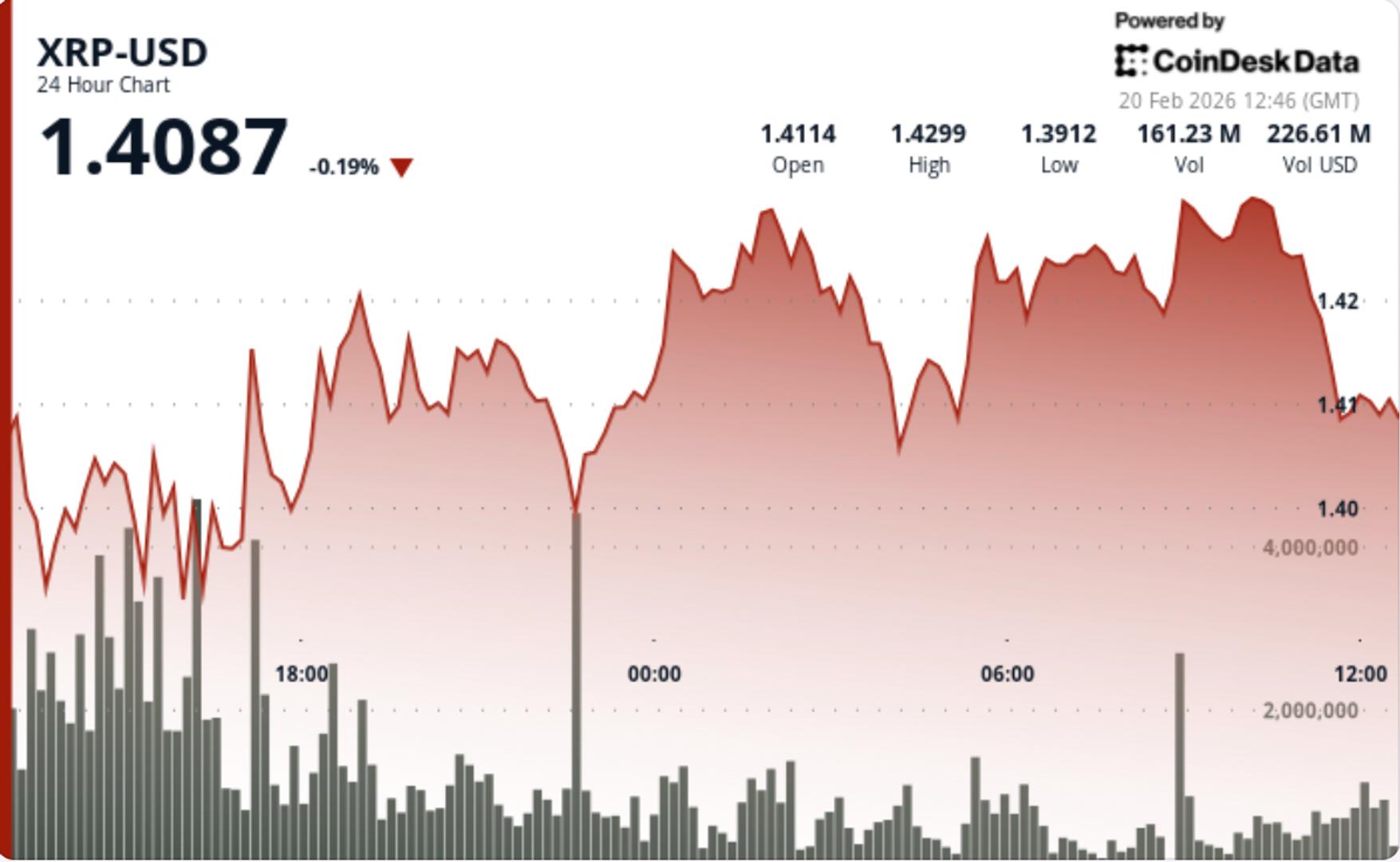
What next for XRP as volatility sinks to 2024 lows

What next for XRP as volatility sinks to 2024 lows

Markets Share Share this article
Copy linkX (Twitter)LinkedInFacebookEmail
What next for XRP as volatility sinks to 202
Share
Coindesk2026/02/20 21:08