Sen. Bernie Moreno described recent negotiations on a comprehensive crypto bill as "decently frustrating," as Democrats and Republicans face roadblocks over agency jurisdiction. The post “No Deal Is Better Than a Bad Deal”: Frustrated US Lawmakers Hit Crypto Regulation Roadblock appeared first on Crypto News Australia.Sen. Bernie Moreno described recent negotiations on a comprehensive crypto bill as "decently frustrating," as Democrats and Republicans face roadblocks over agency jurisdiction. The post “No Deal Is Better Than a Bad Deal”: Frustrated US Lawmakers Hit Crypto Regulation Roadblock appeared first on Crypto News Australia.

“No Deal Is Better Than a Bad Deal”: Frustrated US Lawmakers Hit Crypto Regulation Roadblock

  • US lawmakers face a “frustrating” roadblock in passing comprehensive crypto regulation due to disagreement over the details and the political split between the SEC and CFTC.
  • The core purpose of the bill is to clearly divide jurisdiction over crypto assets between the SEC (securities) and the CFTC (commodities).
  • Senator Bernie Moreno stated he would prefer “no deal… than a bad deal,” indicating a willingness to let the current gray area continue rather than pass poorly designed or damaging legislation.

US lawmakers are trying to pass a broad law to govern crypto in the U.S., but they are stuck on the details and the politics. 

At the Blockchain Association Policy Summit in Washington D.C., Sen. Bernie Moreno said negotiations on a crypto regulation bill have been “frustrating”. At least decently, he added.

The core problem is the split between the Securities and Exchange Commission (SEC) and the Commodities Futures Trading Commission (CFTC). Both want authority over parts of the crypto market, so this bill is supposed to draw a clear line and say which assets count as securities that fall under the SEC, which count as commodities that fall under the CFTC, and what rules exchanges and other intermediaries must follow to protect customers. 

Until there is a clear framework, everyone operates in a gray area and big firms are left guessing how regulators will treat them.

Read more: Western Union Plans “Stable Card” to Shield Users From Sky-High Inflation

No Deal Better Than a Bad Deal?

Moreno is saying negotiations have been “decently frustrating” because Republicans and Democrats still disagree on what exactly should be in the final bill and how far to go in reining in or enabling the industry. 

The House has already passed its own bill, the Digital Asset Market Clarity Act. The Senate has its own draft being worked on in the Banking Committee, where Sen. Bernie Moreno sits. 

That Senate draft would do two big things: divide jurisdiction between the SEC and CFTC, and create a category called “ancillary assets”, basically a way to say that some crypto tokens linked to a broader project are not securities, even if the original fundraising might have been.

Moreover, Moreno claimed he’d rather have no law at all than a law he thinks is poorly designed or damaging. 

What I don’t want to do is promulgate a bad bill just to say that we passed something. No deal is better than a bad deal.
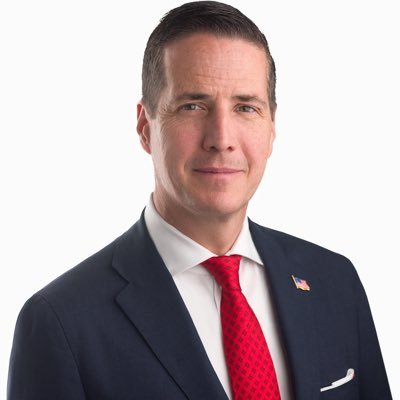
Bernie Moreno, US Senator.

So, the next steps we can expect are committees tweaking their drafts, holding hearings, marking up the bills, and then trying to get enough support in both chambers to pass a single, reconciled version. They are nowhere near finished, which is why he’s obviously impatient.

Related: Canada’s Tax Agency Flags Massive Crypto Non-Compliance but Brings Zero Charges Since 2020

The post “No Deal Is Better Than a Bad Deal”: Frustrated US Lawmakers Hit Crypto Regulation Roadblock appeared first on Crypto News Australia.

Market Opportunity
Bad Idea AI Logo
Bad Idea AI Price(BAD)
$0,00000000162
$0,00000000162$0,00000000162
0,00%
USD
Bad Idea AI (BAD) Live Price Chart
Disclaimer: The articles reposted on this site are sourced from public platforms and are provided for informational purposes only. They do not necessarily reflect the views of MEXC. All rights remain with the original authors. If you believe any content infringes on third-party rights, please contact service@support.mexc.com for removal. MEXC makes no guarantees regarding the accuracy, completeness, or timeliness of the content and is not responsible for any actions taken based on the information provided. The content does not constitute financial, legal, or other professional advice, nor should it be considered a recommendation or endorsement by MEXC.

You May Also Like

The Channel Factories We’ve Been Waiting For

The Channel Factories We’ve Been Waiting For

The post The Channel Factories We’ve Been Waiting For appeared on BitcoinEthereumNews.com. Visions of future technology are often prescient about the broad strokes while flubbing the details. The tablets in “2001: A Space Odyssey” do indeed look like iPads, but you never see the astronauts paying for subscriptions or wasting hours on Candy Crush.  Channel factories are one vision that arose early in the history of the Lightning Network to address some challenges that Lightning has faced from the beginning. Despite having grown to become Bitcoin’s most successful layer-2 scaling solution, with instant and low-fee payments, Lightning’s scale is limited by its reliance on payment channels. Although Lightning shifts most transactions off-chain, each payment channel still requires an on-chain transaction to open and (usually) another to close. As adoption grows, pressure on the blockchain grows with it. The need for a more scalable approach to managing channels is clear. Channel factories were supposed to meet this need, but where are they? In 2025, subnetworks are emerging that revive the impetus of channel factories with some new details that vastly increase their potential. They are natively interoperable with Lightning and achieve greater scale by allowing a group of participants to open a shared multisig UTXO and create multiple bilateral channels, which reduces the number of on-chain transactions and improves capital efficiency. Achieving greater scale by reducing complexity, Ark and Spark perform the same function as traditional channel factories with new designs and additional capabilities based on shared UTXOs.  Channel Factories 101 Channel factories have been around since the inception of Lightning. A factory is a multiparty contract where multiple users (not just two, as in a Dryja-Poon channel) cooperatively lock funds in a single multisig UTXO. They can open, close and update channels off-chain without updating the blockchain for each operation. Only when participants leave or the factory dissolves is an on-chain transaction…
Share
BitcoinEthereumNews2025/09/18 00:09
USDC Treasury mints 250 million new USDC on Solana

USDC Treasury mints 250 million new USDC on Solana

PANews reported on September 17 that according to Whale Alert , at 23:48 Beijing time, USDC Treasury minted 250 million new USDC (approximately US$250 million) on the Solana blockchain .
Share
PANews2025/09/17 23:51
US S&P Global Manufacturing PMI declines to 51.8, Services PMI falls to 52.9 in December

US S&P Global Manufacturing PMI declines to 51.8, Services PMI falls to 52.9 in December

The post US S&P Global Manufacturing PMI declines to 51.8, Services PMI falls to 52.9 in December appeared on BitcoinEthereumNews.com. The business activity in
Share
BitcoinEthereumNews2025/12/16 23:24