Grayscale Research has referred to Chainlink as the foundational infrastructure layer for the growing tokenized real-world asset (RWA) sector.Grayscale Research has referred to Chainlink as the foundational infrastructure layer for the growing tokenized real-world asset (RWA) sector.

Grayscale Calls Chainlink the ‘Critical Connective Tissue’ for Tokenized Finance in New Report

Grayscale Research has referred to Chainlink as the foundational infrastructure layer for the growing tokenized real-world asset (RWA) sector in a newly published report titled The LINK Between Worlds as the “critical connective tissue” bridging cryptocurrency and traditional finance.

The report comes two months after Grayscale filed with the SEC in September to convert its existing $29 million Grayscale Chainlink Trust into a spot exchange-traded fund (ETF) under the ticker GLNK on NYSE Arca. If approved, the product would be the first U.S.-listed ETF offering direct exposure to LINK with staking rewards.

As of November 23, 2025, LINK is currently trading at $12.05 with an $8.74 billion market capitalization, making it the highest-cap cryptocurrency that is neither a layer-1 blockchain nor a stablecoin.

Grayscale estimates the on-chain tokenized RWA market increased from about $5 billion at the start of 2023 to a range of $33 billion and $35 billion at the end of 2025. Despite the fast growth, the segment still accounts for just 0.01% of the global fixed-income and equity markets. 

The company cites Standard Chartered predictions that the sector could reach $2 trillion by 2028 and as much as $30 trillion by 2034, excluding stablecoins.

The report states Chainlink’s fast-changing technology improvements, including its oracle network, the Cross-Chain Interoperability Protocol (CCIP), the Automated Compliance Engine (ACE), and the recently launched Chainlink Runtime Environment (CRE), as their unique inventions ready to solve the core technical and regulatory challenges that are facing tokenized assets.

In the report, several institutional milestones that have been reached were mentioned. Some include the first-of-its-kind cross-chain delivery-versus-payment transaction in June involving JPMorgan’s Kinexys and Ondo Finance that settled tokenized United States Treasuries against fiat without off-chain movement, the November on-chain publication of FTSE Russell and S&P Global indices representing $18 trillion in benchmarked assets, and an August collaboration with the United States Department of Commerce to bring official GDP and PCE data on-chain.

Others include the 2025 partnerships with Japan’s SBI Group, with over $78 billion in assets under management; ANZ; China AMC; Fidelity International; Intercontinental Exchange; Mastercard;   and Saudi Awwal Bank. 

Tokenized United States Treasuries and money market funds have reached more than $7.4 billion in outstanding value, up 80% year-to-date.

Grayscale also notes that Chainlink developer activity has increased by 2.3× year-over-year, surpassing most top protocols, while the network now supports more than 2,500 live integrations.

This article was originally published as Grayscale Calls Chainlink the ‘Critical Connective Tissue’ for Tokenized Finance in New Report on Crypto Breaking News – your trusted source for crypto news, Bitcoin news, and blockchain updates.

Market Opportunity
Solayer Logo
Solayer Price(LAYER)
$0.0846
$0.0846$0.0846
-1.19%
USD
Solayer (LAYER) Live Price Chart
Disclaimer: The articles reposted on this site are sourced from public platforms and are provided for informational purposes only. They do not necessarily reflect the views of MEXC. All rights remain with the original authors. If you believe any content infringes on third-party rights, please contact service@support.mexc.com for removal. MEXC makes no guarantees regarding the accuracy, completeness, or timeliness of the content and is not responsible for any actions taken based on the information provided. The content does not constitute financial, legal, or other professional advice, nor should it be considered a recommendation or endorsement by MEXC.

You May Also Like

Cashing In On University Patents Means Giving Up On Our Innovation Future
Cashing In On University Patents Means Giving Up On Our Innovation Future

The post Cashing In On University Patents Means Giving Up On Our Innovation Future appeared on BitcoinEthereumNews.com. “It’s a raid on American innovation that would deliver pennies to the Treasury while kneecapping the very engine of our economic and medical progress,” writes Pipes. Getty Images Washington is addicted to taxing success. Now, Commerce Secretary Howard Lutnick is floating a plan to skim half the patent earnings from inventions developed at universities with federal funding. It’s being sold as a way to shore up programs like Social Security. In reality, it’s a raid on American innovation that would deliver pennies to the Treasury while kneecapping the very engine of our economic and medical progress. Yes, taxpayer dollars support early-stage research. But the real payoff comes later—in the jobs created, cures discovered, and industries launched when universities and private industry turn those discoveries into real products. By comparison, the sums at stake in patent licensing are trivial. Universities collectively earn only about $3.6 billion annually in patent income—less than the federal government spends on Social Security in a single day. Even confiscating half would barely register against a $6 trillion federal budget. And yet the damage from such a policy would be anything but trivial. The true return on taxpayer investment isn’t in licensing checks sent to Washington, but in the downstream economic activity that federally supported research unleashes. Thanks to the bipartisan Bayh-Dole Act of 1980, universities and private industry have powerful incentives to translate early-stage discoveries into real-world products. Before Bayh-Dole, the government hoarded patents from federally funded research, and fewer than 5% were ever licensed. Once universities could own and license their own inventions, innovation exploded. The result has been one of the best returns on investment in government history. Since 1996, university research has added nearly $2 trillion to U.S. industrial output, supported 6.5 million jobs, and launched more than 19,000 startups. Those companies pay…
Share
BitcoinEthereumNews2025/09/18 03:26
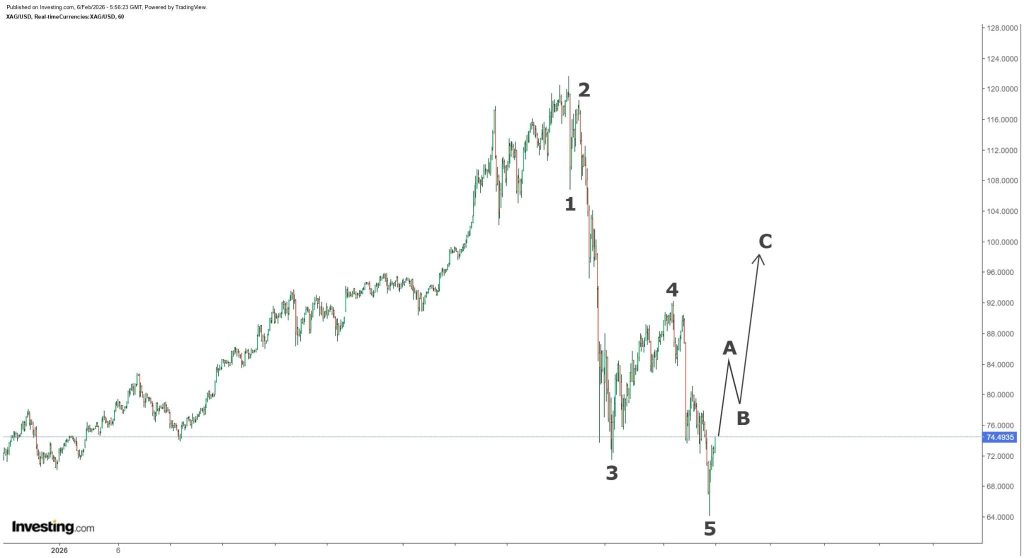
Silver Price Crash Is Over “For Real This Time,” Analyst Predicts a Surge Back Above $90

Silver Price Crash Is Over “For Real This Time,” Analyst Predicts a Surge Back Above $90

Silver has been taking a beating lately, and the Silver price hasn’t exactly been acting like a safe haven. After running up into the highs, the whole move reversed
Share
Captainaltcoin2026/02/07 03:15
Citi Caps Year-End at $4,300, But ETF outflows Challenge Outlook

Citi Caps Year-End at $4,300, But ETF outflows Challenge Outlook

The post Citi Caps Year-End at $4,300, But ETF outflows Challenge Outlook appeared on BitcoinEthereumNews.com. Ethereum Price Prediction: Citi Caps Year-End at $4,300, But ETF outflows Challenge Outlook Disclaimer: The information found on NewsBTC is for educational purposes only. It does not represent the opinions of NewsBTC on whether to buy, sell or hold any investments and naturally investing carries risks. You are advised to conduct your own research before making any investment decisions. Use information provided on this website entirely at your own risk. Related News © 2025 NewsBTC. All Rights Reserved. This website uses cookies. By continuing to use this website you are giving consent to cookies being used. Visit our Privacy Center or Cookie Policy. I Agree Source: https://www.newsbtc.com/news/ethereum/ethereum-price-prediction-citi-caps-year-end-at-4300-but-etf-outflows-challenge-outlook/
Share
BitcoinEthereumNews2025/09/18 14:30