Quick Facts: ➡️ Bitcoin’s thesis is shifting from pure price action to real scalability and DeFi utility, with Layer-2 infrastructure taking center stage. ➡️ Bitcoin Hyper will use ZK rollups, an SVM execution layer, and a canonical $BTC bridge to deliver fast, low-fee, Bitcoin-secured DeFi and dApps. ➡️ As expected, the $HYPER presale just crossed […]Quick Facts: ➡️ Bitcoin’s thesis is shifting from pure price action to real scalability and DeFi utility, with Layer-2 infrastructure taking center stage. ➡️ Bitcoin Hyper will use ZK rollups, an SVM execution layer, and a canonical $BTC bridge to deliver fast, low-fee, Bitcoin-secured DeFi and dApps. ➡️ As expected, the $HYPER presale just crossed […]

Bitcoin Hyper Presale Hits $28M: Next Crypto To Explode?

2025/11/19 22:41
5 min read

Quick Facts:

  • ➡ Bitcoin’s thesis is shifting from pure price action to real scalability and DeFi utility, with Layer-2 infrastructure taking center stage.
  • ➡ Bitcoin Hyper will use ZK rollups, an SVM execution layer, and a canonical $BTC bridge to deliver fast, low-fee, Bitcoin-secured DeFi and dApps.
  • ➡ As expected, the $HYPER presale just crossed the $28M milestone, with staking rewards around 41% p.a. for early investors.

Volatility continues to take a toll on the Bitcoin price, which is still down at around $91.3K. That’s a steep decline after reaching an ATH of $126,198K just over a month ago.

Yet analysts continue to talk about six-digit targets and even 200K-plus possibilities for the next cycle. Institutions are still accumulating, ETFs keep attracting inflows, and the broader market looks more like a long build-up than a brief spike.

At the same time, the market has become selective.

  • Liquidity is no longer chasing every new meme coin.
  • Capital is shifting toward infrastructure that delivers real throughput, lower fees, and practical use cases.

Ethereum’s Layer-2s pushed its combined capacity into hundreds of transactions per second and opened the door to a new wave of DeFi activity. Bitcoin has not had its equivalent breakout yet, which is where the current opening sits.

More importantly, Bitcoin still handles single-digit transactions per second – at max, just seven – with fees rising whenever activity picks up.
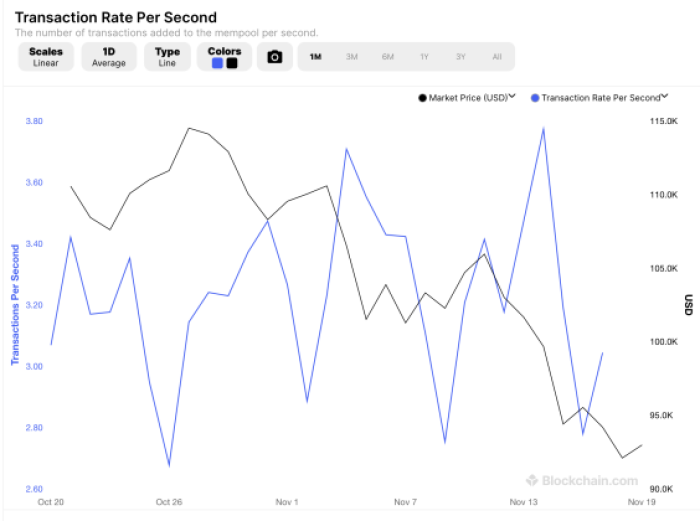
Line chart showing Bitcoin’s transaction rate per second over one month.

That works for a digital gold role, but not for DeFi, gaming, real-world assets, or simple everyday transactions.

Bitcoin Hyper ($HYPER) Aims to Fill That Gap

Bitcoin Hyper ($HYPER) is set to be a Bitcoin Layer-2 built that integrates the Solana Virtual Machine, and uses zero-knowledge (ZK) rollups and a canonical bridge that moves $BTC into a high-speed environment and settles back to Bitcoin.

The project’s native token presale has already crossed $28M. Currently priced at $0.013295, staking rewards are currently marketed at 41% APY for early buyers

Whale entries – with one investor buying over half a million dollars in a single transaction – and rising participation have led many traders to ask whether Bitcoin Hyper could be the next crypto to explode.

The hype is well-founded.

  • Bitcoin Hyper keeps Bitcoin as the security and settlement layer while shifting execution and programmability to Layer-2.
  • The bridge locks $BTC on Layer-1 and creates a one-to-one representation on Hyper’s chain.
  • You can then trade, lend, or deploy capital at speeds similar to Solana, with ZK proofs and regular commitments anchoring everything to Bitcoin.

By integrating the Solana Virtual Machine, Bitcoin Hyper brings an existing, high-performance developer stack straight into the Bitcoin world. Rust developers and Solana teams can port their dApps with minimal adjustments.

📖 Discover more about this Layer-2 project in our Bitcoin Hyper review.

That helps accelerate the build-out of lending markets, DEXs, NFT platforms, payment systems, and other applications that usually drift to chains with higher throughput.

This setup aligns well with current market expectations.

A Bitcoin Layer-2 that turns passive $BTC into active collateral without giving up base-layer security fits that shift. In addition, the $HYPER smart contracts and bridge code have gone through audits by Coinsult and SpyWolf with no critical issues reported.

The roadmap outlines a measured approach through testnet, mainnet, and DAO governance.

For anyone tracking Bitcoin’s long-standing congestion and fee limitations, Bitcoin Hyper is a direct bet that the next wave of $BTC demand will focus on native DeFi and usable applications.

📖 Read our guide to buying Bitcoin Hyper for step-by-step instructions.

Why Now is the Right Time to Secure $HYPER

Bitcoin Hyper’s current presale figures have reached the $28M milestone, supported by visible whale purchases and steady retail growth. Staking has been a major driver.

Early participants can lock $HYPER immediately, with a dynamic APY of 41% currently. This makes the token more than a speculative asset. It becomes a way to earn yield while waiting for network milestones.

With so much $BTC sitting idle and looking for yield without leaving the Bitcoin story, this is a clear value proposition.

Our Bitcoin Hyper price prediction forecasts a potential high of around $0.20 by the end of next year. From the current price of $0.013295, that projection suggests strong upside, although it depends on a successful launch and market conditions.

With $28M already raised, completed audits, and staking live, the project appears more mature than many early-stage launches. For traders and builders looking at the Bitcoin infrastructure niche, $HYPER has moved from a side note to a serious contender.

For investors who find the value propositions appealing, now is the right time to join. The next price surge is just a few hours away.

🚀 Join the $HYPER presale before the next price surge.

Disclaimer: This article is informational only, not financial advice. Crypto is volatile and risky; always do independent research and never invest money you can’t lose.

Authored by Bogdan Patru for Bitcoinist – https://bitcoinist.com/next-crypto-to-explode-bitcoin-hyper-presale-reaches-28m

Market Opportunity
Hyperlane Logo
Hyperlane Price(HYPER)
$0.10084
$0.10084$0.10084
-0.04%
USD
Hyperlane (HYPER) Live Price Chart
Disclaimer: The articles reposted on this site are sourced from public platforms and are provided for informational purposes only. They do not necessarily reflect the views of MEXC. All rights remain with the original authors. If you believe any content infringes on third-party rights, please contact service@support.mexc.com for removal. MEXC makes no guarantees regarding the accuracy, completeness, or timeliness of the content and is not responsible for any actions taken based on the information provided. The content does not constitute financial, legal, or other professional advice, nor should it be considered a recommendation or endorsement by MEXC.

You May Also Like

Cashing In On University Patents Means Giving Up On Our Innovation Future

Cashing In On University Patents Means Giving Up On Our Innovation Future

The post Cashing In On University Patents Means Giving Up On Our Innovation Future appeared on BitcoinEthereumNews.com. “It’s a raid on American innovation that would deliver pennies to the Treasury while kneecapping the very engine of our economic and medical progress,” writes Pipes. Getty Images Washington is addicted to taxing success. Now, Commerce Secretary Howard Lutnick is floating a plan to skim half the patent earnings from inventions developed at universities with federal funding. It’s being sold as a way to shore up programs like Social Security. In reality, it’s a raid on American innovation that would deliver pennies to the Treasury while kneecapping the very engine of our economic and medical progress. Yes, taxpayer dollars support early-stage research. But the real payoff comes later—in the jobs created, cures discovered, and industries launched when universities and private industry turn those discoveries into real products. By comparison, the sums at stake in patent licensing are trivial. Universities collectively earn only about $3.6 billion annually in patent income—less than the federal government spends on Social Security in a single day. Even confiscating half would barely register against a $6 trillion federal budget. And yet the damage from such a policy would be anything but trivial. The true return on taxpayer investment isn’t in licensing checks sent to Washington, but in the downstream economic activity that federally supported research unleashes. Thanks to the bipartisan Bayh-Dole Act of 1980, universities and private industry have powerful incentives to translate early-stage discoveries into real-world products. Before Bayh-Dole, the government hoarded patents from federally funded research, and fewer than 5% were ever licensed. Once universities could own and license their own inventions, innovation exploded. The result has been one of the best returns on investment in government history. Since 1996, university research has added nearly $2 trillion to U.S. industrial output, supported 6.5 million jobs, and launched more than 19,000 startups. Those companies pay…
Share
BitcoinEthereumNews2025/09/18 03:26
China Blocks Nvidia’s RTX Pro 6000D as Local Chips Rise
China Blocks Nvidia’s RTX Pro 6000D as Local Chips Rise

The post China Blocks Nvidia’s RTX Pro 6000D as Local Chips Rise appeared on BitcoinEthereumNews.com. China Blocks Nvidia’s RTX Pro 6000D as Local Chips Rise China’s internet regulator has ordered the country’s biggest technology firms, including Alibaba and ByteDance, to stop purchasing Nvidia’s RTX Pro 6000D GPUs. According to the Financial Times, the move shuts down the last major channel for mass supplies of American chips to the Chinese market. Why Beijing Halted Nvidia Purchases Chinese companies had planned to buy tens of thousands of RTX Pro 6000D accelerators and had already begun testing them in servers. But regulators intervened, halting the purchases and signaling stricter controls than earlier measures placed on Nvidia’s H20 chip. Image: Nvidia An audit compared Huawei and Cambricon processors, along with chips developed by Alibaba and Baidu, against Nvidia’s export-approved products. Regulators concluded that Chinese chips had reached performance levels comparable to the restricted U.S. models. This assessment pushed authorities to advise firms to rely more heavily on domestic processors, further tightening Nvidia’s already limited position in China. China’s Drive Toward Tech Independence The decision highlights Beijing’s focus on import substitution — developing self-sufficient chip production to reduce reliance on U.S. supplies. “The signal is now clear: all attention is focused on building a domestic ecosystem,” said a representative of a leading Chinese tech company. Nvidia had unveiled the RTX Pro 6000D in July 2025 during CEO Jensen Huang’s visit to Beijing, in an attempt to keep a foothold in China after Washington restricted exports of its most advanced chips. But momentum is shifting. Industry sources told the Financial Times that Chinese manufacturers plan to triple AI chip production next year to meet growing demand. They believe “domestic supply will now be sufficient without Nvidia.” What It Means for the Future With Huawei, Cambricon, Alibaba, and Baidu stepping up, China is positioning itself for long-term technological independence. Nvidia, meanwhile, faces…
Share
BitcoinEthereumNews2025/09/18 01:37
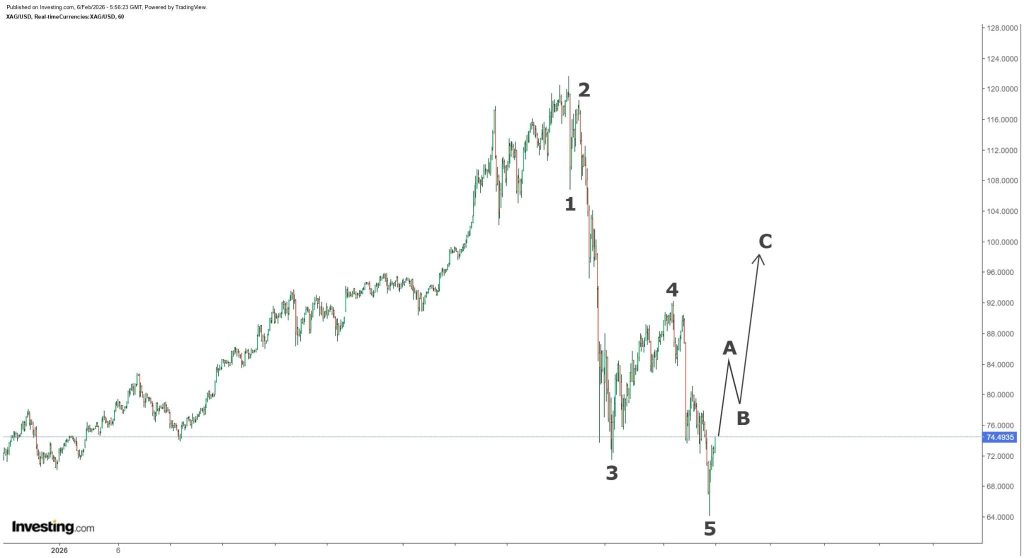
Silver Price Crash Is Over “For Real This Time,” Analyst Predicts a Surge Back Above $90

Silver Price Crash Is Over “For Real This Time,” Analyst Predicts a Surge Back Above $90

Silver has been taking a beating lately, and the Silver price hasn’t exactly been acting like a safe haven. After running up into the highs, the whole move reversed
Share
Captainaltcoin2026/02/07 03:15