The Ethereum Foundation is charting the next phase of Ethereum, proposing an Interoperability Layer to enable one-wallet access across all L2s. Layer-2 rollups have boosted Ethereum’s throughput, but they have simultaneously created fragmentation across networks. The Ethereum Foundation has revealed a technical roadmap that will make Layer-2 (L2) rollups feel like a single, seamless Ethereum [...]]]>The Ethereum Foundation is charting the next phase of Ethereum, proposing an Interoperability Layer to enable one-wallet access across all L2s. Layer-2 rollups have boosted Ethereum’s throughput, but they have simultaneously created fragmentation across networks. The Ethereum Foundation has revealed a technical roadmap that will make Layer-2 (L2) rollups feel like a single, seamless Ethereum [...]]]>

Ethereum Foundation Details New Interop Layer to Make L2 Networks Operate as One

  • The Ethereum Foundation is charting the next phase of Ethereum, proposing an Interoperability Layer to enable one-wallet access across all L2s.
  • Layer-2 rollups have boosted Ethereum’s throughput, but they have simultaneously created fragmentation across networks.

The Ethereum Foundation has revealed a technical roadmap that will make Layer-2 (L2) rollups feel like a single, seamless Ethereum chain. The report, posted yesterday by Yoav Weiss and the Account & Chain Abstraction Team, coincided with the Devconnect conference in Argentina, where the event’s opening featured an address by Ethereum co-founder Vitalik Buterin.

The problem the foundation aims to address is that rollups have fragmented assets and user experience. Users currently manage tokens across chains such as Arbitrum, Base, Scroll, or Linea, relying on bridges, relayers, and manual steps to move and interact with their assets.

The idea was first introduced in August through a blog post outlining a focus on three strategic initiatives: scaling L1, scaling blobs, and improving user experience. To achieve this, the work is organized into three streams: Initialisation, Acceleration, and Finalisation.

The Ethereum Interoperability Layer (EIL) is spearheaded by the Chain and Account Abstraction team, the creators of the ERC-4337 protocol, and is built on the ERC-4337 standard.

The team framed their initiative with a thought-provoking question:

To illustrate the concept, the team explained that users would simply open their wallet, choose an asset and an address, and hit Send. Behind the scenes, the wallet would determine which chain the transaction is on and handle delivery automatically.

Whether minting an NFT, moving tokens, or trading assets, it would no longer matter which rollup the user or counterparty is on, or where the dApp is deployed. As new networks join the ecosystem, the wallet would continue to work with them, without requiring custom integrations or relying on off-chain operators.

The team also made an analogy to highlight its impact of EIL: “In a sense, EIL is to Ethereum what HTTP was to the early Internet.”

Ethereum UX Upgrade

EIL was designed according to the Trustless Manifesto that emphasizes several core principles: No critical secrets, No indispensable intermediaries, and No unverifiable outcomes.

Transactions occur directly between users across all chains, and liquidity providers operate in a trustless manner, supplying capital without ever engaging with users or accessing their transaction data.

They explain that instead of thinking, “I trust a bridge operator to move my funds,” users can rely on verifiable rules executed by their wallet and smart contracts.

Early crypto relied heavily on centralized exchanges (CEXs), exposing users to counterparty risk. With Ethereum, decentralized exchanges (DEXs) emerged, enabling users to transact trustlessly without relying on custodians. EIL seeks to extend this trustless model to cross-L2 interoperability.

Today, cross-L2 solutions still mirror a CEX-like setup, depending on bridge operators, relayers, solvers, and opaque off-chain processes. EIL removes these intermediaries by executing all logic on-chain via the user’s wallet, making transfers, swaps, and minting fully trustless.

From the user’s viewpoint, the experience is simple: “Send, mint, swap, I just do what I want.”

A suite of standards will be used to provide a consistent set of design principles that guide interactions. Key components include interoperable addresses (ERC-7828 and ERC-7930), which enable consistent identification of accounts across different chains, asset consolidation (ERC-7811) to streamline the management of tokens and other digital assets, and multi-calls (ERC-5792).

The standards also provide a neutral message-passing infrastructure, which ensures reliable communication between chains and protocols. This includes an intent standard (ERC-7683) that enables transactions and actions to be expressed in a structured, verifiable way, and (ERC-7786) that standardizes how messages are sent and received across different systems.

]]>
Market Opportunity
Solayer Logo
Solayer Price(LAYER)
$0.08438
$0.08438$0.08438
-1.44%
USD
Solayer (LAYER) Live Price Chart
Disclaimer: The articles reposted on this site are sourced from public platforms and are provided for informational purposes only. They do not necessarily reflect the views of MEXC. All rights remain with the original authors. If you believe any content infringes on third-party rights, please contact service@support.mexc.com for removal. MEXC makes no guarantees regarding the accuracy, completeness, or timeliness of the content and is not responsible for any actions taken based on the information provided. The content does not constitute financial, legal, or other professional advice, nor should it be considered a recommendation or endorsement by MEXC.

You May Also Like

Cashing In On University Patents Means Giving Up On Our Innovation Future

Cashing In On University Patents Means Giving Up On Our Innovation Future

The post Cashing In On University Patents Means Giving Up On Our Innovation Future appeared on BitcoinEthereumNews.com. “It’s a raid on American innovation that would deliver pennies to the Treasury while kneecapping the very engine of our economic and medical progress,” writes Pipes. Getty Images Washington is addicted to taxing success. Now, Commerce Secretary Howard Lutnick is floating a plan to skim half the patent earnings from inventions developed at universities with federal funding. It’s being sold as a way to shore up programs like Social Security. In reality, it’s a raid on American innovation that would deliver pennies to the Treasury while kneecapping the very engine of our economic and medical progress. Yes, taxpayer dollars support early-stage research. But the real payoff comes later—in the jobs created, cures discovered, and industries launched when universities and private industry turn those discoveries into real products. By comparison, the sums at stake in patent licensing are trivial. Universities collectively earn only about $3.6 billion annually in patent income—less than the federal government spends on Social Security in a single day. Even confiscating half would barely register against a $6 trillion federal budget. And yet the damage from such a policy would be anything but trivial. The true return on taxpayer investment isn’t in licensing checks sent to Washington, but in the downstream economic activity that federally supported research unleashes. Thanks to the bipartisan Bayh-Dole Act of 1980, universities and private industry have powerful incentives to translate early-stage discoveries into real-world products. Before Bayh-Dole, the government hoarded patents from federally funded research, and fewer than 5% were ever licensed. Once universities could own and license their own inventions, innovation exploded. The result has been one of the best returns on investment in government history. Since 1996, university research has added nearly $2 trillion to U.S. industrial output, supported 6.5 million jobs, and launched more than 19,000 startups. Those companies pay…
Share
BitcoinEthereumNews2025/09/18 03:26
China Blocks Nvidia’s RTX Pro 6000D as Local Chips Rise
China Blocks Nvidia’s RTX Pro 6000D as Local Chips Rise

The post China Blocks Nvidia’s RTX Pro 6000D as Local Chips Rise appeared on BitcoinEthereumNews.com. China Blocks Nvidia’s RTX Pro 6000D as Local Chips Rise China’s internet regulator has ordered the country’s biggest technology firms, including Alibaba and ByteDance, to stop purchasing Nvidia’s RTX Pro 6000D GPUs. According to the Financial Times, the move shuts down the last major channel for mass supplies of American chips to the Chinese market. Why Beijing Halted Nvidia Purchases Chinese companies had planned to buy tens of thousands of RTX Pro 6000D accelerators and had already begun testing them in servers. But regulators intervened, halting the purchases and signaling stricter controls than earlier measures placed on Nvidia’s H20 chip. Image: Nvidia An audit compared Huawei and Cambricon processors, along with chips developed by Alibaba and Baidu, against Nvidia’s export-approved products. Regulators concluded that Chinese chips had reached performance levels comparable to the restricted U.S. models. This assessment pushed authorities to advise firms to rely more heavily on domestic processors, further tightening Nvidia’s already limited position in China. China’s Drive Toward Tech Independence The decision highlights Beijing’s focus on import substitution — developing self-sufficient chip production to reduce reliance on U.S. supplies. “The signal is now clear: all attention is focused on building a domestic ecosystem,” said a representative of a leading Chinese tech company. Nvidia had unveiled the RTX Pro 6000D in July 2025 during CEO Jensen Huang’s visit to Beijing, in an attempt to keep a foothold in China after Washington restricted exports of its most advanced chips. But momentum is shifting. Industry sources told the Financial Times that Chinese manufacturers plan to triple AI chip production next year to meet growing demand. They believe “domestic supply will now be sufficient without Nvidia.” What It Means for the Future With Huawei, Cambricon, Alibaba, and Baidu stepping up, China is positioning itself for long-term technological independence. Nvidia, meanwhile, faces…
Share
BitcoinEthereumNews2025/09/18 01:37
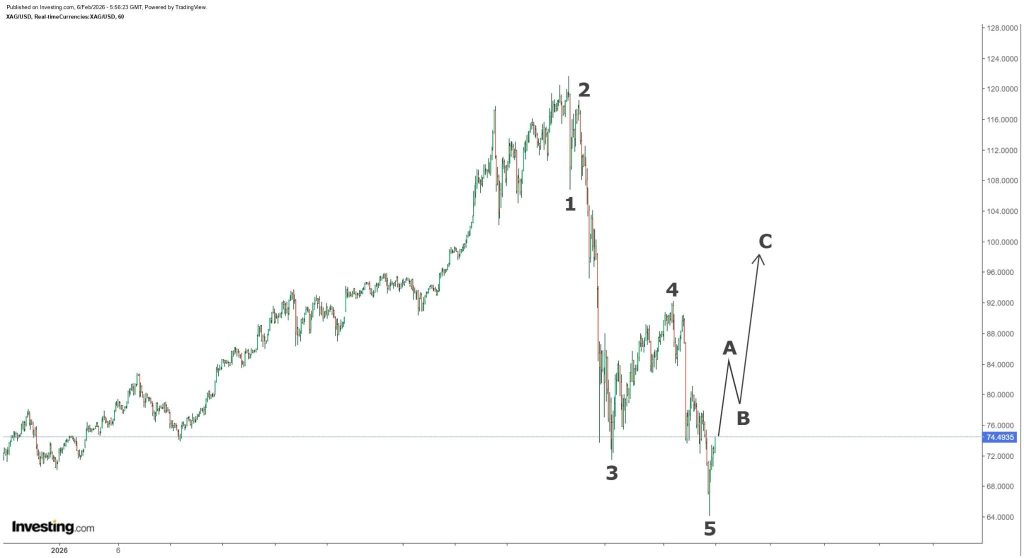
Silver Price Crash Is Over “For Real This Time,” Analyst Predicts a Surge Back Above $90

Silver Price Crash Is Over “For Real This Time,” Analyst Predicts a Surge Back Above $90

Silver has been taking a beating lately, and the Silver price hasn’t exactly been acting like a safe haven. After running up into the highs, the whole move reversed
Share
Captainaltcoin2026/02/07 03:15