The post The Inexorable Growth In Air Travel And It’s Implication appeared on BitcoinEthereumNews.com. PARIS, FRANCE – JUNE 27: A general view of the Eiffel Tower at dusk as the Olympic Rings are displayed during previews ahead of the Paris 2024 Olympic Games on June 27, 2024 in Paris, France. (Photo by Ryan Pierse/Getty Images) Getty Images One of the foundational facts of commercial air travel is that the number of people flying globally is closely linked to world Gross Domestic Product. That is as the economy continues to grow over time, so does the demand for air transportation and by extension, the need for new aircraft to fulfill that demand as well as to replace older aircraft that are economically obsolete. Dips in world GDP, occasioned by recessions (dot-com bubble, fiscal crisis), pandemics (SARS, COVID) or wars (Ukraine, 9/11) can disrupt the monotonic increase of air travel demand, but eventually the curve reverts to the mean. In this case, that mean is roughly 4 per cent year over year, and world Revenue Passenger Miles (RPM’s) – a paying passenger travelling a mile – have recently returned to pre-pandemic levels. Most of those RPM’s are utilized for leisure travel which is estimated to make up as much as 85% or more of miles flown. Business passengers are only around 12 to 15% of overall travel but they are vastly more profitable, making up as much as 75% of profits for a given flight. This is because business travelers tend to purchase premium seats, often make last minute changes which incur fees or higher prices and spend more on amenities. A more recent development has been the blending of business and leisure travel to create a category called “bleisure.” While adding a few days at a destination that was the focus of a business event for personal reasons has always existed, the category has expanded… The post The Inexorable Growth In Air Travel And It’s Implication appeared on BitcoinEthereumNews.com. PARIS, FRANCE – JUNE 27: A general view of the Eiffel Tower at dusk as the Olympic Rings are displayed during previews ahead of the Paris 2024 Olympic Games on June 27, 2024 in Paris, France. (Photo by Ryan Pierse/Getty Images) Getty Images One of the foundational facts of commercial air travel is that the number of people flying globally is closely linked to world Gross Domestic Product. That is as the economy continues to grow over time, so does the demand for air transportation and by extension, the need for new aircraft to fulfill that demand as well as to replace older aircraft that are economically obsolete. Dips in world GDP, occasioned by recessions (dot-com bubble, fiscal crisis), pandemics (SARS, COVID) or wars (Ukraine, 9/11) can disrupt the monotonic increase of air travel demand, but eventually the curve reverts to the mean. In this case, that mean is roughly 4 per cent year over year, and world Revenue Passenger Miles (RPM’s) – a paying passenger travelling a mile – have recently returned to pre-pandemic levels. Most of those RPM’s are utilized for leisure travel which is estimated to make up as much as 85% or more of miles flown. Business passengers are only around 12 to 15% of overall travel but they are vastly more profitable, making up as much as 75% of profits for a given flight. This is because business travelers tend to purchase premium seats, often make last minute changes which incur fees or higher prices and spend more on amenities. A more recent development has been the blending of business and leisure travel to create a category called “bleisure.” While adding a few days at a destination that was the focus of a business event for personal reasons has always existed, the category has expanded…

The Inexorable Growth In Air Travel And It’s Implication

PARIS, FRANCE – JUNE 27: A general view of the Eiffel Tower at dusk as the Olympic Rings are displayed during previews ahead of the Paris 2024 Olympic Games on June 27, 2024 in Paris, France. (Photo by Ryan Pierse/Getty Images)

Getty Images

One of the foundational facts of commercial air travel is that the number of people flying globally is closely linked to world Gross Domestic Product. That is as the economy continues to grow over time, so does the demand for air transportation and by extension, the need for new aircraft to fulfill that demand as well as to replace older aircraft that are economically obsolete.

Dips in world GDP, occasioned by recessions (dot-com bubble, fiscal crisis), pandemics (SARS, COVID) or wars (Ukraine, 9/11) can disrupt the monotonic increase of air travel demand, but eventually the curve reverts to the mean. In this case, that mean is roughly 4 per cent year over year, and world Revenue Passenger Miles (RPM’s) – a paying passenger travelling a mile – have recently returned to pre-pandemic levels.

Most of those RPM’s are utilized for leisure travel which is estimated to make up as much as 85% or more of miles flown. Business passengers are only around 12 to 15% of overall travel but they are vastly more profitable, making up as much as 75% of profits for a given flight. This is because business travelers tend to purchase premium seats, often make last minute changes which incur fees or higher prices and spend more on amenities.

A more recent development has been the blending of business and leisure travel to create a category called “bleisure.” While adding a few days at a destination that was the focus of a business event for personal reasons has always existed, the category has expanded as a result of the pandemic where remote work was normalized and schedules became more flexible.

The result has been for airlines to expand their offerings away from a three class system (First, Business, Economy) to more gradations such as First, Premium Economy, Economy Plus or Comfort Plus and Coach. This allowed airlines to match their service and price offerings to capture the willingness of the flying public to pay for something in between First Class and steerage.

People gathering at the Colosseum monument in Rome on April 7, 2023, prior to the Way of the Cross (Via Crucis) prayer service as part of celebrations of the Holy Week. (Photo by Andreas SOLARO / AFP) (Photo by ANDREAS SOLARO/AFP via Getty Images)

AFP via Getty Images

Another effect of the rebound in air travel has been the strain on popular destinations. Coming out of the pandemic, people pulled out their “bucket lists” and engaged in “revenge travel.” As a result iconic sites, such as the Coliseum, the Eiffel Tower or the Louvre drew record crowds to their host countries.

For the last 30 years, France has been the most popular tourist destination representing 8% of global tourism with over 100 million visitors. Spain, US, Italy and Turkey round out the top five destination countries. China which had been in the top five before the pandemic has dropped lower due to travel restrictions and reduced preference.

However, there are only so many “A list” sites to be visited, while the travel push continues to grow. A result of the ever increasing swell of tourists to a finite set of iconic destinations has been “overtourism.” To combat the crowding and destruction, many locations have instituted tourist caps, time entry reservations, fees, activity bans and restrictions on accommodations.

ATHENS, GREECE – JULY 20: Atop the Acropolis ancient hill with Parthenon temple during a heat wave on July 20, 2023 in Athens, Greece. The Acropolis of Athens and other archaeological sites in Greece announced reduced opening hours due to the heatwave conditions. (Photo by Milos Bicanski/Getty Images)

Getty Images

Mount Fuji has instituted a daily visitor cap as well as a hiking fee. Popular US National Parks such as Yosemite and Glacier use caps and reservation systems. The Acropolis uses timed entry permits as well as the restored Notre Dame in Paris. Florence has instituted a ban on short term rentals in its historic city center and Machu Pichu closed the site for a period due to concerns regarding deterioration from high foot traffic.

This problem is only going to become more severe as the 4% increase year over year funnels more visitors to the limited set of high profile locations. One reaction is to move to new sites (such as Croatia, Norway, India, Cambodia). Another is to shift away from the high summer season.

Traditional summer locations such as Cape Cod, the Hamptons or Jackson Hole have seen increases in visitors during shoulder seasons. The tremendous heat during the summer in Europe in 2025 has made visiting in fall much more attractive. Visitors are motivated by a less crowded, more authentic experience as well as concerns regarding the environment and sustainability.

Passion based travel – fueled by social media posts – has also prompted shifts away from the traditional sites and focused on more remote or less well known destinations and is often associated with special events or festivals.

Studies show that as income rises, a population begins to travel – for both business and leisure reasons. The good news is that commercial aircraft, which currently have a delivery backlog of seven years or more, will stay in high demand. The bad news is that the strain on passengers, airports and tourist destinations will not abate any time soon, if ever.

Source: https://www.forbes.com/sites/jerroldlundquist/2025/10/06/the-inexorable-growth-in-air-travel-and-its-implication/


Market Opportunity
TOWER Ecosystem Logo
TOWER Ecosystem Price(TOWER)
$0.0003018
$0.0003018$0.0003018
+0.06%
USD
TOWER Ecosystem (TOWER) Live Price Chart
Disclaimer: The articles reposted on this site are sourced from public platforms and are provided for informational purposes only. They do not necessarily reflect the views of MEXC. All rights remain with the original authors. If you believe any content infringes on third-party rights, please contact service@support.mexc.com for removal. MEXC makes no guarantees regarding the accuracy, completeness, or timeliness of the content and is not responsible for any actions taken based on the information provided. The content does not constitute financial, legal, or other professional advice, nor should it be considered a recommendation or endorsement by MEXC.

You May Also Like

Young Republicans were more proud to be American under Obama than under Trump: data analyst

Young Republicans were more proud to be American under Obama than under Trump: data analyst

CNN data analyst Harry Enten sorts through revealing polls and surveys of American attitudes, looking for shifts, and his latest finding is an indictment of President
Share
Alternet2026/02/10 22:18
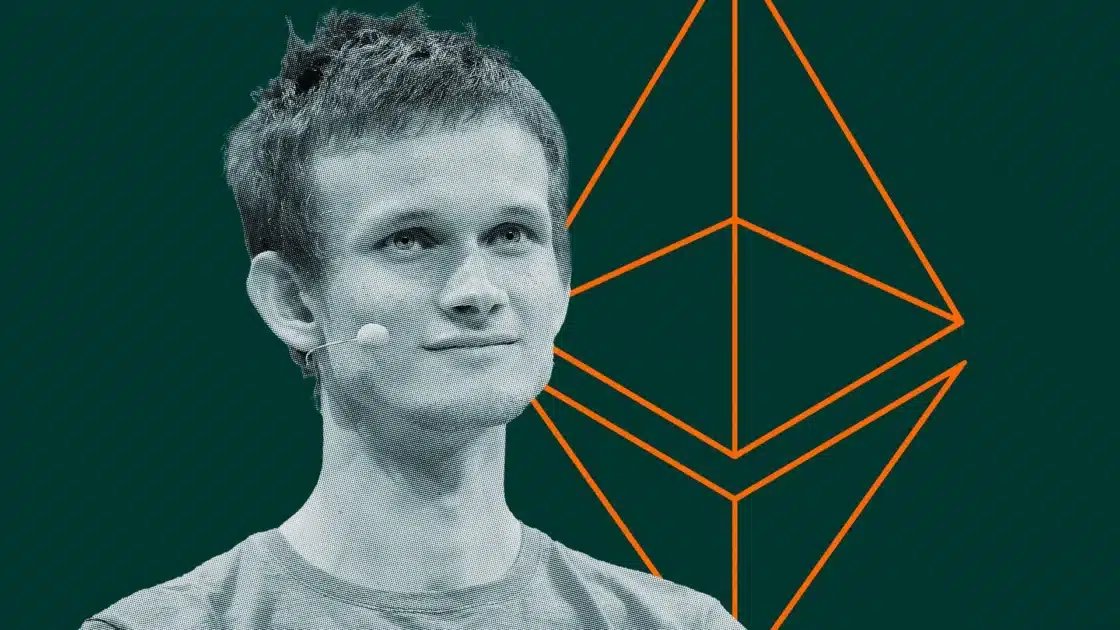
Vitalik Buterin Outlines Ethereum’s AI Framework, Pushes Back Against Solana’s Acceleration Thesis

Vitalik Buterin Outlines Ethereum’s AI Framework, Pushes Back Against Solana’s Acceleration Thesis

Ethereum co-founder Vitalik Buterin has reacted to Solana’s artificial general intelligence acceleration initiative. He did this through the establishment of his
Share
Thenewscrypto2026/02/10 18:40
Vitalik Buterin Reveals Ethereum’s Bold Plan to Stay Quantum-Secure and Simple!

Vitalik Buterin Reveals Ethereum’s Bold Plan to Stay Quantum-Secure and Simple!

Buterin unveils Ethereum’s strategy to tackle quantum security challenges ahead. Ethereum focuses on simplifying architecture while boosting security for users. Ethereum’s market stability grows as Buterin’s roadmap gains investor confidence. Ethereum founder Vitalik Buterin has unveiled his long-term vision for the blockchain, focusing on making Ethereum quantum-secure while maintaining its simplicity for users. Buterin presented his roadmap at the Japanese Developer Conference, and splits the future of Ethereum into three phases: short-term, mid-term, and long-term. Buterin’s most ambitious goal for Ethereum is to safeguard the blockchain against the threats posed by quantum computing.  The danger of such future developments is that the future may call into question the cryptographic security of most blockchain systems, and Ethereum will be able to remain ahead thanks to more sophisticated mathematical techniques to ensure the safety and integrity of its protocols. Buterin is committed to ensuring that Ethereum evolves in a way that not only meets today’s security challenges but also prepares for the unknowns of tomorrow. Also Read: Ethereum Giant The Ether Machine Takes Major Step Toward Going Public! However, in spite of such high ambitions, Buterin insisted that Ethereum also needed to simplify its architecture. An important aspect of this vision is to remove unnecessary complexity and make Ethereum more accessible and maintainable without losing its strong security capabilities. Security and simplicity form the core of Buterin’s strategy, as they guarantee that the users of Ethereum experience both security and smooth processes. Focus on Speed and Efficiency in the Short-Term In the short term, Buterin aims to enhance Ethereum’s transaction efficiency, a crucial step toward improving scalability and reducing transaction costs. These advantages are attributed to the fact that, within the mid-term, Ethereum is planning to enhance the speed of transactions in layer-2 networks. According to Butterin, this is part of Ethereum’s expansion, particularly because there is still more need to use blockchain technology to date. The other important aspect of Ethereum’s development is the layer-2 solutions. Buterin supports an approach in which the layer-2 networks are dependent on layer-1 to perform some essential tasks like data security, proof, and censorship resistance. This will enable the layer-2 systems of Ethereum to be concerned with verifying and sequencing transactions, which will improve the overall speed and efficiency of the network. Ethereum’s Market Stability Reflects Confidence in Long-Term Strategy Ethereum’s market performance has remained solid, with the cryptocurrency holding steady above $4,000. Currently priced at $4,492.15, Ethereum has experienced a slight 0.93% increase over the last 24 hours, while its trading volume surged by 8.72%, reaching $34.14 billion. These figures point to growing investor confidence in Ethereum’s long-term vision. The crypto community remains optimistic about Ethereum’s future, with many predicting the price could rise to $5,500 by mid-October. Buterin’s clear, forward-thinking strategy continues to build trust in Ethereum as one of the most secure and scalable blockchain platforms in the market. Also Read: Whales Dump 200 Million XRP in Just 2 Weeks – Is XRP’s Price on the Verge of Collapse? The post Vitalik Buterin Reveals Ethereum’s Bold Plan to Stay Quantum-Secure and Simple! appeared first on 36Crypto.
Share
Coinstats2025/09/18 01:22