

Axon and Rocket Lab rallied while chip stocks sank
SanDisk Corp. (SNDK) closed out the holiday-shortened week as the Nasdaq’s biggest loser, ending Thursday at $1,745 a share, down 26% for the week, according to Seeking Alpha.
Micron (MU), Western Digital (WDC), Seagate (STX) and Teradyne (TER) fell alongside it, each posting double-digit weekly losses in a sector that had led the market for most of 2026.
Axon Enterprise (AXON), Rocket Lab (RKLB) and Palantir (PLTR) moved in the opposite direction, each gaining more than 20%, and the split traces back to one research note that hit Wall Street on Wednesday.
The scale of the reversal only makes sense next to the run that preceded it. SanDisk had gained more than 760% year to date before this week’s slide, and the SOXX semiconductor ETF had added roughly 91% through the end of June, according to Google Finance data.
A rally that size leaves little room for disappointment, even when the underlying business stays healthy.
Related: BofA sees Delta, United entering a rare airline sweet spot
A Bank of America warning triggered the rout
The trigger arrived Wednesday, the first trading day of the third quarter. Bank of America’s proprietary Bubble Risk Indicator hit 0.91 for the semiconductor sector, a reading the bank treats as a sign of extreme frothiness, according to a Reuters report.
The Dow closed at a record high that same day, but the Nasdaq Composite slipped 0.66% to 26,040.03 as chipmakers absorbed the selling, according to CNBC.
Micron alone lost more than 10% of its value that session even though the stock remains up over 260% for the year, according to CNBC.
Bank of America sent a conflicting signal on SanDisk specifically. A day earlier, analyst Wamsi Mohan raised his price target to $2,500 from $2,100, arguing NAND pricing should hold firm through 2027, according to a Seeking Alpha report.
The bank’s own analyst stayed bullish on the business even as its strategists flagged the sector as stretched. A separate worry added pressure.
Samsung and SK Hynix are adding NAND and DRAM capacity that could soften pricing just as AI-related capital spending is expected to peak this year and taper afterward, according to a 24/7 WallSt report. That combination threatens the pricing power that has so far driven memory makers’ outsized margins in 2026.
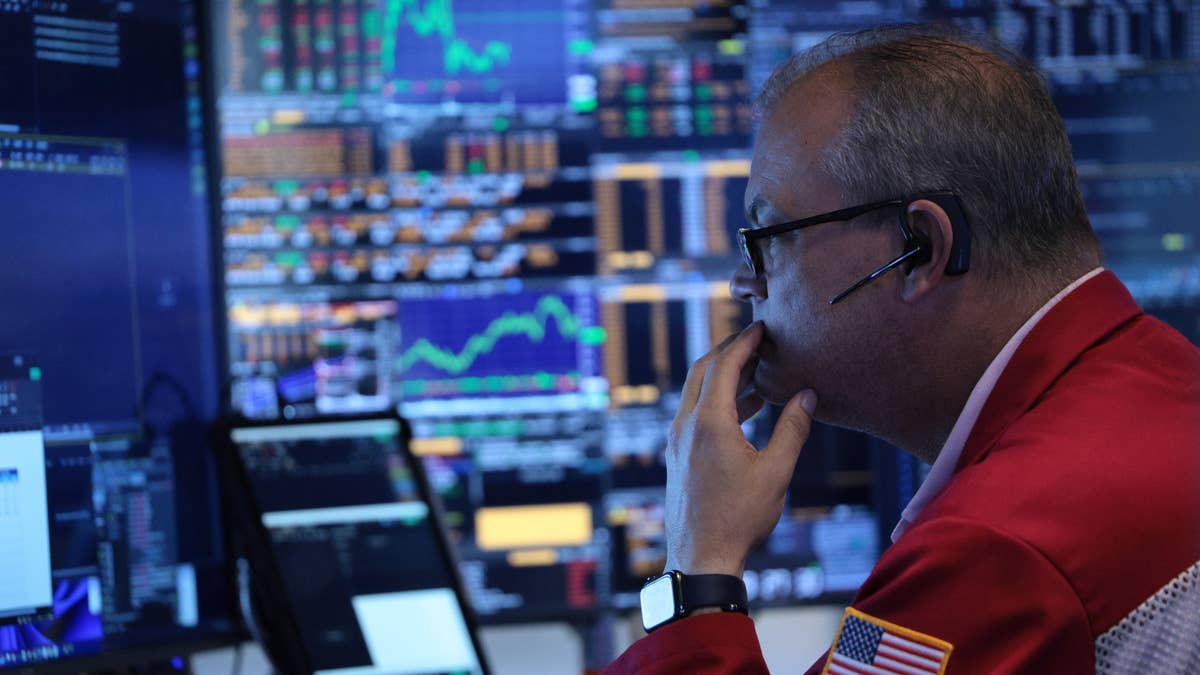 SanDisk closed the week at $1,745, down 26%, after Bank of America flagged bubble risk in chip stocks while raising its own SanDisk price target to $2,500.
Michael M&period Santiago &sol Getty Images
Axon, Rocket Lab and Palantir caught the other side of the rotation
According to data from TheStreet, AXON experienced a significant rally during the week of June 29, 2026. The stock climbed from $560.61 on Tuesday to $593.96 by Wednesday's close, representing a gain of approximately 6%.
This sharp mid-week increase contributed to a broader seven-day winning streak that resulted in a total gain of nearly 45%.
Federal disclosures showed President Trump bought between $1 million and $5 million of Axon stock in February, roughly two weeks before Immigration and Customs Enforcement solicited a $220 million TASER contract, according to CNBC.
Investors read the timing as a signal of stronger federal demand, regardless of whether a contract is ultimately awarded.
Rocket Lab climbed 24% to close the week at $100.46 a share after agreeing to buy satellite communications provider Iridium in an $8 billion deal, according to CNBC.
More AI Stock:
- TSMC executive drops blunt message on AI chip's next frontier
- Morgan Stanley gives Google stock investors reason to rethink AI spending
- Jim Cramer makes a bold call on AI as stocks waver
Analysts framed the acquisition as a move into recurring satellite revenue, the kind of predictable income that chip stocks currently lack.
Palantir added 21% for the week, closing near $129 after a rally built on a sovereign AI partnership with Nvidia, a new U.S. Army data contract, and an upgrade from D.A. Davidson.
The AI investment landscape is broadening beyond hardware. As capital rotates into AI software and cybersecurity platforms, stocks like Palo Alto Networks (PANW) and Workday (WDAY) have seen a noticeable lift in momentum.
Beyond SanDisk, the rest of the week’s chip and storage losers still closed at levels reflecting a historic 2026 run.
- Micron ended the final trading session before the July 4 holiday at $975.56, which represents a notable pullback from its all-time high of $1,255.00 reached on June 25. This closing price marks a decline of approximately 22% from that record intraday peak as the stock experienced its first close below the $1,000 level in several weeks.
- Western Digital concluded the trading session at $539, which is significantly lower than its recent high of $729.
- A $820.16 finish for Seagate Technology reflected the same memory supply glut concerns.
- Teradyne experienced its steepest weekly drop since it joined the Nasdaq 100 in late June, closing at $369.09.
The AI trade is no longer moving as one
This week’s divergence is the clearest evidence yet that investors are pricing artificial intelligence as several separate trades rather than one.
Since the start of 2026, chip and memory stocks captured nearly all the enthusiasm around AI infrastructure spending, while software, defense technology and space companies traded as afterthoughts.
That is changing. Money is shifting toward businesses with contract-based revenue, government backing, or overlooked business lines, reducing exposure to an unpredictable tech landscape. This trend follows warnings from Bank of America strategists that high valuations and crowded tech momentum pose broader market risks.
SanDisk’s 26% weekly loss does not mean the memory cycle is over. Bank of America’s own price target increase argues the opposite.
But a single bubble-risk reading from a major bank can now move tens of billions of dollars across a sector in a single session, and the next leg of the AI trade may reward selectivity over the momentum that defined the first half of the year.
Related: Palantir doubles down on national security with Nvidia AI alliance


You May Also Like

Inside Taylor Swift and Travis Kelce’s lavish New York wedding with A-list guests

Marcos: Flood control corruption probe far from done

Vitalik Buterin Outlines Priorities for ‘Lean Ethereum’ Roadmap



