LRC Hits $0.01 as Loopring Exchange Shutdown Ends zk-Rollup Era
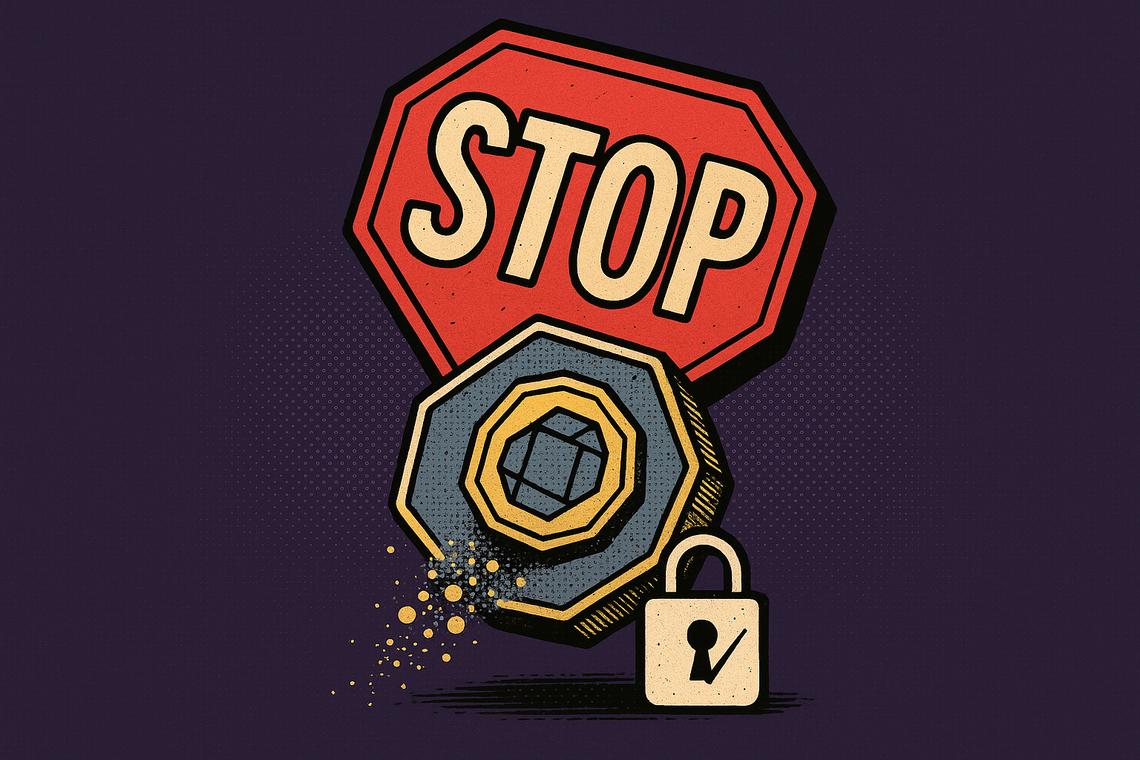
Loopring’s decentralized exchange shutdown marks the end of a project that once helped define what Ethereum scaling could look like. The platform, widely recognized as Ethereum’s first zk-rollup, closed its exchange and automated market maker effective immediately, with all trading halted and the relayer taken offline. For anyone still holding funds on the protocol, the next few weeks will determine whether they get anything back — and how much.
Key takeaways
- Loopring permanently shut down its decentralized exchange immediately, citing failed adoption, weak business development, and competition from newer zkEVM technology.
- Total value locked collapsed 99% from $760 million in November 2021 to approximately $8 million by mid-2026.
- The native token LRC fell from an all-time high of $3.75 to $0.01, a near-total wipeout.
- User funds will be returned through a team-controlled batch process; accounts below $10 are excluded from distribution.
- Loopring’s closure joins over 60 crypto project shutdowns in 2026, according to RootData, as bear market pressure intensifies.
Loopring Shuts Down Its Decentralized Exchange Immediately
The team announced the Loopring exchange shutdown on X without a transition period. Trading stopped instantly. The relayer went offline. What started as a technical breakthrough in Ethereum scaling ended with a blunt acknowledgment: “To be honest, Loopring never gained meaningful adoption.”
That admission is significant. Loopring was not a minor experiment — it raised $45 million in a 2017 token sale and played a direct role in proving that zero-knowledge rollups could scale Ethereum transactions at a fraction of the mainchain cost. Projects like zkSync, Scroll, and StarkNet owe at least part of their conceptual DNA to Loopring’s early work. Its highest-profile moment came in 2021, when it was chosen to power GameStop’s NFT marketplace, briefly placing the protocol in front of a mainstream audience far beyond the DeFi faithful.
That moment never converted into lasting traction.
Reasons Behind Loopring’s Closure
Lack of Adoption and Poor Business Development
The team was unusually direct about its own failures. Three reasons drove the decision: the protocol never attracted a meaningful user base, the team lacked the business development capabilities needed to grow it, and the broader market had moved on. Even when conditions were favorable and Ethereum’s scaling problem was a headline issue, Loopring failed to convert technical credibility into real-world volume.
This is a pattern that repeats across crypto history — technically sound protocols that never bridge the gap between what engineers build and what users actually want to use. Loopring built something real. It just couldn’t sell it.
Competition from Newer zkEVM Technology
The technological argument is equally sharp. zkEVM technology — a more flexible evolution of the zk-rollup concept that supports full Ethereum Virtual Machine compatibility — rendered Loopring’s original architecture less competitive. Newer networks offered developers and users the same security guarantees with greater programmability. When your successors outgrow the problem you were built to solve, the strategic case for continuing becomes hard to defend.
Financial Decline and Market Repercussions
Drops in Total Value Locked and Token Price
The numbers tell a brutal story. Total value locked peaked near $760 million in November 2021, riding the same wave that drove the entire DeFi sector to record highs. By mid-2026, that figure had collapsed to roughly $8 million — a 99% decline. The LRC token tracked that trajectory almost exactly, falling from an all-time high of $3.75 to around $0.01.
That is not a correction. That is a near-complete erasure of value.
Exchange Delistings and Leadership Changes
The institutional signals were flashing well before the final announcement. South Korea’s Upbit delisted LRC in early 2026, pointing to concerns over transparency and long-term sustainability. Binance followed with its own delisting weeks later. When two of the most significant exchanges in the world remove a token in quick succession, it is rarely a coincidence — it reflects a judgment that the project has lost its footing.
Leadership changes compounded the picture. Loopring’s CEO resigned in August 2025. The consumer wallet had already been shut down in July 2025. By the time the exchange closure was announced, the organization had been hollowing out for nearly a year.
User Fund Return and Exit Mechanism Changes
Switch From Trustless to Team-Controlled Withdrawals
How users get their money back is where the story gets complicated. Loopring is upgrading its smart contract to restrict withdrawals to whitelisted addresses controlled by the team — a move that removes the original trustless exit mechanism. That feature had allowed users to withdraw funds directly from Ethereum without depending on the Loopring team at all. It was a core decentralization guarantee.
The team frames the change as user-friendly, sparing people the technical process of generating cryptographic proofs. But the shift toward a team-controlled batch withdrawal process is a meaningful departure from the self-custody principles the protocol was built on. Users are now relying on the team to process their funds correctly.
Distribution Criteria and User Review Process
The process works as follows: Loopring will publish a final balance list and open a two-week review period for users to flag discrepancies. After that window closes, funds will be distributed to Ethereum wallets in batches, with gas fees covered by the team.
One threshold matters: accounts with a final balance below $10 will be excluded from distribution entirely. Anyone with small residual positions will receive nothing. Users should verify their listed balance carefully before the review window closes.
Broader Crypto Market Context in 2026
Loopring is not closing in isolation. According to RootData, more than 60 crypto projects have shut down in 2026 as a deepening bear market eliminates users and revenue for smaller teams. Among the recent casualties are Entropy, a project backed by a16z, and infrastructure protocol Syndicate. The pattern is consistent: protocols built during the 2021 bull cycle that never achieved self-sustaining adoption are now running out of runway.
What makes Loopring’s case instructive is the speed of the unraveling once leadership began to shift. The wallet shutdown, the CEO departure, the exchange delistings, and the final closure all happened within roughly 12 months. For projects in similar positions — technically capable but commercially stalled — the Loopring timeline may be a preview of what comes next.
FAQ
Why did Loopring shut down its decentralized exchange?
Loopring shut down its exchange due to a combination of three factors: the protocol never gained meaningful adoption, the team lacked the business development skills to grow the platform, and newer zkEVM technology had surpassed Loopring’s original architecture, making it less competitive.
How will Loopring users get their funds back after the shutdown?
User funds will be returned through a team-controlled batch process. Loopring will publish a final balance list and open a two-week review period for users to flag discrepancies. Funds will then be distributed to Ethereum wallets in batches, with gas fees covered. A minimum balance of $10 is required for inclusion — accounts below that threshold will be excluded from distribution entirely.
What happened to Loopring’s token and overall value locked over time?
Total value locked peaked at approximately $760 million in November 2021 before collapsing roughly 99% to around $8 million by 2026. The native token LRC dropped from an all-time high of $3.75 to approximately $0.01 over the same period.
Is Loopring’s closure an isolated event?
No. Loopring’s closure is part of a broader trend. According to RootData, more than 60 crypto projects have shut down in 2026 amid a sustained bear market. Other notable closures this year include Entropy, backed by a16z, and infrastructure protocol Syndicate.
Article produced with the assistance of artificial intelligence and reviewed by the editorial team.


You May Also Like

Monday Market Wrap: Comcast Breakup, Alphabet’s Dow Debut, and Tech Stock Rally
Columnist cracks the 'unifying theory' behind Trump's seemingly manic behavior: opinion