

Understanding the BTC/USDT Spot CVD Chart: A Trader’s Guide to Order Flow
BitcoinWorld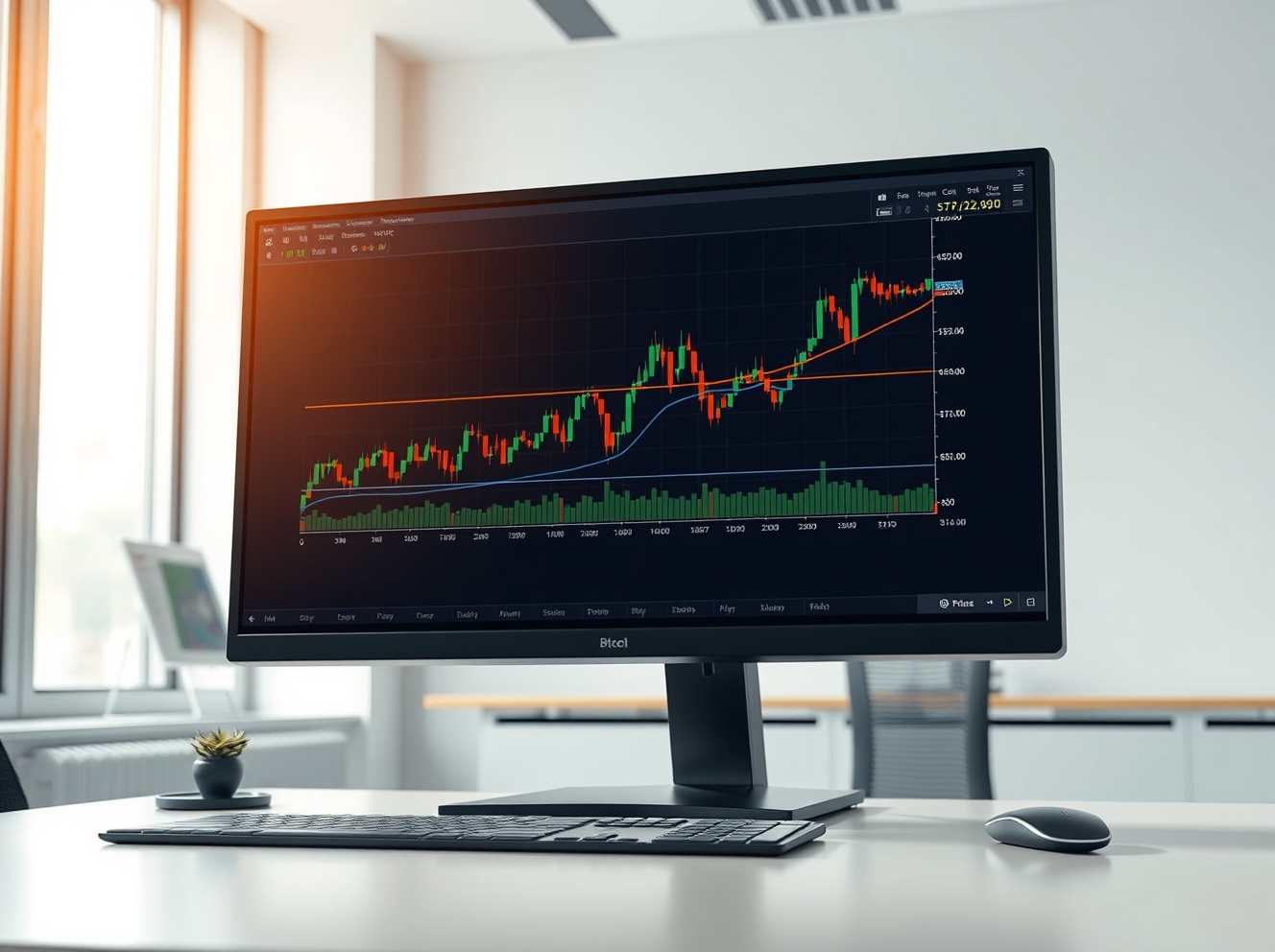
Understanding the BTC/USDT Spot CVD Chart: A Trader’s Guide to Order Flow
For traders monitoring Bitcoin price action on Binance or similar exchanges, the spot Cumulative Volume Delta (CVD) chart for the BTC/USDT pair has become a valuable tool for gauging real-time buying and selling pressure. Unlike simple price charts that only show where the market has been, the CVD provides a granular look at the order book, revealing the imbalance between aggressive buying and selling at each price level.
What the CVD Chart Reveals About Market Sentiment
The BTC/USDT spot CVD chart is divided into two key sections. The upper portion features a Volume Heatmap, which tracks trading activity at specific price levels. The background color of this heatmap brightens when the price consolidates in a narrow range for an extended period or experiences a sharp, high-volume move. These brighter zones often act as future support or resistance, as they represent areas of high trader interest where significant orders were executed.
Below the heatmap lies the CVD indicator itself. This line chart represents the cumulative difference between buy and sell orders, broken down by trade size. The direction of the CVD line is crucial: when it rises, it indicates that buy orders are dominating; when it falls, selling pressure is higher. This can help traders spot divergences. For instance, if Bitcoin’s price is making a new high but the CVD is declining, it may suggest the rally lacks strong buying conviction and could reverse.
Interpreting Order Flow by Trade Size
A distinctive feature of this CVD chart is its segmentation of orders by size. The chart uses colored lines to represent different trade value ranges:
- Yellow line: Represents smaller orders between $100 and $1,000, often attributed to retail traders.
- Brown line: Represents large institutional-sized orders between $1 million and $10 million.
By observing which line is driving the CVD, traders can identify whether the current move is being led by retail or institutional participants. A sharp upward move in the brown line, for example, signals that large players are accumulating, which can be a more reliable signal than a move driven solely by small retail orders.
Practical Implications for Bitcoin Traders
For day traders and swing traders, the CVD chart offers a layer of confirmation beyond traditional volume analysis. A sudden spike in the Volume Heatmap at a key price level, combined with a rising CVD, can validate a breakout. Conversely, a price drop accompanied by a flat or rising CVD might indicate that selling pressure is exhausted, suggesting a potential bounce.
It is important to note that the CVD is a spot market indicator and does not account for activity in the perpetual futures market, where much of Bitcoin’s leverage trading occurs. Therefore, it is most effective when used alongside other tools like open interest and funding rates.
Conclusion
The BTC/USDT spot CVD chart, with its Volume Heatmap and size-segmented order flow, provides traders with a deeper understanding of market microstructure. By analyzing where volume concentrates and who is driving the price action, traders can make more informed decisions. As with any indicator, it is not a standalone signal, but a powerful addition to a comprehensive trading strategy.
FAQs
Q1: What does a rising CVD line indicate?
A rising Cumulative Volume Delta (CVD) indicates that aggressive buying volume is exceeding selling volume at the current price levels, suggesting bullish momentum in the spot market.
Q2: Can the CVD predict price reversals?
The CVD can help identify potential reversals through divergence. For example, if price makes a higher high but the CVD makes a lower high, it signals weakening buying pressure and a possible bearish reversal.
Q3: Is the CVD chart available on all exchanges?
No, the CVD is a specific indicator often provided by advanced trading platforms and charting tools like TradingView or exchange-specific APIs. It is not a default indicator on all retail trading interfaces.
This post Understanding the BTC/USDT Spot CVD Chart: A Trader’s Guide to Order Flow first appeared on BitcoinWorld.


You May Also Like

Covéa Chooses Shift Technology as Strategic Partner for Fraud and Risk Management

Exclusive interview with Smokey The Bera, co-founder of Berachain: How the innovative PoL public chain solves the liquidity problem and may be launched in a few months

LIST: Bayanihan initiatives amid soaring oil prices


Trending News
More24/7 Live News
MoreQuick Reads
More
